

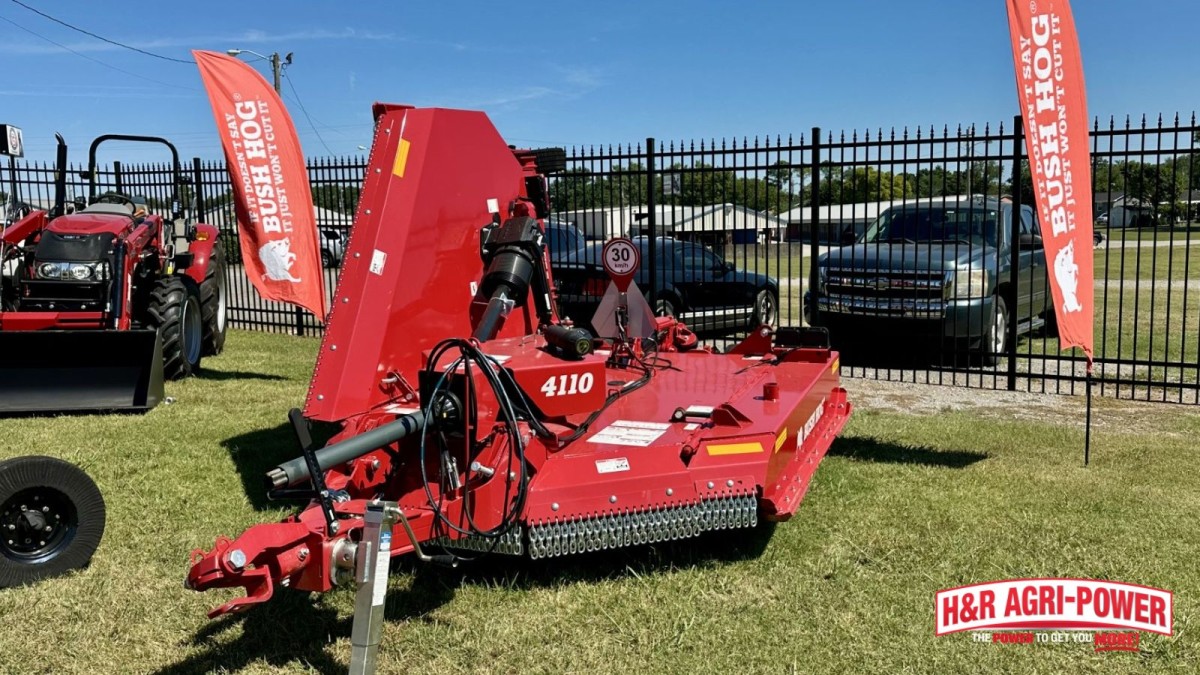
A bush hog is a tractor-mounted rotary cutter with hinged, heavy blades designed to power through dense brush, overgrown fields, and rough terrain; a finish mower is a precision rotary mower with fixed, sharp blades engineered to produce a clean, even cut on maintained turf. Choosing the wrong one leads to equipment damage, poor results, and serious safety risks.
This guide covers the mechanical differences between these two mower types, the specific situations that call for a bush hog over a finish mower, the risks of using the wrong equipment, how to evaluate your property's needs, and how H&R Agri-Power can help you find the right setup.
Bush hogs and finish mowers differ fundamentally in blade design, cutting capacity, and durability. Bush hog blades pivot on hinges so they deflect off rocks and stumps without breaking, while finish mower blades attach rigidly to the spindle for a precise, lawn-quality cut. Bush hogs handle woody material up to several inches in diameter; finish mowers are built for maintained grass.
A bush hog becomes the clear choice when you face thick brush, overgrown pastures, or uneven ground with hidden obstacles. Rotary cutters excel at suppressing woody vegetation, controlling perennial weeds, and clearing fields where a finish mower's thinner blades and rigid deck would suffer immediate damage.
Using a finish mower in conditions that demand a bush hog creates real problems: bent or cracked blades, costly repairs, and dangerous projectile hazards from blade tips spinning at up to 200 miles per hour. Proper equipment matching protects both the operator and the machine.
Selecting the right mower depends on your property's acreage, terrain, vegetation type, and tractor horsepower. We help property owners work through these variables so every cut is safe, efficient, and matched to the job.
What Are the Main Differences Between a Bush Hog and a Finish Mower?
The main differences between a bush hog and a finish mower come down to blade design, cutting purpose, and terrain capability. Below, each mower type's operation and ideal conditions are explained.
How Does Each Mower Type Operate and What Are Their Intended Uses?
Each mower type operates using PTO-driven rotary blades, but their blade attachment and cutting goals differ significantly. A bush hog uses thick, dull blades mounted on hinges that pivot upon hitting rocks or stumps, allowing it to whack through dense brush and saplings without equipment damage. A finish mower uses thin, sharp blades rigidly attached to the spindle, designed to cut grass to an even height on maintained lawns.
Finish mowers rely on high-lift blade design and under-deck baffling to achieve a manicured appearance. Bush hogs prioritize durability over cut quality, shredding crop residue, grass, and small brush by impact. According to Virginia Cooperative Extension, rotary mower blades rotate at 2,000 to 4,000 RPM, generating blade-tip speeds of 100 to 200 miles per hour.
For operators choosing between these tools, the intended use dictates the right pick: a clean, lawn-quality cut requires a finish mower, while vegetation suppression and land clearing demand a bush hog.
What Kinds of Terrain and Vegetation Suit Each Mower Best?
The kinds of terrain and vegetation that suit each mower best depend on ground conditions and plant density. Finish mowers perform on flat, manicured lawn areas mostly free from brush and debris. Bush hogs handle rough terrain containing brush, overgrown vegetation, stumps, and uneven ground.
According to Ohio State University Extension, rotary lawn mowers are designed for maintained areas, while rotary brush mowers are built for rough terrain with brush and overgrown vegetation. Finish mower blades, rigidly fixed to the spindle, are not designed for repeated impacts with hard objects. On slopes, OSHA recommends limiting zero-turn mowers to 15 degrees, while tractor-mounted mowers can operate on slopes up to 22 degrees.
-
Finish mower terrain: Level lawns, sports fields, parks, and groomed properties with minimal debris.
-
Bush hog terrain: Pastures, fence lines, overgrown fields, wooded edges, and properties with rocks or stumps.
Matching the mower to the terrain prevents equipment damage and keeps operators safe, which becomes especially important when thick brush or overgrown conditions are involved.
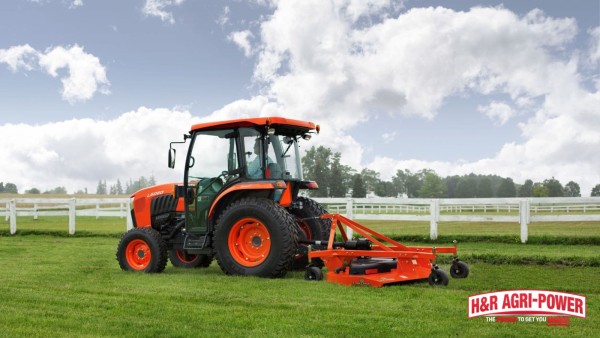
In What Situations Is a Bush Hog the Better Choice Over a Finish Mower?
A bush hog is the better choice over a finish mower when vegetation is thick, terrain is rough, or the property demands durability over cut quality. The following sections cover specific scenarios involving dense brush and large acreages.
When Does Thick Brush or Overgrown Fields Require a Bush Hog?
Thick brush or overgrown fields require a bush hog when vegetation includes woody plants, perennial weeds, or dense growth that would damage a finish mower's fixed blades. According to the University of Maine Cooperative Extension, mowing fields with a rotary mower or bush hog kills many woody plants and reduces the vigor of perennial weeds. Large invasive plant infestations may also require heavy equipment, such as tractors with brush or rotary mowers. A finish mower lacks the hinged blade design and heavy-duty construction needed to absorb repeated impacts from stumps, saplings, and hidden debris. For any field that has not been maintained regularly, or where growth exceeds several inches in stem diameter, a bush hog is the only practical option.
Are There Certain Property Types or Acreages Where a Bush Hog Excels?
Certain property types where a bush hog excels include pastures, hay fields, fence lines, right-of-way corridors, and unimproved rural acreage. A rotary cutter handles rough ground and woody material with durability that a finish mower cannot match, though it will not deliver the same cut quality, according to the University of Tennessee Extension. On larger tracts, the bush hog's wide cutting path and tolerance for uneven terrain allow operators to cover ground efficiently without risking equipment damage. For properties under an acre of maintained turf, a finish mower is usually the smarter investment. Once acreage increases and conditions grow rougher, the bush hog becomes essential for keeping land manageable without constant blade replacement or repair downtime.
With the right mower selected, understanding the risks of using the wrong one matters just as much.
What Are the Biggest Drawbacks of Using a Finish Mower When a Bush Hog Is Needed?
The biggest drawbacks of using a finish mower when a bush hog is needed are equipment damage, serious safety hazards, and accelerated wear. The sections below cover specific risks and how durability suffers under demanding conditions.
Can Using the Wrong Equipment Cause Damage or Safety Issues?
Yes, using the wrong equipment can cause significant damage and serious safety issues. Finish mowers have thin, rigidly attached blades designed for maintained turf, not rough terrain with rocks, stumps, or woody brush. Forcing a finish mower through heavy vegetation bends blades, cracks spindles, and can hurl debris at dangerous speeds.
According to the U.S. Consumer Product Safety Commission, rotary mower blade tips can move at over 200 miles per hour and hurl projectiles with deadly velocity. Mismatched equipment amplifies this risk because finish mower decks lack the reinforced shielding and hinged blade design that allow bush hogs to absorb impacts safely.
Beyond operator danger, the wrong mower damages the land itself. Mowing pastures below 3 to 4 inches with an improperly set finish mower damages tall grasses and increases forage recovery time. Matching the implement to the task is not optional; it is the single most effective accident preventive.
How Do Maintenance and Durability Compare in Demanding Conditions?
Maintenance and durability differ sharply when finish mowers operate in conditions meant for a bush hog. Finish mower blades are thinner and sharper, so they dull rapidly when striking rocks, roots, or thick stems. Frequent sharpening or replacement becomes necessary, driving up both downtime and cost.
Bush hogs, by contrast, use heavy, dull blades on hinges that pivot on impact. This design absorbs contact with hard objects and keeps the drivetrain intact. Finish mower gearboxes, spindles, and belts wear faster under loads they were never engineered to handle, often voiding warranties in the process.
According to Ohio State University Extension, hazard risks increase when equipment is not well maintained, and mower blades should be replaced if bent, cracked, or too dull to sharpen. For operators working overgrown fields or rough pastures, a bush hog simply outlasts a finish mower under those stresses. Choosing the right mower from the start protects both the investment and the operator, which is where matching equipment to property conditions becomes essential.
How Do You Decide Between a Bush Hog and a Finish Mower for Your Property?
You decide between a bush hog and a finish mower by evaluating your vegetation type, property size, tractor horsepower, and desired cut quality. The following subsections cover the key questions to ask and scenarios where owning both makes sense.
What Questions Should Property Owners Ask Before Choosing a Mower?
Property owners should ask these questions before choosing a mower:
-
What vegetation will I cut most often? Thick brush, saplings, and overgrown fields require a bush hog. Maintained turf and landscaped areas call for a finish mower.
-
How large is the mowing area? Rotary mowers are ideal for large areas, according to Oregon State University Extension Service.
-
What width do I need? When selecting a rotary cutter, choose a width wide enough to cover your tire tracks at minimum, and confirm your tractor has sufficient horsepower to spin the implement you attach.
-
What tractor do I have? Match the mower's 3-point hitch category and PTO requirements to your tractor's rated horsepower.
-
What cut quality do I need? A bush hog handles rough ground but produces a coarse cut; a finish mower delivers a manicured result on smooth terrain only.
-
What is my maintenance capacity? Fluids, filters, and belts require regular inspection to optimize performance and extend engine life.
Answering these six questions narrows the field quickly and prevents costly mismatches between equipment and property demands.
Are There Scenarios Where Both Mowers Are Recommended?
Yes, there are scenarios where both mowers are recommended. Properties that combine open pasture or wooded edges with maintained lawn zones benefit from pairing a bush hog for rough clearing with a finish mower for groomed areas. A cattle operation with a fenced yard around the homestead is a classic example: the bush hog manages pasture regrowth and fence lines, while the finish mower keeps the yard presentable.
For landowners managing diverse acreage, running one implement where it excels, rather than forcing a single mower into every task, reduces repair costs and improves results. In my experience, the investment in both tools pays for itself by extending the service life of each.
With these decision factors clarified, a knowledgeable equipment dealer can match the right mower to every acre on your property.
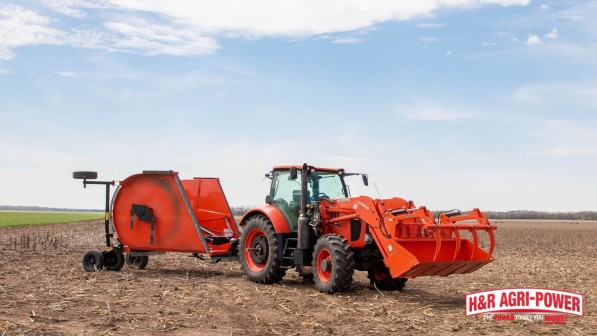
How Can H&R Agri-Power Help You Select and Support the Right Mower Equipment?
H&R Agri-Power helps you select and support the right mower equipment by combining over 50 years of dealer expertise with a full inventory of bush hogs, finish mowers, and compatible tractors across 21 locations in six states.
How Does H&R Agri-Power's Selection and Service Benefit Bush Hog and Finish Mower Users?
H&R Agri-Power's selection and service benefit bush hog and finish mower users by matching each buyer's terrain, vegetation type, and tractor horsepower to the correct implement. A rotary cutter handles rough ground and woody material, while a finishing mower delivers a much higher quality cut on maintained turf. Knowing which tool fits which job prevents costly mismatches.
H&R Agri-Power stocks finish mowers alongside heavy-duty rotary cutters built for pastures and overgrown fields. According to the University of Tennessee Extension, the most common mower for pastures is the rotary cutter because of its durability, though it cannot match a finishing mower's cut quality. H&R Agri-Power's parts departments and service teams across Kentucky, Tennessee, Illinois, Alabama, Indiana, and Mississippi keep both mower types running season after season.
What Are the Key Takeaways for Choosing Between a Bush Hog and a Finish Mower?
The key takeaways for choosing between a bush hog and a finish mower center on three factors: vegetation density, desired cut quality, and property conditions.
-
Choose a bush hog when clearing thick brush, overgrown pastures, or terrain with rocks, stumps, and woody growth.
-
Choose a finish mower when maintaining lawns, sports fields, or any turf where an even, manicured appearance matters.
-
Consider a flail mower as a middle-ground option that provides better cut quality than a rotary cutter and more durability than a finishing mower.
-
Match the mower's width and PTO demand to your tractor; finish mowers typically require cutting widths from 48 to 90 inches and height adjustment between 1 and 5 inches.
-
Prioritize operator safety, since diesel-powered mowers can generate noise levels between 80 and 90 dB, enough to cause hearing loss after two hours of exposure.
Selecting the right mower protects your equipment investment and your land. H&R Agri-Power's team can walk you through every specification to ensure the implement you bring home is the one your property actually needs.