

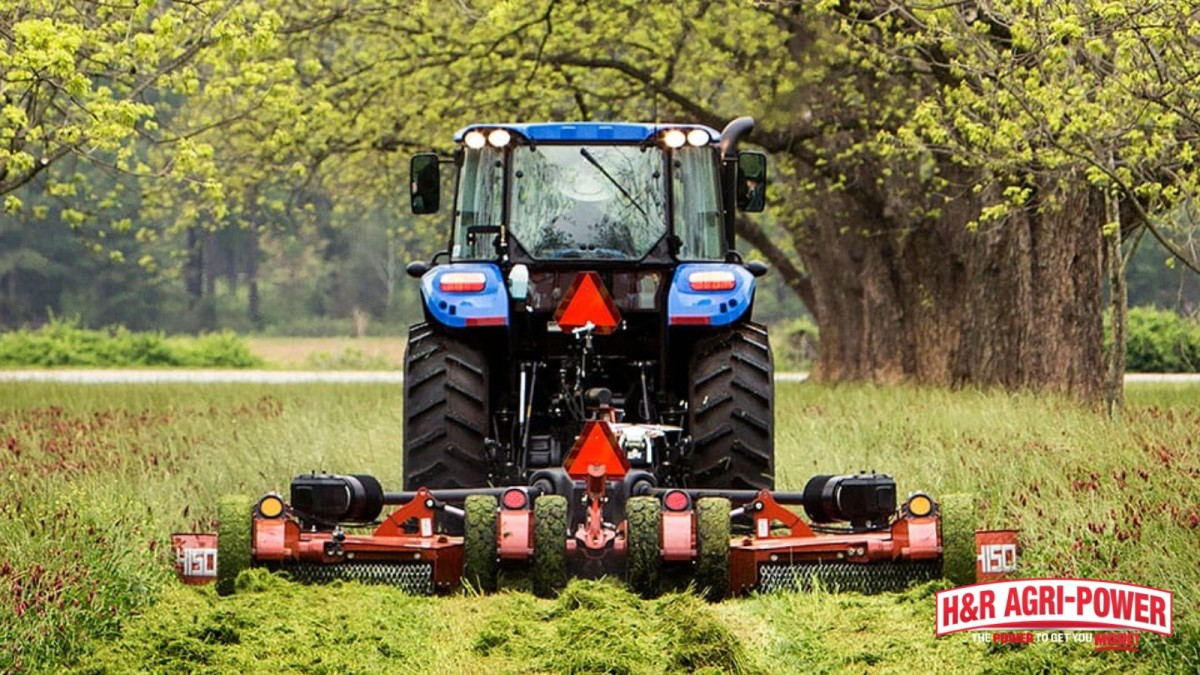
Replacing bush hog blades is the process of removing worn or damaged rotary cutter blades and installing new ones to restore clean cutting performance and safe operation. Dull, bent, or cracked blades increase fuel consumption, stress the gearbox, and create serious hazard risks during fieldwork.
This guide covers required tools and safety preparation, step-by-step blade removal, proper installation of new blades, post-replacement inspection and ongoing maintenance, and how H&R Agri-Power can help with parts and professional service.
Safe preparation starts with the right protective equipment and workspace setup. Eye protection, safety shoes, and gloves are essential, and the bush hog must be securely elevated and blocked before you begin. Lockout/tagout procedures prevent unexpected energy release while you work underneath the deck.
Blade removal requires careful attention to fastener details that catch many operators off guard. Some rotary cutter blade nuts use left-handed threads, and seized bolts on older equipment often demand penetrating oil or high-torque impact tools to break free without damaging mounting components.
Selecting the correct replacement blade matters as much as the installation itself. Blade steel type, thickness, and dimensional compatibility with your specific bush hog model all affect cutting quality, durability, and warranty coverage. Proper alignment and torque specs during installation prevent the dangerous vibrations that destroy gearbox bearings.
Routine inspection after installation keeps your equipment reliable season after season. Manufacturer guidelines call for checking blade hardware torque before each use. H&R Agri-Power, a 21-location dealership with manufacturer-trained technicians, provides the parts, inspections, and service support to keep your bush hog performing at its best.
What Tools and Safety Gear Do You Need to Replace Bush Hog Blades?
You need specific hand tools, proper personal protective equipment, and a secured workspace to replace bush hog blades safely. The following sections cover safety precautions, essential tools, and how to secure your equipment before starting.
Which Safety Precautions Should You Follow Before Starting the Replacement?
The safety precautions you should follow before starting the replacement include implementing lockout/tagout procedures, wearing proper PPE, and verifying all energy sources are isolated. According to OSHA, operators must implement lockout/tagout (LOTO) procedures by disabling machinery, isolating energy sources, and communicating the shutdown to all affected employees before initiating maintenance.
Before touching any blade hardware, take these steps:
-
Shut off the tractor engine and remove the ignition key.
-
Disconnect the PTO driveline from the bush hog.
-
Lower the mower deck fully to the ground before working underneath.
-
Wear steel-toed safety shoes, heavy-duty gloves, and ANSI-rated eye protection.
-
Confirm all safety guards and PTO shields are in place.
Skipping even one of these steps creates serious risk. Grounds maintenance is already one of the most hazardous occupations in U.S. agriculture, so treating every blade change as a formal maintenance event is the safest approach.
What Essential Tools Are Required for Bush Hog Blade Replacement?
The essential tools required for bush hog blade replacement include a properly sized socket, extension bar, impact wrench, and new lock hardware. According to an OrangeTractorTalks forum discussion, proper blade installation requires a 1-11/16" socket, an extension, and a new lock nut for each blade, with the equipment securely elevated and blocked.
A complete tool list includes:
-
1-11/16" socket and extension bar.
-
3/4-inch impact wrench capable of delivering up to 600 lb-ft of torque for seized fasteners.
-
New lock nuts and lock washers for every blade being replaced.
-
Jack stands or solid blocking to support the elevated mower deck.
-
Wire brush and penetrating oil for corroded hardware.
Always replace lock nuts rather than reusing old ones. Mismatched blade weights on the same spindle can cause severe vibration and destroy gearbox bearings, so having a scale to verify weight consistency is a worthwhile addition.
How Do You Secure the Bush Hog and Workspace for Safe Maintenance?
You secure the bush hog and workspace for safe maintenance by stabilizing the mower deck on solid supports, clearing the work area, and verifying hydraulic systems are relieved of pressure. Ohio State University Extension guidelines recommend that operators wear eye protection, safety shoes, and gloves during mower maintenance while ensuring all safety guards and PTO shields remain in place and well-maintained.
Key workspace preparation steps include:
-
Position the tractor on level, firm ground.
-
Raise the bush hog deck and place jack stands or heavy blocking under the frame; never rely solely on hydraulics.
-
Clear debris, tools, and bystanders from the immediate work area.
-
Keep a fire extinguisher accessible when using impact tools near dry vegetation.
Hydraulic failures that pin workers under equipment remain a leading cause of fatal maintenance injuries. Using mechanical supports instead of trusting hydraulic cylinders alone is a non-negotiable safety practice. With the workspace properly secured, you can move on to removing the worn blades.
How Do You Remove Worn or Damaged Bush Hog Blades?
You remove worn or damaged bush hog blades by following a safe loosening sequence, addressing seized fasteners, and inspecting all mounting components before installation. The steps below cover each stage.
What is the Safe Step-By-Step Process for Loosening and Removing the Blades?
The safe step-by-step process for loosening and removing bush hog blades begins with shutting down the tractor, engaging lockout/tagout procedures, and securely elevating the mower deck on jack stands. Many rotary cutter blade nuts use left-handed threads, so they must be turned clockwise to loosen. Failing to check thread direction risks rounding the nut or snapping the bolt. Once loosened, slide each blade off its pivot bolt and set hardware aside in order. According to Schulte Industries, using non-OEM or "will-fit" blades may void the product warranty and compromise safety and reliability. Always match replacement parts to the manufacturer's specifications for your specific model.
Are There Any Specific Tips for Handling Rusted or Stuck Blade Bolts?
There are several specific tips for handling rusted or stuck blade bolts, including penetrating oil application, heat cycling, and high-torque impact tools. Start by soaking the bolt and nut with a quality penetrating lubricant at least 30 minutes before attempting removal. If the fastener remains seized, a 3/4-inch impact wrench can deliver the force needed, sometimes requiring torque values up to 600 lb-ft. Applying heat with a propane torch to expand the nut slightly can also break corrosion bonds. Never use a cheater bar on a standard ratchet, as this risks cracking the blade pan or stump jumper housing. Patience with penetrating oil often prevents the most costly mistakes.
How Do You Inspect Bush Hog Blades and Mounting Components for Wear or Damage?
You inspect bush hog blades and mounting components for wear or damage by examining cutting edges, pivot hardware, and the blade pan surface. Critical signs that warrant replacement include:
-
Rounded or flat cutting edges that no longer slice cleanly
-
Visible cracks, chips, or deep gouges along the blade body
-
Excessive play or wobble on the pivot bolt
-
Worn or deformed blade cups, spacers, or washers
-
Scoring or grooves on the blade pan contact surface
According to manufacturer maintenance specifications, rotary mower blades and hardware torque should be inspected before each use. Catching minor wear early prevents unbalanced cutting that strains the gearbox and driveline.
With blades removed and components inspected, the next step is selecting and installing the correct replacements.
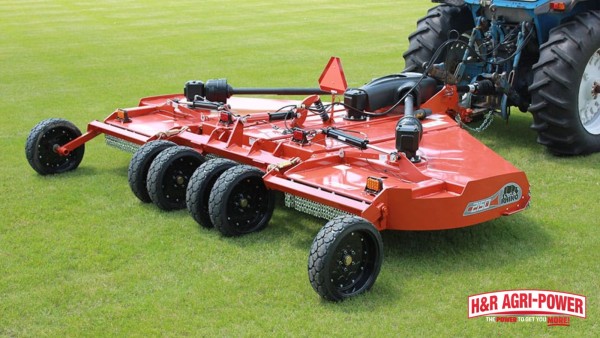
How Should You Prepare and Install New Bush Hog Blades?
You should prepare and install new bush hog blades by matching the correct blade type and size to your model, aligning them properly on the stump jumper, and torquing all fasteners to manufacturer specifications.
Which Blade Types and Sizes are Compatible With Your Bush Hog Model?
The blade types and sizes compatible with your bush hog model depend on the deck width, bolt pattern, and cutting conditions specified in your owner's manual. Two primary steel types dominate the market:
-
High-carbon steel blades (grades 1070–1095) reach hardness up to 60 Rc, delivering superior edge retention in clean, debris-free conditions.
-
Boron steel blades (alloyed with 30MnB5) offer higher toughness at 45–52 HRC, designed to bend rather than shatter under heavy impact.
According to Edgemills, this toughness distinction matters most in rocky or stump-heavy terrain where brittle blades risk catastrophic breakage. Standard blade thickness ranges from 0.375" to 0.5", with heavy-duty models running thicker for extreme shock resistance. Always match blade length, center hole diameter, and bolt spacing to OEM specifications before purchasing replacements.
What is the Correct Procedure for Aligning and Attaching New Blades?
The correct procedure for aligning and attaching new blades starts with positioning each blade on the stump jumper so the cutting edge follows the direction of rotation. Slide each blade onto its mounting bolt, ensuring the blade sits flush against the carrier plate with no gap or debris between contact surfaces. Misaligned blades create imbalance that accelerates gearbox wear. Install a new lock nut for each blade rather than reusing old hardware, since deformed lock nuts lose their holding ability. Hand-thread each nut before final tightening to verify the threads engage smoothly without cross-threading.
How Do You Ensure Bolts and Fasteners are Properly Tightened to Manufacturer Specs?
You ensure bolts and fasteners are properly tightened to manufacturer specs by using a calibrated torque wrench set to the value listed in your bush hog's service manual. Many rotary cutter blade nuts use left-handed threads, meaning they turn clockwise to loosen and counter-clockwise to tighten. Overlooking this detail risks stripping the bolt or leaving the nut dangerously loose.
For seized or corroded fasteners, a 3/4-inch impact wrench can deliver the force needed, sometimes requiring up to 600 lb-ft until the lock washer is fully compressed. After installation, always recheck blade hardware torque before the first mowing pass. Properly secured fasteners are the single most overlooked factor in preventing blade loss during operation.
What Final Safety Checks and Maintenance Steps Should You Take After Replacing Bush Hog Blades?
The final safety checks and maintenance steps you should take after replacing bush hog blades include a thorough post-installation inspection, a controlled vibration test, and an ongoing maintenance schedule. These steps protect both the operator and the equipment.
What Post-Installation Inspection Should You Perform Before Operating the Bush Hog?
The post-installation inspection you should perform before operating the bush hog covers all fasteners, blade orientation, and safety guards. Confirm each blade spins freely without contacting the deck or neighboring components. Verify that lock nuts are seated flush and torqued to the manufacturer's specification. Check that all safety shields, PTO guards, and driveline covers are reinstalled and secure. Lower the mower to operating height and visually inspect the underside one final time for loose hardware or misaligned mounting components. Never skip this step; a single overlooked fastener can cause catastrophic failure at full RPM.
How Do You Test the Mower for Balance and Abnormal Vibrations?
You test the mower for balance and abnormal vibrations by running the bush hog at low RPM in an open, clear area and listening for irregular sounds. Gradually increase engine speed to operating RPM while monitoring for shaking in the deck, driveline, or tractor frame. According to LivLawn, severe mower deck vibration after blade replacement is often caused by bent blades, unsharpened remaining blades, or mismatched blade weights on the same spindle, which can destroy gearbox bearings. If vibration persists, shut down immediately, re-inspect blade alignment, and weigh each blade to confirm they match within a few grams.
How Often Should You Check and Maintain Bush Hog Blades for Optimal Performance?
You should check and maintain bush hog blades before every use for optimal performance. Manufacturer maintenance specifications require blade hardware torque to also be rechecked before each use. Beyond torque checks, inspect cutting edges for rounding, cracks, or uneven wear at each interval. Driveline CV joints also require lubrication on a regular schedule to prevent premature failure. Consistent inspections catch small problems before they escalate into costly gearbox or spindle damage.
With safety checks and a maintenance routine established, professional support ensures your bush hog stays field-ready.
How Can H&R Agri-Power Support You with Bush Hog Blade Replacement and Agricultural Equipment Services?
H&R Agri-Power can support you with bush hog blade replacement and agricultural equipment services through OEM parts, professional inspections, and manufacturer-trained technicians across 21 locations.
What Parts, Inspections, and Maintenance Services Does H&R Agri-Power Offer for Bush Hogs and Similar Equipment?
H&R Agri-Power offers parts, inspections, and maintenance services for bush hogs and similar equipment through dedicated service departments staffed by manufacturer-trained technicians. With 21 locations across Kentucky, Tennessee, Illinois, Alabama, Indiana, and Mississippi, H&R Agri-Power provides convenient access to OEM replacement blades, lock nuts, bolts, and gearbox components for brands including Bush Hog.
Professional maintenance matters because the stakes are high. According to a PubMed study published by the National Institutes of Health, grounds maintenance workers experience fatal work injury rates nearly five times higher than the average for all U.S. workers, with common accidents including being pinned under equipment when hydraulic systems fail. H&R Agri-Power's 24/7 emergency support and certified service teams help reduce these risks by ensuring blade replacements, hardware inspections, and rotary cutter servicing meet manufacturer specifications. For operators who lack specialized tools or face seized fasteners, relying on trained professionals is one of the most practical ways to protect both equipment longevity and personal safety.
What Are the Key Takeaways for Replacing Bush Hog Blades Safely and Correctly?
The key takeaways for replacing bush hog blades safely and correctly center on preparation, proper tooling, and consistent follow-through:
-
Always implement lockout/tagout procedures and wear appropriate PPE before working underneath a mower deck.
-
Secure the bush hog on stable jack stands; never rely solely on hydraulic systems to hold elevated equipment.
-
Use the correct tools, including a 1-11/16" socket, extension, and a new lock nut for each blade.
-
Check thread direction before applying force, since many rotary cutter blade nuts use left-handed threads.
-
Select OEM or manufacturer-approved blades matched to your specific bush hog model to maintain warranty coverage.
-
Inspect blade hardware torque before each use.
When the job calls for professional expertise or hard-to-find OEM parts, H&R Agri-Power's service teams stand ready to help.