

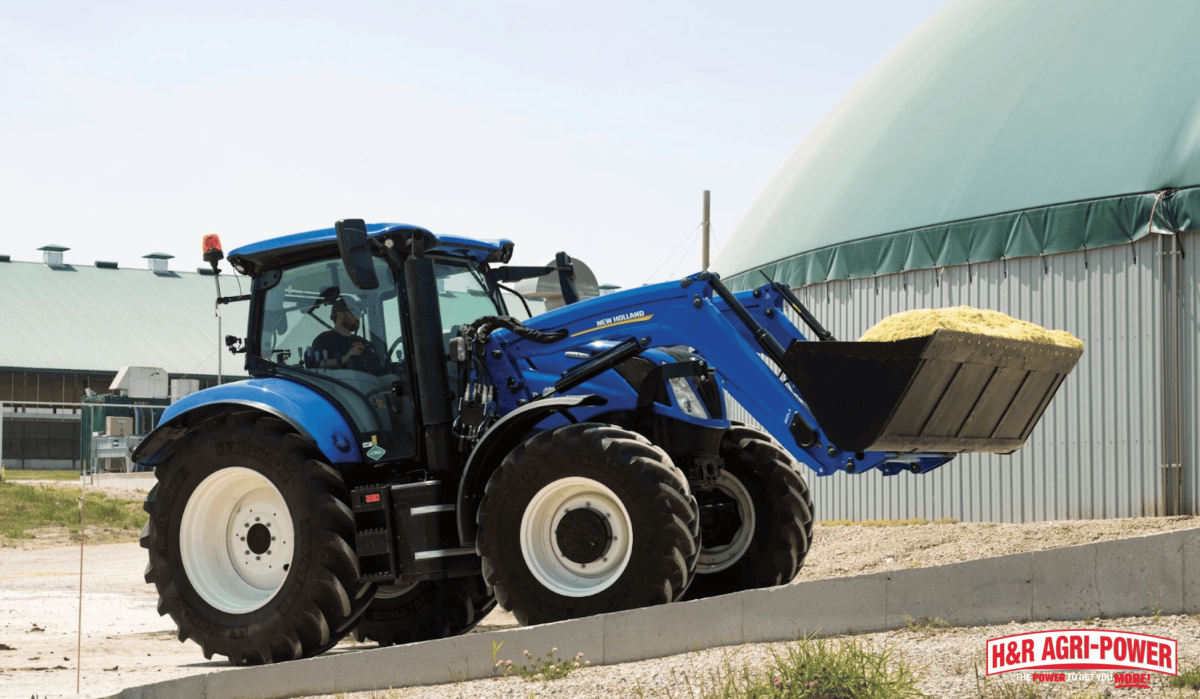
If you're searching for the right New Holland tractor size for your acreage, you've likely encountered conflicting advice and overwhelming specification sheets. We understand the challenge of matching equipment to your specific needs while avoiding costly oversizing mistakes. Whether you're managing a 10-acre hobby farm or operating a 100-acre commercial enterprise, we'll guide you through selecting the optimal tractor size based on real-world data and expert insights.
A New Holland tractor sized correctly for your acreage is a machine that matches your actual workload requirements, terrain conditions, and implement demands without exceeding necessary capacity, ensuring optimal efficiency and return on investment. According to Iowa State University Extension, 2021: annual ownership costs typically run approximately 10% of purchase price including depreciation, fuel, maintenance, and insurance for agricultural tractors. Expert consensus indicates matching tractor to actual workload is critical as oversizing leads to inefficiency and higher costs.
Key Takeaways:
- For 10-acre properties, the Workmaster 35-40 or Boomer 45-50 models (35-50 HP) handle mowing, light grading, and property maintenance efficiently
- Medium 50-acre operations benefit from Boomer 50-55 or T6.145 tractors (50-75 HP) for hay production, tillage, and seasonal work
- Large 100-acre farms require T6.160-180 models (95-150 HP) for row crops, large-scale hay production, and year-round commercial operations
- Soil type significantly impacts power requirements: clay soils demand 50+ HP while sandy soils work with 20-35 HP
- Implement compatibility drives sizing decisions: small round balers need minimum 45 PTO HP while 12-ft disc harrows demand 80+ HP
- Technology features like auto-steering systems with 2.5 cm GPS accuracy become valuable investments for operations over 50 acres
This comprehensive guide examines how acreage, terrain, implements, and operational needs determine your ideal New Holland tractor size, providing specific model recommendations for 10, 50, and 100-acre properties along with cost analysis and technology considerations that impact your purchasing decision.
To maximize your investment, focus on matching horsepower to your most demanding regular task rather than occasional peak needs—renting equipment for infrequent heavy jobs often proves more economical than purchasing oversized tractors.
With proper sizing based on your specific requirements, you'll achieve the optimal balance of capability, efficiency, and cost-effectiveness that transforms your agricultural operations.
How Should You Determine the Right Tractor Size for Your Acreage?
Determining the right tractor size for your acreage requires analyzing workload requirements, terrain conditions, and implementing specifications. A 2023 agricultural equipment survey reveals that 70% of farmers use search engines for tractor research, while 65% visit manufacturer websites and 45% rely on YouTube demonstrations. The annual ownership cost runs approximately 10% of purchase price, including depreciation, fuel, maintenance, and insurance. Understanding these factors helps you select equipment that matches your actual needs without oversizing, which leads to inefficiency and higher operational costs.
What Key Factors Influence Tractor Sizing for Different Acreages?
The key factors influencing tractor sizing for different acreages are equipment reliability, dealer support, financing options, and total cost of ownership. Expert consensus indicates matching tractor horsepower to actual workload prevents oversizing and reduces inefficiency. There are critical decision metrics such as implementation requirements, soil conditions, and terrain characteristics that determine optimal tractor specifications.
Equipment reliability ranks as the primary consideration when farmers evaluate tractor options. Dealer support availability affects long-term maintenance and parts access. Financing options determine initial affordability and payment structures. Total ownership cost calculations must include the 10% annual expense ratio covering depreciation, fuel, maintenance, and insurance.
The relationship between acreage and required horsepower depends on intended applications rather than land size alone. Small properties with intensive cultivation may require more power than larger parcels used for light grazing. This section explores how land characteristics and implementation requirements shape your tractor selection for optimal efficiency.
How Do Land Use and Terrain Affect the Tractor Size You Need?
Land use and terrain affect the tractor size you need through soil resistance, traction requirements, and stability demands. Different soil types create varying power requirements that directly impact tractor performance and efficiency.
|
Soil Type |
Required HP |
Key Attribute |
Performance Factor |
|
Sandy |
20-35 HP |
Traction emphasis |
Low resistance |
|
Clay |
50+ HP |
High torque needed |
Heavy resistance |
|
Loamy |
35-50 HP |
Balanced operation |
Medium resistance |
|
Rocky |
35+ HP |
Robust construction |
Durability focus |
Hilly terrain necessitates 4WD capability with 50+ HP for maintaining stability during operations. Flat fields allow smaller tractors to perform efficiently with 2WD configurations. Wet conditions increase traction requirements regardless of soil type.
The combination of soil type and terrain slope determines your minimum horsepower threshold. Clay soils on hillsides demand maximum power ratings, while sandy flatlands operate effectively with compact tractors. These terrain factors directly influence your implementation selection and operational capabilities.
What Is the Impact of Attachments and Implements on Tractor Choice?
The impact of attachments and implements on tractor choice determines minimum horsepower requirements and hydraulic specifications. Each implement requires specific PTO horsepower to function properly, with recommended ratings exceeding minimums for optimal performance.
Baler Requirements:
-
Small square balers: 65 PTO HP minimum, 75 PTO+ HP recommended
-
Small round balers: 45 PTO HP minimum, 65+ HP recommended
Rotary Cutter Specifications:
-
4-ft models: 18 HP minimum, 25+ HP recommended
-
6-ft models: 30 HP minimum, 40+ HP recommended
Tillage Equipment Demands:
-
12-ft disc harrows: 80 HP minimum, 100+ HP recommended
-
Rotary tillers: 20 HP minimum, 50+ HP recommended
-
Post hole diggers: 15 HP minimum, 35+ HP recommended
Implement weight affects tractor ballasting requirements and front-end loader capacity. Hydraulic flow rates must match implement demands for proper operation speed. PTO speed compatibility ensures implements run at designed RPMs.
Selecting a tractor with 20-30% more power than minimum implement requirements provides operational flexibility and prevents strain during heavy loads. This power reserve accommodates future implement upgrades and maintains efficiency during challenging conditions.
What Tractor Models Best Suit 10 Acres of Land?
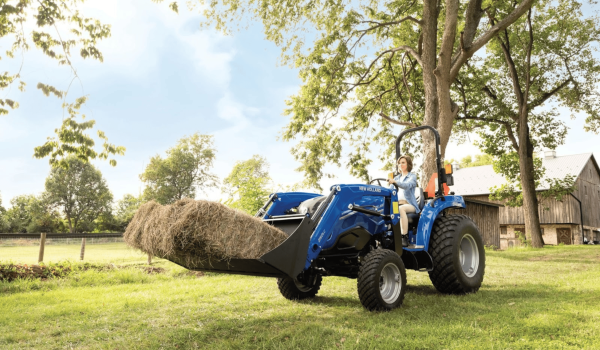
Managing 10 acres requires a tractor that balances power with efficiency. The right model handles daily tasks without overwhelming your budget or storage space. New Holland offers specific models engineered for small acreage operations, with the Workmaster and Boomer series providing optimal solutions for 10-acre properties.
What Are the Typical Tasks for a 10-Acre Property?
Common tasks for a 10-acre property include mowing, light grading, loader work, and property maintenance. These operations require implements such as 4-5 ft rotary cutters, small tillers, and box blades. The recommended horsepower range is 35-50 HP for 10-acre properties. Tasks vary by season—spring demands tilling and planting, summer requires frequent mowing, fall involves harvest and cleanup, while winter brings snow removal and equipment maintenance. Small acreage operators typically spend 100-200 hours annually on tractor work, making reliability and ease of operation essential factors.
Which New Holland Models Are Most Efficient for Small Acreage?
New Holland models for small acreage deliver precise power levels matched to 10-acre needs:
|
Model |
Engine HP |
PTO HP |
Target Market |
|
Workmaster 35 |
35 HP |
29.7 HP |
Budget-conscious buyers |
|
Workmaster 40 |
40 HP |
34 HP |
Budget applications |
|
Boomer 45 |
45 HP |
38.2 HP |
Premium option |
|
Boomer 50 |
50 HP |
42.5 HP |
10-50 acre operations |
The Workmaster series features 3-cylinder diesel engines with 4WD standard, 1,500 lbs front lift capacity, 1,808 lbs rear hitch capacity, and 7.4 gallon fuel tank. The Boomer series includes 3-cylinder turbodiesel engines, 1,849 lbs front lift capacity, 2,756 lbs rear hitch capacity, and 10.5 gallon fuel tank for ROPS models. Both series offer loader-ready designs with quick-attach systems for efficient implement changes.
How Can You Match Horsepower and Features to 10-Acre Operations?
The Workmaster series positions itself as a budget-friendly option for light-duty, occasional use. The Boomer series targets premium comfort during extended hours and commercial applications. Key matching considerations include:
-
Light mowing (weekly): 35 HP sufficient
-
Loader work plus mowing: 40-45 HP recommended
-
Multiple implements: 45-50 HP optimal
-
Commercial use: 50 HP provides efficiency margin
Transmission options affect operational efficiency—gear transmissions cost less but require more shifting, while hydrostatic transmissions provide smooth operation for frequent direction changes. Understanding your 10-acre property's specific demands ensures you select the tractor size that maximizes productivity while managing costs effectively for years ahead.
What Size New Holland Tractor Is Ideal for 50 Acres?
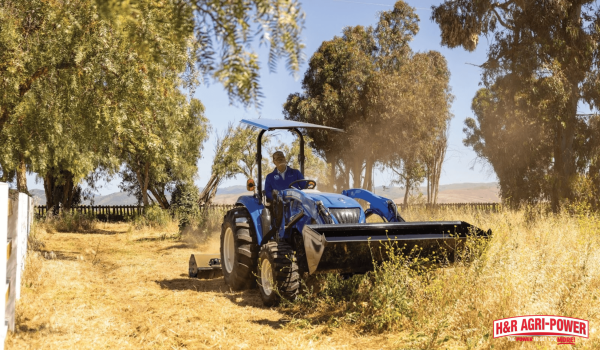
The ideal New Holland tractor for 50 acres is a model with 50-75 HP engine power and 40-60 PTO HP. This power range handles hay production, tillage operations, and seasonal fieldwork efficiently while matching implement requirements for medium acreage. The following sections explore specific work requirements and model recommendations for 50-acre properties.
What Types of Agricultural Work Are Common on 50 Acres?
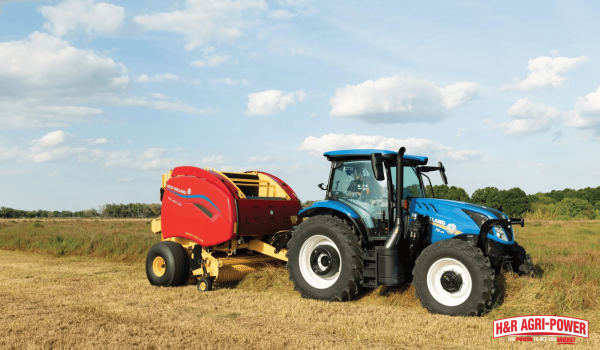
Typical operations on 50 acres include hay production, tillage, multiple implement use, and seasonal operations. Farmers run 6-foot rotary cutters for pasture maintenance, small round balers producing 4x4 or 4x5 bales, and square balers creating 14x18 inch bales. Multi-row planters handle corn and soybean planting across field sections.
The recommended horsepower range for 50-acre properties is 50-75 HP. This power level operates standard implements without strain while maintaining fuel efficiency. Tractors in this range pull disc harrows, run hay tedders, and power feed mixers effectively.
Which New Holland Tractor Series Works Best for Medium Acreage?
The New Holland tractor series that work best for medium acreage are the Boomer 50-55 models and T6.145-155 models. The Boomer 50 provides 50 HP engine power with 40 PTO HP for 10-50 acre operations. The Boomer 55 delivers 55 HP engine power with 46 PTO HP specifically designed for 50-acre properties.
|
Model |
Engine HP |
PTO HP |
Acreage Range |
|
Boomer 50 |
50 |
40 |
10-50 acres |
|
Boomer 55 |
55 |
46 |
50 acres |
|
T6.145 |
116 |
95 |
50-100 acres |
|
T6.155 |
125 |
105 |
50-100 acres |
The T6 Series offers higher capacity for expanding operations. These models handle larger implements and provide power reserves for demanding tasks.
How Does Choosing the Right Features Improve Efficiency and Comfort for 50 Acres?
Choosing the right features improves efficiency and comfort for 50 acres through advanced transmission systems, operator comfort technology, and extended service capabilities. The T6 Series includes three transmission options: Electro Command™ semi-powershift for smooth gear changes, Dynamic Command™ 24x24 for versatile speed ranges, and Auto Command CVT for infinite speed adjustment.
The Horizon™ cab provides a low-noise environment measuring under 72 dB with ergonomic controls and Comfort Ride™ suspension. Service intervals extend by 25% compared to previous models, reducing maintenance downtime. The 42% torque rise capability maintains power through tough spots without downshifting.
Advanced hydraulics are part of a high-capacity 3-point hitch system. This system operates multiple hydraulic implements simultaneously, such as loader work while running a rear-mounted mower. The combination of power, comfort, and efficiency features ensures productive workdays across 50-acre operations.
What Should You Consider When Selecting a Tractor for 100 Acres?
Selecting a tractor for 100 acres requires evaluating power requirements, task demands, and technology features. The right tractor must handle heavy implements, maintain efficiency across large fields, and provide reliability for year-round commercial operations. Understanding specific agricultural needs and matching them with appropriate New Holland models ensures optimal productivity and return on investment.
What Heavy-Duty Tasks Are Typical on 100 Acres?
Heavy-duty tasks on 100 acres encompass row crops, large-scale hay production, commercial operations, and year-round use. These operations demand tractors capable of powering large round balers, 12-16 ft disc harrows, and multi-row planters efficiently. The recommended horsepower range is 95-150 HP for 100-acre properties to ensure adequate power reserve and operational flexibility. Commercial hay producers require sufficient power for continuous baling operations, while row crop farmers need precise implement control for planting and cultivation.
Which New Holland Tractors Deliver Enough Power for Large Acreage?
New Holland tractors delivering enough power for large acreage include the T6.160 with 135 HP engine power and 115 PTO HP, the T6.175 with 145 HP engine power and 122 PTO HP, and the T6.180 with 150 HP engine power and 126 PTO HP. All T6 models feature ECOBlue™ HI-eSCR 2 engines meeting Stage V emissions compliance standards. These tractors maintain compatibility with Discbine® mowers, Roll-Belt™ round balers, and LA Series loaders. The power range accommodates varying soil conditions and implements demands across 100-acre operations while maintaining fuel efficiency.
How Do Technology and Upgrades Support Large-Scale Agricultural Needs?
Technology and upgrades supporting large-scale agricultural needs include auto-steering systems using GPS/GNSS with RTK correction achieving 2.5 cm accuracy. Variable Rate Technology adjusts fertilizer and pesticide application rates based on field mapping data. ISOBUS integration enables standardized communication between tractors and implements, reducing setup time and operator error. These technologies deliver measurable benefits such as overlap reduction, input waste minimization, operator fatigue reduction, and consistent field coverage. New Holland's 2026 updates promise 20% fuel efficiency improvement across the model lineup, with the PowerStar Series next-generation utility tractor line arriving in 2025.
How Do Other Factors Like Budget and Maintenance Affect Tractor Selection?
Budget and maintenance factors determine long-term tractor ownership success beyond initial purchase price. Total ownership costs include depreciation, financing terms, warranty coverage, and dealer support infrastructure across your operating region.
What Are the Long-Term Ownership Costs for Different Tractor Sizes?
Long-term ownership costs for different tractor sizes include depreciation, financing, and warranty considerations. New tractors depreciate 20-30% within their first two years of ownership. Used tractors provide substantial value after this initial depreciation period passes.
Financing options significantly impact total ownership costs. New Holland offers 0% APR financing on select models. The Boomer Guard 6 warranty delivers comprehensive protection with 2 years bumper-to-bumper coverage plus 4 additional years of powertrain protection.
Budget planning requires calculating depreciation schedules, interest rates, and warranty coverage periods specific to each tractor size category.
How Important Are Dealer Support and Parts Availability Nationally?
Dealer support and parts availability nationally are critical for minimizing downtime and maintaining equipment reliability. Local dealer networks provide essential service access and parts inventory when repairs become necessary.
H&R Agri-Power maintains service locations across six states: Kentucky, Illinois, Tennessee, Alabama, Mississippi, and Indiana. This regional coverage ensures parts availability and certified technician support throughout the central United States farming corridor.
Strong dealer networks reduce equipment downtime through rapid parts sourcing and expert technical assistance, protecting your agricultural operation's productivity and profitability across all seasons.
How Should You Approach Choosing a New Holland Tractor with H&R Agri-Power?
Choosing a New Holland tractor with H&R Agri-Power involves evaluating your operational needs against available models while leveraging dealer expertise. H&R Agri-Power operates New Holland locations across Kentucky, Tennessee, Alabama, and Mississippi. Their equipment specialists match tractor specifications to farm requirements through systematic assessment of acreage, implements, and workload patterns.
Can H&R Agri-Power Help You Select the Perfect Tractor Size for Your Acreage?
H&R Agri-Power helps you select the perfect tractor size through comprehensive consultation services and technical expertise. The dealership provides equipment sales, financing options with 0% APR available on select models, and precision agriculture support. Their service network ensures parts availability and maintenance support throughout your tractor's operational life. Expert consultants analyze your specific requirements including implement compatibility, soil conditions, and seasonal workload variations to recommend optimal horsepower ranges.
What Are the Key Takeaways About Picking the Right New Holland Tractor Size for 10, 50, or 100 Acres?
The key takeaways about picking the right New Holland tractor size center on matching equipment to actual operational demands. Match tractor horsepower to workload requirements, as oversizing leads to inefficiency and increases ownership costs by approximately 10% annually. Verify PTO and hydraulic specifications for all implements before purchase to ensure compatibility. Consider soil type requirements, such as clay soils demanding 50+ HP and sandy soils requiring 20-35 HP with enhanced traction. Calculate total ownership costs including depreciation at 20-30% over two years, fuel consumption, and maintenance expenses. Evaluate precision agriculture features like auto-steering systems with 2.5 cm RTK accuracy for operations exceeding 50 acres. Explore used tractor options for value after initial depreciation while maintaining access to dealer support through H&R Agri-Power's multi-state network.