

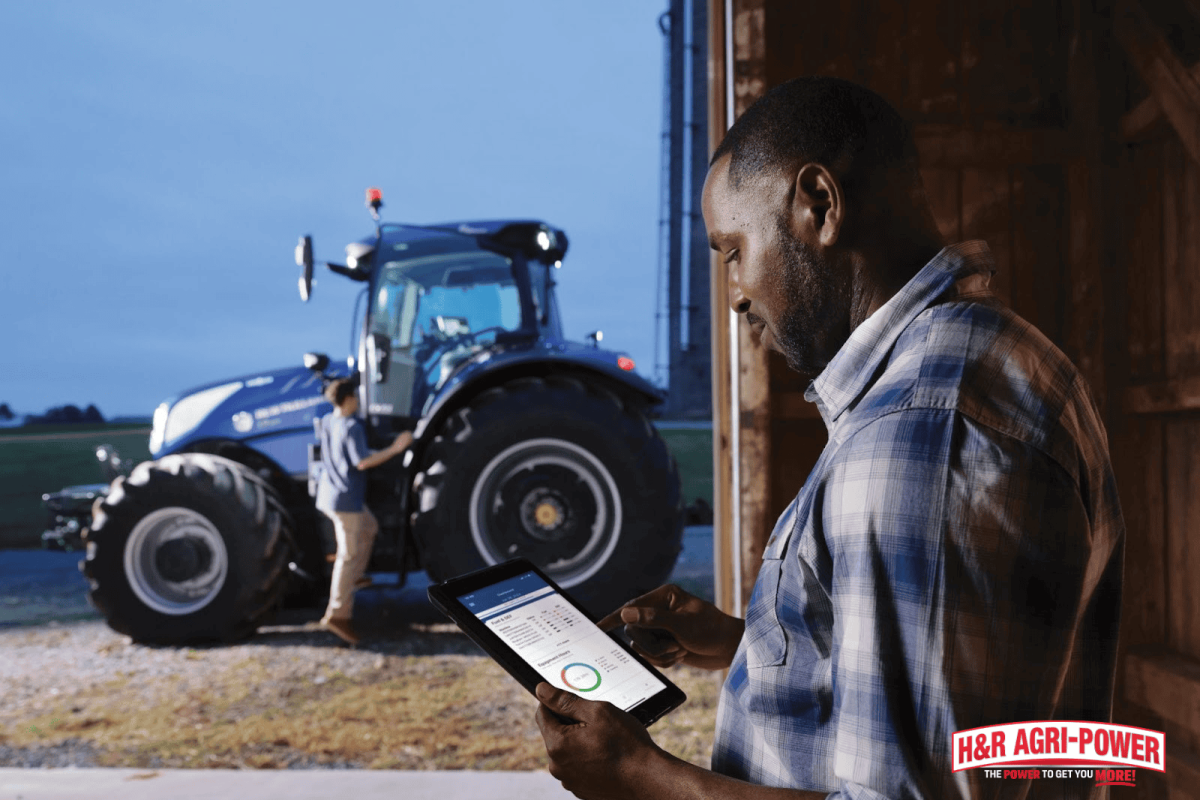
When it comes to maintaining your New Holland agricultural equipment, understanding service intervals isn't just about following a schedule—it's about protecting your investment and ensuring your operation runs smoothly when you need it most. We recognize that equipment downtime during critical farming seasons can be devastating to your productivity and profitability, which is why we're providing this comprehensive guide to help you stay ahead of maintenance needs and maximize your equipment's performance.
New Holland service intervals are systematic maintenance schedules designed to preserve equipment functionality, prevent catastrophic failures, and maintain warranty coverage through regular inspections and component replacements at specific operating hour thresholds. According to the U.S. PIRG Education Fund (2023), farmers face an average of $3,348 in yearly losses due to repair delays and downtime, making proactive maintenance essential for agricultural profitability.
"Regular oil changes are the lifeblood of your engine. Old, contaminated oil can lead to increased wear and tear, reduced performance, and even catastrophic engine failure," emphasizes technical experts from Farmry's agricultural maintenance guide.
Key takeaways from this guide include:
- Daily pre-operation checks and 50-hour break-in services form the foundation of equipment care
- Comprehensive 300-hour services include critical hydraulic and fuel system maintenance
- Digital tools like FieldOps™ provide real-time monitoring and 40% reduction in breakdowns
- Model-specific requirements vary, with specialized intervals for different New Holland equipment
- Seasonal maintenance adjustments protect equipment during extreme weather conditions
- Warranty compliance requires strict adherence to manufacturer schedules and documentation
- Professional service partnerships ensure proper maintenance using genuine parts
This comprehensive overview synthesizes manufacturer specifications, warranty requirements, digital tracking innovations, seasonal considerations, and professional service options to create a complete maintenance strategy. By following these guidelines and partnering with certified service providers, you'll transform equipment maintenance from a reactive expense into a proactive investment that delivers measurable returns in reduced downtime, lower repair costs, and enhanced resale value.
One universally applicable tip we recommend is establishing a simple pre-operation routine: dedicate just 10 minutes before starting your equipment to check fluid levels, tire pressure, and clear debris from radiators—this small daily investment can prevent thousands of dollars in repairs.
As we explore the critical importance of regular service intervals, you'll discover how preventive maintenance can save your operation 12-18% in repair costs while reducing equipment breakdowns by up to 40%, setting the foundation for a more profitable and reliable farming operation.
Why Are Regular Service Intervals Important for New Holland Equipment?
Regular service intervals are important for New Holland equipment because they prevent unplanned downtime that costs 15-20% of potential productivity. Preventive maintenance saves companies 12-18% compared to reactive maintenance strategies. Every dollar spent on preventive maintenance returns $5 in avoided costs.
Digital maintenance logs and preventive scheduling reduce equipment breakdowns by 40%. Annual maintenance costs for used tractors run $0.75-$1.50 per operating hour, representing 10-15% of total operational costs. Regular oil changes prevent increased wear, reduced performance, and catastrophic engine failure.
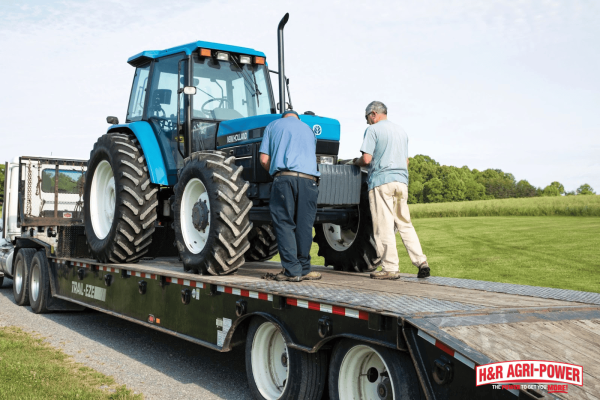
The following sections explore specific risks of missed services and benefits of scheduled maintenance.
What Risks Can Arise If You Miss Service Intervals on New Holland Machines?
The risks that can arise if you miss service intervals on New Holland machines include $3,348 in average yearly losses from repair delays and downtime, according to a 2023 U.S. PIRG Education Fund survey. Missing service intervals voids warranty coverage on New Holland equipment.
Water contamination in hydraulic fluid causes significant damage to pumps and valves. Old, contaminated oil increases engine wear and leads to catastrophic failure. New Holland denies warranty claims for failures caused by maintenance neglect or abuse.
Proper service scheduling protects both equipment performance and financial investments.
How Do Scheduled Services Help Extend the Lifespan of New Holland Equipment?
Scheduled services help extend the lifespan of New Holland equipment by maintaining optimal performance and preserving resale value. Well-documented maintenance history commands premium prices from buyers.
A case study demonstrated 42% reduction in equipment downtime, generating $3.2 million in annual savings. Regular service improves fuel efficiency, providing significant savings over equipment lifetime. Scheduled maintenance ensures warranty compliance and maintains manufacturer coverage.
Buyers pay higher prices for equipment with proven maintenance records. This systematic approach transforms maintenance from cost center to value driver for farming operations nationwide.
What Are the Recommended Service Intervals for New Holland Tractors and Implements?
The recommended service intervals for New Holland tractors and implements follow a progressive schedule based on operating hours and time periods. Daily checks at 10 hours include fluid levels for engine oil, coolant, and hydraulic fluid, plus tire pressure and radiator cleaning. The 50-hour mark requires engine oil and filter changes, battery checks, and grease point lubrication.
At 100-150 hours, service includes engine oil and filter changes, fuel filter inspection, and hydraulic system checks. The 250-300 hour interval demands comprehensive service with hydraulic fluid and filter changes plus belt and hose inspections. Major service at 500-600 hours covers fuel filter, air filter, and transmission fluid replacements. The 1000-1200 hour mark requires in-depth inspection of all systems and coolant replacement. Service timing follows whichever comes first: operating hours or calendar time, such as 300 hours or annually.
How Do Service Interval Requirements Differ Across New Holland Tractor Models?
Service interval requirements differ across New Holland tractor models based on specific engineering and warranty specifications. The Workmaster 50 requires engine oil and filter changes at 50 hours, front axle oil changes at 1200 hours, and engine valve clearance adjustments at 1200 hours. Round balers operate under 2-year/15,000-bale base factory warranty requirements. Discbine mower-conditioners carry 2-year factory warranties with 3-year MowMax™ cutterbar warranties.
Each model's unique service schedule reflects its design complexity and operational demands. Understanding these model-specific requirements ensures proper maintenance timing and warranty compliance.
Which Maintenance Tasks Are Essential at Each Service Interval?
Essential maintenance tasks at each service interval form a structured progression of equipment care. Daily tasks include pre-operation fluid level checks and radiator grille cleaning. The 50-hour interval requires engine oil and filter changes, battery maintenance, and grease point lubrication.
|
Service Interval |
Essential Tasks |
Critical Components |
|
Daily |
Fluid level checks |
Engine oil, coolant, hydraulic fluid |
|
50 hours |
Oil/filter change |
Engine, battery, grease points |
|
300 hours |
Filter replacements |
Fuel, hydraulic oil, belt tension |
|
600 hours |
Air filter service |
Outer element plus 300-hour tasks |
|
1200 hours |
Major overhaul |
Inner air filter, front axle oil, valves |
The 300-hour mark demands fuel filter replacement, hydraulic oil filter changes, and belt tension adjustments. At 600 hours, outer air filter element replacement combines with all 300-hour services. The 1200-hour interval includes inner air filter element replacement, front axle oil changes, and valve clearance adjustments. These progressive maintenance tasks ensure optimal performance throughout the equipment's operational life. These are general guidelines, refer to your operators manual to confirm specific service intervals for your machine.
How Can You Track and Manage New Holland Service Schedules Effectively?
Tracking and managing New Holland service schedules effectively requires documenting the date of service, operating hours, detailed maintenance description, and receipts for all parts and fluids. Maintain these records for warranty compliance and to enhance equipment resale value. Use hour-based intervals as your primary guide with time-based backup, performing service at whichever milestone comes first. Track key performance indicators through digital platforms for proactive maintenance planning.
Proper documentation serves two critical purposes: warranty protection and resale value enhancement. A 2023 U.S. PIRG Education Fund survey found that farmers face an average of $3,348 in yearly losses due to repair delays and downtime. Systematic tracking prevents these losses by ensuring timely service completion. Digital record-keeping platforms reduce equipment breakdowns by 40% compared to paper-based systems.
The following sections detail specific tools and digital solutions that streamline service tracking and enhance equipment reliability.
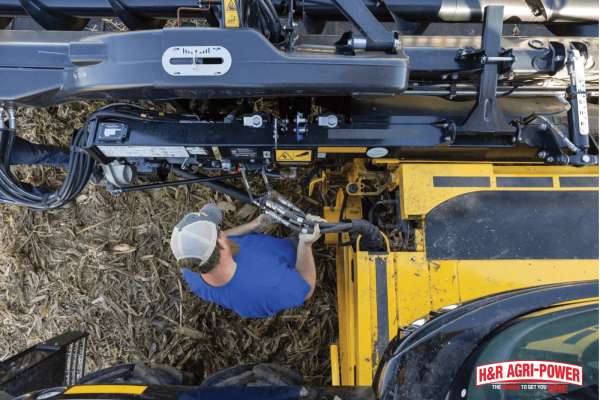
What Tools or Resources Help Schedule and Remember Service Intervals?
Tools and resources that help schedule and remember service intervals include New Holland FieldOps™, which provides all-in-one farm data management with real-time machine health insights. FieldOps™ offers 24-hour machine history and high-priority issue notifications to prevent unexpected breakdowns. The Electronic Service Tool (EST) connects to equipment's CAN network for comprehensive diagnostics. The Remote Service Tool (RST) enables remote diagnostics via FieldOps™ modem, reducing technician travel time. EST provides access to electronic service manuals, electrical schematics, and hydraulic diagrams.
These digital tools transform maintenance from reactive to proactive. FieldOps™ monitors machine parameters continuously and alerts operators before issues become critical. The system integrates with H&R Agri-Power's service network, ensuring certified technicians receive alerts simultaneously. EST diagnostic capabilities identify problems that manual inspections might miss.
|
Maintenance Tool |
Primary Function |
Key Value/Benefit |
How to Access |
|
FieldOps™ |
Real-time monitoring |
24-hour history |
Mobile app/web |
|
EST |
CAN diagnostics |
Fault code retrieval |
Direct connection |
|
RST |
Remote diagnostics |
Software updates |
FieldOps™ modem |
|
Service manuals |
Technical reference |
Repair procedures |
EST interface |
Digital maintenance tracking fundamentally changes how operators manage their New Holland equipment reliability.
How Can Digital Maintenance Tracking Enhance Your Equipment Reliability?
Digital maintenance tracking enhances your equipment reliability by reducing equipment breakdowns by 40% through predictive analytics and timely interventions. Remote Display Viewing in FieldOps™ allows H&R Agri-Power support technicians to view in-cab displays remotely for immediate troubleshooting. Fleet management features provide precise location tracking and job status updates across multiple machines. RST enables remote fault code retrieval and software updates, minimizing downtime to hours instead of days. These digital tools shift maintenance from reactive repairs to predictive care.
A 2022 agricultural equipment study demonstrated that farms using digital tracking systems achieved 42% reduction in equipment downtime, resulting in $3.2 million in annual savings across participating operations. The combination of real-time monitoring and remote diagnostics prevents small issues from escalating into major failures. H&R Agri-Power technicians can diagnose problems remotely and arrive with correct parts, eliminating multiple service trips.
Digital tracking creates a comprehensive maintenance history that protects warranty coverage and maximizes resale value when upgrading equipment.
What Signs Indicate Your New Holland Machine Needs Immediate or Early Service?
Immediate service indicators for New Holland machines include milky hydraulic fluid, performance degradation, and unusual operational behavior. Water contamination in hydraulic systems causes significant damage to pumps and valves. A 2023 U.S. PIRG Education Fund survey reveals delayed repairs result in average yearly losses of $3,348 per farm. Early detection prevents catastrophic component failure and warranty voids. The following sections detail specific warning signals and their implications.
Which Warning Lights or Error Codes Signal Service Is Due?
Warning lights and error codes signal service is due through New Holland's diagnostic systems. Electronic Service Tool (EST) retrieves and clears fault codes from equipment's CAN network. FieldOps™ sends real-time notifications for high-priority issues directly to operators. Fault codes accessible through EST provide detailed descriptions and repair procedures.
These diagnostic tools transform reactive repairs into predictive maintenance. Remote Service Tool capabilities enable technicians to identify issues before field failures occur.
Why Should You Not Ignore Certain Sounds or Performance Issues?
You should not ignore certain sounds or performance issues because water contamination in hydraulic systems causes significant damage to pumps and valves. According to a 2023 U.S. PIRG Education Fund survey, delayed repairs result in average yearly losses of $3,348 per farm. Ignoring issues leads to catastrophic component failure and warranty void.
Early intervention prevents minor problems from escalating into major repairs. Performance issues compound rapidly in agricultural equipment under heavy operational stress. Immediate attention to unusual sounds or behaviors protects your investment and maintains operational readiness for critical farming periods.
How Do Seasonal and Heavy-Use Conditions Affect Service Interval Timing?
Seasonal and heavy-use conditions affect service interval timing by requiring adjusted maintenance schedules based on environmental stress and workload intensity. Spring maintenance involves thorough post-storage inspection with complete fluid changes. Summer operations demand frequent air filter cleaning and cooling system monitoring. Fall preparation focuses on system reliability before harvest season begins. Winter storage preparation includes comprehensive fluid changes and battery storage in warm, dry locations.
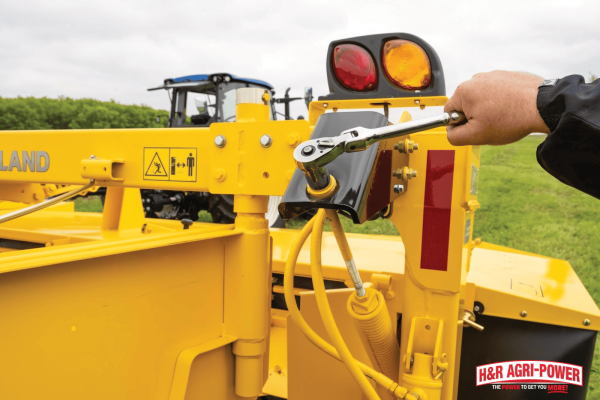
When Should Service Intervals Be Adjusted Due to Weather or Workload?
Service intervals should be adjusted when equipment faces heavy-use periods, extreme weather, or harsh environmental conditions. Heavy workloads require inspection of high-stress components every 25–50 operating hours instead of standard intervals. Dusty conditions necessitate air filter cleaning every 10 hours rather than the typical 50-hour schedule. High-temperature operations above 90°F demand cooling system checks twice daily. Wet conditions require hydraulic fluid inspection every 50 hours to detect water contamination early.
What Are Best Practices for Servicing During Planting and Harvest Seasons?
Best practices for servicing during planting and harvest seasons include conducting pre-season inspections, testing critical systems, and maintaining spare parts inventory. Pre-season inspection covers all components under heavy use, including hydraulics, transmissions, and implements. Belt and hose examination identifies cracks or brittleness before peak operational demands. Battery and charging system testing prevents unexpected failures during critical periods. Post-season maintenance involves thorough cleaning and fluid changes before winter storage to prevent corrosion and component degradation.
What Should You Know About Warranty and Compliance for New Holland Service Intervals?
Warranty and compliance for New Holland service intervals require strict adherence to manufacturer-recommended maintenance schedules. New Holland limits warranty coverage to defects occurring during regular use and excludes failures from maintenance neglect. Round balers carry a 2-year/15,000-bale base factory warranty. Discbine mower-conditioners include a 2-year factory warranty plus a 3-year MowMax™ cutterbar warranty. Genuine New Holland parts and fluids remain mandatory for warranty compliance.
The following sections detail how missing service intervals affects coverage and what documentation you need for warranty protection.
How Can Missing Service Intervals Impact Your Warranty Coverage?
Missing service intervals could void your New Holland warranty coverage immediately. New Holland denies warranty claims for equipment failures resulting from lack of maintenance, negligence, or abuse. Skipping scheduled services eliminates manufacturer coverage for all related repairs. According to a 2023 U.S. PIRG Education Fund survey, farmers face $3,348 in yearly losses due to repair delays and downtime—costs that warranty would typically cover if maintenance schedules were followed.
Your warranty protection depends entirely on completing every recommended service at the specified intervals.
What Documentation Should You Keep for Warranty and Audit Purposes?
Documentation for warranty and audit purposes includes the date of each service performed, hours of operation at service time, detailed descriptions of all maintenance completed, and receipts for all parts and fluids used. Well-documented service history significantly enhances resale value beyond warranty benefits. H&R Agri-Power recommends maintaining digital records through New Holland FieldOps™ for automatic tracking and easy retrieval during warranty claims.
Proper documentation protects your warranty coverage and ensures you receive full value from your New Holland equipment investment throughout its operational life.
How Should You Approach New Holland Service Intervals with H&R Agri-Power?
H&R Agri-Power offers planned maintenance agreements for structured, cost-effective equipment care. Their certified technicians service New Holland equipment per manufacturer specifications. Service centers use Electronic Service Tool (EST) for precise diagnostics. Technicians employ Remote Service Tool (RST) for remote diagnostics and support. This comprehensive approach ensures your equipment receives professional care that maintains warranty compliance and optimal performance.
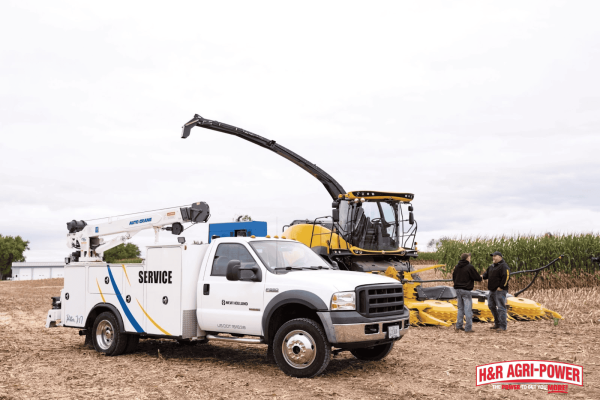
Can H&R Agri-Power Help You Stay on Top of New Holland Service Needs?
H&R Agri-Power helps you stay on top of New Holland service needs through planned maintenance programs performed by certified technicians. Comprehensive seasonal inspections prepare equipment for planting, harvesting, or winter storage. The company uses genuine New Holland parts and fluids to maintain warranty compliance. Continuous technician training keeps staff current with the latest technologies and procedures. Advanced diagnostic tools enable quick issue identification and repair. Their systematic approach transforms reactive repairs into proactive care that protects your investment.
What Are the Key Takeaways About New Holland Service Intervals: What to Know and When to Act?
The key takeaways about New Holland service intervals are that proactive maintenance is an investment that pays significant dividends. Following manufacturer service schedules maintains warranty and maximizes equipment value. Digital tools like FieldOps™ and EST revolutionize maintenance with predictive, data-driven approaches. According to industry data, preventive maintenance reduces repair costs by 12-18% and downtime by up to 40%. Partnership with certified dealers like H&R Agri-Power ensures highest-level care for optimal performance and longevity. These practices transform equipment maintenance from costly necessity into strategic advantage for agricultural operations.