

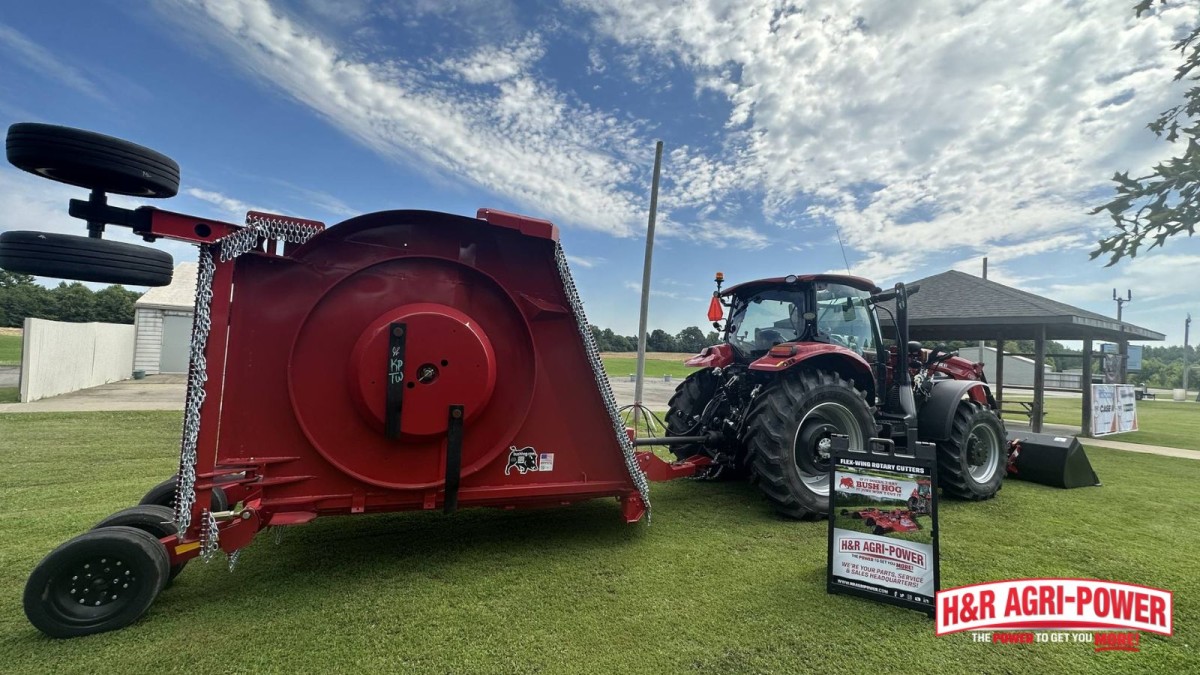
Bush Hog implements are heavy-duty agricultural attachments built to clear, mow, and manage land in conditions where standard equipment fails. Spring steel construction, reinforced decks, and robust drivetrain components allow these implements to perform reliably across rocky terrain, dense brush, overgrown pastures, and uneven ground.
This guide covers engineering and durability, equipment versatility, maintenance practices, cost-effectiveness, and local dealer support through H&R Agri-Power.
Bush Hog builds its rotary cutters and finishing attachments with wear-resistant materials designed to absorb impact from rocks and debris. Critical component failures account for a significant share of machinery breakdowns in demanding environments, so heavy-gauge steel decks and freely swinging cutting elements help reduce damage and extend service life compared to fixed-blade alternatives.
Versatility matters when a single operation spans pasture mowing, brush clearing, and seedbed preparation. Bush Hog's lineup includes quick-connect attachments that minimize changeover time between tasks, keeping crews productive instead of idle during peak field seasons.
Routine maintenance on Bush Hog equipment follows predictable intervals; oil changes, blade inspections, and gearbox checks keep implements running through extended use in abrasive conditions. Recognizing early wear signs prevents costly downtime and preserves resale value.
Machinery cost differences between high-profit and low-profit farming operations can shift breakeven costs meaningfully on a per-bushel basis. Evaluating total ownership cost, depreciation schedules, and available financing helps farmers invest confidently.
H&R Agri-Power provides dedicated parts inventory and service support across its locations, ensuring Bush Hog owners get fast access to replacement components and professional maintenance when field conditions take their toll.
What Features Make Bush Hog Implements Suited for Demanding Agricultural Environments?
Bush Hog implements combine heavy-duty construction, field-proven engineering, and versatile design to withstand the harshest conditions farmers encounter. The sections below cover durability engineering, tough field performance, and competitive positioning.
How Are Bush Hog Implements Engineered for Durability and Reliability?
Bush Hog implements are engineered for durability and reliability through heavy-gauge steel construction, reinforced decks, and robust drivetrain components designed to absorb sustained punishment. According to a 2023 study published in the MDPI Materials Journal, the failure of critical wear-resistant parts accounts for over 50% of rural machinery breakdowns, which underscores why material selection matters so much in implement design.
Bush Hog addresses this vulnerability with features such as:
-
Thick-plate steel cutting decks that resist punctures from debris and rocks.
-
Hardened gearboxes built to handle continuous high-torque loads.
-
Reinforced hitch assemblies that distribute stress across the frame.
-
Spring steel components in high-wear areas for extended service life.
For farmers running equipment hundreds of hours per season, this level of structural reinforcement directly reduces costly downtime.
What Types of Tough Field Conditions Can Bush Hog Implements Handle Effectively?
The types of tough field conditions Bush Hog implements handle effectively include overgrown pastures, rocky terrain, dense brush, steep hillsides, and waterlogged bottomland. Each scenario places distinct stresses on equipment, from blade impact on hidden stones to frame flexion on uneven ground.
Bush Hog rotary cutters, for example, manage thick vegetation and light brush that would stall lighter-duty machines. Their heavy flywheel momentum carries blades through dense material without bogging down. On uneven or rocky ground, stump jumper assemblies protect the gearbox by allowing the blade pan to deflect over obstacles. Maintaining implements across such varied conditions does add cost; the American Society of Agricultural and Biological Engineers (ASABE) has estimated annual repair and maintenance cost functions for nine machine types, confirming that proactive upkeep is essential for any equipment working in demanding environments.
How Do Bush Hog Implements Compare with Competing Brands in Challenging Settings?
Bush Hog implements compare favorably with competing brands in challenging settings by offering a combination of cut capacity, structural heft, and widespread parts availability that many rivals struggle to match simultaneously. According to a 2025 Farmonaut report, leading brands now deliver machinery with 25% higher chassis durability for rough terrains compared to previous models, a trend Bush Hog reflects in its reinforced frame designs.
Key competitive differentiators include:
-
Wider cutting width options across the rotary cutter lineup, accommodating both compact tractors and high-horsepower rigs.
-
Heavier-gauge decks and blade pans than many mid-tier competitors offer at comparable price points.
-
An extensive dealer and parts network that reduces wait times for replacement components during peak season.
While brands like Woods offer strong warranty terms on specific models, Bush Hog's depth across implement categories gives farmers a single-source solution for clearing, mowing, and land management. That breadth is a practical advantage when tough conditions demand quick equipment swaps without switching brands.
Why Is Equipment Versatility Important for Farmers Facing Harsh Field Challenges?
Equipment versatility is important for farmers facing harsh field challenges because a single implement platform that handles multiple tasks reduces downtime, lowers per-acre costs, and keeps operations moving when conditions shift unpredictably. Below, we cover which Bush Hog attachments offer the most flexibility and how quick-swap systems boost field productivity.
Which Bush Hog Attachments Offer the Most Flexibility for Multiple Tasks?
Bush Hog attachments that offer the most flexibility for multiple tasks include rotary cutters, finishing mowers, and loader-mounted grapples. Rotary cutters clear heavy brush. Finishing mowers then deliver a clean cut for maintained pastures. This range lets one tractor serve clearing, mowing, and material-handling roles across a single season, which is the kind of return on investment that justifies the upfront cost for most operations.
How Does Easy Attachment and Detachment Benefit Field Productivity?
Easy attachment and detachment benefits field productivity by minimizing the idle time between tasks. According to Parker Hannifin, quick-connect couplings significantly reduce the time spent changing equipment, allowing operators to complete jobs faster and take on additional work. Hydraulic quick-connect fittings also reduce media spillage, keeping the work environment cleaner and protecting operators.
When field conditions shift mid-day, from mowing a flat pasture to clearing a brushy fenceline, the ability to swap implements in minutes rather than hours keeps crews productive. For farmers managing multiple land types across large acreages, that saved time compounds into measurably lower labor costs per acre over a full season.
With versatility covered, consistent maintenance ensures these implements perform reliably season after season.
What Maintenance Requirements Are Typical for Bush Hog Implements in Tough Conditions?
Maintenance requirements typical for Bush Hog implements in tough conditions include regular oil changes, blade inspections, gearbox service, and hydraulic system checks. The sections below cover how to extend equipment lifespan and recognize when service or replacement is needed.
How Can Farmers Prolong the Lifespan of Their Bush Hog Equipment?
Farmers can prolong the lifespan of their Bush Hog equipment by following a consistent preventive maintenance schedule tailored to operating intensity. Key practices that extend implement life include:
-
Inspecting and sharpening or replacing blades before each heavy-use season.
-
Greasing all fittings and pivot points after operation in abrasive soil.
-
Checking gearbox oil levels and hydraulic hoses for leaks weekly during peak use.
-
Cleaning debris from decks and shields after each session to prevent corrosion.
-
Storing implements under cover to reduce exposure to moisture and UV damage.
Operators who treat maintenance as a scheduled task rather than a reactive fix consistently get more productive seasons from their equipment.
What Signs Indicate That Bush Hog Implements Need Service or Replacement?
The signs that indicate Bush Hog implements need service or replacement include unusual vibrations, uneven cut quality, visible structural damage, and declining hydraulic performance. A 2023 study published in the MDPI Materials Journal found that the failure of critical wear-resistant parts is responsible for over 50% of rural machinery breakdowns, making early detection essential.
Watch for these specific warning indicators:
-
Excessive vibration during operation, which often signals bent or unbalanced blades.
-
Uneven cutting height across the mowing path, suggesting worn or damaged blade tips.
-
Hydraulic fluid leaks around fittings, cylinders, or hoses.
-
Grinding or knocking sounds from the gearbox, indicating bearing or gear wear.
-
Cracks in the deck, skid shoes, or mounting hardware from repeated impact stress.
Ignoring these symptoms accelerates damage to connected drivetrain components, turning a minor repair into a costly replacement. With proper maintenance protocols in place, evaluating total ownership costs becomes the next step in choosing the right implement.
How Do Farmers Evaluate Cost-Effectiveness When Choosing Bush Hog Implements?
Farmers evaluate cost-effectiveness when choosing Bush Hog implements by analyzing total ownership costs over time and exploring available financing structures. The sections below cover long-term cost factors and equipment financing pathways.
What Is the Total Cost of Ownership for Bush Hog Implements Over Time?
The total cost of ownership for Bush Hog implements over time includes the purchase price, depreciation, annual maintenance, repair expenses, and the implement's impact on operational efficiency. New farm machinery follows a 5-year recovery period under IRS MACRS depreciation rules, which directly affects year-over-year asset value and tax planning.
Machinery cost differences compound quickly at scale. According to a 2025 farmdoc daily analysis from the University of Illinois, the gap in crop machinery costs between low-profit and high-profit farm groups translates into a breakeven cost difference of $0.76 per bushel for soybeans alone. That margin underscores why selecting durable, low-maintenance implements like Bush Hog products pays dividends across multiple growing seasons. Farmers who factor in blade longevity, gearbox reliability, and parts availability alongside the sticker price consistently make more profitable equipment decisions.
Are There Financing Options Available for Investing in Bush Hog Equipment?
Yes, there are financing options available for investing in Bush Hog equipment. The USDA Farm Service Agency offers Farm Operating-Direct loans with an interest rate of 4.750% as of April 2026, providing one government-backed pathway for implement purchases. Dealer-arranged financing, manufacturer promotions, and agricultural lender programs offer additional routes.
Key financing considerations include:
-
Loan term alignment with the implement's useful life and depreciation schedule.
-
Seasonal payment structures that match cash flow from harvest cycles.
-
Down payment requirements, which vary between FSA programs and private lenders.
-
Interest rate comparisons across dealer financing, local ag lenders, and federal programs.
Exploring multiple financing channels before committing ensures the payment structure supports long-term profitability rather than straining operating capital. With implement selection and financing strategy addressed, working with a knowledgeable dealer simplifies both decisions.
How Should Farmers Approach Tough Field Conditions with Support from H&R Agri-Power?
Farmers should approach tough field conditions by partnering with a dealer that provides reliable equipment, dedicated service, and readily available parts. The following sections cover how H&R Agri-Power supports Bush Hog equipment maintenance and summarize the key reasons farmers trust these implements.
Can H&R Agri-Power's Dedicated Service and Parts Inventory Help With Bush Hog Equipment Maintenance?
Yes, H&R Agri-Power's dedicated service and parts inventory can help with Bush Hog equipment maintenance by keeping critical wear components available and minimizing costly downtime. Agricultural machinery components are mostly made with spring steel for enhanced wear resistance, yet the failure of wear-resistant parts still accounts for over 50% of rural machinery breakdowns, according to a 2023 study published in MDPI Materials Journal. Having a dealer with stocked parts inventory eliminates the delays that turn a simple blade replacement into lost field days. With 17 Bush Hog locations across five states, H&R Agri-Power provides the local access farmers need to source Bush Hog parts and schedule service before minor wear becomes a major breakdown.
What Are the Key Takeaways About Why Farmers Choose Bush Hog Implements for Tough Field Conditions We Covered?
The key takeaways about why farmers choose Bush Hog implements for tough field conditions are rooted in durability, versatility, and long-term value. Bush Hog's heavy-duty construction handles overgrown brush, rocky terrain, and uneven pastures where lighter equipment fails. Easy attachment systems improve field productivity by reducing changeover time. Proactive maintenance, guided by clear wear indicators, extends implement lifespan and controls total ownership costs. Partnering with a dealer like H&R Agri-Power ensures access to knowledgeable service teams and parts inventory that keep operations running through demanding seasons. For farmers working difficult ground, choosing the right implement and the right dealer support makes the difference between lost time and a productive season.