

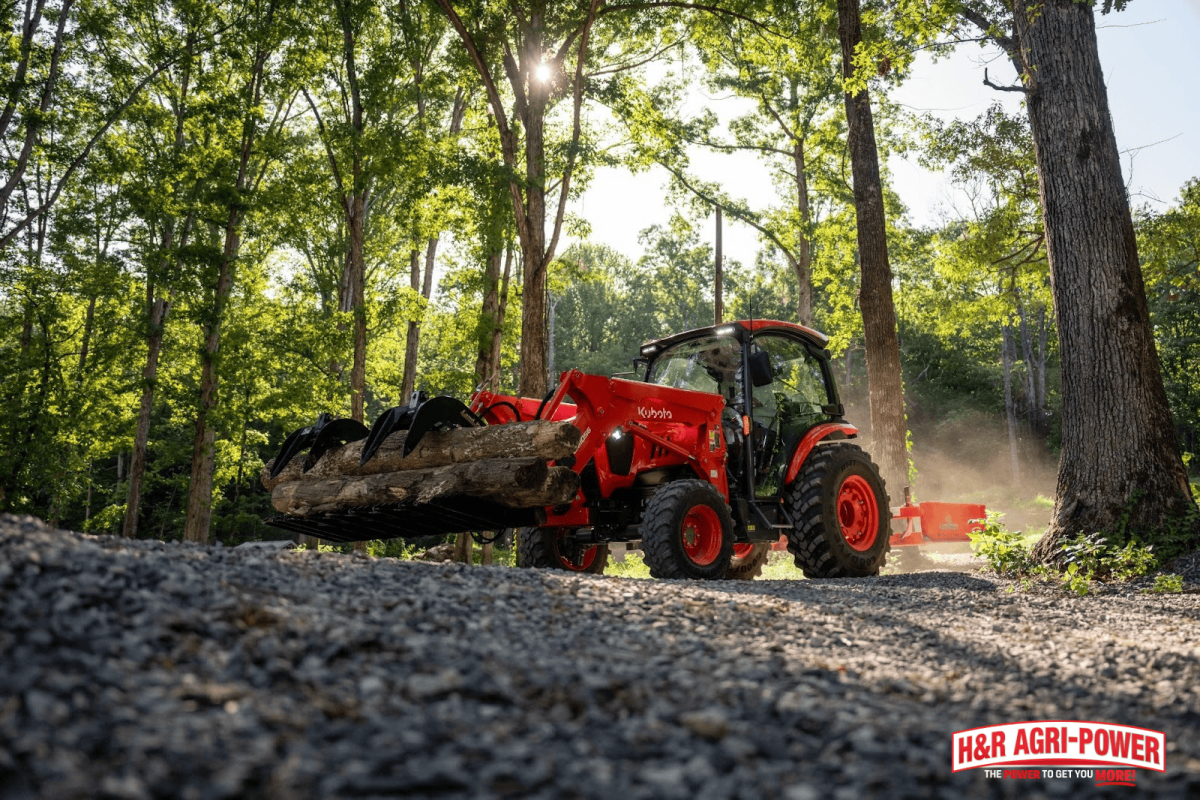
Small farm owners facing the critical decision between Kubota and New Holland compact tractors are in the right place – we understand the weight of this investment and the need for reliable, detailed information to guide your choice. A compact tractor represents one of the most significant equipment purchases for farms ranging from hobby operations to serious small-scale agricultural enterprises, and we've analyzed both brands extensively to help you make an informed decision.
Compact tractors are versatile agricultural machines specifically designed for properties ranging from 1 to 50 acres, offering horsepower ratings typically between 20 and 60 HP with the ability to power various implements through power take-off (PTO) systems and hydraulic connections. According to the University of Nebraska Tractor Test Laboratory (NTTL), which has tested 2,053 tractors since 1920 as the officially designated testing station for the U.S., modern compact tractors deliver exceptional efficiency and reliability when properly matched to their intended applications. The Progressive Farmer Reader Insights Survey (2021-2022), which gathered 7,755 tractor evaluations from 2,262 mostly crop farmers, revealed that Kubota ranks highest among tractor brands for Overall Durability and Overall Customer Experience, while New Holland rated as Most Durable in the midsize tractor category.
Key Takeaways:
- Kubota excels in fuel efficiency, compact maneuverability, and dealer network coverage with over 1,100 dealerships nationwide
- New Holland offers superior lifting capacity and operator comfort features including the 360° VisionView Cab
- Both brands provide 2-year bumper-to-bumper warranties with 6-year powertrain coverage
- Operating costs typically range from $40-50 per hour including fuel and maintenance
- Kubota tractors generally retain 2/3 to 3/4 of their value when well-maintained
- H&R Agri-Power provides comprehensive support for both brands across six states with 24/7 emergency service
Our comprehensive analysis reveals that while both Kubota and New Holland manufacture excellent compact tractors suitable for small farms, each brand offers distinct advantages depending on your specific operational requirements, budget constraints, and long-term farming goals. Kubota's reputation for fuel efficiency and extensive dealer support makes it ideal for operations prioritizing low operating costs and accessibility to service, while New Holland's powerful lifting capabilities and advanced cab comfort features excel in applications requiring extended operator hours and heavy material handling.
Practical Application Tips:
- Calculate your actual horsepower needs based on your heaviest implement requirements before shopping to avoid overspending on unnecessary power
- Schedule test drives with both brands during your busiest season to evaluate comfort and controls under real working conditions
Understanding these fundamental differences between Kubota and New Holland compact tractors sets the foundation for evaluating specific performance metrics, reliability data, and total cost of ownership – crucial factors that will ultimately determine which brand delivers the best value for your small farm operation.
How Do Kubota and New Holland Compact Tractors Compare in Performance?
Kubota and New Holland compact tractors compare in performance through distinct differences in engine power, transmission options, and fuel efficiency. Both brands offer competitive horsepower ranges from 20 to 60 HP, with Kubota featuring direct-injection diesel engines and New Holland utilizing turbocharged designs with electronic fuel management. The performance comparison reveals each brand's engineering priorities and operational capabilities for small farm applications.
What Engine Options and Power Ratings Are Available for Each Brand?
The engine options and power ratings are 24.8 to 48.4 HP for Kubota L-series and 24.7 to 55 HP for New Holland WORKMASTER and Boomer models. Kubota L2501 delivers 24.8 HP gross engine power with 18.4 HP PTO and 100.5 cubic inch displacement. Kubota L3302 provides 33.0 HP with 28.0 HP PTO for gear drive or 26.1 HP PTO for hydrostatic transmission. Kubota L3902 generates 37.5 HP gross with 32.1 HP PTO (gear) or 30.3 HP PTO (HST) and 1,435 lbs three-point linkage capacity. Kubota L4802 produces 48.4 HP with 40.5 HP PTO (gear) or 39 HP PTO (HST).
|
Brand/Model |
Engine Power |
PTO Power |
Key Features |
|
Kubota L2501 |
24.8 HP |
18.4 HP |
100.5 cu.in. displacement |
|
Kubota L3302 |
33.0 HP |
28.0 HP (DT), 26.1 HP (HST) |
Direct injection diesel |
|
Kubota L3902 |
37.5 HP |
32.1 HP (DT), 30.3 HP (HST) |
1,435 lbs linkage capacity |
|
Kubota L4802 |
48.4 HP |
40.5 HP (DT), 39 HP (HST) |
Water-cooled 4-cycle |
|
NH WORKMASTER 25 |
24.7 HP |
17.8 HP |
T4B Final emissions |
|
NH WORKMASTER 35 |
35 HP |
29.7 HP |
Common rail injection |
|
NH WORKMASTER 40 |
40 HP |
34 HP |
Electronic fuel management |
|
NH Boomer 45 |
45 HP |
38.2 HP |
1.9L (114.7 cu.in.) displacement |
Kubota engines feature vertical, water-cooled 4-cycle diesel design with direct injection. New Holland uses 3-cylinder turbocharged diesel engines with large displacement design. New Holland 35 and 40 HP models include common rail, direct-injected systems with electronic fuel management. The Boomer series ranges from 24 to 55 HP across six models.
How Do Transmission Types and Operation Differ Between Kubota and New Holland?
Transmission types and operation differ between Kubota and New Holland through gear configurations and hydraulic flow capacities. Kubota offers 8F/8R fully synchronized gear drive transmission and hydrostatic transmission with 3 range options. New Holland features 12x12 synchronized shuttle transmission and hydrostatic options for easier operation.
Hydraulic system performance varies between brands. Kubota compact models deliver up to 7.8 gallons per minute hydraulic flow. Standard-flow hydraulic systems range from 5 to 10 gpm across compact tractors. Compact tractor hydraulics operate under 3,000 psi pressure limits. These specifications determine implement operation speed and lifting capacity for loader work and three-point attachments.
How Does Fuel Efficiency Stack Up for Kubota vs New Holland Compact Tractors?
Fuel efficiency for Kubota vs New Holland compact tractors shows Kubota tractors generally have better fuel efficiency according to Wickham Tractor analysis. Kubota tractors optimize power delivery without wasting fuel through efficient diesel engine design. New Holland features fuel-efficient 3-cylinder diesel engines, with every Boomer model delivering more power with less fuel according to manufacturer specifications.
Operating costs provide concrete efficiency metrics. Fuel costs approximately $2.00 per hour, plus $1.00 per hour when powering PTO implements. Service costs roughly $500 every 100 hours, adding $5 per hour to operating expenses. Fuel consumption averages 2 gallons per hour for another $5 in hourly costs. Well-maintained engines use less fuel and deliver more power, while neglected maintenance causes fuel efficiency drops. These performance characteristics help farmers evaluate long-term operational costs when choosing between Kubota and New Holland compact tractors for their small farm operations.
Which Brand Offers Better Reliability and Durability for Small Farm Use?
Reliability and durability determine the long-term value of compact tractors for small farms. Kubota tractors last 4,500-5,500 hours on average, while New Holland models typically reach 4,000 operating hours. Both brands can achieve 10,000 operating hours with proper maintenance. Understanding maintenance requirements, common issues, and warranty coverage helps farmers choose the most dependable compact tractor for their operations.
What Are the Typical Maintenance Requirements for Kubota and New Holland?
The typical maintenance requirements for Kubota and New Holland differ in service intervals and complexity. Kubota requires daily checks of engine oil, tire pressure, coolant, visible leaks, and dashboard indicators. Weekly tasks include cleaning, hydraulic fluid checks, greasing, and belt inspection. Every 100 hours, Kubota operators perform oil changes, filter replacements, and battery testing.
New Holland Workmaster tractors require a 50-hour initial service. The 50-hour service costs approximately $600 for compact tractors. Annual maintenance costs range from $300-$600 for New Holland models. Repair and maintenance costs for both brands range from $0.75 to $1.50 per hour of operation, accounting for 10-15% of total operational costs.
Regular maintenance schedules include:
-
Daily visual inspections and fluid checks
-
Weekly greasing and cleaning procedures
-
100-hour oil and filter changes
-
Seasonal tire, bolt, and battery inspections
-
Annual comprehensive system evaluations
Are There Common Issues Owners Experience with Either Brand?
Common issues owners experience with both brands center on electrical and comfort systems. Compact tractor owners report battery problems, lighting malfunctions, and seat adjustability as primary concerns. All tractors commonly experience HVAC, battery, and electrical issues regardless of brand.
According to industry surveys, the brands with least problems per unit rank as follows: Kubota, Case IH, John Deere, New Holland, and Massey Ferguson. The industry averages 1.21 problems per unit across all brands. Compact tractors typically achieve 2,000 to 4,000 hours of useful life under normal conditions.
|
Brand/Category |
Reliability |
Reported Value |
|
Kubota |
Average Lifespan |
4,500-5,500 hours |
|
New Holland |
Average Lifespan |
4,000 hours |
|
Both Brands |
Maximum Lifespan |
10,000 hours |
|
Compact Tractors |
Typical Useful Life |
2,000-4,000 hours |
|
All Brands |
Problems Per Unit |
1.21 average |
These reliability metrics demonstrate that proper maintenance significantly extends operational life beyond typical usage patterns.
How Do Warranties and Support Services Compare?
Warranties and support services vary significantly between Kubota and New Holland compact tractors. Kubota provides 24 months or 1,500 hours Basic Standard Limited warranty for non-commercial use, plus 72 months or 2,000 hours Limited Powertrain coverage. Commercial users receive the same basic coverage but only 36 months powertrain protection.
New Holland Boomer Guard offers 2 years bumper-to-bumper coverage plus 4 additional years powertrain protection, totaling 6 years powertrain warranty. Both manufacturers match industry standards with 2-year comprehensive and 6-year powertrain warranties on most models.
Service network differences include:
-
Kubota maintains over 1,100 dealerships across the USA
-
New Holland Top Service leverages entire network for expedited parts delivery
-
Kubota's dealer network provides efficient after-sales service
-
Both brands offer mobile service options through H&R Agri-Power locations
The extensive dealer networks and warranty programs from both manufacturers ensure small farms receive reliable support throughout their compact tractor's operational life, making either brand a viable choice for durability-focused buyers.
What Features and Attachments Are Available for Kubota and New Holland Compact Tractors?
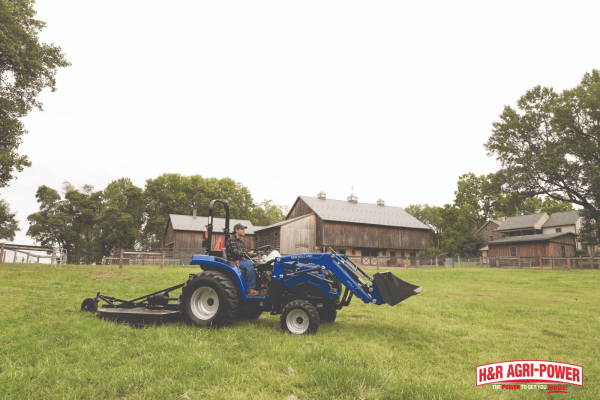
Features and attachments for Kubota and New Holland compact tractors center on three-point hitch compatibility, loader systems, and implement versatility. Most compact tractors use Category 1 three-point hitch systems for universal attachment compatibility across brands. New Holland Deluxe Compact Loaders work with 40 HP to 100 HP tractors, while Kubota offers model-specific loader compatibility charts. Both manufacturers provide extensive attachment options designed for small farm operations. The following subsections examine the most useful attachments and implementation switching capabilities for each brand.
Which Attachments Are Most Useful for Small Farms?
The most useful attachments for small farms are those compatible with Category 1 three-point hitch systems, which most compact tractors feature as standard equipment. Front-end loaders rank as essential attachments, with New Holland Deluxe Compact Loaders specifically designed for 40 HP to 100 HP tractors. Loader compatibility varies by model across both brands, requiring manufacturers' compatibility charts for proper matching.
Essential small farm attachments include:
-
Box blades for grading and leveling
-
Rotary cutters for pasture maintenance
-
Post hole diggers for fence installation
-
Disc harrows for soil preparation
-
Rear blades for snow removal and grading
Both Kubota and New Holland support standard PTO-driven implements such as rotary tillers, finish mowers, and hay equipment. The three-point hitch standardization ensures cross-brand attachment compatibility, though hydraulic flow rates and lift capacities determine specific implement limitations.
How Easy Is It to Switch Between Implements with Each Brand?
Switching between implements with each brand involves differences in mounting systems despite Category 1 standardization. The mounts for side links vary between Kubota and New Holland tractors in four key areas: length of lift arms, profile of lift arms, style of lift arm mount, and stabilizer mounting configurations.
Quick-attach systems streamline implement changes on both brands. Kubota's Swift-Tach system and New Holland's quick-hitch options reduce changeover time from 15-20 minutes to under 5 minutes. These systems eliminate manual pin alignment and simplify the connection process.
Key switching considerations include:
-
Hydraulic coupler compatibility between implements
-
PTO shaft alignment and length adjustments
-
Top link positioning for proper implement angle
-
Stabilizer chain or turnbuckle adjustments
Operator convenience features differ between brands, with Kubota emphasizing tool-free adjustments while New Holland focuses on color-coded connection points. Both manufacturers provide detailed operator manuals specifying proper attachment procedures and safety protocols for implementing changes.
How Do Operator Comfort and Technology Integrations Differ?
Operator comfort and technology integrations differ significantly between Kubota and New Holland compact tractors through cab design, control layouts, and smart farming features. Kubota emphasizes spacious operator environments with advanced suspension seating, while New Holland focuses on visibility and ergonomic control placement.
What Cab Options, Controls, and Ergonomic Features Are Offered?
Cab options, controls, and ergonomic features offered by Kubota include spacious environments with wide cabins, ample legroom, and air-ride high-back seats that absorb vibration. Kubota provides climate control systems with efficient heating and air conditioning, sound-insulated cabs that minimize engine noise, and intuitive control layouts with frequently used levers within natural reach. Additional Kubota comfort features include tilt steering, cruise control for repetitive tasks, and optional closed cabs with flat operator stations.
New Holland Workmaster models feature roomy operating platforms with open paths to padded seats and clutter-free designs for unobstructed views. New Holland positions controls and pedals for easy access with well-placed, color-coded markings. The 360° VisionView Cab improves visibility while reducing noise and includes air suspension seats.
|
Brand Feature Area |
Ergonomic Attribute |
Included Option |
|
Kubota Cab |
Seating Type |
Air-ride, high-back suspension |
|
Kubota Cab |
Noise Control |
Sound-insulated design |
|
Kubota Controls |
Steering |
Tilt-adjustable |
|
New Holland Cab |
Visibility |
360° VisionView |
|
New Holland Platform |
Design |
Clutter-free layout |
|
New Holland Controls |
Marking System |
Color-coded |
Both brands prioritize operator fatigue reduction through ergonomic seating and control placement, though Kubota offers more comprehensive climate control while New Holland emphasizes superior visibility.
How Do Pricing and Overall Cost of Ownership Compare Between Kubota and New Holland?
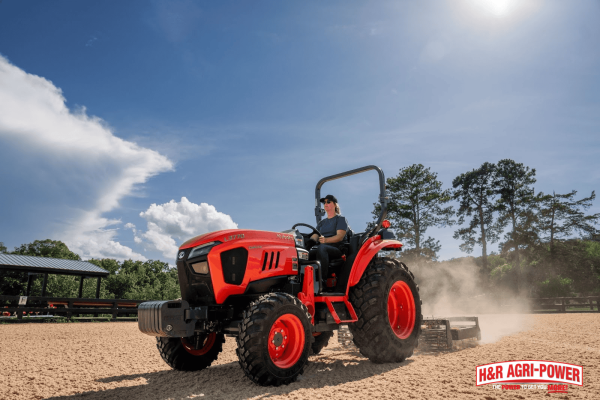
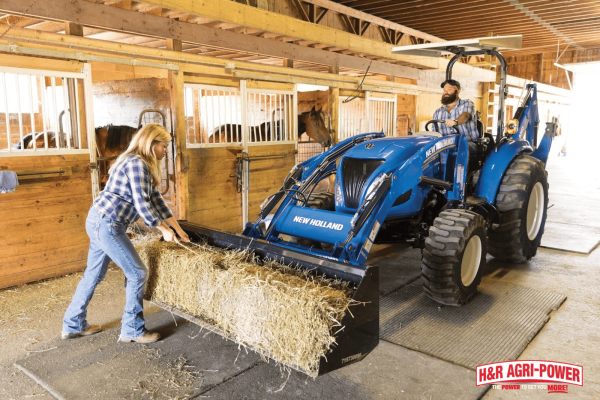
The pricing and total cost of ownership significantly impact compact tractor decisions for small farms. Kubota and New Holland offer distinct pricing structures, financing options, and long-term value propositions that affect overall investment returns.
What Is the Price Range for Comparable Models from Each Brand?
The price range for comparable models shows Kubota tractors are more affordable than New Holland counterparts with similar specifications. Kubota's L02 Series starts at MSRP $22,430 for 23.3-48.4 HP models. The Kubota BX2680 with 24.8 HP and 19.5 PTO costs $16,459.
Specific 2025 Kubota pricing includes:
-
L3302: $32,500 (33 HP)
-
L3902: $33,204 (37.5 HP)
-
L4802: $40,743 (48.4 HP)
New Holland WORKMASTER models command higher prices. The WORKMASTER 25 costs $30,200 cash price. The WORKMASTER Compact 40 sells at $28,999 (reduced from $34,999 retail). The Workmaster 25S with 24.7 HP and 17.2 PTO starts at $22,000+.
How Do Financing Options, Insurance, and Depreciation Impact Costs?
Financing options, insurance, and depreciation significantly affect total ownership costs. Both manufacturers offer 0% APR financing through promotional programs. Kubota provides the Farmer Veteran Coalition Rebate and 2026 Equine Purchase Program for additional savings on Compact/Utility AG Tractors. New Holland offers 0% financing on new compact tractors.
Depreciation patterns follow predictable curves. New tractors experience steepest value decline immediately after purchase. According to industry data, John Deere compact tractors depreciate 23-26% in year one. By year five, John Deere compact tractors retain 58% of original price and hold 16% more value than competitive brands.
The Kubota B2650 HSD demonstrates typical depreciation: $23,007 new, worth $14,339 after 5 years—a $8,668 loss or 37.7% depreciation. Kubota tractors hold value better than competitors, typically retaining 2/3 to 3/4 of new price when well-maintained. Two to three-year-old tractors offer optimal value, having absorbed steep initial depreciation while retaining most useful life.
Are There Hidden or Long-Term Costs Owners Should Consider?
The hidden or long-term costs owners should consider include operating expenses of $40-50 per hour for fuel and maintenance. Fuel costs approximately $2.00 per hour, plus $1.00 per hour when PTO powers implements.
Service requirements add predictable expenses. The 50-hour service costs approximately $600. Routine service runs roughly $500 every 100 hours, equating to $5 per hour. Repair and maintenance costs range from $0.75 to $1.50 per hour of operation, accounting for 10-15% of total operational cost.
These ongoing expenses compound over typical ownership periods, making initial purchase price only part of the total investment equation for small farm operations.
What Do Owners and Experts Say About Kubota vs New Holland Compact Tractors?
Owner feedback and expert analysis reveal distinct strengths for each brand in the compact tractor market. The Progressive Farmer Reader Insights Survey 2021-2022, which gathered 7,755 tractor evaluations from 2,262 farmers, provides comprehensive performance data. Both brands demonstrate strong owner satisfaction, with 65% of survey respondents willing to recommend their tractor brand to others.
What Are Common Customer Reviews and Testimonials for Each Brand?
Kubota ranks highest among tractor brands for Overall Durability and Overall Customer Experience according to the Progressive Farmer Reader Insights Survey 2021-2022. The brand earned top ratings for Best Ownership Experience and Most Durable in the compact tractor category. New Holland secured the Most Durable rating in the midsize tractor category, demonstrating strength in larger equipment segments.
The overall brand rankings place Kubota first, followed by John Deere, New Holland, Case IH, and Versatile. John Deere leads in Highest Owner Loyalty across compact, mid-size, and full-size tractor categories. These rankings reflect real-world performance across thousands of farming operations nationwide.
What Do Industry Experts and Reviewers Recommend for Small Farms?
Industry experts recommend New Holland for farmers prioritizing lifting power and operator comfort. Prairie State Machinery analysis shows New Holland provides superior operator comfort with spacious seating and ergonomic controls. The brand excels with powerful, high-lifting sub-compact tractors ideal for heavy-duty tasks.
Kubota receives expert recommendations for fuel efficiency, compact maneuverability, and long-term reliability. According to Wickham Tractor analysis, Kubota engines outperform New Holland's FPT Industrial engines when comparing similar power specifications. Kubota's smaller frame delivers better maneuverability in tight spaces, while the operational-friendly driving system features easily accessible controls and spacious cabins.
The expert consensus positions Kubota as ideal for compact, fuel-efficient, easy-to-maintain designs, while New Holland suits operations requiring maximum lifting power and comfort. Your specific farm needs determine which advantages matter most for daily operations.
How Do You Choose the Right Compact Tractor Brand for Your Small Farm Needs?
The right compact tractor brand for your small farm needs depends on your specific operations, budget, and long-term farming goals. The global compact tractor market, valued at $7.76 billion in 2025 and projected to reach $11.5 billion by 2033, offers diverse options from established manufacturers. Understanding market leaders and matching their strengths to your requirements ensures optimal investment returns.
What Factors Should Influence Your Compact Tractor Decision?
The factors that should influence your compact tractor decision are market position, proven reliability, and manufacturer track record. Kubota leads the compact tractor market, having sold over 3 million units in the U.S. and maintaining top sales position for over a decade. The U.S. agricultural tractor market, valued at $16.8 billion in 2025 and projected to reach $21.9 billion by 2030, reflects strong demand for quality equipment.
Market presence indicates dealer support and parts availability. The top five tractor brands by market presence are John Deere, Kubota, Mahindra, TYM, and Kioti. New Holland holds a smaller but growing market share, increasing from 3.97% in October 2023 to 4.04% in October 2024.
Brand dominance translates to practical benefits for small farms:
-
Extensive dealer networks ensure timely service
-
Established supply chains guarantee parts availability
-
Proven designs reduce operational risks
-
Strong resale values protect your investment
Your decision framework should prioritize operational needs over brand loyalty while considering long-term support infrastructure essential for maintaining productivity.
How Can You Assess Which Brand Fits Your Specific Farm Operations?
You can assess which brand fits your specific farm operations by matching horsepower, lift capacity, and design focus to your primary tasks. Kubota offers three distinct models for different small farm applications. The Kubota LX3520 delivers 35 HP with 28 PTO HP and 1,200 lbs maximum lift capacity, making it ideal for loader-heavy tasks. The Kubota BX2680 provides 24.8 HP with 18 PTO HP and 613-739 lbs lift capacity for versatile small farm work. The Kubota B2601 generates 24.3 HP with 19 PTO HP and 950 lbs lift capacity, optimized for utility and tillage operations.
New Holland structures their offerings by acreage requirements. The WORKMASTER 25S with 24.7 HP suits 1-20 acre properties. WORKMASTER 35-40 models provide versatility for small acreage operations. The BOOMER 35-55 series offers comprehensive options for small to mid-sized farms.
|
Tractor Model |
Spec Category |
Spec Detail |
|
Kubota LX3520 |
Horsepower |
35 HP |
|
Kubota LX3520 |
Max Lift |
1,200 lbs |
|
Kubota BX2680 |
Weight |
1,600 lbs |
|
Kubota B2601 |
PTO Power |
19 HP |
|
New Holland WORKMASTER 25S |
Acreage Range |
1-20 acres |
|
New Holland BOOMER |
HP Range |
35-55 HP |
Selecting between Kubota's task-specific engineering and New Holland's acreage-based approach depends on whether you prioritize specialized performance or operational flexibility for your small farm's evolving needs.
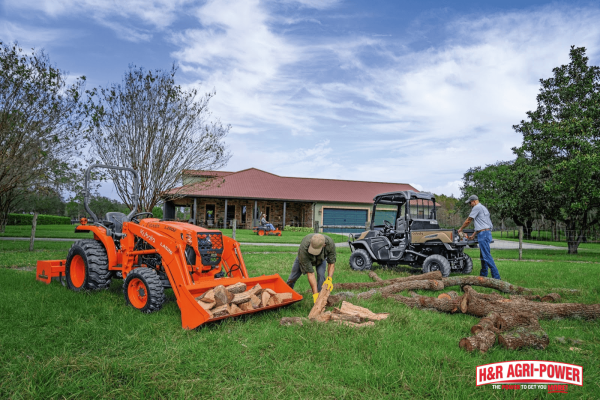
How Can H&R Agri-Power Help You Select the Ideal Kubota or New Holland Tractor?
H&R Agri-Power operates a multi-state dealer network covering Kentucky, Illinois, Tennessee, Alabama, Mississippi, and Indiana with comprehensive Kubota and New Holland equipment solutions. The dealership offers tractors, parts, service, financing options, and precision agriculture support through standard business hours of 7:00 AM to 5:00 PM Monday through Friday, and Saturday 7:00 AM to 12:00 PM. Their Benton, Illinois location extends Saturday service from 8:00 AM to 12:00 PM for added convenience. Their Washington, Indiana location also has non-standard hours, operating 7:30 AM to 5:00 PM Monday through Friday, and Saturday 7:30 AM to 12:00 PM.
What Compact Tractor Solutions and Support Does H&R Agri-Power Offer for Small Farms?
The compact tractor solutions at H&R Agri-Power include 24/7 emergency parts support with location-specific after-hours contact numbers. Mobile service trucks deliver parts and maintenance directly to farm locations, providing everything from preventative maintenance to emergency repairs around the clock. The dealership specializes in Case IH, New Holland, and Kubota equipment with certified technicians trained on each brand's specific requirements.
H&R Agri-Power conducts monthly customer feedback surveys to maintain service quality and overall experience standards. Their financing department works with multiple lenders to secure competitive rates for compact tractor purchases. The parts inventory system maintains critical components for both Kubota and New Holland models to minimize equipment downtime.
Technical specialists at each location provide guidance on tractor selection based on farm size, intended applications, and budget constraints. The dealership's precision agriculture team assists with GPS guidance systems and telematics integration for modern farming operations. Their multi-brand expertise allows direct comparisons between Kubota and New Holland models to match specific farm requirements.
What Are the Key Takeaways About Which Compact Tractor Wins for Small Farms?
The key takeaways about compact tractor selection rely on data from the University of Nebraska Tractor Test Laboratory (NTTL), the officially designated tractor testing station for the United States. NTTL tests tractors according to OECD codes adopted by 29 countries, having evaluated 2,053 tractors since 1920. According to a 2024 market analysis, U.S. tractor sales dropped 19.6% in October with compact tractors sitting 7.8% below 2024 levels.
Market conditions show utility tractors down 3.8% and higher-HP tractors declining nearly 24%, indicating shifting farm equipment needs. These statistics suggest opportunities for buyers to negotiate favorable pricing on both Kubota and New Holland compact models. H&R Agri-Power's multi-brand inventory positions them to help farmers capitalize on current market conditions while selecting equipment that matches long-term operational needs.