

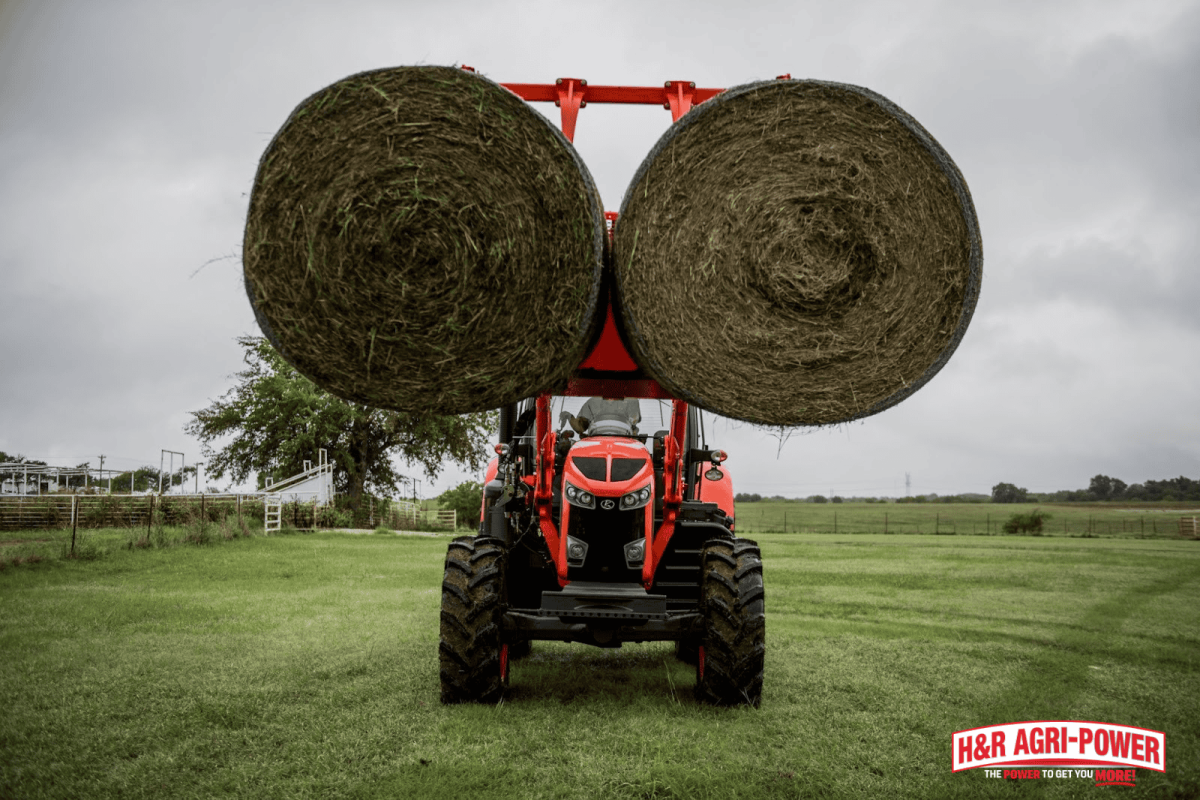
Kubota tractor hydraulics provide the lifting power that drives loaders, rear implements, grapples, and heavy fieldwork. Hydraulic power operates through fluid pressure, pump force, and cylinder strength, enabling modern tractors to lift, carry, and move heavy loads with precision.
USDA Economic Research Service states that total U.S. farm output nearly tripled between 1948 and 2021, while total input use declined slightly, indicating that productivity gains have come mainly from advances in technology and power systems, including mechanized and hydraulic equipment.
As lift demands increase across farms, construction sites, and land management operations, optimizing hydraulic strength on Kubota tractors has become more valuable than ever.
This guide explores how hydraulic power affects lift capacity, how to maintain strong pressure output, how fluid quality influences lift force, and how to keep your Kubota performing at peak heavy-lift capability.
How Kubota Hydraulic Power Supports Heavy Lift Work
Kubota tractors rely on hydraulic pressure to raise loaders, control implements, and manage heavy materials. The pump, valves, cylinders, and hydraulic fluid work together to deliver smooth lifting power each time the operator moves the controls.
Core hydraulic components that influence lift strength
A Kubota’s lifting power comes from its pump, valves, cylinders, reservoir, and fluid passages. These parts move pressurized oil through the system to create force at the loader arms or hitch. When any of them become restricted or worn, the tractor may lift more slowly or lose power during heavy work.
Pump flow, system pressure, and lifting force
Lift performance depends on pump flow for speed and system pressure for strength. Higher pressure allows the tractor to raise heavier loads, while steady flow keeps the loader smooth and responsive. Kubota’s open-center system circulates fluid constantly, helping maintain consistent response under load.
Hydraulic behavior across Kubota BX, B, L, MX, and M series
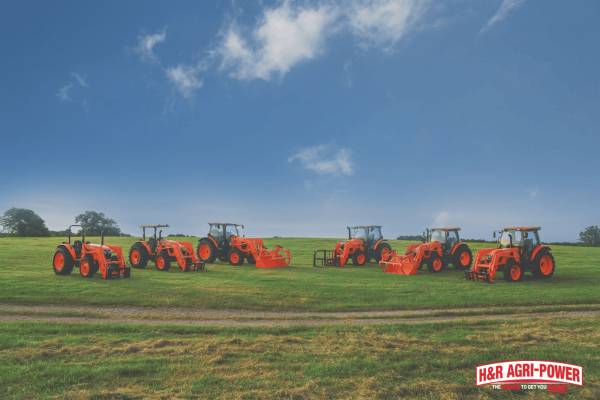
Each Kubota series uses a different hydraulic setup and offers different lift capabilities. Smaller BX and B models handle light to moderate work, while the L and MX series manage heavier materials. The M series provides the highest lift strength for demanding applications.
How hydraulic layout shapes loader and hitch performance
Kubota loaders use dual lift cylinders, while the three-point hitch operates through a single lift cylinder and rockshaft. Since both systems use the same pump, using the loader and hitch simultaneously can reduce response time when the tractor is working near its limits.
How does hydraulic power become a lifting force on a Kubota?
Pump pressure and fluid flow push against the lift cylinders, creating the force needed to raise the loader or hitch.
Key Factors That Shape Lift Capacity and Work Efficiency
Lift capacity depends on more than hydraulic pressure. Tractor weight, loader geometry, cylinder size, and attachment design all influence how confidently a Kubota can raise and carry a load.
Loader lift capacity, breakout force, and hitch ratings
Loader lift capacity reflects how much weight the tractor can raise safely, while breakout force shows how strongly it can push or pry. The rear hitch rating indicates how much weight it can lift close to the tractor or slightly behind the link arms.
Pump output in GPM and PSI during heavy lift cycles
Pump pressure provides lifting strength, while the flow rate determines how quickly the loader or hitch moves. Strong PSI combined with steady flow allows the tractor to handle dense loads without hesitation.
Flow rate impact on lift speed, control, and response
Flow rate affects how smoothly and precisely the tractor lifts and positions a load. When the flow drops, the loader may move more slowly or lose its smoothness during operation.
Matching tractor size and series to lift demands
Different lifting tasks require different tractors. Frequent heavy work is better suited to the L, MX, or M series, while lighter lifting fits the BX or B models.
OEM attachment compatibility and hydraulic limits
Kubota attachments are engineered to match the hydraulic output and geometry of each tractor series. Oversized or incompatible attachments can reduce lift power or create unsafe load angles.
Why does lifting sometimes feel weak even when the pressure is correct?
If the attachment is too large or the load is too far forward, leverage works against the hydraulics, making lifting feel weaker.
Hydraulic Fluid Choices That Keep Lift Power Strong
Hydraulic fluid supports pressure, lubrication, cooling, and seal protection inside the system. Fluid quality directly affects lift strength, response time, and hydraulic component life. Clean, correctly specified oil helps your pump and cylinders deliver full power during heavy lifting.
A technical bulletin on hydraulic oil cleanliness shows that correct viscosity and fluid cleanliness significantly reduce wear and downtime, while protecting hydraulic components and performance.
Choosing the right oil and keeping it clean are among the simplest ways to protect lift capacity.
Approved Kubota hydraulic fluids and viscosity ranges
Kubota typically recommends Super UDT2 or UDT hydraulic/transmission fluids, depending on tractor model, climate, and warranty requirements. The correct viscosity supports smooth cylinder movement, reliable lubrication, and stable pressure under load.
Temperature effects on hydraulic fluid performance
Cold weather thickens hydraulic oil, causing:
-
Slow lifting
-
Jerky movement
-
Delayed response
Hot conditions thin the oil, reducing pressure and lifting strength. Both extremes can weaken loader performance if the oil grade is not matched to the climate and workload.
Contaminant risks from water, debris, and oxidation
Contaminated fluid reduces lifting force, increases friction, and restricts flow. Water contamination encourages corrosion and internal pitting, while dirt and metal particles accelerate wear in pumps, valves, and cylinders. Over time, this reduces lift power and reliability.
Reservoir capacity and its role during repeated lifts
Low fluid levels reduce available oil volume, cause pump cavitation, and slow the loader. Heavy lift cycles require full reservoir capacity to maintain stable pressure. If the reservoir runs low or pulls air, lift performance drops quickly.
How much impact does oil cleanliness really have on Kubota lift performance?
Oil cleanliness has a significant impact. Clean, correctly specified hydraulic fluid allows the pump and cylinders to produce full pressure and flow, while contaminated or degraded oil leads to faster wear, internal leakage, and noticeable loss of lifting power over time.
Troubleshooting Lift Power Loss or Slow Response
When a Kubota tractor begins lifting slowly, losing pressure, or struggling with heavy loads, the cause is usually related to restricted flow, contaminated fluid, or mechanical wear. These issues often appear first as reduced loader speed, reduced hitch responsiveness, and increased pump noise, long before the system fails.
Signs of weak lifting under load
Weak lifting typically shows up as the loader slowing or stalling during a lift, the three-point hitch rising inconsistently, or loads failing to reach full height. You may also hear the pump strain or whine under pressure. These signs indicate that pressure is dropping or internal resistance is increasing somewhere in the system.
Causes of a slow hydraulic cycle
A slow hydraulic cycle can result from reduced pump flow, worn pump components, or a filter that has begun to restrict oil movement. Return-line restrictions, cold hydraulic fluid, or low engine RPM can also cause slow cylinder extension. Even if pressure appears normal at idle, these issues can reduce lift speed during real work.
Air intrusion and cavitation indicators
Air entering the hydraulic system can create foamy or milky fluid and cause vibration or an inconsistent control feel. Cavitation, which happens when oil vaporizes at the pump inlet, often produces a growling noise and can damage pump surfaces. Both conditions weaken lift strength and should be addressed quickly.
Cylinder bypass and pressure loss symptoms
Cylinder bypass occurs when worn piston seals allow fluid to slip past the piston, preventing a full lifting force. This often appears as a load drifting downward, uneven loader movement, or good pump pressure combined with poor load-holding ability. Seal repairs are typically required when a bypass is present.
Steps to identify faults before parts replacement
Initial checks should confirm that the hydraulic fluid is at the correct level and type, that filters are not restricted, and that there are no leaks or damaged hoses. Engine RPM and pump performance should also be verified, followed by a pressure test under load. If the pump holds pressure but lift strength remains weak, inspecting the cylinders is the next step.
When should a Kubota owner consider professional hydraulic diagnostics?
Professional diagnostics are recommended when fluid checks, filter changes, and visual inspection fail to correct lift problems, or when the loader struggles under normal loads despite acceptable pressure readings.
Environmental Conditions That Influence Hydraulic Strength
Hydraulic performance changes with temperature, humidity, dust exposure, and altitude. These environmental factors affect fluid viscosity, cooling efficiency, and component wear, all of which influence lifting strength and responsiveness during work.
Hot and cold weather impacts on hydraulic power.
Cold weather thickens hydraulic oil, causing slower, more jerky movement until the system warms. Hot conditions thin the oil, lowering adequate pressure and increasing the chance of overheating. As seasons shift, a system that feels strong in one climate may feel sluggish or weak in another, simply because fluid behavior changes.
Moisture, dust, and debris effects on components
Moisture and dust increase contamination levels inside the hydraulic system, promoting corrosion, clogging filters more quickly, and raising internal leakage. Working in muddy, wet, or dusty environments accelerates wear and demands more frequent inspections and fluid checks to maintain lift strength.
High-altitude changes in hydraulic behavior
At higher elevations, engines may produce slightly less power and hydraulic systems may run warmer due to reduced cooling efficiency. While the system pressure setting remains the same, continuous lifting may feel different under these conditions, especially with heavy or repeated cycles.
How can operators adapt their hydraulic use to extreme temperatures?
Operators can adapt by choosing fluid grades suited to the local climate, warming the hydraulics with light movement in cold weather, monitoring temperatures during hot conditions, and shortening service intervals in harsh environments.
When Upgrades or Dealer Support Strengthen Heavy Lift Capability
Certain upgrades and dealer services can improve hydraulic responsiveness and lifting consistency. Kubota-approved upgrades protect the tractor’s structure and hydraulic limits while enhancing day-to-day performance.
Adding auxiliary hydraulic flow
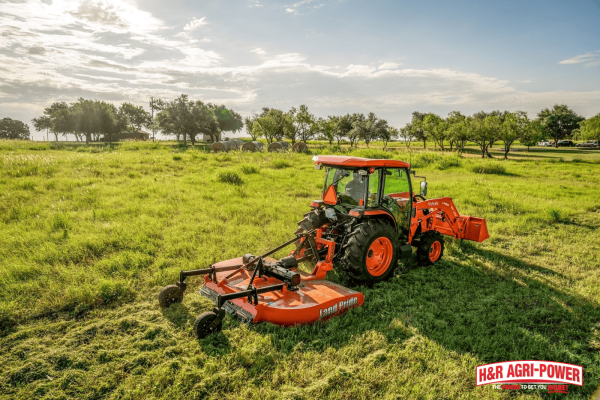
Auxiliary hydraulic kits expand the tractor’s ability to run more implements, such as grapples or rear-mounted hydraulic tools. These kits improve versatility and control but do not increase the base lift rating of the loader or hitch.
Benefits of professional diagnostic checks
Dealer diagnostics can uncover issues that a general inspection might miss. Pressure and flow testing, valve evaluations, cylinder assessments, and contamination analyses help identify hidden restrictions or wear. These checks often restore a tractor that feels weak or inconsistent to a more confident lifting performance.
What hydraulic upgrade usually delivers the most significant improvement?
Most real-world improvements come from restoring proper pump flow and clearing restrictions, often by replacing clogged filters, worn hoses, or restrictive couplers, rather than attempting to increase system pressure beyond factory limits.
Frequently asked Questions
What engine RPM range is ideal for maximum hydraulic lift power on a Kubota?
Most Kubota models reach full hydraulic output in the 2,000-2,600 RPM range, depending on model specifications and load.
How often should hydraulic lines be replaced on a Kubota tractor?
Under regular use, most hoses last 5-7 years, but they should be inspected annually for cracks, abrasion, bulges, and leaks.
Can clogged hydraulic breathers reduce lift capacity?
Yes. A clogged breather can create vacuum conditions in the reservoir, restricting fluid flow to the pump and reducing lift performance.
Does idling a Kubota tractor warm the hydraulics effectively in cold weather?
Only partially. Light cycling of the loader and hitch warms the hydraulic system faster and more evenly than idling alone.
Can hydraulic overloading damage the tractor’s transmission or frame?
Yes. Lifting or prying beyond rated capacities can transfer stress into the frame, axles, and driveline, leading to premature wear or structural damage.
Keep Your Kubota’s Hydraulics Strong for Every Heavy Lift Task
Kubota hydraulic systems power loaders, rear implements, grapples, and daily heavy work. Strong lift performance depends on clean fluid, healthy pump output, proper ballast, and well-matched attachments.
By monitoring early signs of strain and maintaining routine service, you protect both hydraulic performance and long-term equipment reliability. If your Kubota begins lifting slowly or losing force, a quick inspection can restore performance before major issues develop.
With 9 Kubota locations across six states, H&R Agri-Power provides expert hydraulic service, OEM parts, and trained Kubota technicians who know how to keep your machine working at full capability. Contact your nearest H&R Agri-Power location today to maintain peak hydraulic power and keep your Kubota performing at its best.