

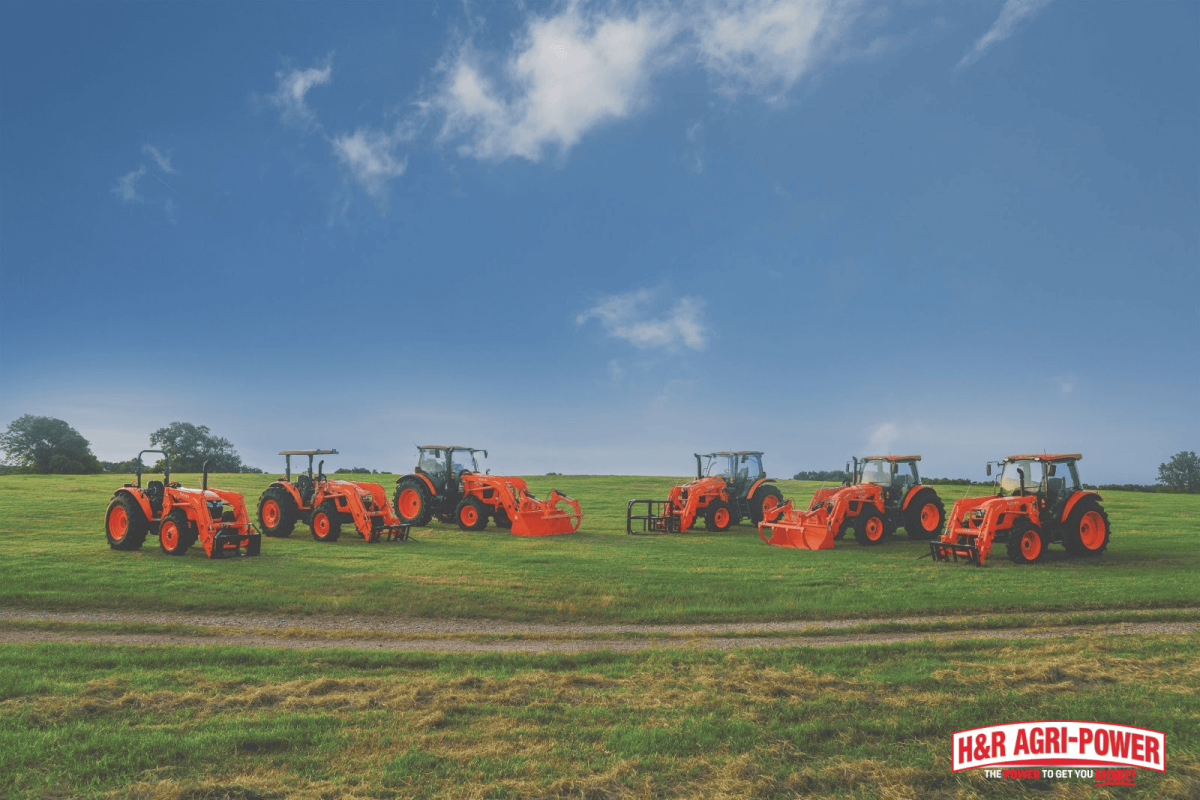
Kubota equipment includes tractors, implements, and compact construction machinery designed for farming, landscaping, and property management. Farmers across Tennessee rely on Kubota because of its durability, ease of use, and adaptability to local conditions.
According to the University of Tennessee Institute of Agriculture’s 2024 annual report, Tennessee’s agricultural and forestry industries “directly and indirectly contributed $103 billion to the state’s economy.”
The report also notes that although acreage planted in key crops like soybeans increased by 14.7% in 2024, growers faced significant price drops; soybean prices alone fell about 16% compared to 2023.
This guide shows how Tennessee farmers can maximize the value of their Kubota equipment, selecting the best models for local crop and livestock needs, maintaining machines for long-term performance, using attachments smartly, and leveraging local dealership support.
Why Kubota Equipment Fits Tennessee Farms
Kubota equipment is well-suited for Tennessee because it can handle the state’s diverse landscapes, heavy rainfall, and the wide range of crops and livestock that define local farming.
1. Farming conditions in Tennessee
Tennessee has a humid subtropical climate, with generous precipitation throughout the year. The state receives about 54 inches of rain annually on average, depending on the region.
This rainfall, along with the varied terrain, from flat river basins to rolling hills, means fields often get wet, soils compact easily, and machinery must be rugged and adaptive.
2. Common crops and livestock operations
Row crops such as soybeans, corn, wheat, and cotton are the backbone of crop farming across Tennessee. Livestock is also a significant part of the state’s agriculture, with beef cattle, poultry, and hog production supporting thousands of farms.
To sustain these animals, hay and pasture management remain essential, making forage crops just as crucial as row crops in the farming cycle.
3. Kubota’s role in local agriculture
Kubota’s compact and utility tractors are well-suited for Tennessee’s small to mid-sized farms. Their reliability and ability to switch between row cropping, hay production, and general chores make them an efficient solution for diverse operations.
Is Kubota a good choice for Tennessee farms?
Yes. Kubota equipment is designed for versatility and durability, which makes it suitable for Tennessee’s diverse farming operations, including row crops, hay production, and cattle management.
Best Kubota Equipment for Tennessee Farmers
Kubota offers a wide range of equipment designed to meet the needs of Tennessee farmers, from powerful tractors for row crops and hay fields to compact machines, mowers, and versatile attachments that keep farms running smoothly year-round.
1. Tractors for row crops and hay production
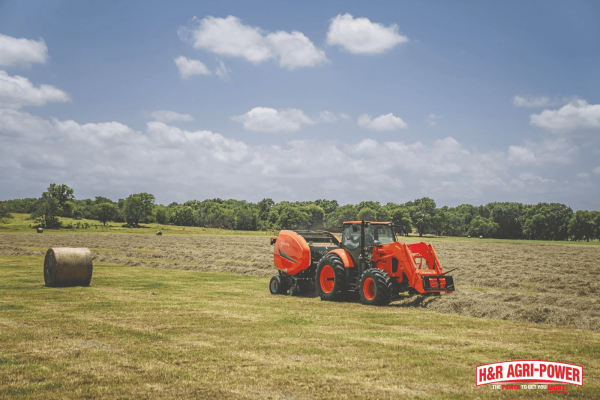
Kubota’s M Series tractors are popular for row-crop farming, offering horsepower and durability for planting and harvesting. For hay production, the L Series provides flexibility for mowing, baling, and hauling.
2. Skid steers and compact construction machines
Compact loaders, skid steers, and similar machinery help farmers handle feed, clear land, and move materials. The USDA Economic Research Service report “The Transformation of U.S. Livestock Agriculture: Scale, Efficiency, and Risks” shows that larger livestock operations often use more advanced equipment to reduce labor and Capital costs per animal.
3. Lawn and garden equipment for small farms and homesteads
For smaller acreages, Kubota’s residential mowers and sub-compact tractors allow landowners to maintain gardens, orchards, and pastures without the need for oversized machinery.
4. Popular attachments and implements
-
Rotary tillers for preparing vegetable fields
-
Front loaders for moving hay and feed
-
Post-hole diggers for fencing
-
Box blades for levelling soil
Which Kubota tractor is best for hay production in Tennessee?
The Kubota M Series is commonly used for hay production because of its power, compatibility with balers, and efficiency in managing forage crops.
Getting the Most Value from Kubota Machines
Kubota equipment delivers the best return when farmers match the right machine to their operation and use attachments to extend its capabilities.
1. Choosing the right model for your farm size
Selecting the correct tractor size is one of the most important decisions for any farm. Smaller farms often benefit from compact models that are easy to manoeuvre and versatile, while larger row-crop operations typically need higher-horsepower tractors built for heavy work.
2. Multi-purpose use with attachments
Attachments turn one tractor into a multi-tasking machine. With the right add-ons, a single Kubota can plough, mow, dig, haul, or grade, reducing the need for multiple pieces of equipment and keeping costs down.
3. Precision Ag technology with Kubota equipment
Kubota tractors work with GPS-based Precision Ag tools to improve planting, spraying, and field management. The USDA Economic Research Service reports that farms using Precision Ag report higher yields and lower input costs.
4. Fuel efficiency and productivity tips
-
Keep tires properly inflated for less drag.
-
Use economy PTO when possible to save fuel.
-
Plan work in cooler times of day to reduce stress on equipment.
How can Tennessee farmers save fuel when using Kubota tractors?
Farmers can save fuel by using an economy PTO, performing regular maintenance, and choosing the top Kubota attachments that are properly sized for the tractor’s horsepower.
Maintenance and Service for Long-Term Performance
Keeping Kubota equipment well-maintained ensures reliable performance, longer machine life, and fewer costly breakdowns during busy seasons.
-
Preventive care and routine checks: Simple steps, such as oil changes, filter replacements, and hydraulic system checks, keep tractors and implements running smoothly. Regular care helps prevent downtime when equipment is needed most.
-
OEM parts availability in Tennessee: Using genuine Kubota OEM parts ensures optimal performance and preserves resale value. Non-genuine parts may fit but can lead to faster wear and unexpected repairs.
-
Local service and support from dealerships: Dealerships such as H&R Agri-Power provide trained technicians who understand local farming needs. Their service teams help reduce downtime with timely repairs and seasonal checkups.
How often should Kubota tractors be serviced?
Kubota recommends servicing most tractors every 100-200 operating hours, depending on the model. Farmers should always check the owner’s manual for the exact schedule.
Innovative Ways to Invest in Kubota Equipment
Making the right financial decisions with Kubota equipment helps farmers strike a balance between performance, reliability, and cost savings.
-
New vs. used Kubota equipment: New Kubota equipment offers warranties and the latest technology, while used models provide significant cost savings. The best choice depends on the farm’s size, needs, and budget.
-
Financing options for Tennessee farmers: Flexible financing options are available through Kubota Credit and local lenders, making it easier to spread out payments and keep operations moving without heavy upfront costs.
-
Insurance coverage for peace of mind: Farm equipment insurance protects valuable machines against theft, damage, and accidents, giving farmers confidence that their investment is secure.
-
Seasonal promotions and rebates: Kubota often provides limited-time promotions, rebates, and special financing rates during planting and harvest seasons, helping farmers save on upgrades or new purchases.
Should Tennessee farmers buy new or used Kubota equipment?
It depends on each farm’s situation. New equipment provides advanced features and warranties, while used models are more budget-friendly and often meet the needs of smaller operations.
Which Kubota Equipment Is Best for Tennessee Farmers?
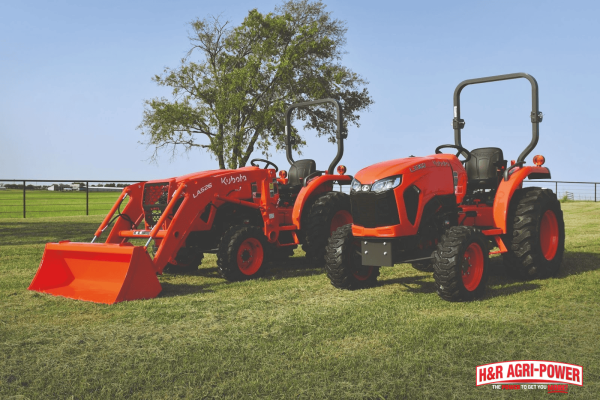
The right Kubota equipment depends on your farm’s size and needs. Compact tractors like the L Series are perfect for small farms and versatile chores, while the M Series delivers horsepower and durability for row crops and hay. For land clearing, feeding, or construction work, Kubota skid steers and track loaders add unmatched flexibility.
Every Tennessee farm is different, but choosing the right Kubota means greater productivity, efficiency, and long-term value. At H&R Agri-Power, we make that choice easier. Request a quote or schedule a demo today. Your farm deserves the best.
Frequently Asked Questions
1. How long do Kubota tractors usually last?
With proper maintenance, Kubota tractors often last 4,500 to 5,500 operating hours, and many continue working well beyond that with regular care.
2. Are Kubota tractors good for small hobby farms?
Yes. Compact models like the BX and L Series are ideal for hobby farms because they are easy to manoeuvre, fuel-efficient, and versatile with attachments.
3. Do Kubota tractors hold their resale value?
Kubota equipment is renowned for its strong resale value, attributed to its durability and consistent demand in the used equipment market.
4. Can Kubota equipment handle Tennessee’s hilly terrain?
Yes. Many Kubota tractors and loaders are designed with stability, 4WD options, and traction features to perform well on uneven or sloped ground.
5. What is the warranty on new Kubota equipment?
Most new Kubota tractors come with a standard 2-year limited warranty, with options to extend coverage depending on the model and usage.