

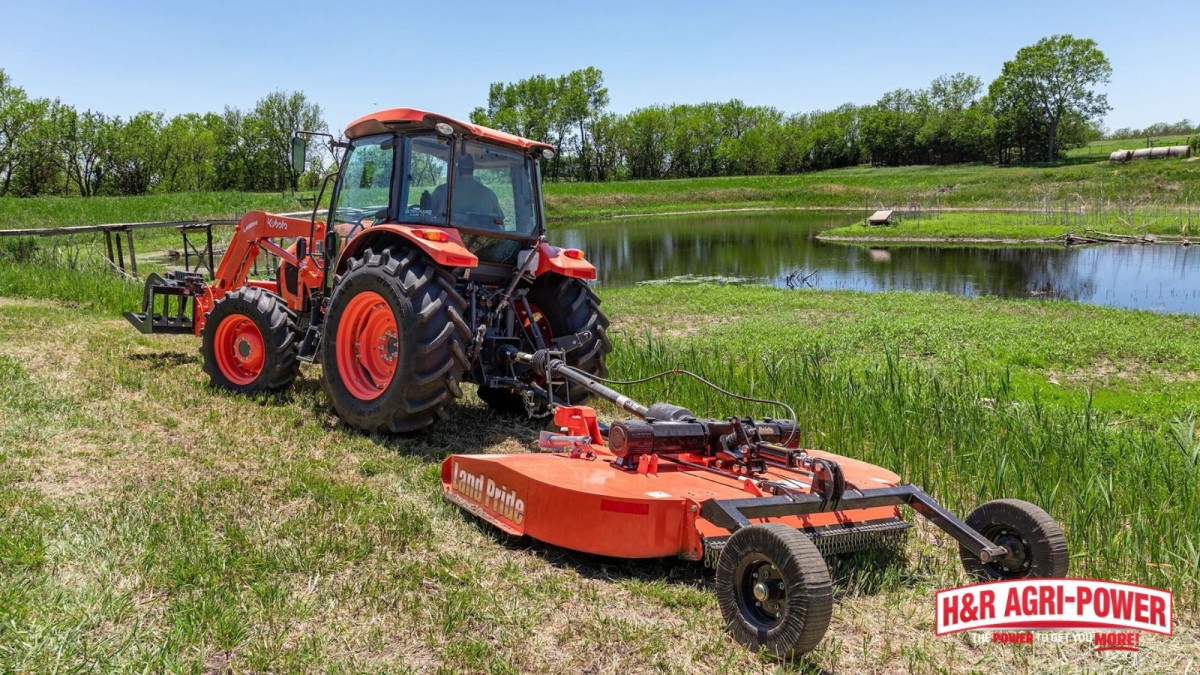
Brush hogging a pasture is the practice of rotary mowing overgrown vegetation to maintain grass health, control weeds, and promote quality forage regrowth. Most pastures benefit from mowing two to four times per growing season, though the ideal frequency depends on grass species, climate, land use, and regional conditions.
This guide covers the factors that shape brush hogging frequency, the benefits and risks of proper mowing timing, seasonal scheduling for Southeast and Midwest pastures, and the equipment practices that keep the job safe and effective.
Grass type, weather patterns, and whether you graze livestock or harvest hay all influence how often you should mow. Cool-season grasses like tall fescue and orchardgrass require different cutting heights and intervals than warm-season species, and seasonal rainfall can accelerate or delay growth cycles considerably.
Properly timed brush hogging controls broadleaf weeds before they set seed, stimulates fresh forage with higher crude protein, and reduces conditions that encourage plant disease. As forage matures past its ideal stage, digestibility and nutrient content decline, which directly lowers livestock intake and performance.
Mowing too frequently weakens root systems and exposes soil to erosion, while neglecting brush hogging allows invasive species to establish and forage quality to collapse. Striking the right balance protects both pasture ecology and long-term productivity.
In states like Kentucky and Tennessee, where tall fescue dominates millions of acres, timing mowing around early summer seed-head removal and late-summer regrowth produces the strongest results. Matching your schedule to local climate patterns keeps pastures productive year after year.
Selecting the right rotary cutter size, maintaining sharp blades, and following critical safety protocols prevent costly breakdowns and serious injuries during operation.
What factors determine the ideal frequency for brush hogging a pasture?
The factors that determine the ideal frequency for brush hogging a pasture include grass species, climate and seasonal conditions, and how the pasture is used. Each factor shifts the mowing schedule in measurable ways.
How does grass type influence brush hogging schedules?
Grass type influences brush hogging schedules by dictating growth rate, recovery speed, and optimal stubble height. Cool-season grasses like tall fescue and orchardgrass grow most aggressively in spring and fall, often requiring mowing every three to four weeks during peak periods. Warm-season species such as bermudagrass and bahiagrass concentrate growth in summer and tolerate slightly longer intervals between cuts.
Stubble height requirements also vary by species. According to Michigan State University Extension, recommended post-harvest stubble heights range from 1 to 2 inches for bluegrass up to 4 to 5 inches for tall fescue and orchardgrass. Cutting below these thresholds stresses root systems and slows regrowth, so matching your mowing schedule to your dominant grass species is essential for long-term stand health.
How do climate and seasonal conditions affect mowing intervals?
Climate and seasonal conditions affect mowing intervals by accelerating or slowing forage growth rates throughout the year. During warm, wet periods, grasses can add several inches per week, compressing the window between necessary cuts. Prolonged drought or extreme heat slows growth significantly, allowing longer gaps between passes.
Seasonal rainfall patterns matter just as much as temperature. A wet spring in the Southeast may demand brush hogging every two to three weeks, while a dry summer stretch could safely extend intervals to five or six weeks. Monitoring actual pasture height rather than following a rigid calendar produces the best results, because conditions vary year to year even within the same region.
What role does pasture usage (grazing, hay production) play in brush hogging timing?
Pasture usage plays a central role in brush hogging timing because grazing land, hay fields, and mixed-use pastures each have different forage management goals. Grazed pastures benefit from periodic mowing to clip refused forage and keep canopy height uniform, typically after each grazing rotation. Hay production fields require fewer but more precisely timed cuts to maximize yield and nutritional value at harvest.
According to the University of Nebraska Extension, as forage matures, crude protein content and rate of digestion decline, causing cattle to derive fewer nutrients from the standing forage. For operations balancing grazing and hay, staggering brush hogging across paddocks helps maintain consistent forage quality while allowing adequate rest and regrowth between uses.
With these core factors established, the next section covers how regular brush hogging directly benefits pasture health.
What are the benefits of regular brush hogging for pasture health?
The benefits of regular brush hogging for pasture health include weed suppression, improved forage quality, and reduced disease pressure. Each of these advantages compounds over time when mowing is timed correctly.
How does brush hogging control weeds and invasive species?
Brush hogging controls weeds and invasive species by cutting them before they can set seed, which depletes the weed seed bank over successive seasons. According to Ohio State University Extension, mowing in June and August works as well as mowing every month to control weeds, and the June mowing removes seed heads before they mature. This targeted timing is far more practical than monthly passes. Broadleaf weeds tend to respond better to mowing than grass-type weeds, making brush hogging especially effective against common pasture invaders like thistles and ragweed. For landowners managing large acreage, two well-timed mowings per season often deliver stronger weed suppression than frequent, poorly scheduled cuts.
Can brush hogging improve forage quality and regrowth rates?
Yes, brush hogging can improve forage quality and regrowth rates by preventing forage plants from reaching full maturity. As forage matures, crude protein content and rate of digestion decline, causing cattle to derive fewer nutrients from the stand. Periodic mowing resets this growth cycle, encouraging younger, more digestible regrowth. According to the University of Wisconsin Extension, forage quality carries a premium of $0.83 to $0.91 per point of Relative Feed Value per ton of hay, with roughly a $45/ton spread between RFV 100 and RFV 150 hay. That economic gap makes timely brush hogging one of the most cost-effective tools for maintaining nutritional value across a grazing season.
Does periodic mowing help prevent pasture plant diseases?
Periodic mowing helps prevent pasture plant diseases by improving air circulation at the canopy level and removing dense, moisture-trapping growth. According to University of Florida IFAS, mowing improves the appearance of a pasture, temporarily increases forage production, and, if properly timed, prevents weeds from producing seed. Thick, overgrown stands create humid microclimates where fungal pathogens thrive. Regular brush hogging opens the canopy, allowing sunlight to reach the soil surface and reducing the conditions that favor leaf spot, rust, and other common forage diseases. This preventive benefit is often overlooked, yet it plays a meaningful role in sustaining long-term pasture productivity.
With pasture health benefits established, understanding the risks of improper mowing frequency helps refine your schedule.
Are there risks or drawbacks to brush hogging too often or not enough?
There are significant risks to brush hogging too often or not enough. Over-mowing weakens root systems and exposes soil, while neglecting mowing invites woody invasion and weed proliferation. The following subsections cover ecological damage from excess mowing, consequences of skipping it, and how to balance frequency with soil conservation.
What negative impacts could over-mowing have on pasture ecology?
Over-mowing can severely damage pasture ecology by depleting grass energy reserves and stunting root development. According to Michigan State University Extension, removing 80% of leaf tissue stops root growth entirely, while even 70% removal halts 78% of root growth. Frequent, aggressive cutting keeps plants in a constant state of recovery, preventing them from photosynthesizing enough to rebuild carbohydrate stores.
Weakened root systems make pastures more vulnerable to drought stress, soil compaction, and erosion. Over-mowed fields also lose beneficial ground cover that shelters pollinators, ground-nesting birds, and other wildlife. For most operations, the ecological cost of mowing too aggressively far outweighs any perceived tidiness benefit.
What happens if you skip brush hogging altogether?
If you skip brush hogging altogether, weeds and woody species progressively overtake desirable forage grasses. Annual broadleaf weeds mature unchecked, drop seed, and expand the weed seed bank year after year. Saplings from species like cedar, locust, and sweetgum eventually establish, converting open pasture into brushland that is far more expensive to reclaim.
Forage quality also declines sharply. As forage matures without cutting, crude protein content and digestibility drop, reducing the nutritional value available to livestock. Thick, rank growth shades out lower-growing legumes and desirable grasses, compounding the decline. Neglected pastures ultimately require costly renovation rather than routine maintenance.
How can you balance brush hogging with soil conservation practices?
You can balance brush hogging with soil conservation practices by adjusting mowing height, timing, and frequency to protect both forage and soil structure. Maintaining a minimum stubble height of 4 inches on most cool-season grasses preserves enough leaf area for root recovery while limiting bare soil exposure.
Key balancing strategies include:
-
Mowing only when grass exceeds the target height rather than on a fixed calendar.
-
Avoiding mowing during drought or saturated soil conditions, when compaction risk is highest.
-
Leaving buffer strips unmowed along waterways and slopes to reduce erosion.
-
Rotating mowed sections so wildlife habitat and soil biology recover between passes.
As Purdue University Extension warns, an accident with a rotary mower can cost you your life, so keeping equipment in good repair also protects both the operator and the land. A measured, adaptive approach to brush hogging preserves pasture productivity without sacrificing the soil health that sustains it long term.
With frequency risks understood, a seasonal schedule helps put these principles into consistent practice.
What are the best seasonal and annual schedules for brush hogging in the Southeast and Midwest?
The best seasonal and annual schedules for brush hogging in the Southeast and Midwest depend on regional grass types, growing seasons, and rainfall patterns. The following sections cover state-specific frequency, optimal timing for regrowth, and how climate shapes your mowing calendar.
How often should you brush hog in Kentucky, Tennessee, and surrounding states?
You should brush hog in Kentucky, Tennessee, and surrounding states two to three times per growing season, typically from late April through October. Tall fescue dominates pastures across this region, and its aggressive spring and fall growth flushes require at least one mowing in late spring and another in early fall.
According to the University of Tennessee Extension, Tennessee sits in the heart of the Tall Fescue Belt, which covers over 20 million acres across 16 states and supports more than 40% of U.S. beef cattle farms. With that kind of fescue density, a mid-summer mowing may also be necessary to knock back seedheads and suppress broadleaf weeds before they set seed. Operators managing mixed warm-season and cool-season pastures across Alabama, Indiana, Illinois, and Mississippi should adjust frequency based on which forage species are actively growing.
When is the best time of year to brush hog for optimal regrowth?
The best time of year to brush hog for optimal regrowth is late spring and late summer, timed before weeds enter their reproductive phase. Mowing during these windows removes seedheads while grasses still have enough energy reserves and daylight hours to recover vigorously.
According to Iowa State Extension, when mowing tactics are used in a timely manner prior to the reproductive phase, they can help reduce the number of weed seeds in the seed bank of that field. For cool-season pastures, a late-May to early-June cut catches the first flush before it becomes stemmy. A second cut in August maintains forage quality heading into fall stockpiling season. Skipping these windows allows mature growth to shade out desirable grasses, slowing regrowth considerably.
How do local climate patterns and rainfall affect brush hogging calendars?
Local climate patterns and rainfall affect brush hogging calendars by accelerating or delaying forage growth cycles and determining when equipment can safely operate on soft ground. In the Southeast, higher annual rainfall and longer growing seasons often push mowing frequency to three or more passes per year. Midwest pastures with shorter growing windows and drier late summers may only need two well-timed cuts.
Wet springs across Kentucky and Tennessee can delay first mowing by several weeks if soils remain saturated, since running heavy equipment on waterlogged ground causes compaction that damages root systems. Conversely, drought periods slow grass growth enough that scheduled mowing becomes unnecessary. Monitoring weekly rainfall totals and soil moisture conditions before each planned cut prevents both equipment damage and unnecessary stress on recovering pastures.
With regional schedules established, selecting the right equipment and maintaining it properly ensures each mowing pass delivers clean, effective results.
What equipment and maintenance tips ensure effective and safe pasture brush hogging?
Effective and safe pasture brush hogging requires the right rotary cutter size, a consistent maintenance routine, and proper safety precautions. The following sections cover equipment selection, upkeep schedules, and essential protective steps.
What size and type of bush hog is best for your pasture?
The best size and type of bush hog for your pasture depends on acreage, terrain, and tractor horsepower. Key factors to consider include:
-
Cutting width: Economy 4-foot models suit small pastures under 10 acres, while 6- to 10-foot pull-type cutters handle larger operations more efficiently.
-
Duty rating: Light-duty cutters work for maintained grass, but medium and heavy-duty rotary cutters are necessary for thick brush and woody growth.
-
Tractor match: The bush hog's PTO and three-point hitch requirements must match your tractor's specifications.
-
Spindle configuration: Single-spindle cutters are simpler to maintain, while double-spindle models cover more width per pass.
Rotary cutter pricing ranges from $2,398 for a 4-foot economy model to $13,650 for a 10-foot medium/heavy-duty pull-type double-spindle cutter, according to Howse Implement. Oversizing slightly for your acreage reduces mowing time and engine strain per session.
How do you maintain bush hog mowers and attachments for longevity?
You maintain bush hog mowers and attachments for longevity through a three-phase service schedule: pre-operation checks, mid-season service, and end-of-season storage preparation.
Pre-operation checks:
-
Grease all zerk fittings.
-
Check gearbox oil level.
-
Inspect blades for wear and cracks.
-
Check the PTO driveline for loose U-joints.
-
Inspect all bolts and fasteners.
Mid-season periodic service:
-
Sharpen or replace blades.
-
Inspect slip clutch discs for wear.
-
Check the deck for cracks and dents.
-
Verify tailwheel bearings.
-
Tighten any loose hardware.
End-of-season winter storage:
-
Clean the cutter thoroughly.
-
Change the gearbox oil.
-
Grease all fittings generously.
-
Apply rust-preventive paint or oil.
-
Store covered and blocked off the ground.
Skipping any phase accelerates wear and shortens equipment life considerably.
What safety steps should you take when brush hogging a pasture?
The safety steps you should take when brush hogging a pasture begin with wearing proper personal protective equipment and following strict operational protocols. According to the University of Tennessee Safety Office, recommended PPE includes safety glasses, hearing protection, safety shoes or boots, a reflective garment or vest, and a seat belt.
Common hazards during bush hog operation include:
-
Eye injury from flying debris.
-
Trauma from contact with rotating parts.
-
Foot injury from equipment rolling over the operator's foot.
-
High noise exposure.
-
Falls from the mower.
Blade sharpness is key to both efficient mowing and safety; inspect blades often and replace them when too dull. Walk the pasture before mowing to identify rocks, stumps, and hidden obstacles that could become projectiles. Never allow bystanders within throwing distance of the cutter while it is engaged.
With the right equipment and maintenance habits in place, partnering with a knowledgeable dealer simplifies long-term pasture management.
How should you approach pasture grass management with machinery sales, parts, and support from H&R Agri-Power?
You should approach pasture grass management with H&R Agri-Power by leveraging over 50 years of equipment expertise, precision agriculture technology, and dedicated parts and service support across 21 locations.
Can machinery sales, inspections, or precision farming technology from H&R Agri-Power help with pasture brush hogging?
Yes, machinery sales, inspections, and precision farming technology from H&R Agri-Power can help with pasture brush hogging. H&R Agri-Power specializes in tractors, mowers, and attachments from brands like Case IH, Kubota, and New Holland, giving farmers access to properly sized equipment for any pasture. Reliable machinery matters because bush hog operation hazards include eye injury from flying debris, trauma from rotating parts, foot injury, and high noise exposure, according to the University of Tennessee Safety Office. Equipment inspections at any of the 21 locations across Kentucky, Tennessee, Illinois, Alabama, Indiana, and Mississippi help catch worn blades, loose U-joints, and other issues before they become dangerous. H&R Agri-Power also provides GPS guidance systems and field mapping tools through the Precision Ag department, helping farmers track mowing patterns and make data-driven decisions about when and where to brush hog.
What are the key takeaways about how often you should brush hog a pasture for better grass management?
The key takeaways about how often you should brush hog a pasture center on matching mowing frequency to grass type, season, and pasture use. The most actionable principles include:
-
Brush hog two to three times per growing season for most cool-season pastures, timing cuts to prevent weed seed production.
-
Maintain a cutting height of 4 to 5 inches for tall fescue and orchardgrass to protect root reserves and encourage regrowth.
-
Mow forage to about 4 inches in height for horse pastures, as recommended by University of Minnesota Extension.
-
Avoid removing more than 50 percent of leaf tissue in a single pass to prevent significant root growth disruption.
-
Schedule strategic cuts in early summer and late summer rather than mowing monthly.
-
Keep blades sharp and equipment well maintained for clean cuts that promote plant health.
Proper brush hogging frequency, combined with the right equipment and professional support, protects long-term pasture productivity. H&R Agri-Power offers the selection, service, and solutions to keep your operation running efficiently from the first spring cut through end-of-season storage.