

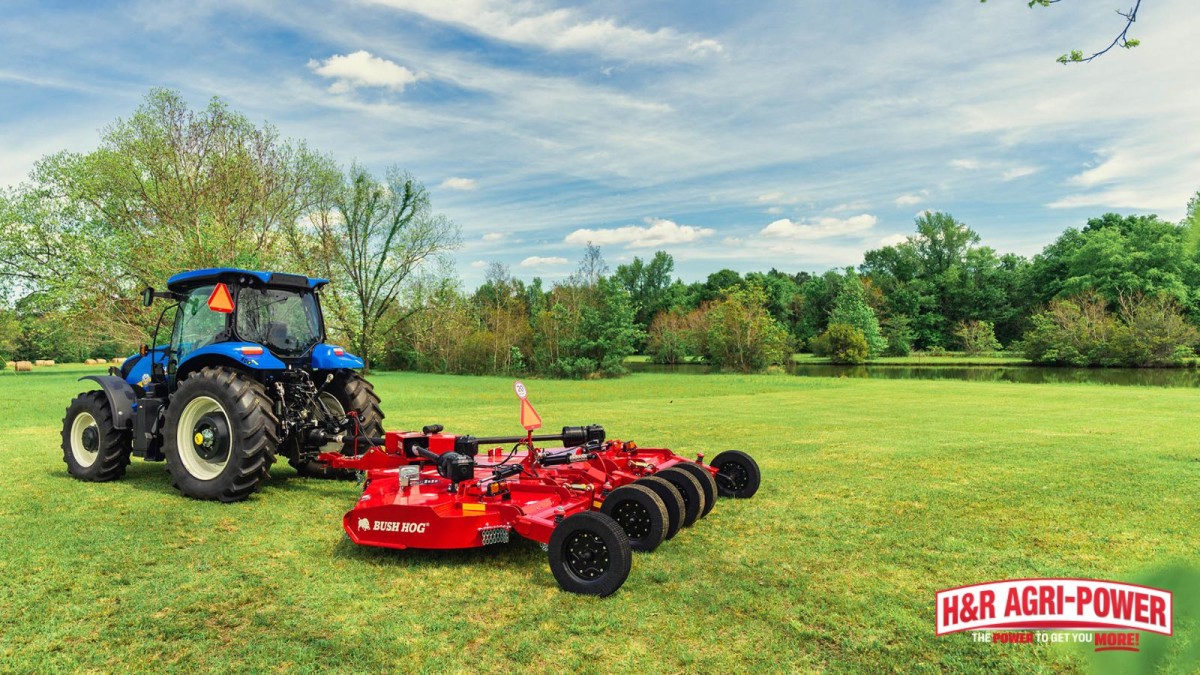
A bush hog cutter is a tractor-mounted rotary mower designed to clear grasslands, brush, and saplings across properties ranging from small farms to large-scale operations. Choosing the right one depends on matching cutter width and type to your specific acreage, tractor, and terrain.
This guide covers property-to-cutter sizing, cutter types and their trade-offs, tractor compatibility, maintenance and safety, budget planning, and where to find expert support.
Acreage directly determines the cutting width you need. Smaller properties under 10 acres pair well with compact 4- to 5-foot single-spindle cutters, while properties exceeding 50 acres benefit from 6-foot or wider models (and flex-wing cutters spanning 10 to 20 feet for the largest operations) to keep mowing time practical.
Bush Hog offers three primary cutter styles: rotary cutters for heavy brush and rough clearing, flail mowers for a finer finish at higher cost, and finishing mowers for groomed turf. Each serves a distinct purpose, and the vegetation density on your land plays a major role in which type performs best.
Your tractor's horsepower, PTO speed, and hitch type set firm limits on which cutters you can run. The general rule is 5 HP per foot of cutting width, so a 6-foot cutter needs at least 30 PTO horsepower to operate effectively.
Routine maintenance is straightforward; greasing bearings, changing gearbox oil, and replacing worn blades keep these machines productive for years. Safe operation requires constant awareness of thrown-object hazards and slope limitations.
Cutter prices range from a few thousand dollars for economy single-spindle models to well over $26,000 for commercial flex-wing units. Factoring in fuel, repairs, and ownership costs gives a clearer picture of long-term value than sticker price alone.
What factors determine the best Bush Hog cutter size for different property types?
The best Bush Hog cutter size for different property types depends on acreage, terrain conditions, and vegetation density. The following subsections break down how each factor shapes your ideal cutter selection.
How does acreage influence the size of Bush Hog cutter you need?
Acreage influences the size of Bush Hog cutter you need by dictating both cutting width and the tractor horsepower required to run it efficiently. The industry rule of thumb is 5 HP per foot of cutter, so a 5-foot bush hog requires at least 25 HP. For properties around 100 acres, experienced operators recommend a minimum 6-foot wide cutter, with a 7-foot model preferred if your tractor can handle it.
Pricing reflects these size jumps. According to TNT Supercenter, a 2024 Bush Hog BH310-2 Series 6-foot rotary cutter retails at $5,199, while a flex-wing model like the Bush Hog 4110 reaches $26,750. For smaller hobby farms under 10 acres, a 4- or 5-foot cutter keeps costs reasonable without sacrificing productivity.
What are the typical size categories for Bush Hog cutters?
The typical size categories for Bush Hog cutters are:
-
4- to 5-foot single-spindle cutters: Designed for compact and sub-compact tractors on small farms, these three-point hitch models handle light brush and pasture maintenance.
-
6- to 7-foot single-spindle cutters: The most common mid-range option, suited for properties between 25 and 100 acres with moderate vegetation.
-
10-foot drawbar cutters: Raised and lowered by hydraulics, these require at least 85 HP and serve larger operations with significant acreage.
-
Flex-wing (bat wing) cutters: Spanning up to 20 feet, these heavy-duty mowers need high-horsepower tractors and cover large fields or commercial properties in fewer passes.
Matching your property to the right category prevents both underpowering your cutter and overspending on capacity you will never use.
How do terrain and vegetation affect Bush Hog cutter choice?
Terrain and vegetation affect Bush Hog cutter choice by determining the required deck strength, cutting height adjustability, and safe operating slope. Flat pastures with light grass allow wider, faster cutters, while rough ground with stumps, rocks, or heavy brush demands a heavier-duty deck and hinged blade system that absorbs impacts.
Slope is a critical safety factor. According to OSHA, tractor mowers are approved for slopes up to 22 degrees; anything exceeding 25 to 30 degrees requires specialized equipment and extreme caution. Dense saplings and woody growth also call for higher horsepower ratings, since thicker vegetation places more strain on the gearbox and PTO drivetrain.
For properties with mixed terrain, prioritizing a rugged single-spindle cutter over a wider but lighter model typically yields better long-term durability. Understanding your tractor's power output helps match the right cutter to these conditions.
What are the main types of Bush Hog cutters available?
The main types of Bush Hog cutters available are rotary cutters, flail mowers, and finishing mowers. Each type serves a different purpose based on vegetation density, terrain conditions, and desired cut quality.
How do rotary cutters differ from flail and finishing mowers?
Rotary cutters differ from flail and finishing mowers in blade design, cut quality, cost, and intended application. Rotary cutters use hinged blades spinning at over 150 miles per hour, generating enough kinetic energy to cut through saplings several inches in diameter, according to Cornell Cooperative Extension. This raw power comes at the expense of a polished finish, as rotary cutters spread cut material rather than dropping it in place.
Flail mowers use multiple small blades attached to a rotating drum. They leave material where it falls and produce a more manicured appearance. However, the cost of a flail mower can be three to four times higher than a rotary cutter, with greater fuel consumption and repair expenses.
Finishing mowers deliver the cleanest cut of the three, designed specifically for groomed lawns and maintained turf areas. For most landowners managing mixed-use acreage, the rotary cutter remains the most versatile and cost-effective starting point.
What are the pros and cons of each Bush Hog cutter type?
The pros and cons of each Bush Hog cutter type center on durability, cut quality, and operating cost.
-
Rotary cutters handle heavy brush, saplings, and overgrown pasture at the lowest purchase price, but they produce a rough finish and scatter debris widely.
-
Flail mowers deliver an even cut and contain material in the mowing path, but they cost significantly more to buy, fuel, and repair.
-
Finishing mowers produce a manicured, lawn-quality result ideal for maintained turf, but they cannot handle thick brush or uneven terrain.
Matching the cutter type to your actual vegetation and finish expectations prevents overspending on features you will not use.
Which Bush Hog cutter types are best for rough or uneven ground?
The Bush Hog cutter types best for rough or uneven ground are single-spindle and multi-spindle rotary cutters. Their hinged blade design allows blades to deflect on impact with rocks, stumps, and debris rather than breaking. This makes rotary cutters far more forgiving on neglected fields and overgrown pastures than flail or finishing mowers, which require relatively smooth surfaces to function properly.
Timing matters as well. According to Spring Island Trust, bush-hogging is usually best done before the growing season in February through March, allowing habitat to recover quickly while minimizing negative impact.
For properties with significant grade changes or hidden obstacles, a heavy-duty rotary cutter paired with the right tractor horsepower is the most practical and reliable choice.
How do tractor specifications impact Bush Hog cutter selection?
Tractor specifications impact Bush Hog cutter selection by determining which cutter sizes your machine can safely power, connect to, and lift. Horsepower, PTO speed, and hitch configuration each play a role.
What horsepower requirements should you consider for different cutter sizes?
The horsepower requirements you should consider follow a widely cited guideline: 5 HP per foot of cutting width. A 5-foot Bush Hog cutter requires approximately 25 HP, while a 6-foot model needs around 30 HP. According to the TractorByNet community, this 5-HP-per-foot rule serves as a reliable baseline for matching tractor output to cutter demand.
Larger cutters scale accordingly. A 10-foot drawbar-mounted rotary cutter needs at least 85 HP, and bat-wing mowers reaching 20 feet require even higher horsepower tractors. Undersizing your tractor relative to the cutter strains the drivetrain, reduces cutting effectiveness, and accelerates wear on both machines. Always check the cutter's minimum HP rating against your tractor's PTO horsepower, not just engine horsepower, since PTO output is typically 15 to 20 percent lower.
How does PTO compatibility influence cutter performance?
PTO compatibility influences cutter performance by determining how efficiently power transfers from the tractor to the cutter's gearbox. Most Bush Hog cutters designed for small to mid-size tractors use a 540 RPM PTO, while heavy-duty models intended for higher-horsepower tractors often require a 1,000 RPM PTO.
The distinction matters because a 1,000 RPM PTO transmits power at lower torque than a 540 RPM shaft, providing more efficient power transfer at higher HP levels. Mismatching PTO speed damages the cutter gearbox and creates a serious safety hazard. Before purchasing, confirm your tractor's PTO speed output and verify it matches the cutter's specifications. Some tractors offer dual-speed PTO shafts, which adds flexibility when upgrading cutters later.
What is the importance of hitch type and lift capacity?
The importance of hitch type and lift capacity lies in their direct effect on cutter stability, maneuverability, and the range of models your tractor can support. According to Cornell Cooperative Extension, smaller tractors on typical small farms most commonly use three-point hitch cutters, which typically cover a pass of 5 or 6 feet.
Three-point hitch cutters offer precise height control and easy transport between fields. Larger cutters, generally 10 feet and above, attach at the drawbar and rely on hydraulic cylinders for raising and lowering. Your tractor's three-point lift capacity must exceed the cutter's total weight to safely raise and transport it. Insufficient lift capacity causes poor ground tracking and uneven cuts, particularly on hilly terrain.
With tractor specs properly matched, the next consideration is keeping your cutter safe and well maintained.
What maintenance and safety considerations come with using Bush Hog cutters?
Maintenance and safety considerations with Bush Hog cutters include routine blade care, gearbox servicing, and strict operating protocols to prevent injury. The sections below cover blade maintenance, essential safety features, and terrain-specific operating practices.
How can you maintain and sharpen Bush Hog cutter blades?
You can maintain and sharpen Bush Hog cutter blades through routine inspections and simple grinding. Unlike lawnmower blades, bush hog blades attach on hinges rather than rigid mounts, and they are designed to be relatively dull so they whack through dense vegetation with rotational force.
According to Cornell Cooperative Extension, brush hogs normally require minimal maintenance. A consistent schedule keeps them running reliably:
-
Grease all bearings, especially on the PTO driveshaft, before each use.
-
Maintain the proper weight oil in the gearbox and check for milky discoloration indicating moisture.
-
Sharpen blades with a handheld disc grinder whenever cutting efficiency drops.
-
Replace blades entirely when they become excessively worn or bent.
-
Inspect and maintain all safety shields after every session.
What safety features should you look for in a Bush Hog cutter?
The safety features you should look for in a Bush Hog cutter include chain shielding, deck reinforcement, and driveline guards. Rotary cutter blades can reach tip speeds exceeding 150 miles per hour, generating enough force to throw rocks and debris over 300 feet. These hazards make built-in protective features essential rather than optional.
Key safety features to prioritize:
-
Full-perimeter chain guards that contain thrown objects.
-
Heavy-gauge steel decks that resist puncture from stumps and rocks.
-
PTO driveline shields covering the entire shaft length.
-
Slip clutch or shear bolt protection to prevent gearbox damage during impact.
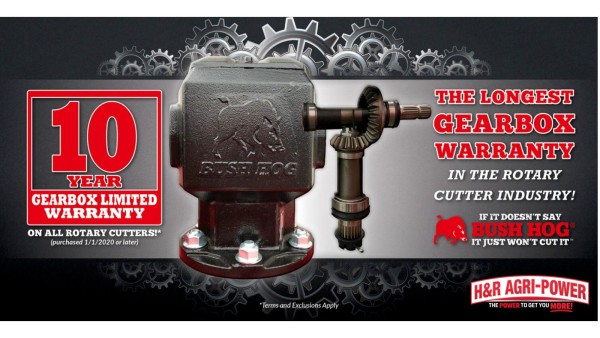
Bush Hog's 10-Year Gearbox Limited Warranty on models like the 4115 Flex-Wing reflects confidence in drivetrain durability, which directly ties to safer, more reliable operation.
How can you safely operate a Bush Hog cutter on various terrains?
You can safely operate a Bush Hog cutter on various terrains by matching ground speed to conditions, respecting slope limits, and clearing the area beforehand. OSHA approves tractor mowers on slopes between 15 and 22 degrees; anything exceeding 25 to 30 degrees demands specialized equipment and extreme caution.
Practical terrain safety guidelines include:
-
Walk unfamiliar fields first to identify rocks, stumps, and hidden ditches.
-
Reduce ground speed on rough or uneven terrain to maintain tractor stability.
-
Keep bystanders and children completely clear of the operating area, since debris can be thrown at speeds exceeding 200 mph.
-
Mow up and down slopes rather than across them to reduce rollover risk.
-
Schedule brush hogging before the growing season, ideally February through March, when vegetation is dormant and ground visibility is better.
For operators managing diverse property types, prioritizing pre-mow inspections over rushing through acreage prevents the most common equipment damage and personal injuries.
With proper maintenance habits and safety awareness established, the next step is aligning your cutter choice with your overall budget.
How does budget impact your choice of Bush Hog cutter?
Budget impacts your choice of Bush Hog cutter by determining the size, type, and long-term ownership costs you can sustain. Below, the cost differences across models and the additional expenses of ownership clarify what to expect at every price point.
What are the cost differences across Bush Hog cutter sizes and types?
The cost differences across Bush Hog cutter sizes and types range from a few thousand dollars for lightweight single-spindle models to well over $26,000 for flex-wing configurations. According to Cornell Cooperative Extension, a typical lightweight brush hog for a smaller tractor costs between $2,000 and $4,000, while larger ten-foot machines can easily reach $10,000.
Current retail pricing illustrates the spread across mid-range and commercial models:
-
A 2024 Bush Hog BH310-2 Series 6-foot rotary cutter retails at $5,199.
-
A 2024 Bush Hog BH316-2 72-inch rotary cutter retails at $5,759.
-
A 2024 Bush Hog 4110 Single Flex-Wing rotary cutter retails at $26,750.
The jump from a standard single-spindle cutter to a flex-wing is substantial, so matching the cutter to your actual acreage prevents overspending on capacity you will never use.
Are there additional costs involved in owning and operating a Bush Hog cutter?
Yes, there are additional costs involved in owning and operating a Bush Hog cutter beyond the purchase price. Fuel, repairs, labor, and routine maintenance all factor into total cost of ownership. According to the University of Illinois farmdoc, rotary mower ownership cost runs approximately $22.00 per hour, with operating cost at $9.20 per hour and labor at $6.70 per hour, totaling roughly $37.90 per hour fully loaded.
Key ongoing expenses include:
-
Gearbox oil changes when necessary.
-
Blade sharpening with a handheld disc grinder and eventual blade replacement.
-
Greasing all bearings, especially on the PTO driveshaft.
-
Safety shield inspection and replacement when damaged.
Thrown-object hazards also create indirect costs. Rocks, stones, and roadside debris can be thrown in excess of 300 feet, which means property damage and liability risk should be factored into your operating budget. Budgeting for these recurring expenses from the start is far more realistic than focusing solely on sticker price, and it often determines whether a buyer should size up for efficiency or stay conservative to keep per-hour costs manageable.
With a clear picture of both upfront and ongoing costs, the next step is finding expert guidance to match your budget to the right cutter.
Where can you get expert advice or service for choosing and maintaining Bush Hog cutters?
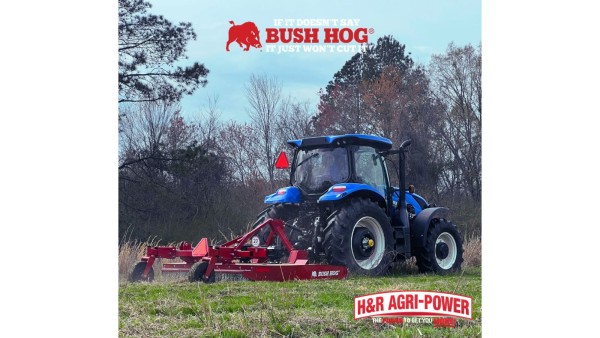
H&R Agri-Power offers expert advice and service for choosing and maintaining Bush Hog cutters across 17 dealership locations in five states. The sections below cover specific services and key decision-making takeaways.
What services does H&R Agri-Power offer for Bush Hog cutter selection and support?
H&R Agri-Power offers manufacturer-trained service technicians, the area's largest parts inventory, and 24-hour emergency parts and service support for Bush Hog cutter selection and maintenance. Founded in 1990 when Wayne Hunt took over the Case IH store in Hopkinsville, Kentucky, the dealership added Bush Hog as a core brand early on. Today, H&R Agri-Power operates 17 Bush Hog locations across Kentucky, Tennessee, Illinois, Indiana, and Mississippi.
Bush Hog has built American-made cutters since 1951, ranging from economy models for small tractors to heavy-duty shredding mowers for row crops and pastures. H&R Agri-Power matches these options to each customer's tractor specs and property needs. For landowners unsure where to start, having a knowledgeable dealer walk through horsepower requirements, cutting width, and terrain demands saves costly mismatches.
What are the key takeaways for choosing the right Bush Hog cutter for your property size?
The key takeaways for choosing the right Bush Hog cutter for your property size center on matching cutting width to acreage, verifying tractor compatibility, and planning for long-term maintenance:
-
Match cutter width to property scale: small lots under 10 acres work well with 4- to 5-foot cutters, while properties over 50 acres benefit from 6-foot or wider models.
-
Verify PTO compatibility before purchasing. A 1000 RPM PTO provides more efficient power transfer at higher horsepower levels, according to the TractorByNet community, while 540 RPM suits most mid-range tractors.
-
Confirm your tractor's horsepower, hitch type, and lift capacity meet the cutter's minimum requirements.
-
Budget for ongoing costs including blade sharpening, gearbox oil changes, and bearing maintenance.
-
Consider terrain and vegetation density; rough ground with saplings demands heavier-duty construction.
Getting these fundamentals right before you buy prevents expensive mismatches. H&R Agri-Power can help evaluate your specific property and tractor combination across any of its 17 Bush Hog locations.