

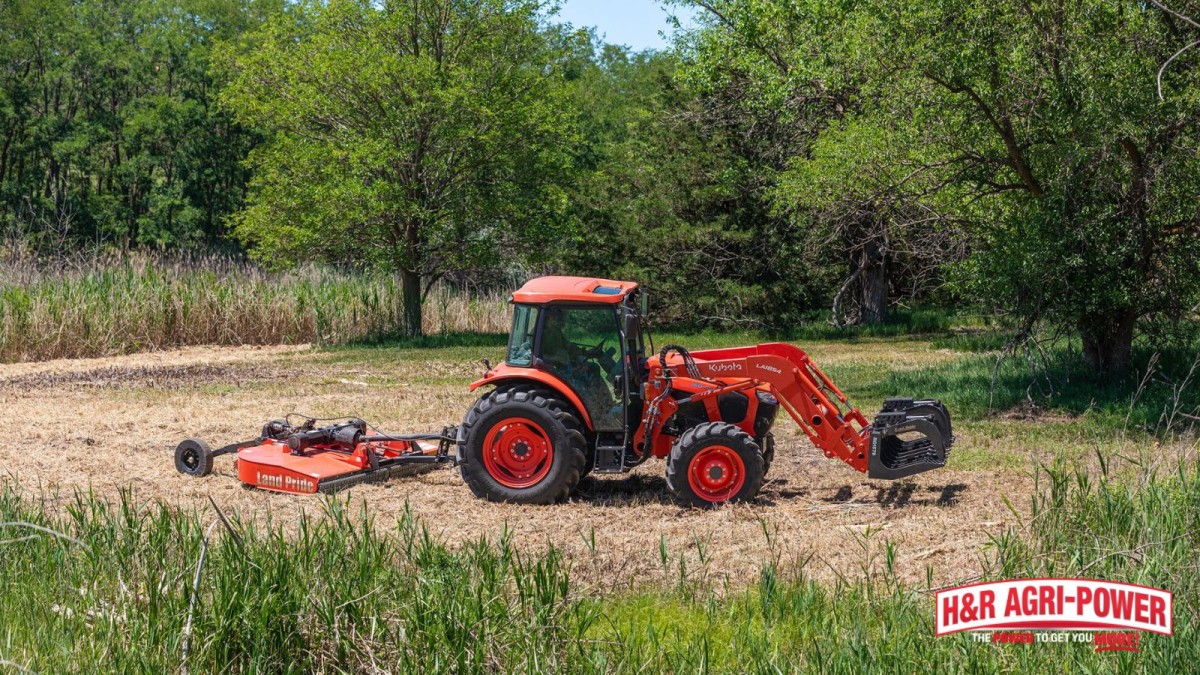
The best bush hog cutting width is the widest deck your tractor can safely power while still fitting the terrain and layout of your fields. Selecting the right width directly determines how many acres you cover per hour and how efficiently you use fuel, time, and equipment life.
This guide covers field and tractor matching, speed and efficiency gains, application-specific comparisons, common sizing mistakes, and practical calculation methods.
Field and tractor matching starts with three variables: acreage, terrain complexity, and available horsepower. Larger, open fields benefit from wider decks, while irregular ground with slopes, trees, or fence lines demands a narrower, more maneuverable cutter. Your tractor's horsepower sets a hard ceiling; a ten-foot rotary cutter can require 80 horsepower or more, and pairing an oversized deck with an underpowered tractor causes overloading and premature wear.
Speed and efficiency gains follow a clear formula. Wider implements cover more ground at the same travel speed, but real-world field efficiency for rotary cutters typically falls between 75% and 85% once you account for turning, overlapping, and adjustments. Wider decks also tend to show slightly lower field efficiency percentages, so raw width alone does not guarantee proportional time savings.
Application-specific comparisons matter because pasture maintenance, brush clearing, and residue management each place different demands on deck thickness, gearbox ratings, and cut height. Heavy-duty cutters built for brush and small trees use thicker decks and larger gearboxes than standard-duty models designed for grass.
Common sizing mistakes center on overestimating tractor capacity or ignoring field shape. Matching the cutter width to your actual operating conditions, not just your largest field, prevents performance problems and unnecessary cost.
Practical calculation methods let you estimate the optimal width before you buy by using field capacity formulas that factor in implement width, travel speed, and a realistic efficiency rating.
What Factors Should You Consider When Selecting a Bush Hog Cutting Width?
The factors you should consider when selecting a bush hog cutting width include field size, terrain and obstacles, tractor horsepower, and crop type. Each factor directly shapes which cutting width delivers the best balance of speed, safety, and performance.
How Does Field Size Influence the Ideal Bush Hog Cutting Width?
Field size influences the ideal bush hog cutting width by determining how many passes are needed to cover the total acreage. Larger fields benefit from wider cutting decks because each pass covers more ground, reducing total field time significantly.
Theoretical field capacity (TFC) in acres per hour is calculated by multiplying implement width in feet by speed in miles per hour, then dividing by 8.25. According to the University of Kentucky College of Agriculture, Food and Environment, this formula demonstrates how even a two-foot increase in cutting width can measurably boost hourly output.
However, wider implements tend to show slightly lower field efficiency due to increased overlap and longer turning arcs. For small or irregularly shaped fields, a compact five- or six-foot cutter often proves more practical than an oversized deck that struggles with tight corners.
How Do Terrain and Obstacles Affect Your Cutting Width Decision?
Terrain and obstacles affect your cutting width decision by limiting maneuverability and increasing the risk of equipment damage. Narrow, uneven, or obstacle-dense landscapes demand a more compact rotary cutter that can navigate safely.
A rotary cutter must pivot vertically about the lower link pins of the three-point hitch, allowing the mower deck to flex upward when the tractor dips into a depression. According to the LSU AgCenter, this vertical articulation is essential for maintaining consistent cut quality on undulating ground.
Key terrain factors that favor a narrower cutting width include:
-
Steep slopes that shift the tractor's center of gravity.
-
Rocky soils that increase blade strike risk on wider decks.
-
Fence lines, tree stands, and drainage ditches requiring tight clearance.
For open, level pastures, wider widths remain the more efficient choice.
What Role Does Tractor Horsepower Play in Choosing Cutting Width?
Tractor horsepower plays a decisive role in choosing cutting width because every additional foot of deck demands more engine power to maintain blade speed under load. An undersized tractor paired with an oversized cutter leads to bogging, excessive fuel consumption, and accelerated drivetrain wear.
According to the Cornell Small Farms Program, larger rotary cutters such as ten-foot models can require at least an 80-horsepower tractor to operate effectively. The mower should also be slightly wider than the tractor's wheel width for full coverage, but a mower that is too wide for the tractor's weight and power will cause overloading.
Matching horsepower to cutting width is one of the most overlooked steps in bush hog selection, yet it directly determines whether the implement performs as designed or becomes a constant source of mechanical problems.
How Do Crop Type and Residue Impact the Best Cutting Width for Your Needs?
Crop type and residue impact the best cutting width for your needs by affecting blade load and the duty rating required for safe, effective operation. Dense vegetation and heavy crop residue place greater demands on the gearbox, blades, and deck structure.
Heavy-duty rotary cutters feature thicker decks and larger gearboxes specifically designed for clearing heavy brush and small trees. When working through thick stalks or woody growth, a moderately sized cutter matched to a heavy-duty rating often outperforms a wider, standard-duty model that stalls under the load.
Lighter vegetation like maintained pasture grass allows wider cutting widths at faster speeds. The key is matching deck width and duty class to the material you cut most frequently, not just the acreage you need to cover.
With these selection factors established, understanding how cutting width translates into measurable field efficiency helps refine the final choice.
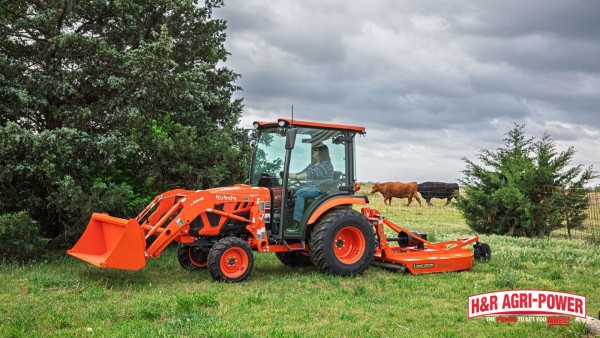
How Does Cutting Width Affect Field Work Speed and Efficiency?
Cutting width directly affects field work speed and efficiency by determining how many acres a bush hog covers per pass. Below, we explore how wider implements reduce total field time and where potential trade-offs arise.
In What Ways Can a Wider Bush Hog Reduce Your Total Field Time?
A wider bush hog reduces total field time by covering more ground per pass, which cuts the number of passes needed to complete a field. Theoretical field capacity (TFC) in acres per hour is calculated by multiplying implement width in feet by speed in miles per hour, then dividing by 8.25. Doubling cutting width at the same travel speed doubles your theoretical coverage rate.
However, real-world performance falls below the theoretical maximum. According to Mississippi State University Extension, field efficiency for rotary cutters typically ranges from 75% to 85%, accounting for time lost to turning, overlapping, and minor adjustments. Even with that reduction, wider implements still deliver a meaningful net gain in acres covered per hour compared to narrower models.
Are There Drawbacks to Using a Wider Cutting Width for Field Work?
There are drawbacks to using a wider cutting width for field work, particularly when field conditions or tractor capacity create limitations. As documented by Cornell Cooperative Extension, wider equipment operated at the same speed covers more acres per hour, yet field measurements show slightly lower field efficiency for wider implements. This efficiency drop comes from longer turning arcs at row ends, greater overlap needed on irregular field boundaries, and reduced maneuverability around obstacles.
Wider rotary cutters also demand more horsepower and add weight, which can strain undersized tractors. For operators working small, irregularly shaped, or obstacle-heavy fields, the speed advantage of a wider deck may be partially offset by increased time spent maneuvering.
Understanding these efficiency trade-offs helps when comparing bush hog sizes across specific applications.
How Do Bush Hog Cutting Widths Compare Across Different Applications?
Bush hog cutting widths compare across different applications based on vegetation density, maintenance goals, and required duty rating. Smaller widths suit routine pasture upkeep, while larger, heavy-duty widths handle brush clearing more effectively.
What Are the Advantages of Smaller vs. Larger Cutting Widths for Pasture Maintenance?
The advantages of smaller vs. larger cutting widths for pasture maintenance center on maneuverability and coverage efficiency. Smaller cutting widths, typically four to six feet, provide tighter turning and easier navigation around fence lines, water troughs, and uneven terrain. Larger cutting widths cover more ground per pass, reducing total mowing time on open pastures.
For operators maintaining pastures under 20 acres with scattered obstacles, a narrower cutter often proves more practical than a wider model that requires constant repositioning. On large, open pastures, wider cutters deliver clear time savings. Matching the width to how your pasture is actually laid out matters more than raw cutting capacity.
How Should You Choose Cutting Width for Brush Control and Heavy Vegetation?
You should choose cutting width for brush control and heavy vegetation by prioritizing duty rating and build quality over maximum width. According to the University of Georgia Extension, heavy-duty rotary cutters are designed for clearing heavy brush and small trees, featuring thicker decks and larger gearboxes compared to standard-duty models. A moderately sized heavy-duty cutter will outperform a wider, lighter unit in dense growth.
Key factors for brush control width selection include:
-
Vegetation diameter: saplings and thick brush demand heavy-duty components regardless of width.
-
Tractor power reserves: dense material requires sustained horsepower, limiting practical cutter size.
-
Cut height: rotary cutters should generally not be set lower than 3 inches, since cutting too low is the most common operational error.
For serious land clearing, choosing a cutter built for the task beats simply choosing the widest option available.
What Mistakes Should You Avoid When Choosing a Bush Hog Cutting Width?
The mistakes you should avoid when choosing a bush hog cutting width include overestimating your tractor's capacity and mismatching cutter size to your actual field operations. Both errors reduce efficiency and increase wear.
How Can Overestimating Tractor Capacity Lead to Performance Issues?
Overestimating tractor capacity leads to performance issues by forcing the engine, PTO, and hydraulic system to work beyond their safe operating limits. When a bush hog's cutting width demands more horsepower than the tractor can deliver, ground speed drops, fuel consumption spikes, and the drivetrain suffers accelerated wear.
A mower that is too wide for the tractor's weight and power will cause overloading, which strains the gearbox and can lead to premature failure. Operators often assume their tractor can handle a wider deck because it runs fine on flat, light grass. Once conditions change to thick brush or uneven terrain, the mismatch becomes clear. Always size your cutter to the tractor's continuous PTO rating, not its peak horsepower.
Why Is Matching Bush Hog Size to Field Operations Critical?
Matching bush hog size to field operations is critical because an improperly sized cutter wastes time, fuel, and money on every pass. A deck that is too wide for small or irregular fields forces excessive turning, while a deck that is too narrow on large acreage adds unnecessary hours.
According to Michigan State University Extension, effective field capacity can be estimated by multiplying the theoretical field capacity by the field efficiency factor, which for most mowing operations is approximately 0.80. That 20% loss accounts for turning, overlapping, and adjustments. Choosing a cutting width that minimizes these losses for your specific field layout directly improves productivity.
-
A cutter too wide for tight areas increases overlap and turning time, eroding that efficiency factor further.
-
A cutter too narrow for open pastures leaves potential capacity on the table.
-
The right match keeps your effective field capacity as close to the theoretical maximum as possible.
Selecting the correct width is not just about raw speed; it is about sustained, practical output across real working conditions. With cutter size properly matched, estimating the ideal width for your specific operation becomes much more straightforward.
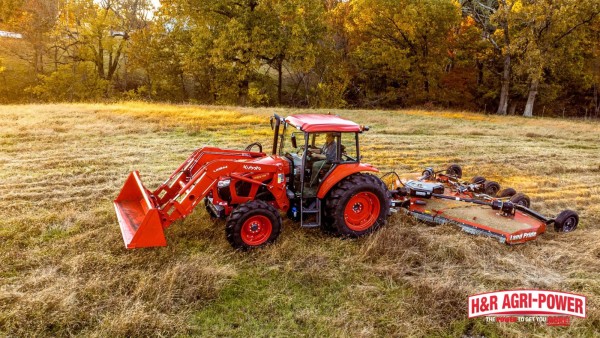
How Can You Estimate the Best Cutting Width for Your Operation?
You can estimate the best cutting width for your operation by using field capacity formulas and matching the result against your tractor's capabilities and field layout. The following subsections cover calculation methods and practical balancing strategies.
What Are Practical Methods to Calculate Optimal Cutting Width?
Practical methods to calculate optimal cutting width start with the theoretical field capacity formula. According to the University of Kentucky College of Agriculture, Food and Environment, theoretical field capacity in acres per hour equals the implement width in feet multiplied by speed in miles per hour, divided by 8.25.
To apply this formula:
-
Determine your target acres per hour based on available work windows.
-
Plug in your typical ground speed (usually 3 to 6 mph for rotary cutting).
-
Solve for the implement width that meets your productivity goal.
-
Multiply the result by a field efficiency factor of approximately 0.80 to get effective field capacity.
This approach turns cutting width selection from guesswork into a measurable decision, which is one of the most reliable ways to right-size a bush hog before purchasing.
How Do You Balance Cutting Width With Equipment and Field Constraints?
You balance cutting width with equipment and field constraints by ensuring the mower matches your tractor's power, weight, and the physical demands of your land. A mower should be slightly wider than the tractor's wheel width for full coverage, but oversizing relative to available horsepower causes overloading and premature wear.
Key constraints to weigh include:
-
Tractor horsepower and PTO rating relative to the cutter's gearbox demands.
-
Field shape and gate widths that limit transport and turning radius.
-
Terrain conditions, since steep slopes and rocky soils reduce both efficiency and safe operating width.
Wider implements also tend to produce slightly lower field efficiency due to increased overlap and longer turn times. Prioritizing a width your tractor handles comfortably across your most challenging fields delivers better long-term productivity than chasing maximum coverage on paper.
With cutting width estimated, matching the right bush hog to your operation becomes the next step.
How Should You Approach Bush Hog Selection With Equipment Sales and Service from H&R Agri-Power?
You should approach bush hog selection with H&R Agri-Power by leveraging over 50 years of equipment expertise across 21 locations in six states. The sections below cover personalized cutting width guidance and key takeaways.
Can H&R Agri-Power's Equipment Sales and Service Help With Choosing the Right Bush Hog Cutting Width?
Yes, H&R Agri-Power's equipment sales and service can help with choosing the right bush hog cutting width. H&R Agri-Power matches cutting width recommendations to your specific tractor horsepower, field size, and terrain conditions, drawing on decades of hands-on agricultural equipment experience. With 21 locations across Kentucky, Tennessee, Illinois, Alabama, Indiana, and Mississippi, H&R Agri-Power provides in-person consultations where specialists evaluate your operation before recommending a size.
Choosing the wrong cutting width affects more than efficiency; it directly impacts operating costs. According to Mississippi State University Extension Service, the average custom rate for brush hogging in Mississippi is $72.00 per hour, with rates ranging from $30.00 to $125.00. Selecting a properly matched bush hog reduces hours in the field and lowers those per-hour costs significantly.
H&R Agri-Power carries top-tier brands such as Bush Hog, giving you access to a wide selection of rotary cutters across multiple duty ratings and widths.
What Are the Key Takeaways About How to Choose the Best Bush Hog Cutting Width for Faster Field Work We Covered?
The key takeaways about how to choose the best bush hog cutting width for faster field work are:
-
Field size is the primary driver of cutting width; larger acreage benefits from wider decks that increase effective field capacity.
-
Tractor horsepower must match the rotary cutter size to prevent overloading and performance loss.
-
Terrain and obstacles dictate maneuverability needs, often favoring narrower widths on irregular or wooded ground.
-
Vegetation type and duty rating determine deck thickness and gearbox requirements for reliable cutting.
-
Wider implements improve theoretical coverage but produce slightly lower field efficiency due to added turning and overlap time.
-
Calculating effective field capacity before purchasing prevents costly mismatches between equipment and operation size.
For personalized guidance on matching a bush hog to your specific operation, H&R Agri-Power offers expert consultations at any of its 21 dealership locations.