

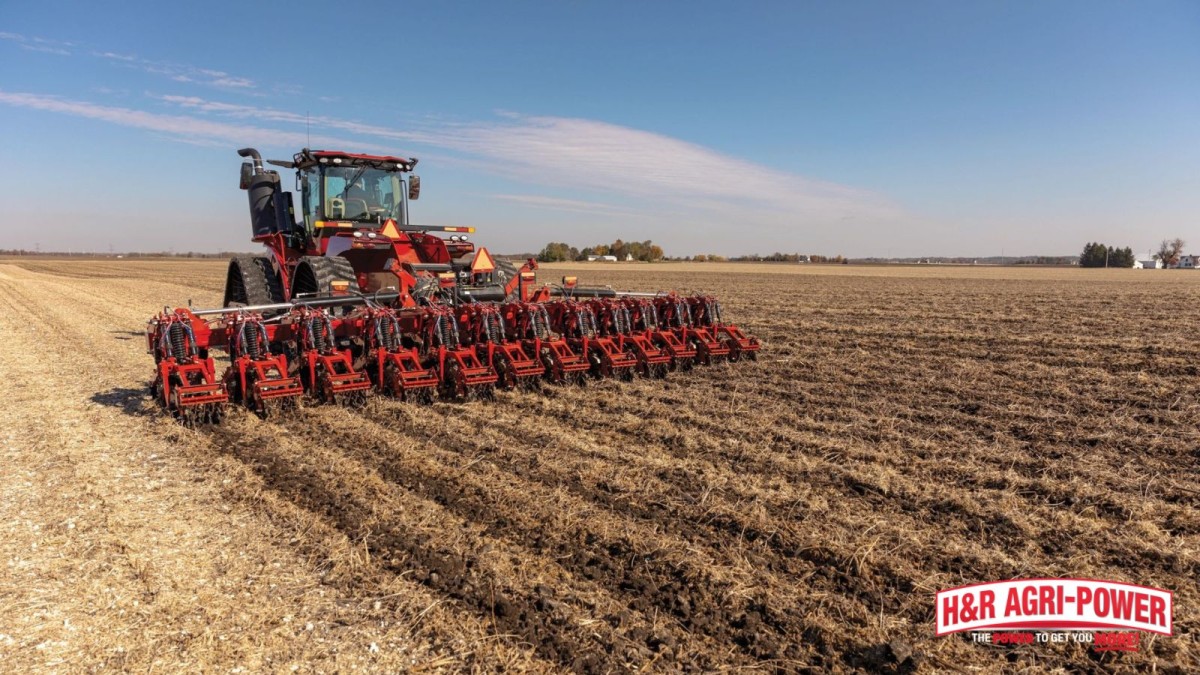
Precision tillage is a targeted approach to soil management that addresses compaction only where it exists, rather than disturbing an entire field uniformly. Case IH precision tillage systems give row-crop farmers the tools to fracture compacted layers, restore pore space, and protect yield potential without the collateral soil damage that comes from full-width conventional tillage.
This guide covers what soil compaction is and how it forms, how precision tillage differs from conventional methods, the Case IH equipment designed to address it, the agronomic outcomes farmers can expect, and how to build a long-term soil health strategy around these tools.
Soil compaction reduces porosity below functional thresholds, restricting root growth and limiting the movement of air and water through the profile. Research shows yield losses from a single compaction event can persist into the third year, making early diagnosis and targeted intervention critical for protecting long-term field productivity.
Precision tillage differs from conventional tillage by matching working depth to actual compaction zones, which reduces unnecessary soil disturbance and fuel consumption. Strip-till systems like the Nutri-Tiller 1000 Series preserve interrow soil structure entirely, while variable-depth rippers like the Ecolo-Tiger 875 concentrate disturbance where hardpan layers actually exist.
Case IH offers three primary implements for compaction relief: the Ecolo-Til 2500 in-line ripper, the Nutri-Tiller 1000 Series strip-till tool, and the Ecolo-Tiger 875 disk ripper. Each targets compaction differently, from deep shank fracturing to zone tillage combined with nutrient placement, allowing farmers to match the tool to the field condition. H&R Agri-Power carries all three of these implements across its 18 Case IH locations in Kentucky, Tennessee, Illinois, Alabama, Indiana, and Mississippi, giving row-crop farmers in those regions direct access to hands-on equipment guidance from staff with over 50 years of agricultural experience.
Agronomic benefits of precision tillage extend beyond compaction relief to include improved water infiltration, better fertilizer efficiency, and reduced input costs over multiple seasons.
What Is Soil Compaction and Why Does It Matter to Farmers?
Soil compaction is a physical condition in which soil particles are pressed together, reducing pore space and restricting the movement of air, water, and plant roots. It matters to farmers because compacted soils directly reduce crop yields, increase input costs, and degrade long-term field productivity. The following sections cover how compaction forms, what it does to soil structure, and the yield losses farmers can expect.
What Is Soil Compaction?
Soil compaction is the compression of soil particles that reduces porosity and limits root penetration. According to the USDA Natural Resources Conservation Service, high bulk density is an indicator of low soil porosity and compaction, which restricts root growth and impairs movement of air and water through the soil. Healthy soil structure, by contrast, consists of roughly 50 percent solid particles and 50 percent pore space, with air and water filling that space equally to support root activity. When heavy equipment, repeated traffic, or tillage at the same depth collapses that pore structure, the soil loses its capacity to sustain healthy crops.
How Does Soil Compaction Affect Crop Yield?
Soil compaction affects crop yield by reducing root access to nutrients, water, and oxygen. Researchers at Purdue University observed stand count reductions of 20 to 30 percent and yield reductions of approximately 19 percent in compacted plots compared to non-compacted soil, as reported by the University of Minnesota Extension. A 2018 study published in the Journal of Biosystems Engineering found that corn yields continued to decline by 4.13 percent in the second year and 2.62 percent in the third year after a single compaction event. These losses compound across seasons, making compaction one of the most economically significant soil health threats facing row-crop farmers today.
What Causes Soil Compaction on Farm Fields?
The causes of soil compaction on farm fields include heavy equipment traffic, field operations on wet soils, and repeated tillage at a uniform depth. Tillage at the same depth each year creates a hardpan layer, often called a plow pan, just below the working zone. Axle loads from grain carts and combines concentrate pressure at the soil surface and subsoil simultaneously. Wet field conditions amplify compaction risk because saturated soils offer far less structural resistance. Recognizing these causes is the first step toward selecting the right tillage strategy to break existing compaction and prevent new layers from forming.
How Does Precision Tillage Differ from Conventional Tillage?
Precision tillage differs from conventional tillage by targeting only the soil zones that need disturbance, rather than working an entire field uniformly. The sections below cover how variable-depth adjustments save fuel and how strip-till protects soil structure between rows.
How Does Variable-Depth Tillage Save Fuel and Reduce Compaction?
Variable-depth tillage saves fuel by matching tillage depth to actual soil conditions across each zone of a field. Conventional tillage runs at a single fixed depth regardless of whether compaction exists at that point, forcing the tractor to work harder than necessary across large portions of the field.
According to Ohio's Country Journal, prescriptive tillage using variable-depth adjustments on a Case IH Ecolo-Tiger 875 uses 5 to 10% less fuel per acre compared to traditional tillage because the tractor does not work as hard throughout the entire field. Fewer unnecessary tillage passes also means fewer equipment trips across the soil, which directly limits the additional compaction that repeated field traffic causes.
How Does Strip-Till Preserve Soil Structure Between Rows?
Strip-till preserves soil structure between rows by disturbing only the narrow planting zone while leaving the interrow soil undisturbed. This approach maintains natural soil aggregation, root channels, and organic matter in the areas that never receive seeds.
A 2025 soybean tillage study reported by Precision Planting found strip-till delivered the highest yield at 80.8 bushels per acre across all tillage programs tested. Randall Reeder, a retired Extension agricultural engineer from Ohio State University, notes that strip-till works best when completed in the fall, and “you want to get it done while the ground is still fairly dry.” Protecting interrow soil from unnecessary tillage is one of the most underrated compaction-reduction strategies available to row-crop farmers.
What Case IH Precision Tillage Equipment Addresses Soil Compaction?
Case IH precision tillage equipment that addresses soil compaction includes the Ecolo-Til 2500 in-line ripper, the Nutri-Tiller 1000 series strip-till tool, and the Ecolo-Tiger 875 disk ripper. Each machine targets compaction differently, from deep shank ripping to zone tillage and aggressive disk cutting.
What Is the Ecolo-Til 2500 In-Line Ripper?
The Ecolo-Til 2500 in-line ripper is a Case IH deep-tillage implement designed to fracture hardpan and plow pan layers with minimal soil disturbance at the surface. According to Linder Equipment specifications, the Ecolo-Til 2500 offers row spacing options of 30, 36, 38, and 40 inches, working widths from 7 feet 6 inches to 26 feet 6 inches, and requires 28 to 38 PTO horsepower per shank. Farmers debating vertical till versus in-line ripping for plow pan destruction will find the Ecolo-Til 2500 purpose-built for that task, delivering deep fracturing without full-width inversion.
What Is the Nutri-Tiller 1000 Series?
The Nutri-Tiller 1000 series is a Case IH strip-till tool that combines targeted zone tillage with precision nutrient placement in a single pass. It is available in 6-, 8-, and 12-row mounted models with transport widths from 12 feet 4 inches to 14 feet 7 inches, and features parallel linkage with 12 inches of vertical travel (6 inches up/down). By tilling only the crop row, the Nutri-Tiller 1000 leaves interrow soil undisturbed, preserving soil structure and reducing field-wide compaction risk.
What Is the Ecolo-Tiger 875 Disk Ripper?
The Ecolo-Tiger 875 disk ripper is a Case IH implement engineered for aggressive disk-cutting power combined with deep compaction relief. It features a minimum of 36-inch spacing between points and high underframe clearance for working through heavy residue without plugging. The Ecolo-Tiger 875 suits fields where both surface residue management and subsurface compaction fracturing must be accomplished in a single pass, making it a versatile choice for corn or soybean ground with layered hardpan.
How Does the Ecolo-Til 2500 Reduce Soil Compaction?
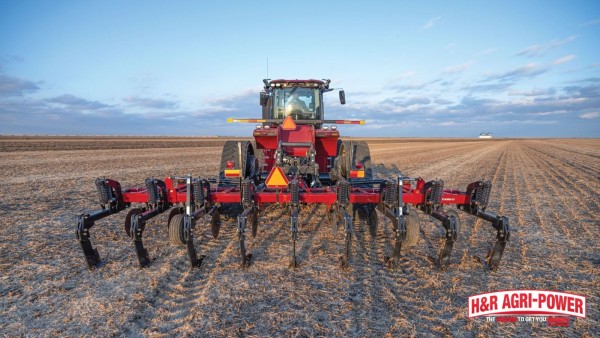
The Ecolo-Til 2500 reduces soil compaction by driving shanks deep into the soil profile to fracture compacted layers, restoring pore space for water, air, and root penetration. The sections below cover working depth and which soil types benefit most.
How Deep Does the Ecolo-Til 2500 Work?
The Ecolo-Til 2500 works by using in-line shanks to penetrate deep into the subsoil, targeting hardpan and plow pan layers that restrict root growth. Shank spacing options of 30, 36, 38, and 40 inches allow the machine to be configured for varying row spacings and compaction depths. The implement requires 28 to 38 PTO horsepower per shank, meaning adequate tractor power is essential to achieve consistent penetration across the working width.
What Soil Types Benefit Most from the Ecolo-Til 2500?
The soil types that benefit most from the Ecolo-Til 2500 are those with significant compaction reducing their pore space below functional thresholds. According to Kansas State University Research and Extension, most agricultural soils have a porosity of about 50 percent, but compaction decreases that porosity, limiting the space available for water and air. Compacted clay-heavy soils, high-traffic row crop fields, and soils with identifiable plow pans see the most direct benefit, as deep shank ripping restores the fracture and aeration those profiles have lost.
What Is the Ecolo-Til 2500 In-Line Ripper?
The Ecolo-Til 2500 in-line ripper is a Case IH vertical tillage implement designed to fracture compaction layers beneath the soil surface while leaving surface residue largely intact. It targets plow pan and hardpan zones that restrict root growth and water infiltration, making it a practical choice for farmers managing compacted row-crop fields.
The Ecolo-Til 2500 offers shank spacing options of 30, 36, 38, and 40 inches, with working widths ranging from 7 feet 6 inches to 26 feet 6 inches. According to the Linder Equipment product brochure, the implement requires 28 to 38 PTO horsepower per shank, meaning tractor sizing is a critical factor when matching this tool to existing equipment. The in-line shank configuration is what sets this ripper apart from disk-based alternatives: shanks run in a single file, reducing draft resistance and allowing deeper penetration with less soil disturbance at the surface. For fields where residue management and compaction relief are both priorities, this design represents one of the most efficient approaches available in the Case IH tillage lineup.
How Does the Nutri-Tiller 1000 Series Combine Tillage and Nutrient Placement?
The Nutri-Tiller 1000 Series combines tillage and nutrient placement by performing strip-till operations and applying fertilizer in a single field pass. The sections below cover how strip-till reduces compaction and which crops benefit most from this system.
How Does Strip-Till Reduce Overall Field Compaction?
Strip-till reduces overall field compaction by disturbing only the narrow row zone where seeds will be planted, leaving the soil between rows undisturbed. Unlike full-width tillage, this approach preserves the natural soil structure across the majority of the field, limiting the breakdown of pore space that supports root growth, water movement, and air exchange. Because tractor and implement traffic is concentrated in the same interrow zones each season, compaction risk stays contained rather than spread across every acre. For row-crop farmers managing heavy equipment loads, strip-till is one of the most practical compaction management strategies available.
What Crops Benefit from the Nutri-Tiller 1000 Series?
The crops that benefit from the Nutri-Tiller 1000 Series are primarily row crops, such as corn and soybeans, planted on consistent row spacings that align with the tool's row configurations. According to Case IH, the Nutri-Tiller 1000 is available in 6-, 8-, and 12-row mounted models with transport widths from 12 feet 4 inches to 14 feet 7 inches, and features parallel linkage with 12 inches of vertical travel. That vertical travel range allows each row unit to follow field contours independently, maintaining consistent tillage depth and fertilizer placement across uneven terrain.
What Is the Nutri-Tiller 1000 Series?
The Nutri-Tiller 1000 Series is a Case IH strip-till tool designed to simultaneously till narrow seedbed zones and place nutrients in a single field pass. By limiting soil disturbance to the crop row, it preserves beneficial soil structure between rows while still addressing compaction where roots need it most.
According to Case IH, the Nutri-Tiller 1000 Series is available in 6-, 8-, and 12-row mounted models, with transport widths ranging from 12 feet 4 inches to 14 feet 7 inches. The parallel linkage system provides 12 inches of vertical travel, with 6 inches of upward and 6 inches of downward movement, allowing each row unit to follow ground contours independently. For row crop farmers working uneven terrain, this level of individual row responsiveness is one of the most practically valuable features a strip-till tool can offer.
How Does the Ecolo-Tiger 875 Disk Ripper Break Hardpan Compaction?
The Ecolo-Tiger 875 breaks hardpan compaction by combining aggressive disk-cutting action with deep ripping to fracture compacted soil layers. The sections below cover when to choose it over an in-line ripper and how it prepares a seedbed after deep tillage.
When Should Farmers Choose the Ecolo-Tiger 875 Over an In-Line Ripper?
Farmers should choose the Ecolo-Tiger 875 over an in-line ripper when fields have both surface residue management needs and deep hardpan layers requiring simultaneous tillage. The Ecolo-Tiger 875 features a minimum 36-inch spacing between points and delivers aggressive disk-cutting power with high underframe clearance, making it well suited for heavy-residue conditions where an in-line ripper would struggle to maintain consistent depth and trash flow.
In-line rippers, like the Ecolo-Til 2500, excel in cleaner fields where targeted fracturing of a plow pan is the primary goal. When residue volume is high and soil structure requires both surface incorporation and subsoil fracturing in a single pass, the Ecolo-Tiger 875 is the stronger choice. For most high-residue situations, this dual-action capability meaningfully reduces the number of field passes required.
How Does the Ecolo-Tiger 875 Prepare a Seedbed After Deep Ripping?
The Ecolo-Tiger 875 prepares a seedbed after deep ripping by using its disk gang configuration to cut, mix, and level disturbed soil immediately following subsoil fracture. The disks break apart large clods lifted by the ripping shanks, incorporating residue while leaving a firm, level surface suitable for planting.
According to Case IH, the machine's high underframe clearance prevents residue bridging, keeping the disk blades and shanks operating cleanly through heavy material. This integrated approach reduces the need for a separate finishing pass, saving both time and fuel across the operation.
What Is the Ecolo-Tiger 875 Disk Ripper?
The Ecolo-Tiger 875 disk ripper is a Case IH tillage implement designed for aggressive disk-cutting power combined with deep soil fracturing to relieve hardpan compaction. According to the official Case IH product page, the Ecolo-Tiger 875 features a minimum of 36-inch spacing between points and is built with high underframe clearance to handle heavy residue without plugging.
This design makes the Ecolo-Tiger 875 well-suited for fields where surface residue management and subsoil compaction relief must be addressed simultaneously. Its disk-ripper configuration distinguishes it from straight-shank in-line rippers by cutting through residue while fracturing compacted layers below, making it one of the more versatile precision tillage tools in the Case IH lineup.
What Agronomic Benefits Can Farmers Expect from Case IH Precision Tillage?
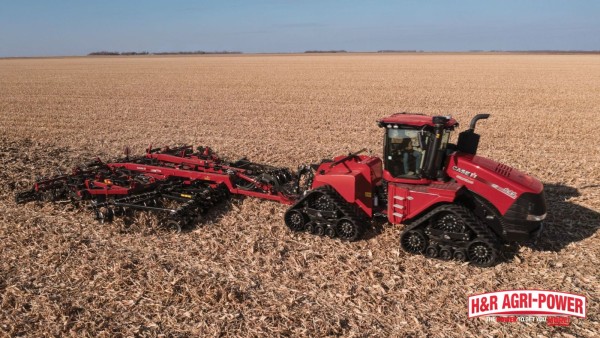
The agronomic benefits farmers can expect from Case IH precision tillage include improved root penetration, better water infiltration, enhanced nutrient uptake, and measurable yield protection. The following sub-sections detail how these outcomes are supported by soil science and field research.
How Does Precision Tillage Improve Root Development and Crop Yields?
Precision tillage improves root development by fracturing compacted soil layers that physically restrict downward growth. When bulk density rises, roots cannot penetrate effectively, limiting access to subsoil moisture and nutrients. Researchers at Purdue University observed stand count reductions of 20 to 30 percent and yield reductions of approximately 19 percent in compacted plots compared to non-compacted soil, according to University of Minnesota Extension. Targeted tillage restores pore space without disturbing the entire field, allowing roots to expand where they are needed most. In practice, this translates directly to more consistent stands, better canopy closure, and stronger yield potential across variable soil conditions.
How Does Precision Tillage Reduce Input Costs Over Time?
Precision tillage reduces input costs by concentrating soil disturbance only where compaction exists, rather than working the entire field uniformly. Fertilizer efficiency improves when roots reach properly aerated soil zones, reducing the amount of applied nutrients lost to runoff or immobility. Fuel consumption also decreases because equipment works less across undisturbed zones. A 2025 soybean tillage study found strip-till delivered the highest yield at 80.8 bushels per acre, demonstrating that reduced-disturbance approaches can match or exceed conventional tillage output without the same input intensity. Over multiple seasons, the combination of lower fuel use, better fertilizer response, and sustained yields makes precision tillage a strong long-term economic strategy.
Does Precision Tillage Help with Water Management and Drainage?
Precision tillage does help with water management by restoring the pore space compacted soils lose over time. Agricultural soils normally maintain around 50 percent porosity, but compaction shrinks that pore space, reducing both water infiltration and drainage. By selectively fracturing hardpan layers, precision tillage re-establishes pathways for water to move through the profile rather than pooling on the surface or running off. Improved drainage also reduces waterlogging risk during wet planting seasons, allowing earlier field entry. Better infiltration further supports drought resilience by increasing the soil's capacity to store water at depth where roots can access it during dry periods.
How Does Precision Tillage Fit Into a Long-Term Soil Health Plan?
Precision tillage fits into a long-term soil health plan by targeting compaction relief where it's needed while preserving soil structure in undisturbed zones. The sections below cover the foundational soil composition targets farmers should aim for and the timing strategies that make precision tillage most effective over time.
What Soil Composition Goals Should Precision Tillage Support?
Soil composition goals that precision tillage should support center on achieving healthy soil tilth: 50 percent solid soil particles and 50 percent pore space, with water and air equally distributed within that pore space. According to the University of Minnesota Water Resources Center, this balance directly supports healthy plant root activity. Precision tillage tools, such as strip-till units and in-line rippers, work to restore that ratio in compacted zones without collapsing the pore structure across the entire field. Maintaining this target consistently across seasons is what separates a reactive tillage approach from a genuine long-term soil health strategy.
How Should Farmers Time Precision Tillage for Maximum Soil Health Benefit?
Farmers should time precision tillage in the fall whenever possible to maximize soil health benefits over the long term. Randall Reeder, a retired Extension agricultural engineer from Ohio State University, advises that strip-till works best when completed early in the fall, and that “you want to get it done while the ground is still fairly dry.” Fall timing also allows freeze-thaw cycles to further break up loosened soil, improving pore structure naturally. Pairing fall precision tillage with spring soil testing helps farmers track whether compaction is genuinely being reduced season over season, turning each tillage pass into a measurable step in a multi-year soil health program. For farmers looking to build that kind of structured, season-over-season approach, H&R Agri-Power's precision agriculture services are designed to support implement selection and field-level planning as part of a longer-term soil health strategy.
How Can H&R Agri-Power Help Farmers Select the Right Case IH Tillage Equipment?
H&R Agri-Power helps farmers select the right Case IH tillage equipment through 18 locations across Kentucky, Tennessee, Illinois, Alabama, Indiana, and Mississippi, backed by over 50 years of agricultural expertise and a dedicated Precision Ag Department.
Does H&R Agri-Power Offer Precision Farming Support for Case IH Tillage Systems?
H&R Agri-Power's Precision Ag Department offers technology solutions including nutrient management, crop monitoring, GPS guidance, and field mapping to support Case IH tillage systems. These tools allow farmers to implement prescriptive tillage strategies, such as variable-depth adjustments on the Ecolo-Tiger 875, which uses 5–10% less fuel per acre compared to traditional tillage, according to Ohio's Country Journal. Pairing precision technology with the right implement selection is, in practice, one of the most effective ways to reduce operating costs while protecting long-term soil health.
What Are the Key Takeaways About Case IH Precision Tillage Methods to Reduce Soil Compaction?
The key takeaways about Case IH precision tillage methods to reduce soil compaction are that targeted, depth-controlled tillage protects soil structure, preserves yield potential, and supports sustainable productivity. Compaction raises bulk density, restricting root growth and limiting air and water movement through the soil. A 2018 study published in the Journal of Biosystems Engineering found corn yields decreased 4.13% and 2.62% in the second and third years following a compaction event. Selecting the right Case IH implement, whether an Ecolo-Til 2500, Nutri-Tiller 1000, or Ecolo-Tiger 875, and matching it to field conditions is the clearest path to lasting compaction relief.