

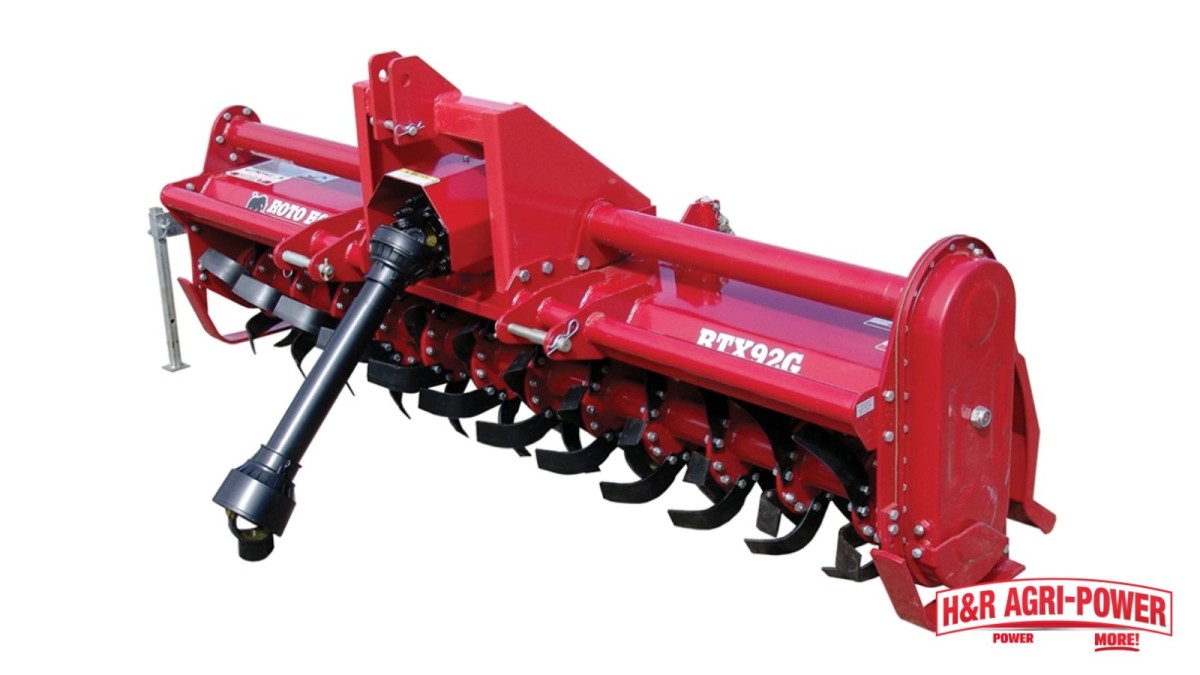
A Bush Hog tiller is a PTO-driven rotary tillage implement designed for three-point hitch tractors. It breaks, mixes, and refines soil for garden beds, food plots, and small field preparation across a range of soil types and property sizes.
We cover Bush Hog tiller features and sizing, brand and implement comparisons, food plot preparation practices, selection criteria for matching tillers to tractors and tasks, and long-term maintenance and support.
Bush Hog builds tillers in widths from roughly four feet for compact garden tractors up to 92-inch models rated for 60 to 90 PTO horsepower, so there is a fit whether you are turning a backyard vegetable bed or prepping a multi-acre field. Soil type matters as much as plot size; clay-heavy ground requires dry conditions to avoid compaction, while loamy soils till cleanly in a broader moisture window.
Rotary tillers differ from disc harrows and cultivators in one critical way: they produce a finely broken seedbed in a single pass. That makes them the preferred tool when uniform seed-to-soil contact is the goal, especially for food plots where plant establishment directly influences local wildlife distribution and forage diversity.
Choosing the right model comes down to matching tilling width, PTO horsepower requirements, and cut depth to your specific tractor and application. Equally important is access to parts and dealer support, which keeps downtime low across planting seasons.
Routine blade inspection, gearbox service, and proper storage protect your investment over years of use. We also outline how H&R Agri-Power provides sales, parts, and service for Bush Hog tillers at our dealership locations.
What Features Make Bush Hog Tillers Suitable for Gardens and Small Plots?
Bush Hog tillers suit gardens and small plots through versatile soil handling, scalable sizing, and straightforward three-point hitch attachment. The sections below cover soil performance, model selection, and compact tractor compatibility.
How Do Bush Hog Tillers Work in Different Soil Conditions?
Bush Hog tillers work in different soil conditions by using rotating blades that break, mix, and aerate soil in a single pass. In loose, sandy soils, the tines cut through quickly to create a fine seedbed with minimal resistance. Heavier loam and compacted ground require slower travel speeds, allowing the blades more contact time to fracture dense layers.
Clay soils demand the most caution. Timing matters more than horsepower in these conditions, because working clay while it still holds excess moisture creates large, stubborn clods rather than a plantable bed. Waiting until clay dries to a crumbly consistency lets the tiller shatter it into workable particles. For gardeners dealing with mixed soil profiles, making a shallow first pass followed by a deeper second pass produces the most uniform results.
What Sizes and Models of Bush Hog Tillers Are Best for Home Gardens?
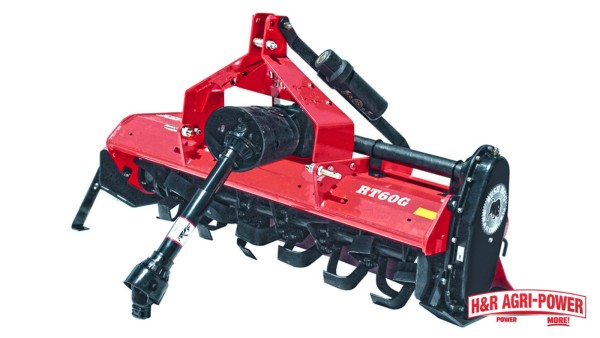
The sizes and models of Bush Hog tillers best for home gardens are typically 4- to 5-foot-wide, three-point-mounted rotary tillers paired with compact utility tractors. According to the University of Georgia Extension, three-point tractor-mounted tillers are extremely useful in larger garden plots, with most home garden sites best suited to a 4- or 5-foot-wide model requiring approximately 18 to 30 horsepower through a PTO and three-point hitch system.
This horsepower range aligns well with the compact and sub-compact tractors many homeowners already own. A narrower tilling width also improves maneuverability around raised beds, fence lines, and established plantings. Matching tiller width to your tractor's rated PTO output prevents strain on the drivetrain and produces a more consistent tillage depth across the entire pass.
Are Bush Hog Tillers Easy to Attach and Operate With Compact Tractors?
Yes, Bush Hog tillers are easy to attach and operate with compact tractors. The standard Category I three-point hitch and PTO shaft connection allows a single operator to back up, align the mounting pins, and lock the tiller into place within minutes. No specialized tools or adapters are required for most compact tractor setups.
Operation is equally straightforward. The operator engages the PTO, lowers the implement to the desired depth using the tractor's hydraulic controls, and drives forward at a steady pace. Depth adjustment happens on the fly through the three-point hitch position lever. One important operational note: as Utah State University Extension warns, clay should not be tilled when wet, since tilling high-clay soils in wet conditions results in the formation of large soil clods that are difficult to break down later. Checking soil moisture before each session protects both soil structure and equipment longevity.
With attachment and operation covered, the next step is understanding how Bush Hog tillers compare to competing brands and alternative tillage tools.
How Do Bush Hog Tillers Compare to Other Tiller Brands and Types?
Bush Hog tillers compare favorably through heavy-duty gearbox construction, deep cutting capacity, and strong dealer support networks. The following subsections cover brand differentiation, equipment type differences, and key advantages and limitations.
What Sets Bush Hog Tillers Apart From Other Brands on the Market?
Bush Hog tillers are set apart from other brands by their reinforced gearbox warranty structure and commercial-grade build quality. Bush Hog offers a one-year machine limited warranty with a five-year limited warranty on gearboxes for some models. This extended gearbox coverage signals confidence in drivetrain durability, which is the component most prone to stress during heavy tilling. Many competing brands, including Land Pride, offer similar one-year overall coverage but vary in long-term gearbox terms. For operators who till compacted or rocky ground regularly, gearbox longevity often determines total cost of ownership more than the initial purchase price.
How Do Rotary Tillers Differ From Disc Harrows or Cultivators?
Rotary tillers differ from disc harrows and cultivators in how they engage the soil and the seedbed quality they produce. Key differences include:
-
Rotary tillers use PTO-driven rotating blades to pulverize soil into fine, uniform seedbeds ideal for gardens and small food plots.
-
Disc harrows cut and turn soil in broad passes, breaking up large clods and crop residue but leaving a coarser finish.
-
Cultivators loosen the top few inches of already-worked soil, serving primarily for weed control between rows rather than primary ground breaking.
According to Ohio State University Extension, a rotary hoe operates from the power take-off and three-point hitch of a tractor and is generally used where finely tilled seedbeds are desired or where small plots are being installed. For garden and food plot applications, rotary tillers consistently deliver the refined soil texture that promotes even seed-to-soil contact.
What Are the Pros and Cons of Using a Bush Hog Tiller?
The pros and cons of using a Bush Hog tiller reflect its design priorities for durability and deep tillage performance.
Pros:
-
Maximum cutting depth reaches 10 inches, supporting the deep tilling that loosens soil for stronger root development.
-
Five-year gearbox warranty reduces long-term repair costs on the most failure-prone component.
-
Local dealership parts availability minimizes field downtime during critical planting windows.
Cons:
-
RTX Series models weigh 1,094 to 1,149 pounds, requiring tractors with adequate three-point hitch lift capacity.
-
PTO horsepower requirements of 60 to 90 HP on the RTX series limit compatibility to mid-size and larger tractors, excluding most compact utility models.
For operators already running appropriately sized tractors, these trade-offs favor long-term reliability over lightweight convenience. Understanding these specifications helps match the right tiller to your tractor and field conditions.
What Are the Best Bush Hog Tiller Practices for Food Plots and Wildlife Management?
The best Bush Hog tiller practices for food plots and wildlife management include deep tilling, seasonal timing, and matching tiller size to field scale. The following sections cover preparation techniques, tilling steps, and tiller recommendations.
How Can Bush Hog Tillers Improve Food Plot Preparation?
Bush Hog tillers improve food plot preparation by creating finely tilled seedbeds that promote strong germination and root establishment. A rotary tiller mounted on a tractor's three-point hitch breaks compacted ground into loose, plantable soil in a single pass, which is critical for establishing clover, brassicas, and cereal grains.
Well-prepared food plots do more than feed deer. According to Oklahoma State University Extension, food plots primarily impact wildlife distribution, which can aid in harvest and population management. This means proper seedbed preparation with a Bush Hog tiller directly influences how effectively a plot attracts and holds game. Incorporating existing vegetation during tilling also adds organic matter, improving long-term soil fertility for future planting seasons.
What Steps Should You Follow for Seasonal Food Plot Tilling?
The steps you should follow for seasonal food plot tilling are:
-
Test soil early. Collect samples 2 to 3 months before planting to determine pH and nutrient needs.
-
Clear surface vegetation. Mow or bush hog existing growth before tilling to reduce tangling in tiller blades.
-
Till deeply. According to Texas A&M AgriLife Extension Service, soil should be tilled as deeply as possible, at least 8 to 10 inches, because deep tilling loosens soil and lets roots penetrate further.
-
Apply amendments. Spread lime or fertilizer based on soil test results, then make a second shallow pass to incorporate them.
-
Firm the seedbed. Use a cultipacker or drag after final tilling to create a smooth, consolidated surface for seed-to-soil contact.
Timing matters as much as technique. Spring plots benefit from tilling once soil has dried enough to crumble, while fall plots should be tilled 4 to 6 weeks before the first expected frost to allow adequate growing time.
Which Tillers Are Recommended for Larger Fields or Wildlife Areas?
The tillers recommended for larger fields or wildlife areas are PTO-driven rotary tillers with tilling widths of 85 inches or greater. Bush Hog's RTX Series, with widths of 85 or 92 inches and a maximum cut depth of 10 inches, handles large food plots efficiently because wider coverage reduces the number of passes required.
Key factors for selecting a tiller for wildlife areas include:
-
Tilling width: Choose 85 to 92 inches for fields over one acre.
-
PTO horsepower match: The RTX Series requires 60 to 90 tractor PTO HP, so verify your tractor meets this range.
-
Blade count: Models with 54 or 60 blades produce finer seedbeds suited to small-seeded forage plantings.
-
Build weight: At 1,094 to 1,149 pounds, these tillers maintain ground contact on uneven terrain without excessive bouncing.
For landowners managing multiple plots across a property, investing in a wider, heavier tiller pays off in reduced preparation time and more consistent seedbed quality. With the right tiller matched to your tractor, the next step is understanding how to choose the best overall setup for your specific operation.
How Do You Choose the Right Bush Hog Tiller for Your Needs?
You choose the right Bush Hog tiller by matching tilling width, PTO horsepower, and intended application to your tractor and project. The sections below cover size and power considerations, tractor compatibility, and parts support.
What Should You Consider: Size, Power, and Application?
You should consider three primary factors when selecting a Bush Hog tiller:
-
Tilling width: Narrower models suit garden beds and tight plots, while wider units cover small fields and food plots more efficiently.
-
PTO horsepower: Your tractor's PTO output must meet the tiller's minimum requirement, or the implement will underperform in heavy soil.
-
Application type: A home garden demands a different tiller configuration than a multi-acre wildlife food plot or pasture renovation.
Matching these three variables prevents undersizing or oversizing, both of which waste fuel and reduce tilling quality. For most landowners juggling garden prep and small field work, a mid-range model offers the best balance of versatility and cost.
How Do Tractor Compatibility and PTO Requirements Affect Your Choice?
Tractor compatibility and PTO requirements affect your choice by determining which tiller models your equipment can safely and effectively operate. A tiller that exceeds your tractor's horsepower range will stall under load, while one rated far below wastes capacity.
The Bush Hog RTX Series illustrates how these specs align:
-
Tilling width: 85 or 92 inches
-
PTO horsepower requirement: 60 to 90 HP
-
Number of blades: 54 or 60
-
Maximum depth of cut: 10 inches
-
Weight: 1,094 or 1,149 pounds
Always verify your tractor's three-point hitch category and PTO speed (540 or 1,000 RPM) before purchasing. Overlooking hitch compatibility is one of the most common, and most avoidable, buyer mistakes.
Where Can You Find Parts and Support for Your Bush Hog Tiller?
You can find parts and support for your Bush Hog tiller through authorized dealerships and the Bush Hog dealer network. According to Bush Hog, local dealerships often maintain on-site inventory, enabling prompt parts availability and minimizing equipment downtime.
Key sources for parts and service include:
-
Authorized local dealers with stocked replacement blades, gearbox components, and driveline parts.
-
Bush Hog's online parts resources for identifying correct part numbers by model and serial number.
-
Dealer service departments equipped for warranty work, seasonal maintenance, and troubleshooting.
Choosing a dealer with strong parts inventory before you buy saves significant frustration later. Reliable aftermarket support is what separates a good tiller investment from a costly one.
How Do You Maintain and Troubleshoot Bush Hog Tillers for Longevity and Performance?
You maintain and troubleshoot Bush Hog tillers for longevity and performance by following a consistent schedule of inspections, lubrication, and blade care while addressing common issues early. The sections below cover routine maintenance tasks, diagnosing typical problems, and sourcing replacement parts.
What Are the Most Common Maintenance Tasks for Bush Hog Tillers?
The most common maintenance tasks for Bush Hog tillers include gearbox oil checks, blade inspection, and driveline greasing. Before each use, verify that PTO shaft shields are intact and shear bolts are properly seated. After tilling, clear packed soil and debris from the tine shaft to prevent imbalance and premature bearing wear.
Key routine tasks include:
-
Checking and replacing gearbox oil at the intervals specified in your operator's manual.
-
Inspecting tiller blades for cracks, bending, or excessive wear and replacing them in matched sets.
-
Greasing all zerk fittings on the driveline, three-point hitch pins, and bearing housings.
-
Tightening mounting hardware and verifying tiller depth skid settings before seasonal use.
Consistent blade maintenance is arguably the single most overlooked task; dull or damaged tines force the gearbox and PTO to work harder, which shortens component life across the entire drivetrain.
How Can You Diagnose and Fix Typical Tiller Problems?
You can diagnose and fix typical tiller problems by matching symptoms to their most likely mechanical causes. Excessive vibration usually points to broken or missing blades, a bent tine shaft, or debris wrapped around the rotor. Uneven tilling depth often results from worn depth skids or an improperly leveled three-point hitch.
Common issues and solutions include:
-
PTO driveline noise or binding: Inspect universal joints for wear and regrease. Replace u-joints that show play or discoloration.
-
Gearbox overheating: Confirm oil is at the correct level and viscosity. Low oil causes rapid gear wear.
-
Shear bolt failure during operation: Verify you are using the manufacturer-specified bolt grade. Repeated shearing may indicate hidden obstructions or tilling at excessive depth.
If problems persist after basic checks, a qualified dealer technician can inspect internal gearbox components and driveline alignment more thoroughly.
Are Replacement Parts Readily Available for Older Models?
Replacement parts are readily available for older Bush Hog tiller models through the brand's authorized dealer network. According to Bush Hog, local dealerships often maintain on-site inventory, enabling owners to get parts promptly and minimize downtime. This dealer-supported parts infrastructure covers blades, gearbox seals, bearings, shear bolts, and driveline components for both current and discontinued models.
Bush Hog also backs its tillers with a one-year machine limited warranty and a five-year limited warranty on center and side gearboxes, which reflects confidence in long-term parts availability. For older units outside warranty, aftermarket suppliers stock compatible tines and universal joints as well. Keeping your model and serial number on hand speeds up the ordering process considerably.
With a solid maintenance routine in place, the right dealer partnership ensures your tiller stays productive season after season.
How Can H&R Agri-Power Support Your Bush Hog Tiller Purchase and Service Needs?
H&R Agri-Power supports Bush Hog tiller purchase and service needs through dedicated sales, genuine parts inventory, and expert service across 17 dealership locations in five states.
What Bush Hog Tiller Sales, Parts, and Service Does H&R Agri-Power Offer?
H&R Agri-Power offers Bush Hog tiller sales, parts, and service backed by over 50 years of agricultural equipment expertise. With locations across Kentucky, Tennessee, Illinois, Alabama, Indiana, and Mississippi, H&R Agri-Power provides hands-on guidance for matching the right tiller model to your garden, food plot, or small field application.
Key offerings include:
-
New Bush Hog tiller sales with knowledgeable staff who can assess your tractor compatibility, PTO requirements, and tilling width needs.
-
Genuine Bush Hog replacement parts, including blades, gearbox components, and driveline hardware, available on-site to minimize downtime.
-
Factory-trained service technicians who handle warranty work, seasonal maintenance, and troubleshooting.
Having a local dealership that stocks parts and understands tiller specifications eliminates guesswork and keeps equipment running through critical planting windows.
What Are the Key Takeaways About Bush Hog Tillers for Gardens, Food Plots, and Small Field Prep We Covered?
The key takeaways about Bush Hog tillers for gardens, food plots, and small field prep are practical considerations that guide smarter buying and operating decisions:
-
Bush Hog rotary tillers attach via three-point hitch and PTO, making them compatible with a wide range of compact and utility tractors.
-
Matching tiller width and PTO horsepower to your tractor prevents mechanical strain and ensures consistent tilling depth.
-
Deep tilling to 8 to 10 inches produces the loose seedbed gardens and food plots require for strong root development.
-
Food plots improve wildlife distribution and habitat diversity when properly tilled and planted on a seasonal schedule.
-
Routine maintenance, including blade inspection, gearbox lubrication, and driveline checks, extends tiller lifespan significantly.
For personalized tiller recommendations, parts sourcing, or service scheduling, H&R Agri-Power's team is ready to help at any of its 17 Bush Hog locations.