

Bush hog size is the cutting width of a rotary cutter matched to your acreage, tractor horsepower, and vegetation type. Choosing the correct size determines how efficiently you clear land and how well your tractor handles the load.
This guide covers acreage-based sizing recommendations, tractor and terrain matching, operational efficiency across property scales, and long-term maintenance requirements.
A 4-foot or 5-foot rotary cutter suits properties around 5 acres, where smaller three-point hitch models paired with compact tractors provide enough coverage without excess cost. As acreage climbs to 10, a 6-foot cutter becomes the practical starting point; it covers roughly 2.4 acres per hour at moderate speed, cutting total mowing time significantly compared to a narrower deck.
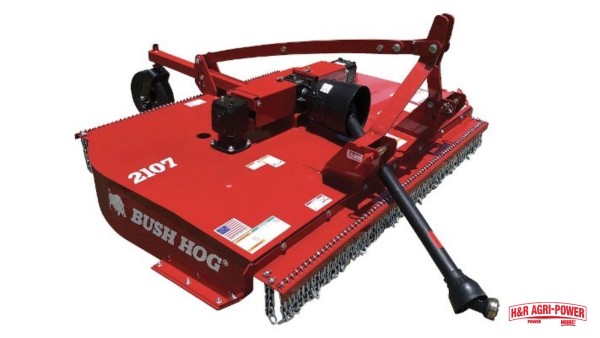
Properties around 20 acres push the decision toward 7- to 10-foot cutters. Wider decks cover more ground per pass, but they require higher PTO horsepower and shift from three-point hitch mounting to drawbar attachment with hydraulic lift. Balancing that productivity gain against tractor capability is critical at this scale.
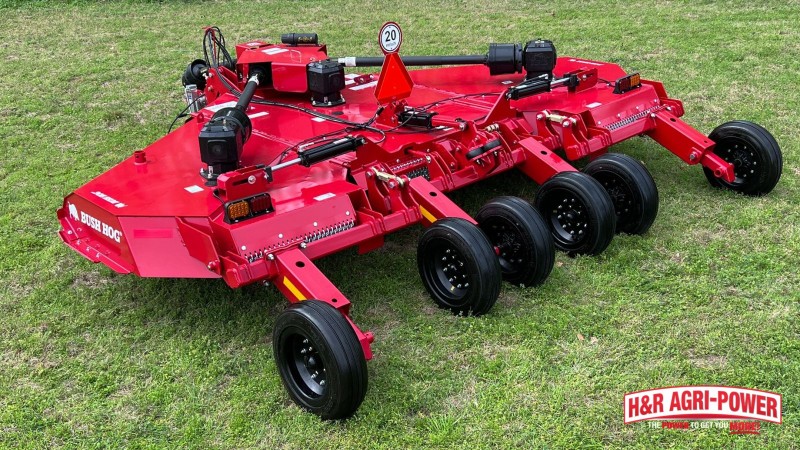
At 50 acres, efficiency demands large-format cutters or bat-wing mowers spanning 10 to 20 feet. These units need 80-plus horsepower tractors and represent a larger investment, so weighing ownership costs against commercial brush hogging rates becomes part of the equation.
Beyond sizing, proper maintenance protects your investment regardless of cutter width. Routine tasks like greasing bearings, checking gearbox oil, inspecting blades, and storing equipment under cover prevent costly repairs and extend service life across seasons.
How Do You Determine the Right Bush Hog Size for Your Acreage?
You determine the right bush hog size for your acreage by evaluating three core factors: tractor horsepower, vegetation type, and terrain conditions. The sections below break down each factor.
What Factors Affect Bush Hog Size Selection?
The factors that affect bush hog size selection include tractor horsepower, cutting width, vegetation density, terrain slope, and hitch type. Each of these determines whether a rotary cutter will perform efficiently or strain your equipment.
Key sizing factors to evaluate:
-
Tractor PTO horsepower: Must match or exceed the rotary cutter's HP rating.
-
Cutting width: Should be slightly wider than your tractor's tire-to-tire span.
-
Vegetation type: Light grass, thick brush, and saplings each demand different deck weight and blade configuration.
-
Terrain: Slopes, rocky ground, and soft soils limit safe operating speed and cutter size.
-
Hitch compatibility: Most rotary cutters connect via three-point hitch; larger units attach to the drawbar with hydraulic lift.
Matching all five factors prevents underpowering, excessive wear, and safety hazards.
How Does Tractor Horsepower Influence Bush Hog Size?
Tractor horsepower influences bush hog size by dictating the maximum cutting width your machine can safely drive. A rotary cutter's HP rating should never exceed your tractor's rating; ideally, the cutter should be rated the same or up to 10 HP less, according to Blain's Farm & Fleet's rotary cutter buyer's guide.
General horsepower-to-width guidelines:
-
4-foot cutter: At least 15 PTO horsepower.
-
6-foot cutter: Approximately 65 HP tractor with a three-point hitch.
-
10-foot cutter: At least 80 HP, typically drawbar-mounted with hydraulic lift.
-
15-foot "bat wing" mower: Requires a high-horsepower tractor, with hydraulically folding side decks.
Most rotary cutters connect to a three-point hitch. If your tractor lacks one, a conversion kit is required before mounting.
What Types of Grass, Brush, or Terrain Impact Your Choice?
The types of grass, brush, or terrain that impact your choice range from light pasture grass to dense overgrowth and uneven ground. Brush hogs are the premier tool for reclaiming old fields and maintaining open habitat on rural properties, according to Cornell University's Small Farms Program.
-
Light grass and maintained pastures: A standard-duty rotary cutter handles this efficiently at higher ground speeds.
-
Heavy brush and saplings: Requires a heavier deck, slower travel speed, and more PTO horsepower to avoid bogging down.
-
Hilly or rocky terrain: Limits safe cutter width because wider decks scalp on uneven ground and reduce maneuverability.
-
Soft or wet soils: Heavier equipment increases compaction risk, so a narrower, lighter cutter may be the better match.
A smooth slope deck prevents grass and dirt from collecting on top of the cutter, which matters especially in dense vegetation. Choosing a rotary cutter at least slightly wider than your tractor's tire span ensures no uncut strips are left behind where tires flatten the grass.
What Bush Hog Size Is Best for 5 Acres?
The best bush hog size for 5 acres is a 5- to 6-foot rotary cutter. This width balances cutting efficiency with maneuverability for smaller properties. Below, we cover the time and productivity details that support this recommendation.
What Efficiency and Time Considerations Are There for 5 Acres?
The efficiency and time considerations for 5 acres center on cutting width and ground speed. A 6-foot rotary cutter at 4 MPH covers 2.4 acres per hour, according to Bush Hog Inc. acreage-per-hour data. At that rate, 5 acres takes roughly two hours, including turns and overlap passes.
A 5- to 8-foot cutting width strikes a balance between efficiency and precision on medium properties of 5 to 20 acres. For a true 5-acre parcel, staying closer to the 5- or 6-foot range keeps the setup practical; most small farm tractors use a three-point hitch and pair naturally with cutters in this size class. Oversizing to an 8-foot cutter can shave time, but it demands more horsepower and becomes harder to navigate around fences, tree lines, and uneven ground.
For most 5-acre landowners, a 6-foot bush hog offers the best trade-off between speed and control. With 10-acre properties requiring a different approach, wider cutting decks start to make more financial sense.
What Bush Hog Size Is Best for 10 Acres?
A 6-foot bush hog is the best starting point for 10 acres, though stepping up to an 8-foot model cuts total mowing time significantly. The right choice depends on how your acreage, terrain, and tractor capacity interact.
How Does Increasing Acreage Change Your Equipment Needs?
Increasing acreage changes your equipment needs by raising the demands on cutting width, tractor horsepower, and maintenance frequency. A 6-foot rotary cutter at 4 MPH covers 2.4 acres per hour, meaning 10 acres takes roughly four hours per session. Upgrading to an 8-foot cutter can reduce that time by a third.
Wider decks also require more PTO horsepower. According to the Cornell University Small Farms Program, a six-foot brush hog requires a 65-horsepower tractor, while ten-foot models need at least 85 horsepower. That jump in tractor size affects both purchase cost and fuel consumption.
Maintenance scales with use as well. Larger properties mean more hours on blades, gearbox oil, and PTO driveshaft bearings each season. For most 10-acre landowners, a 6-to-8-foot three-point hitch cutter paired with a mid-range utility tractor delivers the best balance of speed and practicality without overinvesting in equipment.
With the right cutter width established, the next consideration is how 20-acre properties shift the equation toward even larger equipment.
What Bush Hog Size Is Best for 20 Acres?
A 6- to 8-foot bush hog is best for 20 acres, balancing cutting speed with manageable tractor requirements. The subsection below covers the trade-offs of stepping up to a larger unit.
What Are the Pros and Cons of Larger Bush Hogs on 20 Acres?
The pros and cons of larger bush hogs on 20 acres center on the balance between time savings and equipment demands. A 10-foot rotary cutter covers 4.0 acres per hour at 4 MPH, finishing 20 acres in roughly five hours. A 6-foot cutter at the same speed covers only 2.4 acres per hour, nearly doubling your seat time. That efficiency gain comes with trade-offs, though.
According to the Cornell University Small Farms Program, smaller brush hogs mount on the three-point hitch, while larger units attach to the tractor's drawbar and rely on the hydraulic system for raising and lowering. This difference affects maneuverability around fence lines, tree stands, and irregular field edges common on 20-acre properties. Larger cutters also require significantly more horsepower; a 10-foot model needs at least an 80-horsepower tractor, compared to 65 horsepower for a 6-foot unit.
For most 20-acre landowners, a 6- to 7-foot three-point hitch cutter offers the best compromise between productivity and versatility, especially on properties with obstacles or mixed terrain.
What Bush Hog Size Is Best for 50 Acres?
The best bush hog size for 50 acres is a 10-foot or 15-foot rotary cutter paired with a high-horsepower tractor. Below, we cover how to balance productivity and cost at this scale.
How Do You Balance Productivity and Cost on Larger Properties?
You balance productivity and cost on larger properties by matching cutting width to your tractor's capability and evaluating long-term operating expenses against time savings. A 10-foot rotary cutter at 5 MPH covers 5.0 acres per hour, while a 15-foot model at the same speed reaches 7.5 acres per hour, according to Bush Hog Inc. acreage-per-hour data. That difference cuts a 50-acre job from roughly 10 hours down to under 7.
Larger machines carry higher upfront and repair costs. Cornell University's Small Farms Program notes that 10-foot cutters can easily cost $10,000 and require at least an 80-horsepower tractor. For landowners mowing 50 acres regularly, the time savings from wider decks typically justify that investment over multiple seasons.
With the right cutter sized for your acreage, proper maintenance becomes the next step in protecting that investment.
What Maintenance or Operational Requirements Should You Consider When Choosing a Bush Hog?
You should consider routine lubrication, blade inspection, gearbox oil changes, proper storage, and common operational mistakes when choosing a bush hog. These factors directly affect longevity and performance.
How Do You Maintain and Store a Bush Hog Properly?
You maintain and store a bush hog properly by following a consistent pre-season, post-use, and off-season checklist. According to Woods Equipment, key storage tips for rotary cutters include these steps:
-
Lubricate all pivot points and repack wheel hub bearings to prevent rusting from condensation buildup over winter.
-
Clean the top and bottom of the deck to remove all grass buildup.
-
Touch up paint where needed to prevent rust.
-
Check blades for sharpness, nicks, and cracks, and confirm they are securely mounted.
-
Verify all safety decals are readable and replace any that are damaged.
-
Confirm all shields are properly installed and in good condition.
-
Check the gearbox oil level and fill if needed; if oil appears dirty, drain and refill with gear oil per the operator's manual.
-
Store the unit inside or under cover to prevent weather damage.
What Common Mistakes Should Be Avoided in Selecting or Using a Bush Hog?
Common mistakes that should be avoided in selecting or using a bush hog include oversizing equipment for a tractor, skipping pre-operation checks, and ignoring terrain hazards. Choosing a rotary cutter with a higher horsepower rating than the tractor creates strain on the drivetrain and increases the risk of mechanical failure. Neglecting to check gearbox oil, grease bearings, or inspect blades before each use accelerates wear and leads to costly repairs. Failing to scout the property in early spring for rocks, stumps, and hidden debris is another frequent oversight; objects struck by blades spinning at over 150 mph can be thrown more than 300 feet. Matching the cutter to both the tractor and the terrain avoids most of these problems.
With maintenance habits established, the right dealer partnership ensures you have parts and service support when you need it.
How Can H&R Agri-Power Help You Choose and Support the Right Bush Hog Equipment?
H&R Agri-Power helps you choose and support the right Bush Hog equipment through expert guidance, on-site service, and a large parts inventory across 17 Bush Hog dealership locations.
How Does Equipment Sales and Service from H&R Agri-Power Support Your Bush Hog Decision?
Equipment sales and service from H&R Agri-Power support your bush hog decision by pairing more than 50 years of agricultural expertise with manufacturer-trained service technicians who understand how to match cutting width, horsepower, and terrain demands to your specific acreage. H&R Agri-Power carries Bush Hog rotary cutters alongside top-tier tractor brands like Case IH, Kubota, and New Holland Equipment, so the entire tractor-to-implement pairing can be evaluated in one place.
Owning the right equipment also eliminates the cost of outsourcing. Commercial brush hogging rates range from $60 to $100 per hour depending on vegetation density, according to Ricky's Bobcat. With mobile service trucks, on-site parts representatives, and the area's largest parts inventory, H&R Agri-Power keeps your equipment productive long after the sale.
What Are the Key Takeaways on Choosing the Right Size Bush Hog for 5, 10, 20, or 50 Acres?
The key takeaways on choosing the right size bush hog for 5, 10, 20, or 50 acres come down to matching cutting width and tractor horsepower to your property's size and terrain:
-
Five-acre properties run efficiently with a 4- to 5-foot cutter and a compact tractor.
-
Ten-acre properties benefit from a 5- to 6-foot three-point hitch model paired with at least 65 PTO horsepower.
-
Twenty-acre properties gain meaningful time savings from a 6- to 8-foot cutter, with drawbar-mounted options for heavier brush.
-
Fifty-acre properties demand 10- to 15-foot cutters and 80-plus horsepower tractors to maintain reasonable mowing schedules.
Always verify that your tractor's PTO horsepower meets or exceeds the rotary cutter's rating. H&R Agri-Power can walk you through every variable at any of its 17 Bush Hog locations across Kentucky, Tennessee, Illinois, Indiana, and Mississippi.