

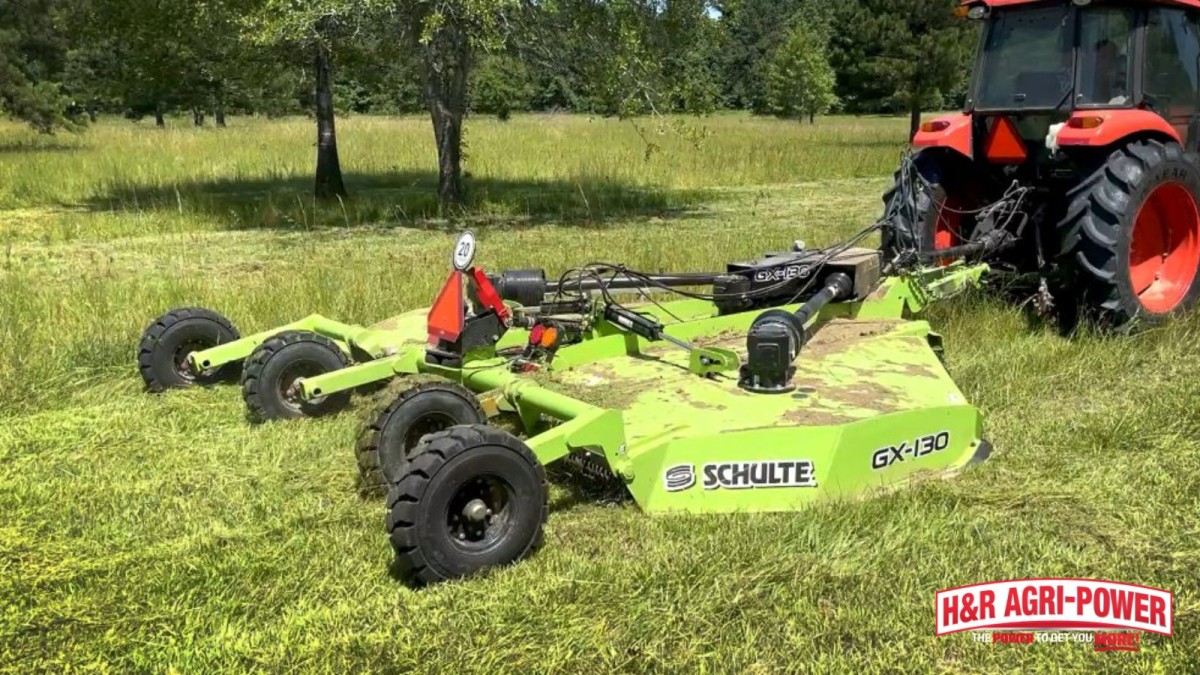
Bush hog service intervals are the manufacturer-specified schedules for inspecting, lubricating, and replacing wear parts on rotary cutters to maintain safe operation and peak cutting performance. These intervals vary by component, with some requiring attention before every use and others on hourly or seasonal cycles.
This guide covers inspection frequency and priority components, lubrication points and greasing schedules, wear part identification and replacement, how operating conditions shift maintenance needs, and service tracking and professional support.
Rotary cutter manufacturers recommend pre-operational checks on items like blade bolt torque, tire pressure, and driveline shielding before each mowing session. Certain components, such as gearbox oil levels and cutting edges, require daily visual assessment to catch damage early.
Greasing schedules differ by joint and fitting location. Driveline universal joints typically need lubrication before each use, while tail wheel hubs follow longer intervals closer to 40 hours. Using the correct grease grade at every fitting prevents premature bearing failure and costly drivetrain repairs.
Blades, belts, slip clutch discs, and safety chains each show distinct wear patterns. Recognizing excessive nicking on blades or frozen friction discs on a slip clutch allows timely replacement before these smaller failures cascade into gearbox or PTO damage.
Heavy brush, rocky terrain, and high mowing speeds all accelerate wear and compress standard service windows. Tracking these variables in a maintenance log helps you adjust intervals based on actual use rather than calendar estimates alone.
H&R Agri-Power provides professional rotary cutter maintenance, parts sourcing, and repair services designed to protect equipment lifespan and hold resale value across demanding operating conditions.
What Are the Recommended Inspection Intervals for Bush Hog Mowers?
The recommended inspection intervals for bush hog mowers include pre-operational checks before every use and scheduled maintenance at hourly milestones. The sections below cover how inspections prevent malfunctions and which parts deserve priority attention.
How Can Regular Inspections Prevent Bush Hog Malfunctions?
Regular inspections prevent bush hog malfunctions by catching wear, loose hardware, and lubrication failures before they escalate into costly breakdowns. Pre-operational checks are the first line of defense.
According to the Bush Hog BH200 series operator's manual, these rotary cutters require inspections every 50 hours for pan nut tightness at 450 ft./lbs. torque and for blade nut tightness at 600 ft./lbs torque, and lubrication of driveline universal joints and plastic guard fittings with multi-purpose grease every 8 hours. Skipping even one of these checks can trigger a chain reaction: a loose blade bolt leads to imbalanced cutting, which strains the gearbox, which accelerates drivetrain failure. For operators running equipment in heavy brush or uneven terrain, building a quick walk-around into every session is one of the simplest ways to protect your investment.
Which Parts Should Be Prioritized During a Routine Inspection?
The parts that should be prioritized during a routine inspection include:
-
Cutting blades: Check for cracks, excessive nicks, and uneven wear before each use.
-
Blade bolts: Confirm torque specifications are met, as vibration loosens hardware quickly.
-
Gearbox oil level: Inspect when cold to get an accurate reading.
-
Driveline universal joints: Grease at manufacturer-specified intervals to prevent binding.
-
Slip clutch: Perform seasonal burnishing to confirm friction discs are not frozen.
-
Safety shields and chain guards: Verify all protective components are intact and secured.
As documented by Virginia Tech's rotary mower safety guide, slip clutch maintenance through seasonal burnishing prevents gearbox failure by allowing the clutch to slip during sudden impacts rather than transmitting shock loads directly to the drivetrain. Operators who neglect the slip clutch often face the most expensive single repair on a rotary cutter. Prioritizing these high-wear, high-consequence components during every routine inspection keeps repair costs predictable and downtime minimal.
With inspection priorities established, understanding when and how to grease each component ensures these parts stay protected between checks.
When and How Should You Grease Bush Hog Components?
You should grease bush hog components before each use at high-wear points and on a scheduled hourly basis for drivetrain fittings. The following subsections cover critical grease points, signs of insufficient lubrication, and the best grease type for the job.
What Grease Points Are Critical on a Bush Hog?
The critical grease points on a bush hog are the driveline universal joints, tail wheel hubs, tail wheel pivots, gearbox input shaft, and plastic guard fittings. These areas experience the highest friction and load during operation.
Prioritize these fittings on a consistent schedule:
-
Driveline universal joints require greasing before each use.
-
Tail wheel hubs and pivots should be lubricated every 40 hours.
-
Plastic guard fittings need multi-purpose grease before each use to prevent seizing.
-
Gearbox input shaft bearing should be checked and greased per the operator's manual interval.
Missing even one fitting accelerates wear across the entire drivetrain. Because safety chain shields and deck components also rely on free movement, inspecting these areas during greasing helps catch damaged links or frozen hardware early. According to Mississippi State University Extension Service, large rotary cutters can throw objects more than 300 feet, which makes maintaining safety chain shields and inspecting for missing or damaged links essential during every lubrication pass.
How Can You Tell if Your Bush Hog Needs Lubrication?
You can tell if your bush hog needs lubrication by listening for squealing or grinding at the driveline joints, checking for stiff or seized tail wheel pivots, and looking for dry or corroded grease fittings. These symptoms indicate metal-on-metal contact where grease has broken down or been displaced.
Additional signs include:
-
Visible rust or discoloration around zerk fittings.
-
Increased resistance when rotating the tail wheel by hand.
-
Excessive heat near the gearbox or universal joints after short operating periods.
-
Old, darkened grease extruding from seals rather than fresh lubricant.
If any fitting refuses to accept grease from a standard grease gun, the zerk may be clogged or damaged and should be replaced before operating. Waiting until components sound or feel wrong typically means wear has already begun; consistent interval-based greasing prevents reaching that point.
What Type of Grease Is Best for Bush Hog Equipment?
The best type of grease for bush hog equipment is NLGI Grade 2 multi-purpose lithium-based grease for most chassis and driveline fittings. This grade provides the right balance of adhesion and pumpability across a wide temperature range common in field conditions.
Key grease selection factors include:
-
NLGI Grade 2 is the standard recommendation for universal joints and tail wheel bearings.
-
EP (extreme pressure) formulations are preferred for high-load fittings near the gearbox.
-
Lithium-complex grease resists water washout better than standard calcium-based options.
According to Bush Hog rotary cutter specifications, driveline universal joints and tail wheel components specifically require NLGI Grade 2 multi-purpose grease. Always consult your specific model's operator's manual, as some manufacturers specify proprietary or synthetic formulations for certain components.
With lubrication practices established, knowing how to identify and replace worn parts keeps your bush hog performing safely.
How Do You Identify and Replace Worn Parts on a Bush Hog?
You identify and replace worn parts on a bush hog by inspecting blades, belts, and drivetrain components for visible damage, tracking hour-based replacement intervals, and following safe procedures during part swaps.
What Are the Signs of Wear on Blades, Belts, and Other Key Components?
The signs of wear on blades, belts, and other key components include:
-
Blades: Excessive nicks, rounded cutting edges, cracks, uneven thickness, or visible bending that causes vibration during operation.
-
Belts: Fraying, cracking, glazing on contact surfaces, or noticeable slack that indicates stretching beyond adjustment range.
-
Gearbox: Oil leaks around seals, unusual grinding noises, or metal shavings visible in the gear lube during oil checks.
-
Driveline and PTO shaft: Play or clunking in universal joints, worn cross bearings, or damaged shielding.
-
Safety chains and shields: Missing links, bent mounting brackets, or chains that no longer hang at the correct height to deflect debris.
Catching these signs early prevents cascading failures that damage more expensive drivetrain components.
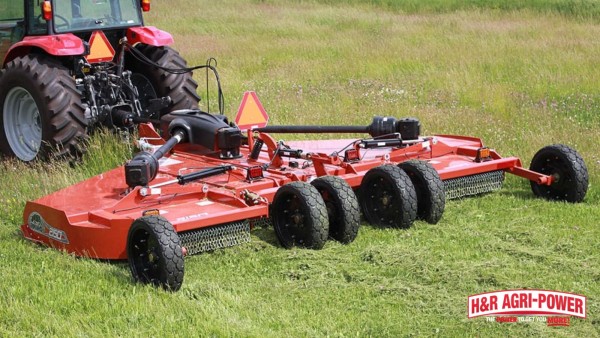
How Frequently Should You Replace Bush Hog Blades and Other Wear Parts?
You should replace bush hog blades and other wear parts based on operating hours, cutting conditions, and visible inspection results rather than a single fixed calendar schedule. Blades typically need replacement or sharpening when worn or damaged, though rocky terrain or heavy brush accelerates wear significantly.
The Bush Hog BH200 series operator's manual requires checks for pan nut tightness at 450 ft./lbs. torque and for blade nut tightness at 600 ft./lbs torque every 50 hours, which helps detect loosening that signals blade or bolt fatigue. Bearings generally follow 8 hour maintenance cycles. Operators who defer replacement beyond visible wear thresholds risk compounding damage to the gearbox and PTO, where repair costs multiply quickly.
What Steps Should You Follow to Safely Replace Worn Bush Hog Parts?
The steps you should follow to safely replace worn bush hog parts are:
-
Disengage the PTO, turn off the tractor, remove the ignition key, and wait for all rotating components to stop completely.
-
Block the mower deck securely with jack stands so it cannot drop during work underneath.
-
Inspect the PTO shaft guard to confirm it is intact before and after any service; OSHA standard 29 CFR 1928.57 mandates that PTO shafts on agricultural equipment must be completely guarded to prevent operator contact with rotating parts.
-
Remove worn blades by loosening bolts in the correct sequence, noting blade orientation for proper reinstallation.
-
Install new or sharpened blades, torquing bolts to the manufacturer's specification and verifying balance between blade sets.
-
Check belts for proper tension and alignment after replacement, and re-lubricate any zerks disturbed during disassembly.
-
Lower the deck, reconnect the driveline, and perform a brief low-RPM test run to confirm smooth operation before returning to full cutting speed.
Never work under a raised mower supported only by hydraulic pressure. With replacement parts installed correctly, consistent maintenance scheduling keeps the entire machine running within its designed service life.
What Impact Do Operating Conditions Have on Bush Hog Service Frequency?
Operating conditions directly determine how often a bush hog needs inspection, greasing, and part replacement. Soil composition, vegetation density, terrain, and total hours of use all accelerate or reduce wear on critical components.
How Do Soil, Crop Type, and Terrain Affect Bush Hog Maintenance Needs?
Soil, crop type, and terrain affect bush hog maintenance needs by changing the stress loads placed on blades, drivetrain components, and the gearbox during operation.
-
Rocky or sandy soils dull and chip blades faster, requiring more frequent sharpening or replacement cycles.
-
Heavy, wet clay packs under the deck and around spindles, trapping moisture that accelerates corrosion and bearing wear.
-
Dense brush and thick crop residue place greater demand on the PTO and drive train. According to a University of Minnesota investigation, high maintenance requirements for rotary mowers are primarily associated with the PTO and drive train due to high power demands, especially when mowing heavy growth or operating at speeds exceeding 10 mph.
-
Hilly or uneven terrain increases stress on tail wheel assemblies, hitch pins, and deck skid shoes, all of which wear unevenly on slopes.
Operators working in these demanding conditions should shorten standard inspection intervals rather than relying on calendar-based schedules alone.
Does Usage Frequency Change the Recommended Service Intervals?
Yes, usage frequency changes the recommended service intervals significantly. A bush hog running 20 hours per week accumulates wear far faster than one used a few hours monthly, and hour-based intervals should always take priority over calendar-based ones.
Operators logging high seasonal hours need to grease driveline universal joints, inspect blade bolt torque, and check gearbox oil levels more frequently than the baseline schedule suggests. Light-duty, infrequent users can generally follow standard manufacturer intervals, but should still perform pre-operational checks before every use. Tracking actual operating hours, rather than estimating, ensures service happens before wear becomes costly damage. With operating conditions accounted for, consistent documentation keeps these adjusted intervals on track.
How Should You Document and Track Bush Hog Maintenance Intervals?
You should document and track bush hog maintenance intervals using a structured log that records every inspection, greasing, and part replacement by date and operating hours. The subsections below cover effective log practices and digital tools for service tracking.
What Maintenance Log Practices Help Ensure Equipment Longevity?
Maintenance log practices that help ensure equipment longevity include recording each service event with the date, hour-meter reading, task performed, and parts replaced or fluids added. Consistently logging PTO and drive train servicing is especially important; according to a University of Minnesota investigation, high equipment maintenance requirements for rotary mowers are primarily associated with the PTO and drive train due to high power demands, particularly when mowing heavy growth or operating at speeds exceeding 10 mph.
Effective logs should track:
-
Greasing intervals for driveline universal joints, tail wheel hubs, and pivot points.
-
Blade inspections noting nicks, cracks, or imbalance.
-
Gearbox oil level checks and fluid changes.
-
Safety shield and chain guard condition per ASABE S318.19 standards.
-
Slip clutch burnishing dates and torque specs for blade bolts.
Tying each entry to cumulative operating hours, rather than calendar dates alone, gives a far more accurate picture of actual wear. Operators who rely solely on seasonal schedules often miss accelerated wear from heavy-use periods.
Are There Manufacturer Guidelines or Digital Tools for Service Tracking?
Yes, there are manufacturer guidelines and digital tools for service tracking. Most rotary cutter manufacturers publish detailed maintenance schedules in their operator's manuals, specifying exact hour-based intervals for lubrication, fluid changes, and component inspections. These manuals serve as the baseline for any tracking system.
Digital tools that support brush hog service tracking include:
-
Equipment management apps that send automated reminders based on logged operating hours.
-
Spreadsheet templates with columns for date, hours, task, and next-due interval.
-
Dealer-integrated platforms that sync service history with warranty and parts records.
Pairing the manufacturer's published intervals with a digital tracking method eliminates guesswork and creates a verifiable service history. That documentation also protects resale value and simplifies warranty claims. With a reliable tracking system in place, professional support can further extend your equipment's productive life.
How Can Professional Bush Hog Service from H&R Agri-Power Enhance Equipment Lifespan?
Professional bush hog service from H&R Agri-Power enhances equipment lifespan by combining expert maintenance, genuine parts support, and factory-trained technicians across 21 locations. The sections below cover available services and key takeaways from this guide.
What Bush Hog Maintenance and Repair Services Does H&R Agri-Power Offer?
H&R Agri-Power offers bush hog maintenance and repair services that include inspections, blade replacement, gearbox service, driveline lubrication, and parts sourcing through 21 dealership locations across Kentucky, Tennessee, Illinois, Alabama, Indiana, and Mississippi. With over 50 years of experience serving agricultural professionals, H&R Agri-Power provides both scheduled maintenance and urgent repairs for rotary cutters.
Staying current with maintenance directly protects designed service life. According to a 2022 University of Minnesota study on deferred maintenance impacts, failure to keep up with maintenance leads to higher future repair costs and reduced resale value. For operators managing multiple rotary cutters across large acreage, partnering with a professional dealer eliminates the risk of overlooked service intervals that quietly degrade performance and safety.
What Are the Key Takeaways About Bush Hog Service Intervals: When to Inspect, Grease, and Replace Wear Parts We Covered?
The key takeaways about bush hog service intervals covered in this guide are:
-
Pre-operational inspections should verify tire pressure, blade bolt torque, and driveline lubrication before every use.
-
Daily blade inspections catch damage and excessive nicks before they compromise cut quality or cause imbalance.
-
Gearbox oil levels should be checked when cold, using the manufacturer-specified gear lube.
-
Grease points on universal joints, pivot fittings, and tail wheel hubs follow hour-based schedules that vary by model.
-
Worn blades, belts, and shielding require replacement at the first sign of degradation, not on a fixed calendar alone.
-
Operating conditions such as heavy growth, rocky terrain, and high-speed mowing accelerate wear on the PTO and drivetrain.
-
Maintenance logs and manufacturer tracking tools help ensure no interval is missed.
Consistent attention to these intervals keeps a bush hog safe, productive, and operating at its designed service life. H&R Agri-Power can help operators build and maintain a service schedule tailored to their specific equipment and working conditions.