

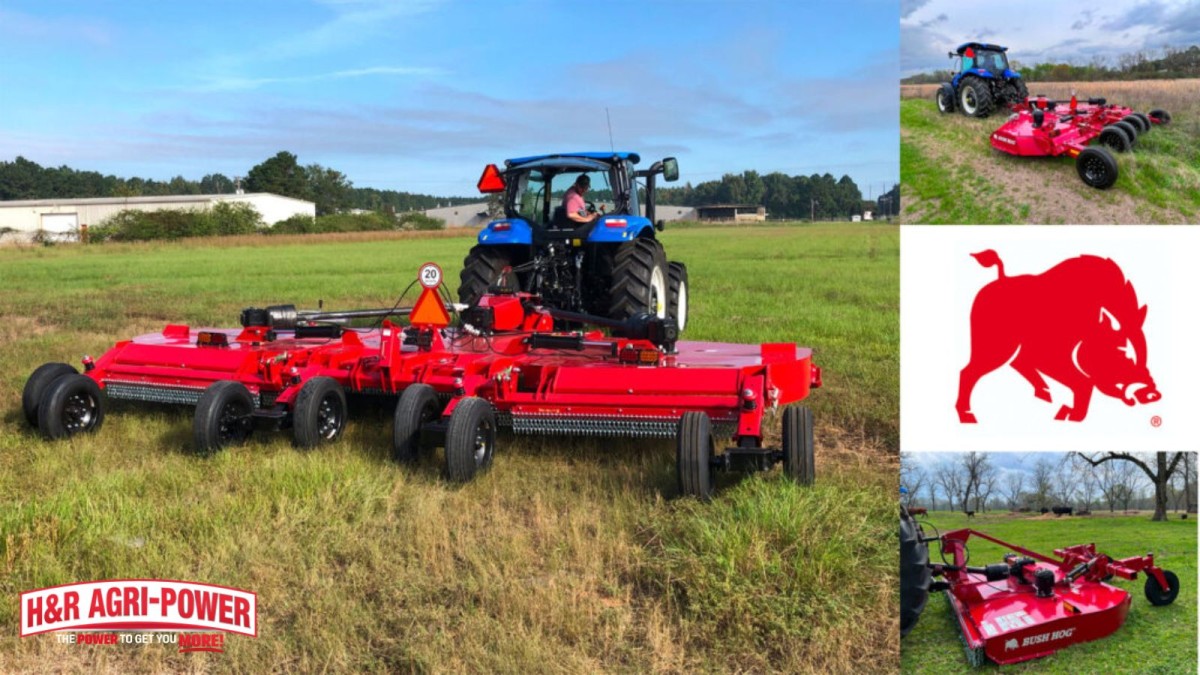
Bush hogs are tractor-mounted rotary cutters designed to clear dense brush, tall grass, and woody vegetation from rural properties. For hunting land managers, these machines serve as essential tools that keep trails passable, food plots productive, and wildlife habitat in balance.
This guide covers equipment selection and specifications, the importance of regular land maintenance, best practices for safe operation, habitat improvement through strategic mowing, implement care and longevity, and how these tools compare to alternative solutions.
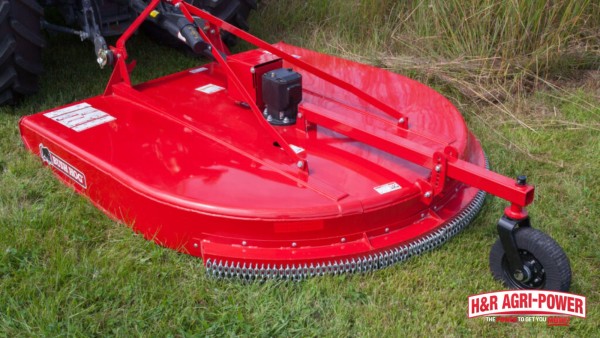
Choosing the right bush hog starts with matching cutting width, horsepower requirements, and attachment type to your property's terrain and vegetation density. Single-spindle rotary cutters handle a range of conditions, but factors like PTO speed, gearbox ratio, and deck size all influence how effectively a unit performs on rough hunting ground.
Neglected trails and overgrown fields reduce both hunter access and habitat quality. Unchecked vegetation eliminates the early successional growth stages that game birds and deer depend on, while poorly maintained paths create safety hazards for anyone navigating the property on foot or by vehicle.
Strategic brush hogging does more than clear land; it resets plant succession to promote diverse native growth and creates the mosaic of openings and cover that supports healthy wildlife populations. Timing matters significantly, as scheduling mowing around nesting seasons protects ground-nesting birds while still achieving habitat goals.
Routine inspection, gearbox lubrication, and blade maintenance directly affect equipment lifespan and cutting performance. Understanding how rotary cutters compare to flail mowers helps landowners invest in the right solution for their specific property needs.
What Are Bush Hogs and How Are They Used for Land Management?
Bush hogs are heavy-duty rotary cutters designed to clear thick brush, tall grass, and woody vegetation from unmanaged land. Below, we cover which types work best for hunting properties and what features matter most for trail maintenance.
Which Types of Bush Hogs Are Most Effective for Hunting Land?
The most effective bush hogs for hunting land are single-spindle rotary cutters and multi-spindle brush cutters. Single-spindle rotary cutters handle routine mowing of food plot borders and shooting lanes, while multi-spindle models tackle heavier brush across larger acreage.
A study published in Rangeland Ecology & Management found that brush management should be tailored to target wildlife species because habitat needs are species-specific, and vegetation mosaics created through selective cutting can improve hunting efficiency. For most hunting properties, matching the implement to the specific clearing task produces better wildlife outcomes than relying on a single cutter for every job.
What Key Features Should You Look For in a Bush Hog for Trail Maintenance?
The key features to look for in a bush hog for trail maintenance include cutting width, deck construction, blade configuration, and hitch compatibility. Cutting width determines how many passes a trail requires; widths of 4 to 7 feet suit most trail corridors. Heavy-gauge steel decks resist damage from hidden rocks and stumps common along wooded paths.
Additional features to prioritize:
-
Stump jumper center plates that deflect obstacles without stalling the blade assembly.
-
Replaceable blade systems that allow quick field changes during long clearing sessions.
-
PTO compatibility matched to your tractor's output, since underpowered setups cause premature gearbox wear.
-
Adjustable skid shoes for controlling cut height across uneven terrain.
Choosing a rotary cutter with these capabilities keeps trail maintenance efficient and reduces equipment downtime across seasons.
Why Is Regular Maintenance of Hunting Land and Trails Important?
Regular maintenance of hunting land and trails is important because it preserves wildlife habitat quality, ensures safe access, and prevents overgrowth from reducing hunting efficiency. The following sections cover how vegetation impacts wildlife and accessibility, and what risks neglected trails create.
How Does Overgrown Vegetation Affect Wildlife and Trail Accessibility?
Overgrown vegetation affects wildlife by eliminating the early successional habitats that game species depend on, while simultaneously blocking trail access for hunters. According to the USDA Natural Resources Conservation Service, mechanical vegetation control can manage early successional habitats, which are critical for many wildlife species, including game birds and deer.
When brush grows unchecked, it creates dense monocultures that crowd out the diverse plant communities supporting food and cover. Trails become impassable, limiting a hunter's ability to reach stands, food plots, or property boundaries efficiently.
Targeted clearing creates vegetation mosaics of open ground, grassland, and brushy edges. These mosaics benefit species differently, so brush management should be tailored to the needs of target wildlife. Timing matters as well; land disturbance and vegetation clearing should occur outside the nesting season to protect ground-nesting birds.
What Risks Can Poorly Maintained Trails Pose to Hunters and Landowners?
Poorly maintained trails pose risks that include:
-
Hidden terrain hazards. Overgrown paths conceal holes, roots, stumps, and uneven ground that cause falls, twisted ankles, or ATV rollovers.
-
Restricted emergency access. Blocked trails delay emergency vehicle response to injured hunters or medical events on remote parcels.
-
Increased wildfire vulnerability. Dense, dry brush along neglected trails acts as fuel, accelerating fire spread across the property.
-
Pest and wildlife conflicts. Thick vegetation along trail edges harbors ticks, venomous snakes, and stinging insects in close proximity to foot traffic.
-
Property liability exposure. Landowners who permit hunting access on poorly maintained land may face increased legal liability if injuries occur.
Routine trail clearing with the right implements reduces every one of these hazards. With safe, accessible trails in place, selecting the right Bush Hog rotary cutter for your specific property ensures that maintenance stays efficient and effective.
How Do You Select the Right Bush Hog Rotary Cutter for Your Hunting Property?
You select the right Bush Hog rotary cutter for your hunting property by matching the equipment to your terrain, vegetation density, and tractor specifications. The sections below cover terrain and vegetation factors alongside size, power, and attachment considerations.
What Factors Should You Consider Based on Terrain and Vegetation?
The factors you should consider based on terrain and vegetation include slope grade, soil conditions, vegetation thickness, and the type of growth you need to manage. Flat food plots with light grass require less cutting power than steep, wooded hillsides choked with saplings and dense brush.
Rocky ground demands a rotary cutter with higher deck clearance and reinforced skid shoes to prevent damage. Wet or soft soil calls for wider tires or dual-wheel kits that distribute weight and reduce rutting. Properties with mixed terrain benefit from implements that adjust cutting height easily, since mowing trails through mature timber differs significantly from clearing overgrown field edges. Evaluating these variables before purchasing prevents costly mismatches between implement and property.
How Do Size, Power, and Attachments Impact Performance?
Size, power, and attachments impact performance by determining cutting width, vegetation capacity, and operational efficiency on hunting properties. Undersized equipment bogs down in heavy brush, while oversized implements waste fuel and maneuver poorly on narrow trail systems.
Key performance factors to evaluate include:
-
Cutting width: Wider decks cover more ground per pass but reduce maneuverability on tight woodland trails.
-
Horsepower matching: A general guideline is approximately 5 horsepower per foot of cutting width, so a 6-foot rotary cutter pairs well with a 30-horsepower tractor.
-
PTO speed compatibility: Gearboxes typically operate at 540 RPM or 1,000 RPM, and mismatching PTO speed accelerates wear.
-
Deck thickness and blade type: Heavier gauge decks and stump jumper blades handle rocky hunting terrain more reliably.
According to FIMIC Implement, the average lifespan of a rotary cutter gearbox is 5 to 10 years with proper maintenance, though horsepower demands and load conditions directly influence longevity. Investing in the correct size and power combination from the start protects that gearbox investment and keeps your hunting property trails consistently passable.
What Are the Best Practices for Using Bush Hog Rotary Cutters on Hunting Land?
The best practices for using Bush Hog rotary cutters on hunting land center on proper timing, consistent mowing schedules, and strict safety protocols. The following subsections cover ideal frequency for trails and food plots, along with steps for safe, efficient operation.
How Often Should You Use a Bush Hog on Trails and Food Plots?
You should use a bush hog on trails and food plots one to three times per year, with timing adjusted to protect nesting wildlife and match seasonal growth cycles. Most brush hogging should be concentrated between February 1 and April 1, which falls before the breeding and nesting season for ground-nesting birds. According to the Virginia Outdoors Foundation, no mowing should occur between early April and early September, as many birds are nesting during this period.
Trails that see heavy foot traffic may need a second pass in late fall (October or November) to clear regrowth before hunting season. Food plots typically require mowing once in late winter to reset vegetation and prepare seedbeds. Adjusting frequency based on rainfall and growth rates prevents overgrowth without stripping essential cover that deer and game birds depend on.
What Steps Ensure Safe and Efficient Operation of Bush Hog Rotary Cutters?
The steps that ensure safe and efficient operation of Bush Hog rotary cutters include pre-operation inspection, proper tractor matching, PTO guarding, and awareness of terrain hazards. A CDC validation study of Power Take-Off shielding found that 40 percent of PTO driveline entanglements resulted in fatalities between 1970 and 2003.
Key safety and efficiency steps include:
-
Walk the mowing area beforehand to identify rocks, stumps, fencing, and hidden obstacles.
-
Verify that all PTO guards and shields are intact and properly secured before engaging the implement.
-
Match tractor horsepower to cutting width, following the general rule of 5 horsepower per foot of cut.
-
Operate with ROPS (rollover protection structures) engaged, as required by OSHA standard 1928.51.
-
Mow at controlled speeds on slopes, keeping the implement on the uphill side whenever possible.
-
Never allow bystanders within the discharge zone during operation.
Consistent adherence to these protocols reduces injury risk and keeps the implement performing reliably season after season. With safe operation habits established, the focus can shift to how brush hogging directly supports habitat improvement.
How Can Bush Hog Rotary Cutters Support Habitat Improvement and Wildlife Management?
Bush Hog rotary cutters support habitat improvement and wildlife management by setting back plant succession, creating food plots, and controlling invasive species. The sections below cover how these tools build productive openings and how maintained trails improve wildlife movement.
What Role Do Bush Hog Rotary Cutters Play in Creating Food Plots and Openings?
Bush Hog rotary cutters play a central role in creating food plots and openings by clearing dense brush to establish the mosaic of cover and open ground that game species require. According to Penn State Extension, brush hogging sets back plant succession, increasing plant species diversity and improving wildlife habitat overall.
Early successional habitat, once cleared and maintained with rotary cutters, produces the forbs, grasses, and young browse that deer, turkey, and quail depend on. This habitat type has declined over the past 50 years, contributing to widespread reductions in some wildlife populations. Brush hogging also helps control invasive plant species that outcompete native vegetation and degrade habitat quality.
Strategically placed openings give landowners flexibility to rotate food plot locations seasonally, keeping soil productive and forage varied.
How Can Trail Maintenance Enhance Wildlife Movement and Hunting Success?
Trail maintenance enhances wildlife movement and hunting success by creating defined travel corridors that animals use naturally between bedding areas, food sources, and water. Mowed trails reduce barriers in dense cover, funneling deer and other game along predictable routes where hunters can position stands effectively.
The Virginia Department of Wildlife Resources uses mechanical mowing techniques to set back succession and improve habitat on Wildlife Management Areas, noting that mowing is labor-intensive but less expensive than other mechanical methods. Well-maintained trail networks also give hunters quiet, low-impact access to stands without pushing game off the property.
At the Flying G Ranch in Texas, brush sculpting converted 1,780 acres of dense brush into productive habitat for quail, white-tailed deer, and cattle grazing, demonstrating how strategic clearing directly improves both wildlife populations and recreational value. Connecting habitat management to the right equipment makes these outcomes achievable on any hunting property.
What Maintenance and Care Do Bush Hog Rotary Cutters Require for Longevity?
Bush Hog rotary cutters require routine inspection, lubrication, and timely component replacement to maximize service life. The following subsections cover inspection and servicing procedures alongside common repair issues and prevention strategies.
How Do You Inspect and Service Your Bush Hog for Optimal Performance?
You inspect and service your bush hog for optimal performance by following a consistent schedule of lubrication, fluid changes, and component checks. Rotary cutter gearbox bearings should be lubricated at intervals according to the operator’s manual, as excessive friction can lead to premature wear.
A thorough service routine includes:
-
Checking gearbox oil level before each use and changing it when necessary with high-quality synthetic gear oil rated for agricultural PTO applications.
-
Inspecting blades for cracks, uneven wear, and proper torque on mounting bolts.
-
Examining the driveline, PTO shaft, and shear pins for damage or excessive play.
-
Greasing all pivot points, spindle bearings, and hitch connections.
-
Clearing debris from the deck underside to prevent rust and imbalanced cutting.
Operators who treat these checks as non-negotiable, rather than seasonal afterthoughts, consistently get more reliable performance from their equipment.
What Are Common Repair Issues and How Can They Be Prevented?
Common repair issues with Bush Hog rotary cutters include gearbox failure, bent or broken blades, worn driveline components, and damaged skid shoes. According to FIMIC Implement, the average lifespan of a rotary cutter gearbox is 5 to 10 years with proper maintenance, though conditions, horsepower, and load directly impact that range.
Preventive steps for the most frequent problems include:
-
Gearbox failure: Maintain correct oil levels and lubrication intervals; avoid exceeding the implement's rated horsepower capacity.
-
Blade damage: Replace blades at the first sign of cracking, and avoid striking rocks or stumps by scouting the cutting area beforehand.
-
Driveline wear: Inspect universal joints and slip clutches regularly; replace shear bolts with manufacturer-specified parts only.
-
Skid shoe deterioration: Adjust cutting height to match terrain and replace worn shoes before the deck contacts the ground.
Most costly repairs trace back to skipped maintenance or mismatched tractor-implement pairings. With consistent upkeep, finding the right parts and service support becomes straightforward.
How Do Bush Hog Rotary Cutters Compare to Other Land Maintenance Solutions?
Bush Hog rotary cutters compare favorably to other land maintenance solutions in cutting power, durability, and versatility for rough terrain. The sections below examine specific advantages, disadvantages, and how these implements work alongside other equipment.
What Are the Advantages and Disadvantages Compared to Flail Mowers?
The advantages of Bush Hog rotary cutters compared to flail mowers center on cutting capacity, cost, and terrain versatility, while disadvantages include cut quality and safety considerations.
Bush Hog rotary cutters excel at clearing thick brush and saplings across uneven ground. Single-spindle rotary cutters offer cutting widths of 4 to 7 feet and can handle vegetation up to 1 inch in diameter, according to Bush Hog Manufacturing specifications. Flail mowers, by contrast, produce a finer, more uniform cut better suited to maintained fields, though they struggle with heavy brush.
Safety is one area where all PTO-driven equipment demands respect. A CDC study of injuries to Kentucky farmers identified PTO-driven rotary mowers as a common source of farm accidents. Proper shielding and operator training reduce this risk significantly regardless of implement type.
For hunting land owners managing dense, irregular growth, rotary cutters remain the most practical option.
Can Bush Hog Rotary Cutters Be Used Alongside Other Equipment Types?
Yes, Bush Hog rotary cutters can be used alongside other equipment types to create a more complete land management system. Pairing a rotary cutter with complementary tools allows landowners to match each task to the right implement:
-
Rotary cutters clear heavy brush, overgrown trails, and thick vegetation.
-
Flail mowers finish open food plots and maintained fields with an even cut.
-
Disc harrows prepare seedbeds for wildlife food plots after initial clearing.
-
Box blades or grading scrapers smooth trail surfaces once vegetation is removed.
This layered approach lets property owners handle everything from initial brush clearing to fine grooming without overworking a single implement. Many hunting properties benefit most from rotating between a bush hog for rough clearing and lighter equipment for seasonal upkeep.
Understanding how these tools complement each other helps landowners choose the right dealer support for their property needs.
How Can H&R Agri-Power Support Your Bush Hog and Trail Maintenance Needs?
H&R Agri-Power can support your bush hog and trail maintenance needs through equipment sales, genuine parts, and dedicated service across 21 locations in six states. Below, explore specific solutions and key takeaways for maintaining hunting land effectively.
What Equipment Sales, Parts, and Service Solutions Does H&R Agri-Power Offer for Bush Hog Users?
H&R Agri-Power offers bush hog users a full range of equipment sales, parts, and service solutions backed by over 50 years of dealership experience. H&R Agri-Power carries over 90 agricultural equipment brands, including Bush Hog, Case IH, Kubota, and New Holland, giving landowners access to rotary cutters, trail mowers, and related implements under one roof.
Key solutions available to bush hog users include:
-
New and used Bush Hog rotary cutters and finishing mowers suited to various property sizes.
-
Genuine OEM parts for blades, gearboxes, drivelines, and PTO shielding.
-
24/7 service and support with mobile service trucks for on-site diagnostics and repair.
-
Parts and Service Sales Representatives available across all 17 Bush Hog locations in Kentucky, Tennessee, Illinois, Indiana, and Mississippi.
Whether you need a replacement gearbox before spring clearing season or a complete rotary cutter setup for a new hunting property, H&R Agri-Power provides the selection, service, and expertise to keep your operation running.
What Are the Main Takeaways About Using Bush Hog Rotary Cutters to Maintain Hunting Land and Trails?
The main takeaways about using Bush Hog rotary cutters to maintain hunting land and trails center on timing, equipment care, habitat balance, and safety.
-
Schedule brush hogging between February and early April to avoid disturbing nesting wildlife during the breeding season.
-
Match tractor horsepower and cutting width to your terrain; dense brush and slopes demand heavier-duty rotary cutters.
-
Maintain a mosaic of cleared openings, food plots, and standing cover rather than clearing all vegetation uniformly.
-
According to FIMIC Implement, a rotary cutter gearbox lasts 5 to 10 years with proper maintenance, so regular oil changes and lubrication are essential.
-
Follow all PTO guarding and rollover protection requirements to reduce injury risk during field operations.
Consistent, well-timed brush hogging improves trail access, supports wildlife diversity, and extends implement longevity. H&R Agri-Power stands ready to help you select, maintain, and service the right Bush Hog equipment for every acre of your hunting property.