

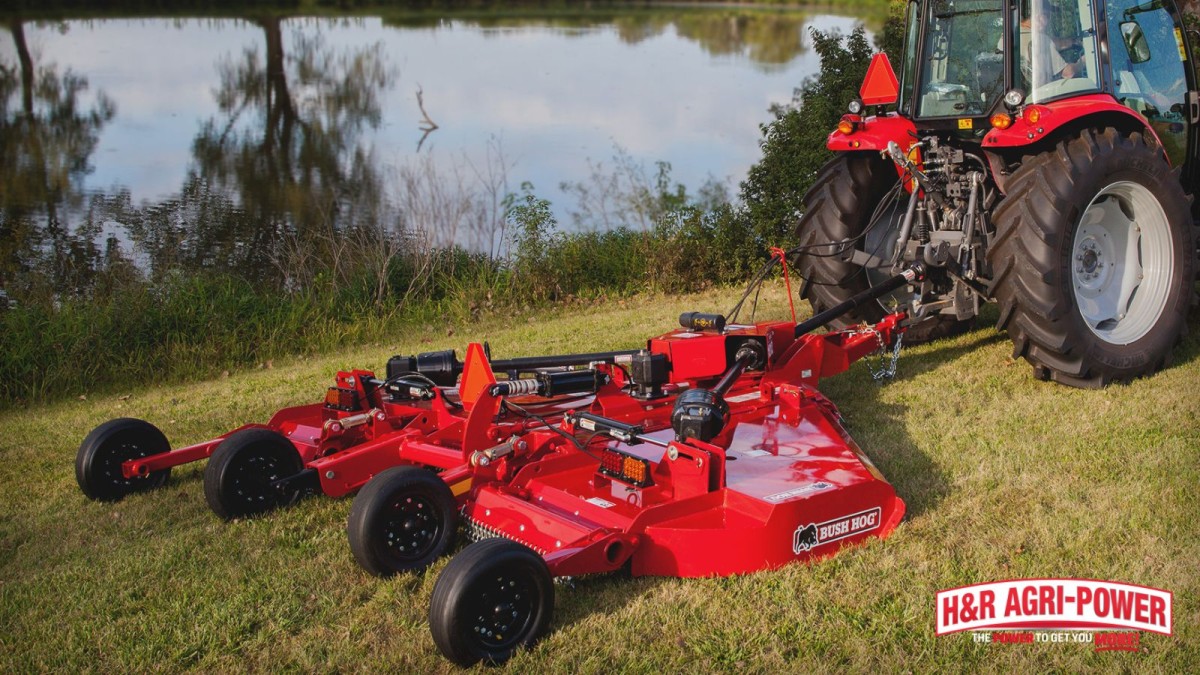
Bush hogs are heavy-duty rotary cutting attachments designed to clear dense vegetation, overgrown brush, and rough terrain on commercial properties and large land parcels. These tractor-mounted tools use high-speed rotating blades to cut through thick growth that standard mowers cannot handle, making them essential equipment for land management professionals, farmers, and property owners across the United States.
This guide covers how Bush Hog rotary cutters operate across different vegetation and terrain types, the range of features and sizing options available, the efficiency and safety benefits they bring to property maintenance, routine maintenance practices for long-term performance, and key purchasing considerations including dealer support and financing.
Bush Hog rotary cutters work by generating substantial cutting force through PTO-driven gearboxes, allowing operators to tackle everything from saplings and dense brush to heavy grass on unimproved land. A properly matched 5-foot bush hog can cover roughly 1.55 acres per hour, making these implements practical for large-scale clearing projects where time and fuel efficiency matter.
Selecting the right attachment depends on matching hydraulic flow rates, horsepower requirements, and cutting width to both the tractor's specifications and the project scope. Proper sizing prevents mechanical strain and costly downtime.
Consistent maintenance, including gearbox oil checks before every use and regular blade inspection, directly extends equipment lifespan. Equally important are safety protocols; rotary mower accidents carry life-threatening risks that proper training and equipment upkeep help prevent.
Working with an experienced dealer like H&R Agri-Power provides access to factory-trained service staff, genuine parts availability, and financing options that simplify both initial purchase and long-term ownership costs.
How Do Bush Hog Rotary Cutters Work for Clearing Large Areas?
Bush Hog rotary cutters work by using heavy-duty rotary blades, powered through a tractor's PTO (power take-off), to cut and mulch dense vegetation across expansive terrain. The sections below cover the vegetation types these implements handle and how they compare to alternative clearing tools.
What Types of Vegetation Can Bush Hog Rotary Cutters Handle?
The types of vegetation Bush Hog rotary cutters can handle range from light grasses to heavy brush, saplings, and woody undergrowth. Rotary cutters generate enough force to shear through small-diameter trees, thick weeds, and overgrown pasture cover that standard mowers cannot manage.
Common vegetation types suited for bush hog clearing include:
-
Tall grasses and meadow overgrowth up to several feet high
-
Woody brush and scrub, including briars and vines
-
Small saplings with trunk diameters typically under three to four inches
-
Dense weed patches and invasive plant species
Blade thickness, cutting deck width, and tractor horsepower all determine how aggressively the implement handles heavier material. For properties with mature trees or stumps, specialized forestry mulchers or excavator-mounted equipment may be needed instead. Most commercial operators find that a properly matched Bush Hog rotary cutter handles the vast majority of overgrown land conditions encountered during routine clearing and property maintenance.
How Do Bush Hog Rotary Cutters Compare to Other Land Clearing Tools?
Bush Hog rotary cutters compare to other land clearing tools by offering a practical balance of cost efficiency, speed, and versatility that dedicated forestry equipment often cannot match for routine vegetation management. While forestry mulchers excel at pulverizing large trees and hydraulic excavators handle heavy stumpage removal, rotary cutters remain the most accessible option for mowing thick brush and maintaining cleared acreage on an ongoing basis.
According to a 2024 market analysis, the land clearing equipment market was valued at USD 3.1 billion and is projected to reach USD 5.2 billion by 2033, reflecting growing demand across all clearing tool categories. Within that expanding market, rotary cutters occupy a unique position: they require lower upfront investment, attach to standard agricultural tractors, and handle repeated maintenance passes that heavier machines are not designed for.
For most commercial property maintenance operations, a Bush Hog rotary cutter delivers the best return when the goal is regular upkeep rather than one-time heavy clearing. Understanding the available attachment types helps match the right implement to each job's demands.
What Are the Most Common Types of Bush Hog Attachments Available?
The most common types of Bush Hog attachments include rotary cutters, rotary mowers, finishing mowers, and boom-arm cutters. Selecting the right attachment depends on vegetation density and property size.
Which Bush Hog Attachments Are Best Suited for Commercial Land Clearing?
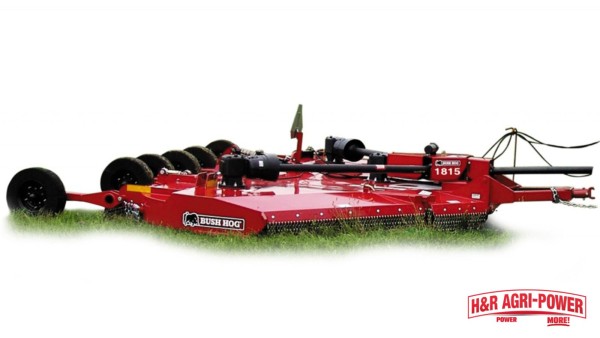
The Bush Hog attachments best suited for commercial land clearing are heavy-duty rotary cutters and brush cutters designed to handle dense vegetation, saplings, and overgrown terrain. These attachments use thick, swinging blades powered by PTO-driven gearboxes to cut through material that would stall lighter equipment.
Key attachment types for commercial clearing include:
-
Heavy-duty rotary cutters handle thick brush, small trees, and dense weeds across large acreage.
-
Brush cutters tackle saplings and woody growth up to several inches in diameter.
-
Boom-arm cutters reach ditches, fence lines, and embankments that standard three-point hitch attachments cannot access.
According to Intel Market Research, the global rotary cutters market was valued at USD 238 million in 2024 and is projected to grow to USD 254 million in 2025. For most commercial operations, a heavy-duty rotary cutter paired with adequate tractor horsepower delivers the best balance of cutting capacity and operational speed.
How Can You Select the Right Size and Model for Your Property?
You can select the right size and model by matching the rotary cutter's cutting width, weight rating, and PTO horsepower requirements to your tractor's specifications and the terrain you need to clear. Mismatching these factors reduces efficiency and risks equipment damage.
Consider these factors when sizing your rotary cutter:
-
Tractor horsepower must meet or exceed the rotary cutter's minimum PTO requirement; rotary mowers require 30% more horsepower than reel-type mowers under the same conditions, according to the GCSAA.
-
Cutting width should reflect property scale; wider decks cover more ground per pass but demand more power.
-
Vegetation type determines blade thickness and gearbox duty rating needed.
-
Hydraulic flow requirements matter for attachments needing auxiliary power, measured in gallons per minute (GPM).
Oversizing a rotary cutter for a smaller tractor strains the drivetrain, while undersizing leaves dense growth uncut. Matching rotary cutter specifications to both tractor capability and job requirements ensures the best return on investment across seasons.
What Benefits Do Bush Hog Rotary Cutters Offer for Property Maintenance?
Bush Hog rotary cutters offer property maintenance benefits that center on operational efficiency and consistent land management across large acreages. The following subsections cover productivity gains on large-scale projects and essential safety practices.
How Can Bush Hog Rotary Cutters Improve Efficiency in Large-Scale Projects?
Bush Hog rotary cutters improve efficiency in large-scale projects by covering significant acreage in minimal time, reducing labor hours and fuel costs per acre. A 5-foot bush hog operating at 3 mph with 85% efficiency can cover approximately 1.55 acres per hour, according to calculations shared on TractorByNet. Wider deck models scale that throughput even further, making multi-acre properties manageable within a single workday. For property managers and commercial operators, this kind of predictable output simplifies scheduling and keeps maintenance costs under control. Matching implement width to tractor horsepower remains the single most effective way to maximize coverage without sacrificing cut quality.
What Safety Considerations Should Be Followed When Using Bush Hog Rotary Cutters?
The safety considerations that should be followed when using Bush Hog rotary cutters include pre-operation inspections, proper PTO shielding, and strict debris-awareness protocols. According to the Purdue University Cooperative Extension Service, an accident with a rotary mower can cost you your life, and following safety practices, using proper equipment correctly, and keeping equipment in good repair are the best accident preventives. Key practices to observe include:
-
Inspecting blades, bolts, and shielding before every use.
-
Keeping all PTO guards and shields securely in place during operation.
-
Walking the cutting area beforehand to remove rocks, metal, and other projectiles.
-
Maintaining a safe perimeter so bystanders stay well outside the discharge zone.
-
Wearing appropriate PPE, including eye protection and sturdy footwear.
Consistent adherence to these measures protects both the operator and anyone nearby. With safety protocols established, routine maintenance becomes the next step in protecting your investment over the long term.
How Should You Maintain and Service Bush Hog Rotary Cutters for Longevity?
You should maintain and service Bush Hog rotary cutters for longevity through consistent routine checks and timely professional repairs. The following subsections cover essential maintenance tasks and when to seek expert service.
What Are Key Routine Maintenance Tasks for Bush Hog Rotary Cutters?
Key routine maintenance tasks for Bush Hog rotary cutters include gearbox oil checks, blade inspection, and drivetrain greasing. Most rotary cutter gearboxes use 80W-90 gear oil; according to FIMIC Implement, operators should remove the oil level plug and check for proper fill. Operators should check oil level before each use.
Additional routine tasks to prioritize:
-
Inspect blades for excessive wear, cracks, or imbalance before each use.
-
Grease all zerk fittings on driveline U-joints, hitch pins, and wheel bearings per the operator's manual schedule.
-
Check belt tension and condition on belt-driven models, replacing any frayed or stretched belts promptly.
-
Clean debris from the deck underside after each session to prevent moisture-trapped corrosion.
-
Verify that all safety shields, guards, and warning decals remain intact and properly fastened.
Skipping even one of these tasks accelerates wear across interconnected components. For operators running equipment in heavy brush or rocky terrain, shortening service intervals is a practical safeguard that pays for itself in extended implement life.
When Should You Seek Professional Service or Repairs?
You should seek professional service or repairs when issues exceed standard operator maintenance, such as gearbox failure, structural cracks, or persistent vibration after blade replacement. Iowa State University Extension and Outreach recommends using an economic life of 10 to 12 years for most farm machines, so scheduling professional inspections as implements approach that window helps catch wear before catastrophic failure.
Signs that warrant dealer-level service include:
-
Unusual grinding or knocking sounds from the gearbox under load.
-
Hydraulic leaks at hose connections or cylinder seals.
-
Bent or cracked rotary cutter frames from impact with stumps or rocks.
-
PTO shaft damage, including worn splines or collapsed shear pins occurring repeatedly.
Attempting complex drivetrain or structural repairs without proper tooling risks compounding the damage. A qualified dealer technician can diagnose root causes, source factory-spec replacement parts, and restore the rotary cutter to safe operating condition. With commercial equipment running hundreds of hours annually, proactive dealer service is far more cost-effective than emergency breakdowns during peak clearing season.
What Should You Consider When Purchasing Bush Hog Rotary Cutters for Commercial Use?
When purchasing Bush Hog rotary cutters for commercial use, you should consider brand reputation, dealer support networks, and available financing. The sections below cover how dealer relationships influence long-term value and what upgrade paths exist.
How Do Brand and Dealer Support Affect Your Buying Decision?
Brand and dealer support affect your buying decision by determining the availability of parts, service quality, and long-term operational reliability. A strong dealer network ensures factory-trained technicians can diagnose issues quickly, minimizing costly downtime during peak clearing seasons.
Leading agricultural equipment manufacturers rely on local, independent dealers to back every product with experienced service personnel. This model, common across major brands like Bush Hog, means your post-purchase experience depends heavily on the dealer you choose.
Key factors to evaluate in a dealer include:
-
Proximity of service locations to your job sites.
-
Parts inventory depth for your specific implement models.
-
Availability of factory-trained service technicians.
-
Warranty processing speed and support responsiveness.
For commercial operators running equipment daily, selecting a dealer with multiple service locations and deep brand expertise often matters more than saving a few hundred dollars on the initial purchase price.
What Financing or Upgrade Options Are Typically Available?
Financing and upgrade options typically available for commercial Bush Hog rotary cutters include manufacturer-backed loan programs, seasonal payment plans, and trade-in allowances toward newer models. These programs help commercial operators manage cash flow while keeping equipment current.
Most major equipment dealers offer structured financing with terms tailored to agricultural and land management businesses. Seasonal payment structures align installments with revenue cycles, so operators clearing land primarily in spring and summer can defer payments during slower months. Low-rate or zero-percent promotional financing is common during manufacturer sales events.
Upgrade paths worth evaluating include:
-
Trade-in programs that apply current equipment value toward higher-capacity models.
-
Lease-to-own arrangements that reduce upfront capital requirements.
-
Fleet financing for operators managing multiple implements across job sites.
Planning equipment purchases around a 10 to 12-year economic life, as recommended by Iowa State University Extension and Outreach for most farm machines, helps operators time upgrades before repair costs erode productivity gains.
With purchasing strategy established, the right dealership partner can simplify both acquisition and long-term support.
How Can H&R Agri-Power Support Your Bush Hog Land Clearing and Maintenance Needs?
H&R Agri-Power supports Bush Hog land clearing and maintenance needs through equipment sales, parts availability, and long-term service across 17 Bush Hog locations in five states. The following sections cover specific solutions and key takeaways.
What Long-Term Service and Equipment Solutions Does H&R Agri-Power Offer?
H&R Agri-Power offers long-term service and equipment solutions built on over 50 years of agricultural dealership experience. With locations across Kentucky, Tennessee, Illinois, Indiana, and Mississippi, H&R Agri-Power provides convenient access to Bush Hog rotary cutters, replacement parts, and factory-trained service technicians.
H&R Agri-Power carries top-tier brands including Bush Hog, ensuring compatibility across a wide range of tractor sizes and land clearing applications. Beyond the initial sale, H&R Agri-Power delivers ongoing support through precision farming solutions, equipment inspections, and maintenance services designed to maximize rotary cutter lifespan. For operations that depend on consistent uptime, having a dealer network with dedicated parts inventories and trained staff eliminates costly delays during peak clearing seasons.
What Are the Key Takeaways About Bush Hog Rotary Cutters for Commercial Land Clearing and Property Maintenance We Covered?
The key takeaways about Bush Hog rotary cutters for commercial land clearing and property maintenance are:
-
Bush Hog rotary cutters handle heavy vegetation, including brush, saplings, and overgrown fields, more effectively than standard mowing equipment.
-
Selecting the right rotary cutter size and model depends on tractor horsepower, PTO specifications, and the density of vegetation on your property.
-
Routine maintenance, such as checking gearbox oil levels before each use and inspecting blades regularly, directly extends rotary cutter lifespan and reduces long-term costs.
-
Safety practices, including proper guarding, debris awareness, and operator training, are essential for every clearing operation.
-
Dealer support significantly influences long-term ownership value; access to parts, service, and knowledgeable staff prevents extended downtime.
Research from the ASABE Technical Library confirms that annual repair and maintenance costs follow predictable functions across agricultural machine types, reinforcing the value of proactive service schedules. Investing in the right Bush Hog rotary cutter and maintaining it through a trusted dealer like H&R Agri-Power positions any commercial operation for reliable, cost-effective land management over the equipment's full working life.