

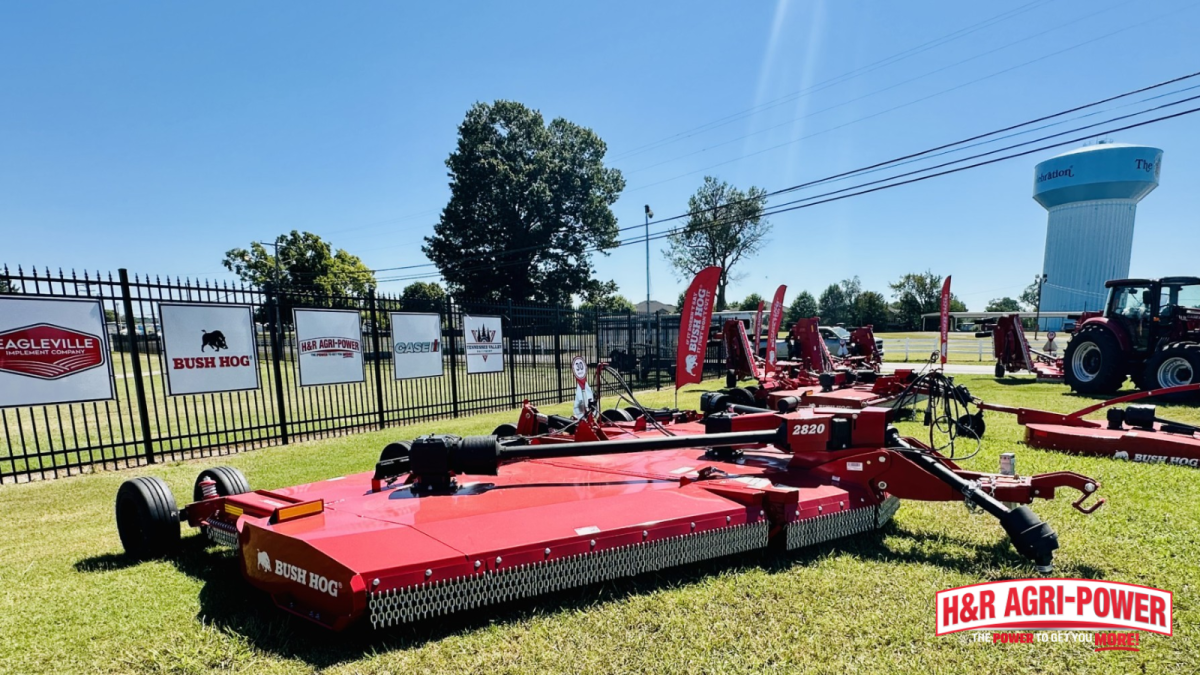
Brush hogs are PTO-driven rotary cutters designed to mow through dense brush, heavy weeds, and overgrown field edges that standard mowers cannot handle. These implements attach to a tractor and use high-speed rotating blades to clear tough vegetation, restoring productive use to neglected land.
This guide covers how Bush Hog rotary cutters work and which types perform best, why brush and weed control matters for farm productivity, how to select the right implement for your operation, essential maintenance practices, and how H&R Agri-Power supports your equipment needs.
Bush Hog rotary cutters range from single-deck models for smaller tractors to flex-wing configurations built for wider coverage on larger properties. Blade tip speeds, cutting width, and deck design all determine how effectively an implement handles thick vegetation and varied terrain.
Uncontrolled brush consumes three to five times more water than native grasses per pound of growth, starving desirable plants of sunlight, moisture, and nutrients. Maintaining clean field edges also reduces yield losses caused by shading, wind exposure, and excess moisture along crop boundaries.
Matching the right implement to your tractor's PTO horsepower, your terrain, and the vegetation you need to manage prevents equipment strain and improves cutting performance. A common guideline is five horsepower per foot of cutter width.
Routine inspections of blade sharpness, guards, and PTO shielding keep Bush Hog rotary cutters running safely and extend their working life. H&R Agri-Power provides equipment sales, genuine parts, and professional service to help you keep fields, fencerows, and pasture edges under control season after season.
What Are Brush Hogs and How Do They Work?
Brush hogs are tractor-mounted rotary cutters designed to mow heavy brush, thick weeds, and overgrown vegetation. The following sections cover the most effective implement types, their cutting mechanics, and essential safety features.
Which Types of Bush Hog Rotary Cutters Are Most Effective for Brush Control?
The most effective Bush Hog rotary cutters for brush control are rotary cutters that minimize soil disturbance while clearing dense vegetation. According to research from the University of Arizona Repository, brush control methods involving minimal soil disturbance were the most reliable for improving successional stage and increasing forage production.
Mechanical brush management options include:
-
Single-deck rotary cutters for standard pasture mowing and light brush.
-
Flex-wing rotary cutters for covering wide acreage on open terrain.
-
Heavy-duty cutters with reinforced decks for dense saplings and woody growth.
Choosing the right implement depends on soil type, brush density, topography, and operation economics. Brush management reduces competition for sunlight and nutrients among desirable plants, which directly increases forage yields.
How Do Bush Hog Rotary Cutters Cut Through Thick Weeds and Overgrowth?
Bush Hog rotary cutters cut through thick weeds and overgrowth using high-speed rotating blades powered by the tractor's power take-off (PTO) shaft. The PTO transfers engine power to the cutter deck, spinning heavy blades at tip speeds exceeding 150 mph according to LSU AgCenter data.
This rotational force shears vegetation on contact rather than slicing it cleanly like a finish mower. The cutting action handles material that would stall lighter equipment, including tall grass, dense weeds, and small saplings. Blade momentum and mass are what make rotary cutters effective in overgrown conditions where precision is less important than raw clearing power.
What Safety Features Should Users Know About When Operating Brush Hogs?
The safety features users should know about when operating brush hogs include cutter deck shielding, chain guards, PTO guards, and proper clearance zones. According to the LSU AgCenter, chain guards reduce the number of thrown objects by half and significantly lower the velocity of debris that escapes.
Key safety considerations include:
-
Cutter decks should conform to American Society of Agricultural Engineers Standard S474.1 for agricultural rotary mower safety.
-
Objects such as stones, cans, and debris can be thrown more than 300 feet from the mower.
-
No people or animals should be within 300 feet during operation.
-
PTO shields must remain in place and well maintained at all times.
Eye damage is the most common injury from thrown objects, making protective eyewear essential. Proper implement selection and maintenance lay the groundwork for understanding why brush control matters for overall farm productivity.
Why Is Brush and Weed Control Important for Farms and Fields?
Brush and weed control is important for farms and fields because unchecked vegetation drains water, blocks sunlight, and reduces usable acreage. The following sections cover the specific risks of neglected brush and how maintaining field edges protects both crop yields and livestock.
What Are the Risks of Uncontrolled Brush and Weeds on Farmland?
The risks of uncontrolled brush and weeds on farmland include lost forage, depleted water resources, reduced sunlight for desirable crops, and degraded pasture quality. Brush plants consume three to five times more water than native grasses for each pound of leaf growth, according to the USDA Natural Resources Conservation Service. That excessive water use starves surrounding crops and forages of the moisture they need to thrive.
Left unchecked, dense brush also creates hiding spots for pests and restricts livestock movement across grazing areas. Over time, overgrown fields become harder and more expensive to reclaim, compounding productivity losses season after season. Proactive management is almost always more cost-effective than reactive clearing once brush has fully established itself.
How Can Field Edge Maintenance Improve Crop Yields and Livestock Safety?
Field edge maintenance improves crop yields and livestock safety by reducing the shading, moisture imbalance, and wind exposure that suppress plant growth along perimeters. According to research published in Agriculture, Ecosystems & Environment, mitigating field-edge yield declines would reduce overall yield losses on farms. Environmental conditions such as wind and moisture significantly affect these declines, while landscape features like overgrown hedgerows can worsen yield effects by exacerbating shading and wetness.
For livestock, well-maintained field edges eliminate dense brush where predators shelter and fencing damage goes unnoticed. Clear sightlines also make it easier to monitor herd health and movement. Keeping borders trimmed is one of the simplest steps a producer can take to protect both revenue and animal welfare.
With a clear understanding of why brush control matters, selecting the right Bush Hog rotary cutter ensures that effort translates into results.
What Factors Should You Consider When Selecting a Bush Hog Rotary Cutter?
The factors you should consider when selecting a Bush Hog rotary cutter include terrain conditions, vegetation density, total acreage, and proper tractor-to-cutter size matching. The following subsections break down how each factor shapes your decision.
How Do Terrain, Vegetation Type, and Acreage Impact Your Choice?
Terrain, vegetation type, and acreage impact your choice by determining the cutting width, deck durability, and implement configuration you need. Hilly or uneven ground demands a rotary cutter with flex-wing capability or a narrower single-deck unit that follows contours without scalping. Dense brush and saplings require heavier-duty decks with reinforced blade carriers, while light weeds and grass call for standard-duty models.
Acreage also plays a direct role in sizing. Operators managing fewer than 20 acres often find a single five- or six-foot cutter sufficient, whereas properties exceeding 50 acres benefit from wider flex-wing configurations that cover more ground per pass. Matching the implement to actual field conditions prevents premature wear and reduces operating costs over time.
What Size and Power Requirements Should You Match to Your Tractor?
The size and power requirements you should match to your tractor depend on the rotary cutter's width and the tractor's PTO horsepower rating. A common industry guideline is 5 PTO horsepower per foot of cutting width, so a five-foot brush hog requires approximately 25 PTO horsepower.
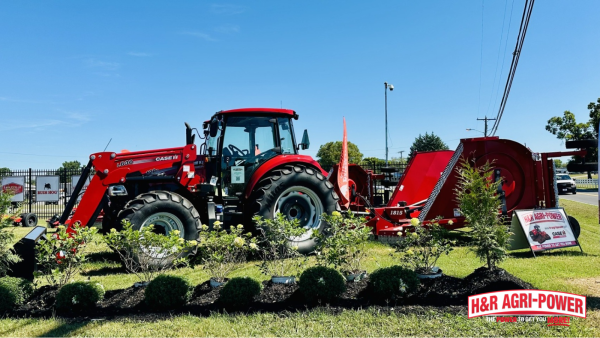
For wider implements, the power demand scales accordingly. According to Bush Hog manufacturer specifications, the 1812 Flex-Wing rotary cutter is designed for small tractors with a PTO horsepower of 50 to 75. Undersizing the tractor strains the drivetrain and shortens component life, while oversizing wastes fuel without improving cut quality.
Key matching considerations include:
-
Verify your tractor's rated PTO horsepower, not engine horsepower.
-
Confirm the implement's three-point hitch category matches your tractor's hitch.
-
Check that the PTO shaft speed (540 or 1,000 RPM) aligns with the cutter's gearbox requirements.
-
Ensure the tractor's hydraulic capacity supports any remote functions on the implement.
Selecting the right power-to-width ratio protects both the tractor and the cutter, setting the stage for proper maintenance habits that extend equipment life.
How Can Proper Maintenance Maximize the Lifespan of Bush Hog Rotary Cutters?
Proper maintenance maximizes the lifespan of Bush Hog rotary cutters by preventing premature wear, ensuring clean cuts, and reducing costly breakdowns. The essential steps and inspection intervals below keep your equipment reliable season after season.
What Are Essential Maintenance Steps for Brush Hog Equipment?
Essential maintenance steps for brush hog equipment include inspecting hardware, protecting guards, and managing deck height. Before each use, complete the following:
-
Check all bolts, nuts, and fasteners for looseness caused by vibration during operation.
-
Verify that blade sharpness is adequate for clean cutting performance.
-
Confirm that all safety guards, including chain guards and PTO shields, remain in place and undamaged.
-
Adjust the mower height so runners avoid excessive ground contact, which accelerates wear on runner shoes.
-
Grease all fittings according to the manufacturer's schedule to prevent bearing failure.
Neglecting any single step compounds wear across connected components. Consistent pre-operation checks are the simplest way to avoid mid-season downtime.
How Often Should Blades and Other Key Parts Be Inspected or Replaced?
Blades and other key parts should be inspected before every use and replaced when damage exceeds what sharpening can restore. According to Ohio State University Extension, operators should check machinery for loose parts and blade sharpness, replacing blades that are too dull to sharpen. Beyond blades, inspect these components on a regular schedule:
-
Blades: Sharpen after every 25 to 50 hours of use; replace when cracks, bends, or excessive thinning appear.
-
Gearbox oil: Check levels before each session and change at manufacturer-recommended intervals.
-
PTO shaft and shields: Inspect for wear, cracks, or missing guards at the start of each cutting season.
-
Belts and bearings: Evaluate tension and play monthly during heavy-use periods.
Staying ahead of blade wear is the single highest-impact maintenance habit, because dull blades strain the gearbox, increase fuel consumption, and produce ragged cuts that invite plant disease. With a solid inspection routine established, matching your equipment to qualified parts and service support ensures these practices hold up long term.
How Should You Approach Brush and Weed Control With Equipment, Parts, and Service from H&R Agri-Power?
You should approach brush and weed control with equipment, parts, and service from H&R Agri-Power by combining the right implements with proper safety practices and post-treatment land management.
Can H&R Agri-Power's Equipment Sales, Parts, and Service Help With Field Maintenance?
Yes, H&R Agri-Power's equipment sales, parts, and service can help with field maintenance. With 21 locations across six states and over 50 years of experience, H&R Agri-Power provides the implements, replacement components, and expert service support that keep rotary cutters and other brush control equipment operating safely and efficiently.
Proper field maintenance also requires compliance with safety standards. According to the Occupational Safety and Health Administration, the requirements for safeguarding PTO shafts used on agricultural equipment are delineated by 29 CFR 1928.57, covering farm field equipment, farmstead equipment, and certain roadside equipment. H&R Agri-Power's parts and service teams can help ensure PTO guards, chain shields, and other safety components stay in working order throughout the season.
What Are the Key Takeaways About How Bush Hog Rotary Cutters Help Control Brush, Weeds, and Field Edges We Covered?
The key takeaways about how Bush Hog rotary cutters help control brush, weeds, and field edges are:
-
Bush Hog rotary cutters manage thick brush and overgrowth through high-speed blade rotation, restoring usable pasture and reducing competition for sunlight, water, and nutrients.
-
Operator safety demands strict clearance zones; you should operate a rotary cutter only if there are no people or animals within 300 feet or more.
-
Selecting the right rotary cutter depends on terrain, vegetation density, acreage, and matching PTO horsepower to cutter size.
-
Regular blade inspections, guard maintenance, and PTO shield checks extend equipment lifespan and reduce hazards.
-
On grassland where brush has been removed, the pasture should be rested and grazing time limited during the first growing season after treatment.
H&R Agri-Power carries the equipment, parts, and service expertise to support every stage of brush and weed control, from selecting the right Bush Hog rotary cutter to maintaining it for years of reliable field work.