

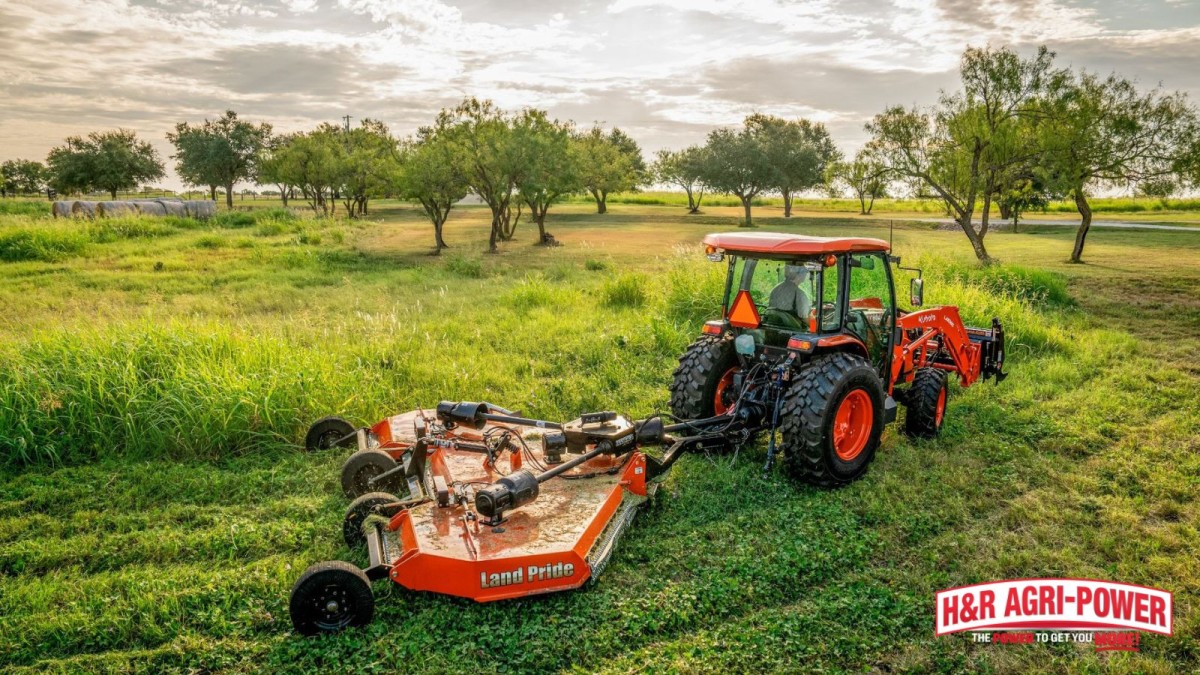
Bush hog mowing on ditches, banks, and uneven ground is the process of using a tractor-mounted rotary cutter to clear vegetation from irregular terrain where rollover risks, hidden obstacles, and unstable footing demand specialized techniques beyond standard flat-field operation.
This guide covers equipment preparation and safety features, slope and ditch mowing techniques, terrain-specific strategy adjustments, essential safety precautions, weather and ground condition considerations, and ongoing maintenance practices.
Proper preparation starts with matching your rotary cutter to the job; Bush Hog single-spindle models range from 15 HP requirements for light cutting up to 70 HP for material over 5 inches in diameter. Pre-operation checks, ROPS installation, seatbelt use, and PTO safety protocols form the foundation of every safe mowing session on uneven ground.
Slopes require deliberate mowing patterns. Operating in the up-and-down direction rather than side-to-side reduces rollover risk, and maintaining safe distances from ditch edges, embankments, and drop-offs prevents loss of traction and control.
Blade height settings, ground speed, and approach angles all shift depending on whether you face rocky ground, rutted pastures, or overgrown banks. Keeping cutting height at a minimum of 3 inches protects both the mower deck and the terrain surface beneath it.
Personal protective equipment, bystander clearance zones of 300 feet or more, and proper dismount procedures directly prevent the most common mowing injuries and fatalities.
Wet or saturated ground creates ruts, compacts soil, and dramatically reduces traction on slopes. Vegetation density also changes your approach, since thick brush demands heavier-duty cutters and slower ground speeds.
Regular blade inspection, chain guard maintenance, and post-mow cleaning extend equipment life and keep every component performing safely on rough terrain. H&R Agri-Power provides the equipment, parts, and service support to keep your operation running across all conditions.
How Should You Prepare Your Bush Hog and Equipment for Mowing on Uneven Terrain?
You should prepare your bush hog and equipment for mowing on uneven terrain by completing thorough pre-operation inspections and equipping your tractor with the right safety features. The following subsections cover essential pre-mowing checks and critical attachments for sloped work.
What Pre-Operation Checks Are Essential for Safe Bush Hog Mowing?
The pre-operation checks essential for safe bush hog mowing include inspecting mechanical components, walking the mowing area, and verifying that your tractor matches the cutter's horsepower requirements. Bush Hog single-spindle rotary cutters range from the BH110 series requiring 15 to 25 HP to the BH516 requiring 70 HP, so confirming proper PTO match prevents overloading on demanding terrain.
Before each session, complete these checks:
-
Inspect blades for sharpness and damage, and check blade balance.
-
Verify all guards, including chain and belt guards, are secure and undamaged.
-
Confirm the tractor seat is firmly attached to the base.
-
Walk the property and remove or mark hidden hazards such as pipes, stakes, and debris.
-
Check for washouts, holes, and ditches that could cause loss of control.
Skipping even one of these steps on uneven ground significantly increases the chance of equipment failure or operator injury at the worst possible moment.
Which Safety Features and Attachments Should You Consider for Sloped Mowing?
The safety features and attachments you should consider for sloped mowing include rollover protective structures, seat belts, chain guards, and proper personal protective equipment. According to OSHA, mowers equipped with a ROPS should also be equipped with a seat belt, and approved seat belt assemblies should be provided and used on all riding mowers with an installed ROPS.
Key safety features and PPE for slope work include:
-
ROPS installed on the tractor frame (check for unused bolt holes if one is not currently fitted).
-
Seat belt used at all times when ROPS is present.
-
Chain guards on the front and rear of the rotary cutter to reduce thrown objects.
-
Safety goggles or glasses with side shields.
-
Steel-toed footwear and hearing protection.
-
Non-baggy clothing, gloves, and a reflective vest.
Remote-controlled mowers represent an emerging option for extreme slopes, featuring low centers of gravity and tilt meters that allow operation on inclines up to 50 degrees compared to the 20-degree rating of most traditional zero-turn mowers. For most operators working ditches and banks with a standard tractor-mounted bush hog, however, properly installed ROPS, a functioning seat belt, and complete PPE remain the most practical and accessible safeguards.
With equipment inspected and safety features in place, the next step is mastering the actual mowing techniques for ditches and steep banks.
What Are the Safest Techniques for Brush Hogging Ditches and Steep Banks?
The safest techniques for brush hogging ditches and steep banks combine speed control, proper mowing direction, and rollover prevention. The following subsections cover stability strategies and recommended mowing patterns.
How Can You Maintain Stability and Prevent Rollovers on Slopes?
You can maintain stability and prevent rollovers on slopes by controlling speed, adding ballast, and avoiding grades beyond your equipment's limits. According to Ohio State University Extension, hazard risks increase when equipment is not well maintained, and operators should never work on steep slopes without taking precautions.
Key stability practices include:
-
Operating at reduced ground speed to keep the tractor's center of gravity low.
-
Adding front wheel weights and widening the rear tire stance for better balance.
-
Keeping drive wheels at least five feet from unprotected ditch edges, embankments, and drop-offs.
-
Ensuring ROPS is installed and the seatbelt is fastened before entering any slope.
-
Walking the area beforehand to identify washouts, hidden holes, or soft ground that could shift the tractor unexpectedly.
For slopes that exceed your tractor's safe operating angle, a remote-controlled mower designed with a low center of gravity is worth considering; it removes the operator from the rollover zone entirely.
What Are the Recommended Patterns and Directions for Mowing Banks and Ditches?
The recommended patterns and directions for mowing banks and ditches prioritize up-and-down passes over side-to-side traversing. OSHA specifies that operators should always mow slopes in the up-and-down direction, never across, because lateral passes shift the tractor's center of gravity toward the downhill side and dramatically increase rollover risk.
Effective mowing patterns for ditch banks include:
-
Starting at the bottom of the bank and mowing uphill, then reversing back down before the next pass.
-
Overlapping each pass slightly to avoid repositioning on the slope itself.
-
Approaching ditch edges straight on rather than at an angle, keeping the tractor aligned with the grade.
-
Raising the cutter height before turning at the top or bottom of each pass to reduce drag.
Side-to-side mowing may seem faster on gentle banks, but even moderate slopes become hazardous when traversed laterally. Committing to vertical passes takes more time yet keeps the tractor's weight distribution centered between the axles, which is ultimately the safer and more productive approach for any ditch or bank work.
How Should You Adjust Your Mowing Strategy for Different Types of Uneven Ground?
You should adjust your mowing strategy for different types of uneven ground by raising blade height, reducing speed, and matching your approach to the specific terrain. The sections below cover optimal blade settings and scalping prevention.
What Blade Height Settings Work Best for Bumpy or Rocky Areas?
The blade height settings that work best for bumpy or rocky areas start at a minimum of 3 inches. According to the Louisiana State University AgCenter, the lowest recommended cutting height for a rotary cutter is 3 inches. Raising the deck beyond this minimum gives blades clearance over rocks, roots, and sudden elevation changes that would otherwise cause strikes.
For properties with mixed terrain, setting the cutting height between 3.5 and 4 inches benefits vegetation health on rough ground, where root systems are already stressed by poor drainage or compacted soil. When hidden obstacles are likely, a higher setting is always the safer choice.
How Can You Minimize Scalping or Equipment Damage on Challenging Terrain?
You can minimize scalping or equipment damage on challenging terrain by slowing ground speed, raising the deck, and walking the area beforehand. Scalping occurs when the mower deck dips into low spots and cuts vegetation down to bare soil, damaging both the turf and the blades.
Key steps to reduce scalping and equipment wear include:
-
Walk the property before mowing to identify and mark hidden hazards such as washouts, stumps, and buried debris.
-
Raise blade height to at least 3 inches, increasing further on heavily rutted or rocky sections.
-
Reduce travel speed so the mower can follow ground contours without the deck bouncing into dips.
-
Overlap passes slightly to avoid forcing the cutter into uncut edges at full width.
-
Check blade condition frequently, since rocky ground dulls cutting edges faster than flat terrain.
For operators managing ditchlines and field borders regularly, this deliberate approach protects both the rotary cutter and the ground surface. With the right height and speed adjustments in place, consistent safety practices become the next priority.
What Safety Precautions Should You Always Follow When Brush Hogging Slopes and Ditches?
The safety precautions you should always follow when brush hogging slopes and ditches include wearing proper PPE, mowing in the up-and-down direction on slopes, and following shutdown procedures before dismounting. The sections below cover protective equipment and tip-over prevention.
What Personal Protective Equipment Should You Wear?
The personal protective equipment you should wear includes hearing protection, head protection, safety glasses, and sturdy work boots. According to OSHA, operators must use all required PPE at all times and avoid wearing jewelry or loose-fitting clothing that can become entangled with moving parts.
When using a tractor equipped with a rollover protective structure (ROPS), always wear a seat belt. Tight, belted clothing reduces snag risk around rotating components. If your mower lacks a ROPS, check near the seat or frame for unused bolt holes or brackets that indicate one should be installed.
Essential PPE for brush hogging slopes includes:
-
Safety glasses or goggles with side shields
-
Hearing protection rated for prolonged equipment use
-
Steel-toed work boots with slip-resistant soles
-
Snug, non-baggy pants and long-sleeved shirts
-
Work gloves for grip and hand protection
Skipping even one piece of protective gear on uneven terrain significantly increases injury exposure, particularly from thrown debris and rollover events.
How Can You Reduce the Risk of Equipment Tip-Overs or Sliding?
You can reduce the risk of equipment tip-overs or sliding by always mowing slopes in the up-and-down direction, maintaining safe speeds, and adding stabilization weight. According to Ohio State University Extension, adding front wheel weights for balance and widening the rear tire setting enhances tractor stability and reduces overturn risk.
Key practices to prevent tip-overs and sliding include:
-
Mowing up and down slopes, never side to side on unlevel ground
-
Operating at a controlled, steady speed with no sudden direction changes
-
Keeping drive wheels at least five feet from unprotected edges of ditches, embankments, and culverts
-
Disengaging the PTO, turning off the engine, and setting brakes before dismounting
-
Confirming blades have fully stopped rotating before approaching the mower
For operators working banks and ditches regularly, investing in proper ballast and wide-set tires is one of the most cost-effective ways to prevent a catastrophic rollover. With the right protective gear and stability measures in place, consistent equipment maintenance becomes the next priority for safe operation.
How Do Weather and Ground Conditions Affect Bush Hog Mowing on Rough Terrain?
Weather and ground conditions affect bush hog mowing on rough terrain by altering traction, soil stability, and vegetation resistance. Wet or saturated ground increases rollover risk, while dense vegetation demands adjusted speed and technique.
When Is It Unsafe to Mow Slopes Due to Wet or Muddy Conditions?
It is unsafe to mow slopes when rain, heavy dew, or recent flooding has left the ground saturated. Wet soil loses its ability to support heavy equipment, and tractor tires lose grip on slick grass, making slides and rollovers far more likely on any grade.
According to Michigan State University Extension, mowing through wet areas can create ruts and compact the soil. Compacted, rutted ground destabilizes equipment on subsequent passes and degrades the terrain further. Before mowing slopes after rainfall, check soil firmness by walking the area first. Operators who push into muddy banks often discover the real danger only after a tire breaks traction mid-slope, when recovery options are limited.
How Does Vegetation Type Change Your Approach to Mowing Uneven Ground?
Vegetation type changes your approach to mowing uneven ground by dictating travel speed, blade height, and the level of caution required on slopes. Thin grass on a graded ditch demands less power than woody brush on an eroded bank.
Key adjustments based on vegetation include:
-
Tall, dense grass conceals hazards like rocks, stumps, and washouts, requiring slower speeds and a thorough pre-mow walkthrough.
-
Woody brush up to one inch in diameter needs a standard rotary cutter at reduced ground speed to avoid stalling on uneven grades.
-
Mixed vegetation with saplings between one and three inches may require a heavy-duty rotary cutter and even more deliberate movement.
According to The Toro Company, operators should never drive on slopes greater than 15 degrees and should keep movements deliberate and steady, avoiding sudden changes in speed or direction. This guidance becomes especially critical when thick vegetation limits visibility of the terrain beneath it.
With ground conditions and vegetation assessed, consistent equipment maintenance ensures safe performance over time.
What Ongoing Maintenance Helps Keep Your Bush Hog Effective and Safe on Uneven Areas?
Ongoing maintenance that helps keep your bush hog effective and safe on uneven areas includes post-operation cleaning, blade inspection, runner adjustments, and guard upkeep. The sections below cover proper post-mowing inspection and the parts that need more frequent attention.
How Should You Clean and Inspect the Mower After Operating on Rough Terrain?
You should clean and inspect the mower after operating on rough terrain by following a systematic shutdown and visual check before touching any component. Many rotary mowers have blades that continue to rotate after the PTO is disengaged, so confirm they have fully stopped before approaching, as noted by the Purdue University Cooperative Extension Service.
Once safe to approach, follow these post-operation steps:
-
Remove caked soil, vegetation, and debris from the deck underside, runners, and chain guards.
-
Inspect the tractor seat mounting to verify it remains firmly attached to the base; a NIOSH FACE Program investigation documented a fatal incident where a loose tractor seat dislodged in a washout area, throwing the operator under the mower.
-
Check all safety chain guards for damage, loose links, or missing sections.
-
Examine wheels, tracks, or three-point hitch pins for signs of bending or excessive wear.
Rough terrain accelerates hidden damage that only shows up under load, so catching issues immediately after each session prevents costly failures down the line.
What Parts Need More Frequent Attention When Mowing Ditches and Banks?
The parts that need more frequent attention when mowing ditches and banks are blades, runners, safety chain guards, and the mower deck structure. Ditches and banks expose these components to greater impact from hidden rocks, stumps, and debris.
Key maintenance priorities include:
-
Blades: According to the Purdue University Cooperative Extension Service, blade sharpness is a key to efficient mowing; inspect blades often and replace any that are too dull for additional sharpening, since dull blades increase mowing difficulty and risk.
-
Runners (skid shoes): Keep the mower height just high enough so the deck does not ride on the runner shoes, which prevents excessive runner wear on uneven ground.
-
Chain guards: Verify front and rear guards remain intact, as stones and wire hidden in tall grass along ditches can cause severe damage when thrown by a mower blade.
-
Gearbox and driveline: Check oil levels and U-joints more frequently, since repeated jolts on rough terrain loosen fittings faster.
Operators who stay ahead of these wear points spend less time on emergency repairs and maintain safer cutting performance throughout the season.
How Can H&R Agri-Power Support Your Bush Hog Mowing on Ditches, Banks, and Uneven Ground?
H&R Agri-Power can support your bush hog mowing on ditches, banks, and uneven ground through equipment sales, genuine parts inventory, and expert service across 21 dealership locations. Below, explore specific solutions and key takeaways.
What Equipment, Parts, or Service Solutions Does H&R Agri-Power Offer for Slope and Uneven Terrain Mowing?
H&R Agri-Power offers equipment, parts, and service solutions for slope and uneven terrain mowing built on more than 50 years of agricultural expertise. H&R Agri-Power sells and supports Bush Hog rotary cutters, along with trusted tractor brands like Case IH, Kubota, and New Holland, giving operators the right power-to-implement match for ditch and bank work.
Key solutions include:
-
Bush Hog single-spindle rotary cutters paired with properly sized tractors for safe slope operation.
-
Replacement blades, chain guards, ROPS components, and seat belt assemblies from the area's largest parts inventory.
-
Mobile service trucks and Parts and Service Sales Representatives who minimize downtime when equipment needs attention between jobs.
For operations where slopes exceed the standard 15-degree safety threshold recommended by OSHA, H&R Agri-Power can help evaluate whether remote-controlled mowing technology or heavier-duty implement configurations better suit the terrain. Having a dealership partner that understands both the equipment and the conditions you face makes the difference between a safe, productive day and a costly breakdown.
What Are the Key Takeaways About Bush Hog Mowing Tips for Ditches, Banks, and Uneven Ground We Covered?
The key takeaways about bush hog mowing tips for ditches, banks, and uneven ground center on preparation, technique, and ongoing maintenance.
-
Always complete pre-operation inspections, checking blade sharpness, ROPS integrity, seat attachment, and chain guards before mowing slopes.
-
Use proper mowing direction (up and down on slopes, never side to side) and maintain safe distances from drop-offs, retaining walls, and drainage edges.
-
Adjust blade height to at least 3 inches and slow your ground speed on bumpy, rocky, or uneven terrain.
-
Wear full PPE, including safety glasses, steel-toed boots, hearing protection, and fitted clothing.
-
Monitor weather and soil moisture closely; wet or saturated ground increases rollover and rutting risk.
-
Inspect and clean equipment thoroughly after every session on rough terrain, prioritizing blades, skid shoes, and structural fasteners.
According to The Toro Company, mowing too close to sudden drop-offs, steep inclines, or unstable ground surrounding drainage ditches can cause loss of traction and control. Every tip covered in this guide works toward preventing that outcome. H&R Agri-Power stands ready to match you with the right Bush Hog rotary cutter, tractor, and replacement parts to keep your slope mowing safe and efficient.