

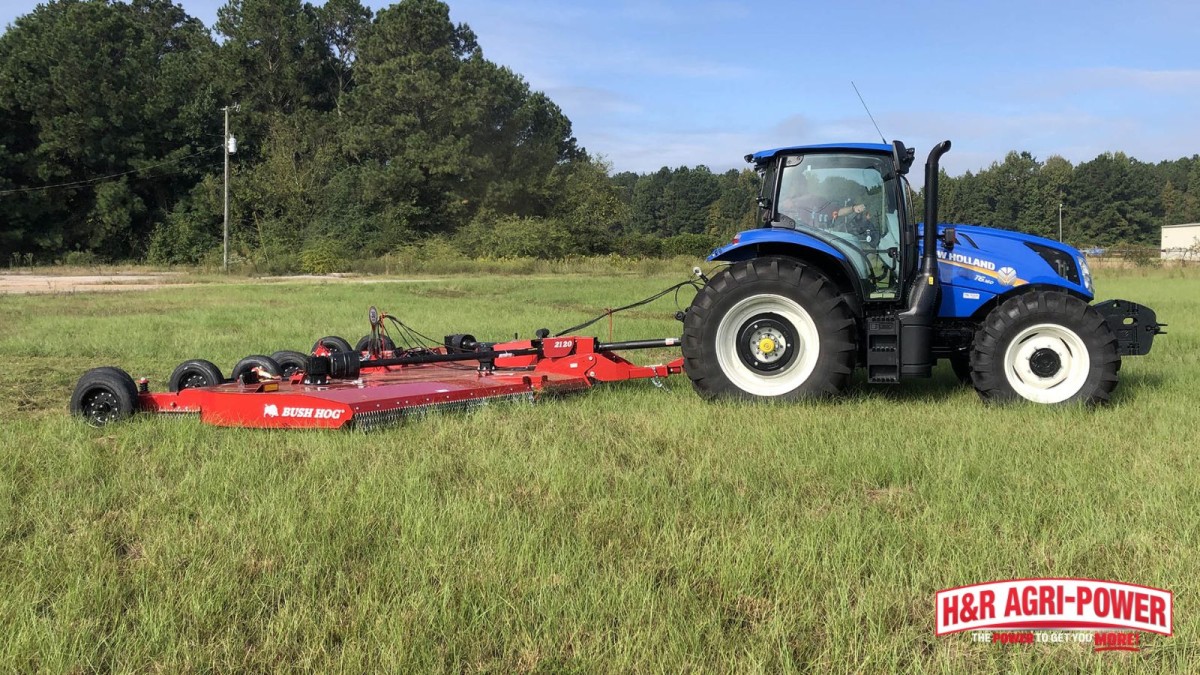
Bush Hog implements are tractor-mounted rotary mowers and attachments designed to cut through thick pasture grass, woody brush, and overgrown vegetation that standard mowing equipment cannot handle. These tools are used to keep grazing land productive while reducing the hours livestock farmers spend on manual pasture management.
This guide covers implement types and their best applications, productivity and labor-saving features, selection and compatibility factors, routine maintenance practices, and solutions for common pasture challenges.
Rotary cutters and finishing mowers each serve distinct roles in pasture care. Rotary cutters power through dense growth and saplings, and finishing mowers provide clean cuts where appearance and forage quality matter most.
Modern Bush Hog equipment reduces labor through features like hydraulic deck adjustments, wider cutting widths, and versatile attachment systems. These allow a single tractor setup to handle multiple pasture tasks in fewer passes across the field.
Choosing the right implement depends on tractor horsepower, hitch compatibility, and pasture size. A six-foot rotary cutter paired with a 65-horsepower tractor suits smaller operations, while larger farms benefit from ten-foot or bat-wing configurations on higher-horsepower machines.
Consistent maintenance protects gearboxes, extends blade life, and prevents costly breakdowns during peak mowing seasons. Simple routines like greasing bearings, checking gearbox oil levels, and replacing worn blades keep implements field-ready year-round.
Well-timed mowing controls invasive broadleaf weeds before they set seed, promotes desirable grass species, and helps manage uneven terrain. Combined with rotational grazing strategies, these implements support healthier pastures that maximize forage utilization across the entire operation.
What Types of Bush Hog Implements Are Most Effective for Pasture Maintenance?
The most effective Bush Hog implements for pasture maintenance include rotary cutters and finishing mowers. Each serves a distinct role depending on vegetation density, terrain, and desired cut quality.
How Do Rotary Cutters Contribute to Efficient Pasture Mowing?
Rotary cutters contribute to efficient pasture mowing by powering through dense vegetation that standard mowers cannot handle. These implements cut rough plant material, from thick pasture grass to tree saplings with trunks 1or more inches thick.
Their versatility makes them the workhorse of pasture management. According to Cornell Cooperative Extension, mowing with rotary cutters is a very effective tool for weed control in pastures, especially for annual and biennial broadleaf weeds, with the key being to mow before weeds produce seed.
Key benefits of rotary cutters for pasture mowing include:
-
Clearing overgrown paddocks in a single pass
-
Controlling broadleaf weeds before seed production
-
Handling saplings and woody growth that other mowers skip
-
Maintaining fence lines and paths for temporary electric netting
Safety awareness remains essential; rotary cutters can throw rocks and debris in excess of 300 feet. For most livestock operations, a quality rotary cutter is the single most time-saving implement investment.
In What Situations Should Finishing Mowers Be Used on Pasture Land?
Finishing mowers should be used on pasture land when a clean, manicured cut is needed in areas visible to visitors or bordering operational buildings. Bush Hog has delivered dependable finishing mowers and a wide variety of tractor-mounted implements since 1951, and these tools remain ideal for lighter-duty, appearance-focused tasks.
Situations where finishing mowers excel include:
-
Maintaining grassy areas around barns, offices, and farmsteads
-
Grooming lanes between paddocks for neat, accessible walkways
-
Trimming already-managed turf that does not contain heavy brush
Finishing mowers lack the ruggedness to handle thick pasture growth or woody material. They complement, rather than replace, rotary cutters in a complete pasture maintenance program. Matching the right implement to each task is what ultimately determines how much time and effort livestock operations save.
How Do Bush Hog Implements Improve Productivity for Livestock Farmers?
Bush Hog implements improve productivity for livestock farmers by reducing manual labor, cutting mowing time, and enabling one machine to handle multiple pasture tasks. The sections below cover labor-saving features and versatility through attachments.
What Features of Modern Bush Hog Equipment Reduce Labor and Time?
The features of modern Bush Hog equipment that reduce labor and time include hinged blade systems, three-point hitch mounting, and hydraulic lift controls. Hinged blades absorb impacts from rocks and stumps without stalling, so operators spend less time stopping for obstacles. Three-point hitch compatibility allows quick attachment and detachment from the tractor, minimizing transition time between tasks. Hydraulic raise-and-lower systems on larger models let the operator adjust cutting height from the cab without leaving the seat. Because these implements require minimal routine maintenance, such as greasing bearings and checking gearbox oil, downtime between uses stays low. For most livestock operations, these combined features mean a single operator can cover more acreage in fewer hours than older, manually adjusted equipment.
How Can Attachments and Accessories Increase Versatility for Pasture Tasks?
Attachments and accessories increase versatility for pasture tasks by allowing a single tractor to mow, clear brush, prepare fencing paths, and manage paddock rotations without swapping to a dedicated machine. Brush hogs handle heavy vegetation that standard riding mowers cannot manage, while finishing mowers provide a cleaner cut for areas near buildings and lanes. Fencing preparation is another key use; rotary cutters clear vegetation along fence lines so temporary electric net fencing can be installed without interference.
When pasture management tools are paired with rotational grazing, the productivity gains compound. According to Washington State University Extension, seasonal utilization rate on tame pastures can reach 65 to 70% with 3-to-4-day grazing periods, and up to 85 to 90% with daily rotation. Keeping paddocks mowed and fencing paths cleared makes those shorter rotation cycles practical rather than burdensome.
With productivity gains established, choosing the right implement size and power match becomes the next critical decision.
What Are the Key Considerations for Selecting Bush Hog Implements for Livestock Operations?
The key considerations for selecting Bush Hog implements for livestock operations include matching implement size to tractor power, ensuring hitch compatibility, and accounting for pasture acreage. The following subsections cover sizing, power requirements, and equipment compatibility.
What Factors Should Be Evaluated When Choosing Implement Size and Power?
The factors that should be evaluated when choosing implement size and power include cutting width, tractor horsepower rating, hitch type, and the terrain conditions of your pastures. According to Cornell Cooperative Extension, a six-foot brush hog using a three-point hitch requires a 65 horsepower tractor, while a ten-foot model attached at the drawbar requires at least 85 horsepower.
Matching these specifications to your operation prevents underpowering, which strains drivetrains and shortens implement life. Key evaluation factors include:
-
Pasture acreage: Larger operations benefit from wider cutting decks that reduce total mowing passes.
-
Vegetation density: Thicker brush and saplings demand higher horsepower reserves.
-
Maintenance demands: Routine tasks such as greasing PTO shaft bearings, maintaining gearbox oil, and sharpening or replacing blades keep the implement performing efficiently.
-
Safety clearance: Children should never be in the vicinity or on the tractor during operation due to hazards from rotating blades and thrown objects.
How Important Is Compatibility with Tractors and Existing Equipment?
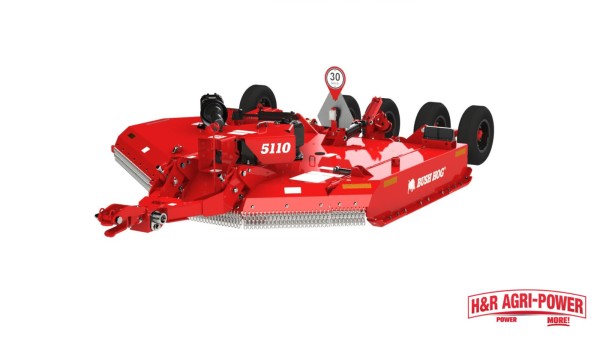
Compatibility with tractors and existing equipment is critical because mismatched hitch systems, hydraulic capacity, or PTO speed can render an implement unusable or unsafe. According to Cornell Cooperative Extension, smaller brush hogs mount on three-point hitches, larger models attach to the drawbar with hydraulic lift, and the largest "bat wing" mowers feature a center deck plus two hydraulically folding side sections.
Before purchasing, operators should verify several compatibility points:
-
Hitch category: Three-point hitch implements must match the tractor's Category I, II, or III rating.
-
Hydraulic capacity: Drawbar-mounted and bat wing models rely on the tractor's hydraulic system for raising, lowering, and folding.
-
PTO speed: Most rotary cutters require 540 RPM PTO output, though some heavy-duty units need 1,000 RPM.
Choosing an implement that integrates cleanly with your current tractor eliminates costly adapter modifications. With size and compatibility settled, consistent maintenance ensures these implements keep delivering reliable performance season after season.
How Can Routine Maintenance of Bush Hog Implements Save Time and Costs?
Routine maintenance of Bush Hog implements saves time and costs by preventing unexpected breakdowns and extending equipment lifespan. The following subsections cover best practices for implement care and critical service intervals for peak-season reliability.
What Are the Recommended Best Practices for Keeping Implements in Top Condition?
The recommended best practices for keeping implements in top condition focus on a short list of consistent tasks. According to Cornell Cooperative Extension, brush hogs normally don't need extensive maintenance, with routine tasks including:
-
Greasing all bearings, especially on the power take-off drive shaft.
-
Maintaining proper weight oil in the gearbox.
-
Sharpening blades whenever they become dull.
-
Replacing blades when they are too worn or damaged to sharpen.
The gearbox deserves particular attention because it is the most expensive component on a brush hog and very costly to repair if lubrication is neglected. Consistent attention to these basics keeps implements cutting efficiently and avoids the compounding repair bills that come from deferred upkeep.
Which Service Intervals and Checks Prevent Downtime During Peak Pasture Seasons?
Service intervals that prevent downtime during peak pasture seasons should align with hours of operation rather than calendar dates alone. According to the University of Wisconsin Extension, annual maintenance and repair costs for used tractors can range from $0.75 to $1.50 per hour of operation, representing 10 to 15% of total operational costs. Implement maintenance follows a similar pattern; the more hours logged, the more frequently checks are needed.
Before each mowing season begins, complete a full inspection of blades, gearbox oil level, PTO shaft condition, and all grease points. During heavy-use periods, check blade sharpness before each use and check bearing lubrication after every 8 hours of cutting. Scheduling these checks proactively keeps Bush Hog implements field-ready when pasture growth is at its peak, rather than sidelining equipment for avoidable repairs.
With maintenance routines established, the next consideration is how these implements tackle specific pasture challenges on livestock farms.
How Do Bush Hog Implements Address Common Pasture Challenges on Livestock Farms?
Bush Hog implements address common pasture challenges on livestock farms by controlling invasive vegetation and handling rough, uneven ground that standard mowers cannot manage. The sections below cover weed suppression for healthier grass stands and terrain management for safer, more productive grazing.
How Can Implements Help Control Invasive Weeds and Promote Grass Growth?
Implements help control invasive weeds and promote grass growth by mowing at strategic intervals before weeds produce seed. According to Ohio State University Extension, mowing is a very effective tool for weed control in pastures, especially for annual and biennial broadleaf weeds, with the key being to mow before plants set seed.
When livestock graze continuously, they repeatedly target preferred plants while avoiding less palatable species. This selective pressure causes favorable grasses to decline and allows undesirable weeds to spread. Rotary cutters break this cycle by uniformly reducing weed canopy height, giving desirable forage grasses access to sunlight and room to establish stronger root systems. Timing one or two passes per season around peak weed growth makes the difference between a pasture that recovers and one that deteriorates.
What Role Do Bush Hog Tools Play in Managing Uneven Terrain and Obstacles?
Bush Hog tools play a critical role in managing uneven terrain and obstacles because their hinged blade design absorbs impact rather than breaking on contact with rocks or stumps. Unlike rigid lawnmower blades, rotary cutter blades swing freely on hinges, allowing them to whack through dense plant growth without seizing when they strike hidden debris.
This design makes rotary cutters practical for rough pasture ground where rocks, old fence posts, and woody regrowth are common. Blade tip speeds exceeding 150 miles per hour, as documented by Cornell Cooperative Extension, enable cutting through saplings several inches in diameter. For livestock operations, clearing these obstacles improves animal safety and opens previously unusable grazing areas. Matching implement size to terrain severity is essential for consistent results across varied pasture conditions.
How Should Livestock Farms Approach Pasture Upkeep Using H&R Agri-Power's Solutions?
Livestock farms should approach pasture upkeep by combining reliable Bush Hog implements with H&R Agri-Power's dealer services, including equipment inspections, precision farming technology, and expert parts support across 17 Bush Hog locations.
Can H&R Agri-Power's Equipment Inspections and Precision Farming Services Support Efficient Pasture Maintenance?
Yes, H&R Agri-Power's equipment inspections and precision farming services can support efficient pasture maintenance. H&R Agri-Power's Precision Ag department provides GPS guidance systems and field mapping tools that help farmers manage mowing patterns and track which paddocks need attention. These technologies reduce overlap, minimize fuel waste, and ensure rotary cutters cover every section of a pasture systematically.
Beyond precision tools, H&R Agri-Power offers thorough equipment inspections that catch worn components before they cause mid-season breakdowns. Because the gearbox is the most expensive part on a brush hog, according to Bush Hog's educational resources, keeping lubrication and maintenance current through scheduled dealer inspections protects that investment. With 17 locations across Kentucky, Tennessee, Illinois, Indiana, and Mississippi, H&R Agri-Power keeps livestock operations running through parts availability and professional service when it matters most.
What Are the Key Takeaways About Bush Hog Implements That Help Livestock Farms Save Time on Pasture Upkeep We Covered?
The key takeaways about Bush Hog implements that help livestock farms save time on pasture upkeep are:
-
Bush Hog rotary cutters use hinged, durable blades designed to power through dense plant growth that standard mowers cannot handle.
-
Graziers use brush hogs extensively to mow grazing paddocks at least once a year, trim weeds around buildings, mow overmature hayfields, and keep small meadows open on wooded properties.
-
Timely mowing with the right implement controls annual and biennial broadleaf weeds before they set seed, reducing future labor.
-
Rotational grazing paired with mechanical mowing increases grassland utilization by giving defoliated grasses recovery time between grazing periods.
-
Routine maintenance, including greasing bearings and checking gearbox oil, prevents costly downtime during peak seasons.
For livestock operations seeking to pair the right Bush Hog implement with professional dealer support, H&R Agri-Power provides the selection, service, and precision technology to keep pasture upkeep efficient year-round.