

Bush Hog implements are tractor-mounted cutting and land-management attachments designed to clear, maintain, and prepare properties for productive mowing. Choosing the right combination before the season starts determines how efficiently you handle overgrowth, how long your equipment lasts, and how safely your crew operates.
This guide covers implement types and their best applications, tractor and property compatibility factors, pre-season maintenance protocols, complementary attachments for site preparation, and how H&R Agri-Power supports the selection and servicing process.
Rotary cutters and boom mowers each serve distinct roles depending on vegetation density, terrain, and desired cut quality. We break down where each excels so you can match the right tool to your specific land conditions.
Selecting an implement requires more than brand preference. Hitch category, PTO speed, property acreage, and terrain slope all influence which models will perform reliably on your tractor. Safety and regulatory requirements, including PTO guarding and ROPS-equipped seatbelt compliance, also shape the decision.
Consistent pre-season maintenance protects your investment and prevents mid-season breakdowns. Blade inspection, gearbox oil changes, belt tension checks, and proper lubrication keep implements cutting at peak performance from the first pass.
Mulchers, landscape rakes, and debris-management attachments extend what a Bush Hog setup can accomplish, turning a single tractor into a complete property preparation system.
H&R Agri-Power provides equipment sales, genuine parts, and certified service across our locations to help you select, configure, and maintain the implements that fit your operation.
What Types of Bush Hog Implements Are Essential for Mowing Preparation?
The types of Bush Hog implements essential for mowing preparation include rotary cutters, finishing mowers, and boom mowers. Each serves a distinct role depending on terrain, vegetation density, and desired cut quality.
How Do Rotary Cutters Compare to Finishing Mowers for Pre-Season Work?
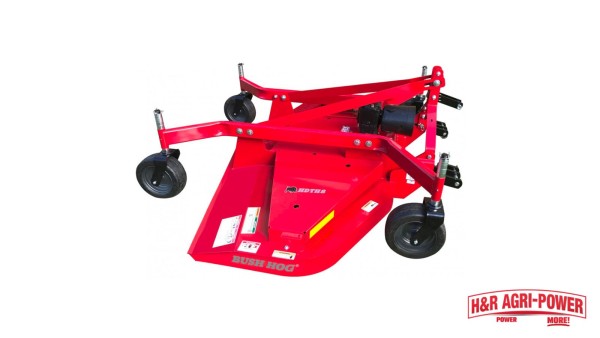
Rotary cutters compare to finishing mowers primarily in cutting capacity and intended application. Rotary cutters handle heavy brush, overgrown fields, and thick vegetation, while finishing mowers deliver a manicured, lawn-quality cut on already-maintained turf.
Bush Hog Flex Wing Rotary Cutters offer cutting widths from 10 to 20 feet with cutting heights ranging from 1.5 to 16 inches, making them ideal for clearing large acreage before the season begins. Finishing mowers use lower cutting heights and often include discharge chutes or bagging systems for groomed properties.
Key differences include:
-
Rotary cutters excel at heavy pre-season clearing of tall grass, saplings, and brush.
-
Finishing mowers produce a clean, even cut suited to maintained lawns and turf areas.
-
Rotary cutters require more PTO horsepower per foot of cutting width.
-
Finishing mowers lack the durability to handle rough terrain or dense vegetation.
For most pre-season preparation, rotary cutters are the more practical starting point because overgrown conditions demand heavy-duty clearing before any finish work makes sense.
When Should You Choose a Boom Mower Over Other Implements?
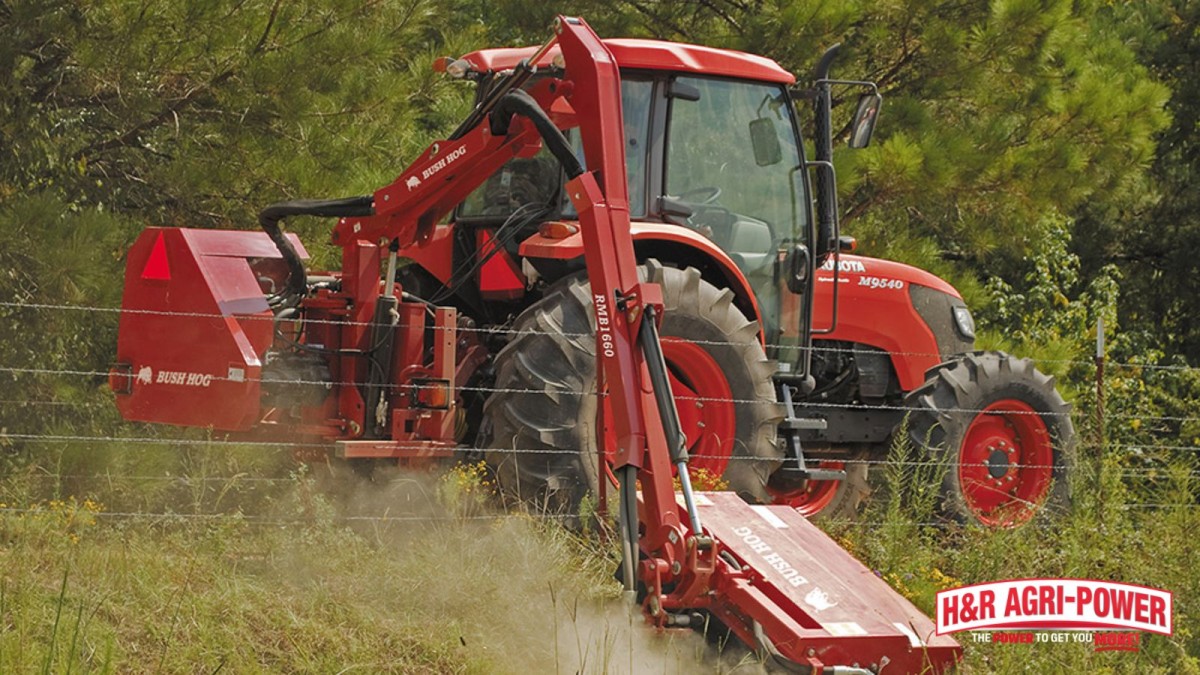
You should choose a boom mower over other implements when vegetation grows in areas a standard three-point-mounted cutter cannot reach, such as ditch banks, fence lines, steep embankments, and roadside shoulders. Boom mowers extend hydraulically from the tractor, allowing operators to cut at angles and elevations impossible with conventional rotary cutters.
According to a Jefferson County, Missouri bid specification, boom mowers may require a tractor equipped with a Category II or III hitch, a minimum PTO horsepower rating of 90 hp, and a 21-spline 1-3/8" 1000 rpm PTO. These requirements make boom mowers a more specialized investment suited to properties with significant roadside or waterway maintenance needs.
Boom mowers are the right choice when:
-
Cutting is needed on steep slopes or below grade level.
-
Fence rows and ditch banks require regular vegetation management.
-
Standard-mounted implements cannot physically access the cutting area.
Because of their higher horsepower demands and cost, boom mowers make the most sense for operators who regularly maintain hard-to-reach areas. With the right implement selected, the next step is matching it properly to your tractor and land conditions.
What Should You Consider When Selecting Bush Hog Implements for Your Land?
When selecting Bush Hog implements for your land, you should consider tractor compatibility, property size, terrain conditions, and safety requirements. The following sections cover each factor in detail.
What Factors Affect Compatibility With Your Tractor or Equipment?
The factors that affect compatibility with your tractor or equipment include hitch category, PTO specifications, and horsepower rating. Modern implement compatibility depends on matching the tractor's hitch category (Cat I–III), PTO speed (540 or 1000 RPM), and PTO shaft type, such as a 6-spline configuration, according to Massey Parts.
A common guideline calls for 5 PTO horsepower per foot of cutter width. Boom-mounted brush cutters designed for tractors above 100 hp can feature 60-inch cutting widths with extra-heavy blade bars. Overlooking even one of these specifications risks equipment damage or unsafe operation, so verifying every match point before purchase saves time and money.
How Does Property Size and Terrain Impact Your Implement Choice?
Property size and terrain impact your implement choice by determining the cutting width, horsepower, and implement style you need. Smaller acreages with relatively flat ground pair well with standard rotary cutters; a 65 hp tractor pulling an 8-foot rotary cutter handles small farm maintenance effectively, as documented by the Cornell University Small Farms Program.
Hilly, uneven, or heavily wooded land demands more specialized solutions. Steep grades and dense brush may call for boom mowers that handle irregular contours safely. For most landowners, matching implement scale to actual acreage prevents overspending on capacity that sits unused.
Are There Safety or Legal Requirements for Certain Bush Hog Implements?
Yes, there are safety and legal requirements for certain Bush Hog implements. OSHA standard 1920.212 requires all farm field and farmstead equipment, regardless of manufacture date, to be equipped with PTO guarding.
Additional OSHA regulations require employers to:
-
Provide safety operating instructions when employees start an assigned job and annually thereafter.
-
Enforce mandatory seatbelt usage on ROPS-equipped tractors.
-
Maintain all cutting heads and knives in sharp, properly adjusted, and firmly secured condition.
Compliance is not optional, and violations carry real liability. Confirming that every implement meets current federal standards before mowing season protects both operators and property owners from preventable incidents.
How Can Regular Maintenance Improve the Performance of Bush Hog Implements?
Regular maintenance improves the performance of Bush Hog implements by preserving cutting efficiency, preventing mechanical failure, and extending component life. The following subsections cover pre-season tasks, wear inspection, and lubrication steps.
What Maintenance Tasks Should Be Completed Before Mowing Season?
The maintenance tasks that should be completed before mowing season include blade inspection, gearbox service, belt checks, and structural hardware review.
Key pre-season tasks include:
-
Inspect and sharpen blades. Decreased cutting performance, excessive vibration, and visible surface wear all indicate blades need attention, according to TGW International's maintenance wear indicator guidelines.
-
Change gearbox oil at the intervals specified in the manufacturer's manual.
-
Check PTO connections for proper lubrication and secure attachment.
-
Examine drive belts for cracking, fraying, or glazing.
-
Tighten all mounting hardware and inspect the three-point hitch pins.
-
Test safety shields and guards for secure attachment and function.
Completing these tasks before the first cut prevents costly mid-season breakdowns and keeps cutting quality consistent from day one.
How Do You Check for Wear or Replaceable Parts on Your Implements?
You check for wear or replaceable parts on your implements by performing a systematic visual and functional inspection of high-wear components.
Start with the blades: look for rounded cutting edges, cracks, or uneven material loss. Rotary blades are detachable, which makes individual inspection straightforward. Next, examine belts. According to MIT's fabrication equipment guidelines, toothed or steel belts on cutting machinery should have their alignment and tension checked and readjusted as necessary to prevent slippage and premature wear.
Additional wear checkpoints include:
-
Spindle bearings (check for play or grinding noise)
-
Skid shoes and deck runners (measure remaining material thickness)
-
PTO shaft U-joints and cross bearings
-
Hydraulic hoses and fittings (look for seepage or cracking)
Replacing worn parts before they fail protects surrounding components from cascading damage.
What Lubrication or Adjustment Steps Are Needed for Optimal Operation?
The lubrication and adjustment steps needed for optimal operation focus on grease points, fluid levels, and mechanical alignment.
Essential lubrication and adjustment steps include:
-
Grease all zerk fittings on spindles, gearbox input shafts, and tailwheel pivots per the manufacturer's schedule.
-
Verify gearbox oil level and top off with the specified lubricant grade.
-
Lubricate PTO shaft slip clutch and telescoping sections with appropriate grease.
-
Adjust blade carrier bolt torque to factory specifications.
-
Set cutting height by leveling the deck and confirming skid shoe position.
Consistent lubrication reduces friction-related heat buildup, which is a leading cause of premature bearing and seal failure. For operators managing large acreage, even small alignment corrections translate into cleaner cuts and lower fuel consumption across a full season.
With maintenance addressed, complementary attachments can further enhance mowing preparation and results.
What Additional Attachments Enhance Efficiency and Results Before Mowing Season?
Additional attachments that enhance efficiency and results before mowing season include landscape rakes, mulchers, and debris management implements. These tools prepare terrain and clear obstacles ahead of cutting.
Can Mulchers or Rakes Add Value to Your Bush Hog Setup?
Yes, mulchers and rakes can add significant value to your Bush Hog setup by handling tasks that rotary cutters alone cannot accomplish. Mulching attachments break down woody debris and standing brush into fine material, reducing the need for multiple passes once mowing begins. Landscape rakes tackle ground-level preparation directly. According to Ideal Rockaway, landscape rake attachments for skid steers and tractors remove rocks from 1/2" to 8" in diameter and level ground before seeding. Pairing a rake with your rotary cutter creates a two-stage workflow: clear and level first, then mow cleanly. This combination is one of the most practical ways to reduce wear on cutting blades and improve overall cut quality.
Which Implements Help With Debris Management and Clean-Up?
The implements that help with debris management and clean-up include:
-
Landscape rakes: Remove rocks, sticks, and root debris while leveling uneven soil surfaces.
-
Grapple buckets: Collect and transport piled brush, fallen limbs, and other large organic material.
-
Mulching heads: Process standing dead brush and small trees into ground-cover material without requiring hauling.
-
Rear blades or box scrapers: Grade and smooth rutted areas left by winter weather or equipment traffic.
Running a debris management pass before the first mow protects rotary cutter blades from hidden obstructions and extends component life. For operators managing larger acreage, dedicating even a single session to clean-up work pays dividends in reduced downtime throughout the season. With the right attachments selected, the next step is choosing where to source equipment and professional support.
How Should You Approach Choosing and Servicing Bush Hog Implements With H&R Agri-Power?
You should approach choosing and servicing Bush Hog implements with H&R Agri-Power by leveraging over 50 years of dealer expertise across 17 Bush Hog locations. The following sections cover seasonal preparation support and key takeaways for the mowing season.
Can H&R Agri-Power's Equipment Sales, Parts, and Service Support Help You Prepare for Mowing Season?
Yes, H&R Agri-Power's equipment sales, parts, and service support can help you prepare for mowing season. With locations across Kentucky, Tennessee, Illinois, Indiana, and Mississippi, H&R Agri-Power provides access to Bush Hog implements, replacement parts, and certified service technicians before seasonal demand peaks.
Timing matters. According to the Bureau of Labor Statistics, the Producer Price Index for final demand services in the agricultural equipment sector advanced 0.8 percent in January 2026, signaling rising costs for new machinery and parts. Securing implements and scheduling service appointments early helps lock in availability and manage budget.
H&R Agri-Power specializes in brands such as Case IH, Kubota, and New Holland Equipment, complementing Bush Hog implement purchases with compatible tractor matching and pre-season inspections. For operators unsure about hitch category, PTO speed, or cutting width requirements, H&R Agri-Power's sales team can evaluate your tractor specifications and recommend the right implement before the first cut of the season.
What Are the Key Takeaways About Which Bush Hog Implements Make the Most Sense Before Mowing Season Starts?
The key takeaways about which Bush Hog implements make the most sense before mowing season starts center on three decisions: matching the implement to your terrain, verifying tractor compatibility, and completing maintenance before the first cut.
-
Rotary cutters handle heavy brush, overgrown pastures, and thick vegetation across large acreage.
-
Finishing mowers deliver a manicured cut for maintained lawns and turf areas.
-
Boom mowers reach ditches, fence lines, and roadside slopes that standard cutters cannot access.
Every implement choice depends on confirming hitch category, PTO horsepower, and shaft specifications. Pre-season blade inspection, gearbox servicing, and belt checks prevent costly downtime. H&R Agri-Power can help match the right Bush Hog implement to your operation and keep it running through the season.