

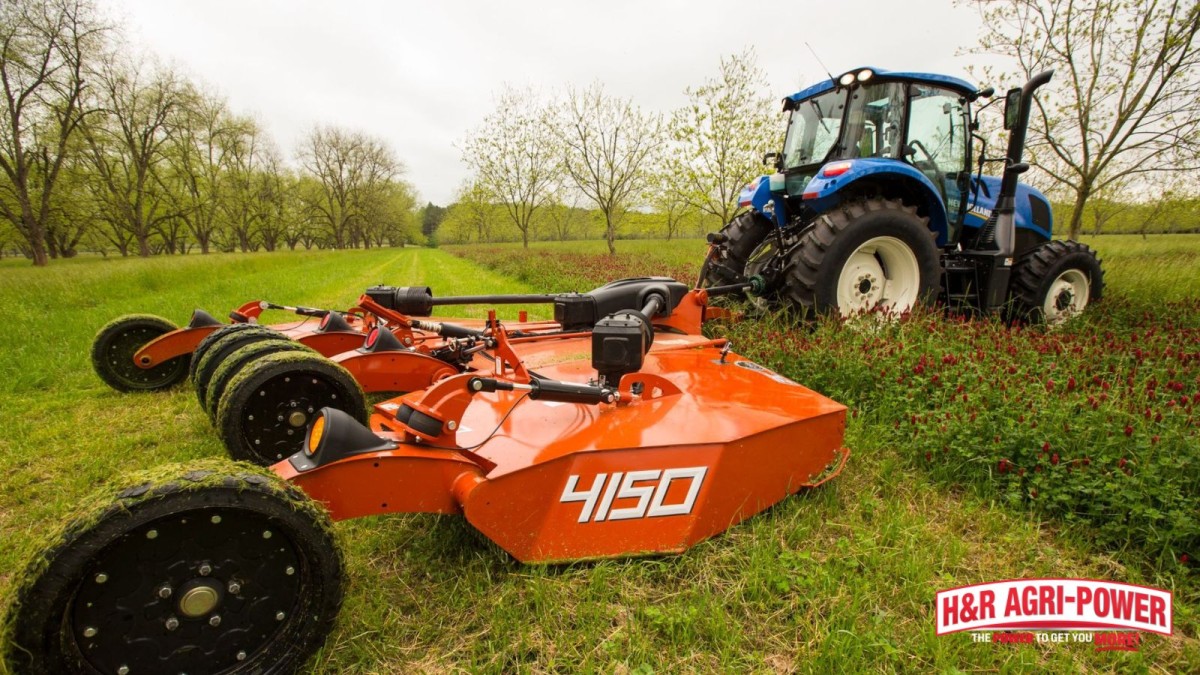
A bush hog driveline is the rotating assembly of shafts, joints, and yokes that transfers power from a tractor's PTO to the cutter deck. Driveline quality directly determines how long a rotary cutter performs before requiring costly repairs or replacement.
This guide covers material composition and corrosion resistance, U-joint and yoke engineering, protective shielding, maintenance accessibility, driveline balancing, sizing and compatibility, warranty support, and where to find expert service.
High-grade alloy steels with chromium, nickel, and molybdenum content give driveline components the hardness and fatigue resistance needed to survive heavy rotary cutting loads. Corrosion-resistant coatings and treatments further protect these components from moisture and chemical exposure in the field.
U-joints and yokes serve as the critical pivot points that absorb angular changes between the tractor and cutter. Constant velocity joint designs reduce the speed fluctuations and vibrations that accelerate wear at higher operating angles.
Proper PTO shielding guards against debris damage while protecting operators from entanglement with shafts spinning at extremely high rotational speeds. Modern shield designs integrate durable guards that maintain protective coverage without restricting normal driveline movement.
Grease fittings, split-collar connections, and accessible service points let operators perform routine lubrication and inspections quickly. Consistent maintenance at recommended intervals reduces energy consumption, extends machine life, and improves operator safety.
Balanced drivelines distribute rotational forces evenly, preventing the vibration patterns that lead to premature bearing failure and structural fatigue. Correct sizing and compatibility between the driveline, tractor output, and cutter specifications are equally important for avoiding excess stress on components.
Manufacturer warranties signal confidence in component quality, and reliable parts availability keeps equipment running when repairs are needed. We at H&R Agri-Power provide the equipment, parts, and service expertise to help you maximize driveline longevity across your operation.
Why Does Driveline Material Quality Impact Bush Hog Longevity?
Driveline material quality impacts bush hog longevity because the metals and coatings used in shafts, yokes, and joints determine how well the system resists wear, fatigue, and environmental degradation. The subsections below cover the specific materials found in durable drivelines and how corrosion resistance extends service life.
What Types of Materials Are Used in Durable Drivelines?
The types of materials used in durable drivelines include alloy steels, case-hardened carbon steels, and heat-treated forgings selected for high fatigue resistance under rotational loads. According to AZoM, AISI 8620 alloy steel contains chromium (0.400–0.600%), nickel (0.400–0.700%), and molybdenum (0.150–0.250%), a composition that delivers excellent core toughness alongside a hard, wear-resistant surface.
These alloying elements work together: chromium improves hardenability, nickel adds impact strength, and molybdenum prevents temper brittleness. For operators running rotary cutters in rocky or debris-heavy conditions, this combination of properties directly translates to longer shaft and yoke life between replacements. Choosing a driveline built from engineered alloy steel rather than plain carbon steel is one of the most cost-effective durability decisions an equipment owner can make.
How Does Corrosion Resistance Affect Driveline Life?
Corrosion resistance affects driveline life by slowing the surface degradation that leads to stress concentrations, pitting, and eventual fatigue failure in shafts and cross bearings. Bush hog drivelines operate in moisture-rich environments where dew, rain, and cut vegetation constantly expose bare metal to oxidation.
Protective measures that extend service life include:
-
Zinc or phosphate coatings on cross and bearing kit surfaces to create a sacrificial barrier against rust.
-
Powder-coated or painted outer tubes that seal the base steel from direct moisture contact.
-
Grease-filled bearing cavities that displace water and prevent internal corrosion at U-joint trunnions.
Even high-grade alloy steel will degrade prematurely without adequate surface protection, which makes corrosion-resistant finishes just as important as the base metal itself. With material quality established, the next factor to examine is how U-joints and yokes handle the mechanical stresses of daily operation.
How Do U-Joints and Yokes Contribute to Driveline Durability?
U-joints and yokes contribute to driveline durability by managing angular stress, absorbing operational vibration, and maintaining consistent power transfer under demanding field conditions. The sections below explore how each component reduces wear and influences long-term performance.
What Role Do U-Joints Play in Reducing Wear and Tear?
U-joints play a critical role in reducing wear and tear by allowing the driveline to flex at varying angles while transmitting rotational power from the PTO to the cutter deck. This flexibility absorbs shock loads caused by uneven terrain, stumps, and sudden resistance changes that would otherwise stress rigid connections to the point of failure.
According to the Alberta Ministry of Agriculture and Forestry, a standard universal joint can operate at angles up to 25 degrees at 1,000 rpm, though speed fluctuates at wider angles, causing vibrations that accelerate component fatigue. Constant velocity (CV) joints address this limitation by maintaining uniform speed across larger operating angles.
Key factors that affect u-joint longevity include:
-
Bearing cap condition and proper greasing intervals
-
Operating angle relative to the PTO shaft
-
Load consistency during cutting operations
-
Quality of the cross and bearing assembly
Operators who consistently exceed recommended operating angles will see accelerated needle bearing wear, eventually leading to driveline vibration and costly downtime.
How Can Yoke Design Influence Long-Term Performance?
Yoke design influences long-term performance by determining how effectively the driveline transfers torque, resists fatigue, and accommodates angular misalignment between the tractor PTO and the implement input shaft. A poorly designed or mismatched yoke introduces stress concentrations that shorten the entire driveline's service life.
Critical yoke design characteristics that affect durability include:
-
Spline fit precision, which prevents excessive play and reduces impact loading
-
Wall thickness and forging quality, which resist bending under heavy torque
-
Proper phasing between the input and output yokes, which minimizes vibration
-
Cross-hole tolerances that ensure secure u-joint seating
For most rotary cutter applications, prioritizing forged yokes over stamped alternatives yields measurably better fatigue resistance. When parts and labor costs for agricultural equipment have spiked by 41% since 2020, as reported by Investigate Midwest, investing in well-engineered yoke components upfront is far more cost-effective than replacing failed assemblies mid-season.
With u-joints and yokes optimized for durability, proper driveline shielding adds another layer of long-term protection.
What Is the Importance of Proper Driveline Shielding for Safety and Durability?
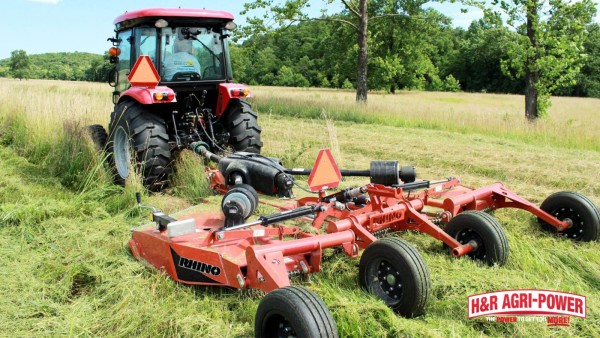
The importance of proper driveline shielding for safety and durability lies in its dual role: protecting operators from rotating components and protecting the driveline itself from environmental damage. Shielding design and safety features vary across modern bush hog drivelines.
How Does Shielding Prevent Damage Over Time?
Shielding prevents damage over time by enclosing the rotating driveline components, blocking debris, moisture, and soil from contacting critical surfaces. Rocks, dirt, and crop residue kicked up during mowing operations act as abrasives that accelerate wear on U-joints, yokes, and PTO shafts when left unprotected.
Beyond debris deflection, intact shields reduce UV exposure and limit moisture accumulation around seals and bearing surfaces. These environmental factors, when unchecked, degrade grease seals and promote corrosion that shortens component life. According to Purdue Extension, following safety practices, using proper equipment correctly, and keeping equipment in good repair are the best accident preventives. That principle applies directly to shielding: a cracked or missing guard invites both mechanical damage and operator risk. Replacing damaged shields promptly is one of the simplest ways to preserve driveline integrity season after season.
What Are the Top Safety Features in Modern Bush Hog Drivelines?
The top safety features in modern bush hog drivelines include several protective elements designed to prevent operator injury and equipment failure:
-
Full-length PTO shaft guards enclose the spinning shaft within a free-rotating plastic or composite sleeve, preventing clothing or limbs from catching on exposed components.
-
Shear bolt or slip clutch protection disconnects or absorbs sudden torque spikes when the cutter strikes a hidden obstacle, shielding the driveline from catastrophic shock loads.
-
Bearing-mounted shield cones cover the connection points between the PTO shaft and the implement, eliminating exposed pinch points near yokes and U-joints.
-
Warning decals and color-coded guards provide visual reminders to maintain safe clearance during operation.
These features matter because PTO entanglement can cause dismemberment or death in less than a second, faster than any human reaction time. Prioritizing equipment with robust, well-maintained safety features is not optional; it is a fundamental requirement for responsible operation.
With shielding protecting both operators and components, accessible maintenance design keeps that protection effective over the long term.
How Does Maintenance Access Impact Driveline Lifespan?
Maintenance access impacts driveline lifespan by determining how quickly and consistently you can perform critical service tasks. The subsections below cover ease-of-service features to prioritize and how regular maintenance extends component life.
What Ease-of-Service Features Should You Look For?
The ease-of-service features you should look for include:
-
Grease fittings on U-joints and slip clutches positioned for quick access without disassembly.
-
Quick-release shields that allow inspection of the driveline shaft, yokes, and cross bearings without tools or excessive downtime.
-
Color-coded or clearly labeled lube points that reduce the chance of missed service intervals.
-
Slip-joint profiles designed for easy separation, simplifying seasonal cleaning and wear checks.
Drivelines that require extensive disassembly for basic greasing or inspection discourage routine service. Over time, skipped maintenance accelerates wear on U-joints, splines, and bearing surfaces. Prioritizing accessible designs keeps operators on schedule and prevents minor neglect from becoming costly failures.
How Does Regular Maintenance Extend Driveline Life?
Regular maintenance extends driveline life by preventing the progressive wear that leads to premature component failure. According to North Carolina State University Extension, performing necessary maintenance operations at required intervals allows farm machinery owners to reduce energy use, increase machine life, and enhance operator safety.
Greasing U-joints flushes contaminants from needle bearings, while inspecting slip joints for play catches spline wear before it damages the shaft. Checking shield integrity, tightening hardware, and verifying driveline alignment at each service window compounds these benefits over successive seasons. Neglecting even one interval allows metal-on-metal contact to escalate, turning a minor service task into a full driveline replacement.
Consistent maintenance access, paired with disciplined service habits, is what ultimately separates drivelines that last from those that fail early. With service features covered, driveline balancing plays an equally critical role in long-term equipment durability.
In What Ways Does Driveline Balancing Affect Equipment Durability?
Driveline balancing affects equipment durability by minimizing vibration-induced stress on bearings, U-joints, and connected components. The sections below cover how imbalance causes premature failure and the warning signs that indicate balancing is needed.
How Does Imbalance Lead to Premature Wear or Failure?
Imbalance leads to premature wear or failure by generating cyclic vibrations that concentrate stress on driveline bearings, seals, and U-joint crosses. Each rotation of an unbalanced shaft produces uneven centrifugal force, accelerating fatigue in metal components that would otherwise last significantly longer under smooth operation.
These vibrations do not stay isolated. They transfer through yokes and into the gearbox, causing internal gears and housings to absorb shock loads they were never designed to handle continuously. Over time, this cascading stress loosens fasteners, erodes splines, and opens clearances that invite debris infiltration.
According to the Alberta Ministry of Agriculture and Forestry, a standard universal joint operating at 1,000 rpm already experiences speed fluctuations that cause vibrations; adding imbalance compounds this effect dramatically. With repair costs for agricultural equipment parts and labor rising sharply in recent years, addressing imbalance early protects both component life and operating budgets.
What Are Signs That a Driveline Needs Balancing?
The signs that a driveline needs balancing include:
-
Unusual vibration at operating speed: A noticeable shake through the tractor seat or frame that intensifies as PTO rpm increases.
-
Rhythmic knocking or clunking: Repetitive sounds synchronized with shaft rotation, indicating uneven mass distribution.
-
Accelerated U-joint wear: Cross bearings that require replacement well before their expected service interval.
-
Visible shaft runout: The driveline wobbles visibly when spinning, confirming physical deflection.
-
Loose or damaged shielding: Protective guards that rattle or shift position from sustained vibration transfer.
Catching these symptoms early matters more than most operators realize. A slight vibration at a lower speed becomes a destructive force at full operating speed, and waiting until a component fails typically damages multiple parts simultaneously. Regular visual and operational checks during routine maintenance help identify balancing issues before they escalate into costly breakdowns.
With balancing concerns identified, matching the correct driveline size to your specific equipment ensures these components operate within their designed tolerances.
How Do Different Sizing and Compatibility Factors Influence Driveline Longevity?
Sizing and compatibility factors influence driveline longevity by determining how well the driveline handles torque loads and operates within safe parameters. Mismatched components accelerate wear and invite premature failure.
Why Is Matching Driveline Size to Equipment Important?
Matching driveline size to equipment is important because an undersized driveline cannot handle the torque demands of a larger rotary cutter, while an oversized driveline adds unnecessary weight and stress to smaller implements. Every bush hog model is engineered for a specific horsepower range and cutting width, so the driveline must be rated accordingly.
Environmental conditions also play a role in this equation. According to the Florida Department of Transportation, plant growth and mowing frequency are influenced by environmental factors such as light, temperature, moisture, and soil conditions. Heavy growth seasons place sustained high-torque demands on the driveline, making proper sizing even more critical during peak use periods.
Operators who consistently run undersized drivelines in demanding conditions often see failures well before expected service life. Selecting the correct series rating from the start is one of the simplest ways to protect your investment.
What Compatibility Issues Can Affect Driveline Life?
Compatibility issues that can affect driveline life include mismatched spline counts, incorrect PTO shaft profiles, and using aftermarket components that do not meet original equipment specifications. These mismatches cause:
-
Uneven torque transfer, which accelerates wear on U-joints and yokes.
-
Excessive vibration from improper shaft fitment, leading to bearing fatigue.
-
Incorrect operating angles that push universal joints beyond their designed range.
-
Cross-brand part substitutions where dimensional tolerances differ enough to create play or binding.
Even small deviations in spline profile or yoke dimensions compound over hundreds of operating hours. For this reason, sourcing genuine or OEM-spec replacement parts matched to your specific bush hog model remains the most reliable approach to preserving driveline integrity.
With sizing and compatibility addressed, understanding warranty coverage helps protect your overall equipment investment.
What Warranty or Manufacturer Support Should You Expect for Durable Drivelines?
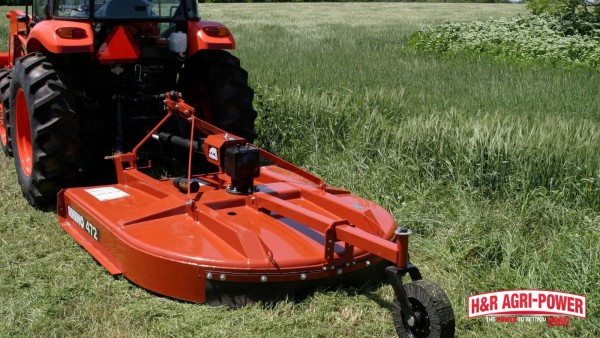
You should expect warranty coverage that reflects component quality and manufacturer confidence, along with responsive customer support and reliable parts availability. The following subsections cover how warranties signal durability and what support features matter most.
How Do Warranties Reflect Driveline Quality?
Warranties reflect driveline quality by signaling how much confidence a manufacturer places in its materials, engineering, and assembly processes. Longer warranty periods on critical components like U-joints, yokes, and shielding typically indicate higher-grade alloys and tighter manufacturing tolerances.
When evaluating warranty coverage, look for these indicators:
-
Coverage that specifically names driveline components rather than offering only a general implement warranty.
-
Protection against material defects and manufacturing flaws, not just catastrophic failure.
-
Clear terms on wear items such as cross kits and bearings.
-
Transferability if the equipment changes hands.
A warranty that excludes normal wear components or limits coverage to an unusually short window often points to cost-engineered parts unlikely to hold up under heavy rotary cutter duty cycles. For operators running bush hogs in demanding conditions, warranty depth is one of the most practical indicators of long-term driveline investment.
What Should You Look For in Customer Support and Parts Availability?
You should look for a dealer network with factory-direct parts access, knowledgeable service staff, and short lead times on driveline components. According to a 2024 Investigate Midwest report, the costs of parts and labor for agricultural machines and equipment spiked by 41% since 2020 alone, making efficient parts sourcing more critical than ever.
Key support features to prioritize include:
-
Dedicated parts departments that stock common driveline wear items like cross kits, guards, and yoke assemblies.
-
Service technicians trained specifically on rotary cutter driveline systems.
-
Reasonable turnaround times that minimize equipment downtime during peak mowing seasons.
-
Access to manufacturer technical resources, including torque specifications and maintenance guides.
Operators who rely on a single hard-to-reach supplier risk extended downtime that compounds costs far beyond the price of the replacement part itself. A strong dealer relationship is one of the most undervalued factors in keeping driveline systems running season after season.
With warranty and support expectations established, a trusted dealer partner can help put these driveline durability principles into practice.
How Can H&R Agri-Power Support Your Bush Hog Driveline Durability Needs?
H&R Agri-Power can support your bush hog driveline durability needs through expert parts sourcing, professional service, and trusted guidance across 21 locations in six states.
Can H&R Agri-Power's Equipment Parts and Service Solutions Help Extend Driveline Life?
Yes, H&R Agri-Power's equipment parts and service solutions can help extend driveline life. With over 50 years of experience serving farmers and agricultural professionals, H&R Agri-Power provides access to genuine replacement components, professional maintenance support, and knowledgeable guidance for rotary cutters. According to a 2024 Investigate Midwest report, the costs of parts and labor for agricultural machines spiked by 41% since 2020 alone. Working with a dealer that stocks the right parts and performs service correctly the first time helps offset rising repair expenses. H&R Agri-Power operates across Kentucky, Tennessee, Illinois, Alabama, Indiana, and Mississippi, making expert driveline support accessible when you need it most.
What Are the Key Takeaways About Bush Hog Driveline Features That Matter for Long-Term Durability We Covered?
The key takeaways about bush hog driveline features that matter for long-term durability are:
-
High-quality driveline materials, such as alloy steel with chromium, nickel, and molybdenum, resist wear and extend component life.
-
Properly engineered U-joints and yokes reduce vibration and minimize stress on connected components.
-
Driveline shielding protects internal parts from debris while keeping operators safe.
-
Maintenance-friendly designs with accessible grease fittings and serviceable components lower long-term ownership costs.
-
Correct driveline balancing prevents premature bearing and seal failure.
-
Matching driveline size and compatibility to your specific equipment avoids unnecessary strain.
-
Strong warranty coverage and reliable dealer support signal manufacturer confidence in durability.
Prioritizing these features when selecting or maintaining a bush hog driveline protects your investment for years of dependable field performance. H&R Agri-Power can help you put these principles into practice with the right parts, service, and solutions.