

A Bush Hog dealer is a licensed equipment retailer that sells, services, and supplies parts for Bush Hog rotary cutters, finishing mowers, and land-clearing implements. The right dealer directly affects how quickly your equipment gets back in the field and how long it stays there.
This guide covers parts inventory and OEM availability, service capabilities and technician expertise, dealer reputation and industry experience, location and logistics accessibility, and post-sale support including training.
Genuine OEM parts keep Bush Hog rotary cutters, flex-wing mowers, and finishing attachments operating within factory specifications. A well-stocked dealer carries blades, gearbox components, driveline parts, and spindle assemblies so you avoid extended downtime waiting on back-ordered components.
Service quality depends on trained technicians who understand Bush Hog gearbox assemblies, PTO configurations, and hydraulic systems. Dealers that offer both in-shop repairs and on-site field service give operations more flexibility during peak seasons when equipment failures are most costly.
A dealer's track record in the agricultural equipment industry signals reliability. Years of consistent operation, verifiable customer feedback, and strong manufacturer relationships all indicate a dealer equipped to handle warranty support and complex repairs.
Proximity and logistics matter because faster parts delivery and shorter service turnaround reduce idle equipment hours. Dealers with regional presence or reliable shipping options help producers maintain tight operational schedules.
Ongoing post-sale support separates adequate dealers from exceptional ones. Operator training programs, seasonal maintenance guidance, and a committed long-term partnership protect your Bush Hog investment well beyond the original purchase.
How Can You Evaluate a Bush Hog Dealer's Parts Inventory and Selection?
You can evaluate a Bush Hog dealer's parts inventory and selection by checking for readily available wear components, genuine OEM stock, and fast lead times. The sections below cover what to look for in each area.
What Types of Bush Hog Parts Should Be Readily Available?
The types of Bush Hog parts that should be readily available include high-wear and high-demand components that keep equipment running during peak seasons. A well-stocked dealer carries:
-
Blades, blade bolts, and blade kits for rotary cutters
-
Gearbox assemblies and gearbox seals
-
Driveline components, including PTO shafts and cross kits
-
Belts, bearings, and spindle assemblies
-
Hydraulic hoses, cylinders, and fittings
-
Skid shoes and deck skins
According to Bush Hog's 2023 Parts Program, dealers can stock inventory at levels ranging from $5,000 to $150,000 in list price, with prepaid freight for continental U.S. orders. Dealers investing at higher stocking tiers signal a serious commitment to keeping critical parts on hand. If a dealer regularly stocks items beyond basic blades, that depth of inventory typically reflects consistent demand and operational reliability.
Why Does Having Genuine OEM Parts Matter for Bush Hog Maintenance?
Having genuine OEM parts matters for Bush Hog maintenance because factory-manufactured components are engineered to exact tolerances, ensuring proper fit, performance, and safety. Aftermarket alternatives may appear similar but can vary in material hardness, dimensional accuracy, and heat treatment.
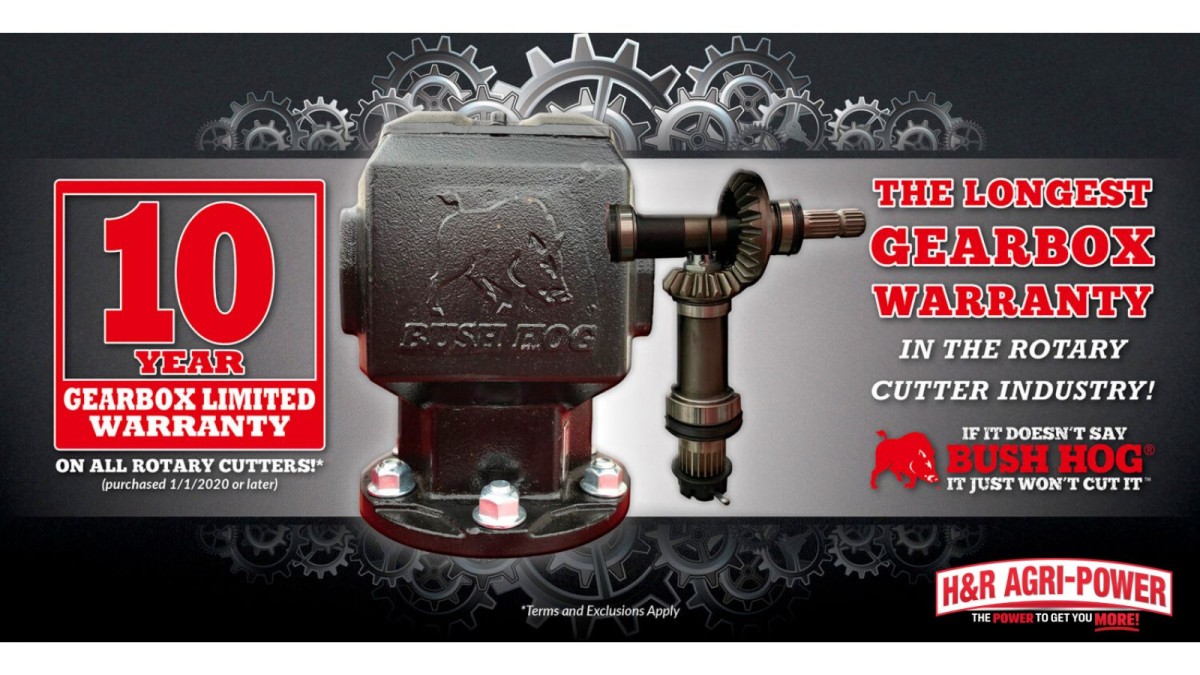
OEM parts also preserve warranty coverage. Installing non-genuine components on a unit still under Bush Hog's warranty, such as the 10-year limited gearbox warranty on rotary cutters, risks voiding that protection. For operators who depend on predictable uptime, the cost difference between OEM and aftermarket parts is small compared to the expense of premature failure or a denied warranty claim.
How Do Lead Times and Stock Levels Affect Equipment Downtime?
Lead times and stock levels affect equipment downtime directly: every day a critical part is on backorder translates to lost productivity and rising costs. Bush Hog standardizes dealer setup times for labor estimates, with multi-spindle rigid deck rotary mowers and flex-wing rotary cutters typically requiring 1.5 hours of setup time per unit. When parts are already in stock, that setup begins immediately rather than stalling behind a shipping delay.
Ask a dealer two questions before committing: what is the average turnaround for in-stock parts, and how quickly can they source items not currently on the shelf? Dealers with strong manufacturer relationships and higher stocking commitments consistently fill orders faster, which keeps seasonal operations on schedule.
With parts availability assessed, the next step is evaluating a dealer's service capabilities.
What Service Capabilities Should a Reliable Bush Hog Dealer Provide?
A reliable Bush Hog dealer should provide certified technician expertise, flexible service locations, and structured preventative maintenance programs. Bush Hog backs its rotary cutter gearboxes with a 10-year limited warranty, so dealer service capabilities must match that commitment.
How Can You Assess the Expertise of a Dealer's Service Technicians?
You can assess the expertise of a dealer's service technicians by verifying their certifications, training credentials, and hands-on experience with Bush Hog equipment specifically. Industry-recognized credentials signal that technicians meet standardized competency benchmarks. According to the Universal Technical Institute, Automotive Service Excellence (ASE) certification requires two years of on-the-job training, with one year satisfied for graduates of specialized technical programs.
Beyond general certifications, look for technicians who have completed manufacturer-specific training on rotary cutters, gearboxes, and PTO-driven implements. A dealer whose technicians understand Bush Hog's specific engineering, including driveline components and deck configurations, will diagnose issues faster and reduce costly misrepairs.
What Is the Importance of On-Site Versus In-Shop Service Options?
The importance of on-site versus in-shop service options comes down to minimizing equipment downtime during critical work windows. In-shop service provides access to full diagnostic tools, lifts, and parts inventory for complex repairs like gearbox rebuilds or structural welding. On-site service eliminates the time and cost of transporting heavy rotary cutters to the dealership.
Seasonal demand makes this flexibility especially valuable. When a Bush Hog implement breaks down mid-project, waiting days for shop availability can delay an entire operation. Dealers offering both options let operators choose based on repair complexity and urgency, which is a practical advantage that separates adequate dealers from truly dependable ones.
How Does Preventative Maintenance Impact Bush Hog Implement Longevity?
Preventative maintenance impacts Bush Hog implement longevity by catching wear on blades, bearings, gearboxes, and driveline components before minor issues become major failures. A Deloitte analysis on asset management found that preventive maintenance can extend heavy equipment lifespan by 35% to 80%.
Routine tasks such as greasing spindles, checking blade bolt torque, inspecting skid shoes, and monitoring gearbox oil levels keep rotary cutters performing within factory specifications. Skipping scheduled service accelerates wear on high-cost components, ultimately shortening the useful life of the machine. A dealer that builds structured maintenance plans around actual usage hours delivers significantly more long-term value than one focused solely on break-fix repairs.
With service capabilities established, a dealer's reputation and industry experience further validate their reliability.
How Important Is Dealer Reputation and Experience in the Agricultural Equipment Industry?
Dealer reputation and experience are critical factors when selecting a Bush Hog dealer. Customer feedback, business longevity, and regional presence each reveal how well a dealer supports agricultural operations over time.
What Can Customer Reviews Reveal About a Dealer?
Customer reviews can reveal a dealer's consistency in parts availability, service turnaround times, and technical competence. Patterns across multiple reviews expose whether a dealer resolves warranty claims efficiently or struggles with communication during peak seasons.
Reviews that mention specific outcomes, such as same-day parts fulfillment or knowledgeable technicians, carry more weight than vague praise. Negative patterns around delayed repairs or incorrect parts orders signal systemic issues worth avoiding. For operations governed by safety requirements like OSHA standards under 29 CFR 1928, which mandates rollover protective structures and equipment guarding, reviews mentioning a dealer's safety awareness indicate deeper operational competence. Prioritizing dealers with documented service quality over flashy marketing typically yields better long-term results.
Why Does Longevity in Business Matter for Bush Hog Support?
Longevity in business matters for Bush Hog support because established dealers have deeper institutional knowledge of product lines, common failure points, and evolving parts catalogs. A dealer operating for decades has likely navigated multiple product generations and supply chain disruptions.
According to the Better Business Bureau's business profile records, Bush Hog is listed as a non-BBB accredited business headquartered in Selma, Alabama. This makes dealer-level accountability even more important; when the manufacturer itself lacks certain third-party accreditations, a well-established local dealer becomes the primary trust layer between the buyer and the brand. Dealers with long track records have also built stronger manufacturer relationships, often translating into better parts access and priority support allocations.
How Do Dealer Networks and Regional Presence Impact Service Accessibility?
Dealer networks and regional presence directly impact service accessibility by determining how quickly a farmer can reach qualified support. A dealer with multiple locations across a region reduces travel time for emergency repairs and seasonal maintenance.
Regional presence also means technicians familiar with local soil conditions, terrain challenges, and the specific Bush Hog models popular in that area. Dealers embedded in agricultural communities understand seasonal urgency; they stock parts aligned with regional demand cycles rather than relying on generic inventory models. A sparse dealer network forces operators to ship equipment long distances or wait for mobile service, both of which increase costly downtime during critical windows like planting or harvest. Choosing a dealer with strong regional coverage is one of the most practical decisions an equipment buyer can make.
With dealer reputation established, proximity and logistics determine how effectively that support reaches your operation.
What Should You Consider About Dealer Location and Accessibility?
Dealer location and accessibility directly influence how quickly you receive parts, service, and field support. The following subsections cover proximity-based response times and the logistics services a dealer should provide.
How Does a Dealer's Proximity Affect Response Time and Support?
A dealer's proximity affects response time and support by determining how fast a technician can reach your operation during critical breakdowns. When equipment fails mid-season, every hour of downtime translates to lost productivity and revenue. A dealer located within a reasonable driving distance can dispatch service trucks faster, deliver emergency parts sooner, and schedule routine maintenance visits without consuming an entire workday in transit. For operations spread across multiple counties, choosing a dealer with regional presence ensures consistent coverage. Proximity also strengthens the working relationship; face-to-face consultations with parts specialists and service advisors lead to more accurate diagnoses and better long-term equipment management.
What Logistics or Delivery Services Should a Dealer Offer?
The logistics or delivery services a dealer should offer include parts shipping, equipment transport, and flexible delivery scheduling that minimizes operational disruption. A capable dealer maintains freight partnerships or in-house delivery fleets to get critical components to your farm quickly, whether through next-day ground shipping or direct truck delivery for larger assemblies. Equally important, dealers should never be forced to accept inventory they did not request. According to the Washington State Farm Implement Dealer Act (RCW 19.98), manufacturers are prohibited from requiring a dealer to order or accept delivery of equipment or parts not voluntarily ordered, which helps ensure dealers stock what their customers actually need rather than excess inventory pushed by the manufacturer.
With location and logistics addressed, post-sale support determines the long-term value of your dealer relationship.
How Does a Dealer Support You After the Sale?
A dealer supports you after the sale by maintaining an ongoing partnership that includes regular maintenance, warranty assistance, and operator training. The following subsections cover why continued support matters and what post-purchase guidance to expect.
Why Are Ongoing Partnership and Support Critical for Bush Hog Owners?
Ongoing partnership and support are critical for Bush Hog owners because equipment performance depends on consistent maintenance, timely parts access, and responsive service throughout the machine's lifespan. A dealer who disappears after the invoice clears leaves operators to navigate warranty claims, seasonal maintenance, and unexpected breakdowns alone.
According to a Deloitte analysis on asset management, preventive maintenance can extend heavy equipment lifespan by 35% to 80%. That kind of longevity gain only materializes when a dealer actively schedules service reminders, stocks the right consumable parts, and keeps technicians available during peak mowing seasons. The dealers who treat the relationship as a long-term partnership, not a one-time transaction, consistently deliver the lowest total cost of ownership for their customers.
What Training or Guidance Should a Dealer Provide Post-Purchase?
A dealer should provide post-purchase training that covers safe operation, routine maintenance procedures, and proper equipment setup. Operators who lack hands-on guidance are more likely to damage components or create unsafe working conditions.
Key areas of post-purchase training include:
-
Safe startup, shutdown, and PTO engagement procedures.
-
Blade inspection schedules and replacement techniques.
-
Gearbox lubrication intervals and fluid specifications.
-
Proper mowing speeds for different terrain and vegetation types.
-
Understanding warranty coverage and how to file a claim.
Bush Hog's T.M.O.S.T. (Tractor Mower Operator Safety Training) program, a 6-hour training day combining hands-on instruction, classroom learning, and obstacle course driving, has trained over 25,000 operators to date. A dealer who facilitates access to structured programs like this demonstrates genuine commitment to customer safety beyond the point of sale.
With strong post-sale support established, the next consideration is finding a dealer equipped to deliver on all these expectations.
How Should You Approach Bush Hog Parts and Service Needs with H&R Agri-Power?
You should approach Bush Hog parts and service needs with H&R Agri-Power by leveraging over 50 years of dealer expertise, 17 Bush Hog locations across five states, and a commitment to genuine OEM parts availability and dedicated service support.
Can H&R Agri-Power's Dedicated Service Support and Extensive Parts Selection Help with Bush Hog Maintenance and Availability?
Yes, H&R Agri-Power's dedicated service support and extensive parts selection can help with Bush Hog maintenance and availability. With 17 Bush Hog locations across Kentucky, Tennessee, Illinois, Indiana, and Mississippi, H&R Agri-Power provides regional accessibility that minimizes equipment downtime for agricultural producers.
As of October 2025, there are 1,213 Bush Hog dealers across the United States, according to ScrapeHero location data. Within that dense national network, H&R Agri-Power stands out through a multi-state footprint built specifically to keep customers operating without prolonged delays. Approximately 83% of agricultural producers now dual-source critical equipment parts between OEM and aftermarket suppliers; working with an established dealer like H&R Agri-Power ensures access to genuine Bush Hog components while maintaining that operational continuity.
For producers serious about long-term equipment reliability, choosing a dealer with both parts depth and trained service technicians is the single most impactful decision you can make.
What Are the Key Takeaways About What to Look for in a Bush Hog Dealer for Parts, Service, and Availability We Covered?
The key takeaways about what to look for in a Bush Hog dealer for parts, service, and availability are:
-
Verify the dealer stocks genuine OEM parts, including high-wear components like blades, gearbox assemblies, and driveline hardware, to reduce repair lead times.
-
Assess service technician expertise through certifications and hands-on training credentials.
-
Prioritize dealers offering both in-shop and on-site service to match your operational schedule.
-
Evaluate dealer reputation through customer reviews, industry longevity, and manufacturer relationships.
-
Confirm proximity and delivery logistics so emergency parts reach you quickly during peak seasons.
-
Look for post-sale support including preventive maintenance programs and operator training resources.
H&R Agri-Power combines more than 50 years of agricultural equipment expertise with 17 convenient locations to deliver on each of these criteria for Bush Hog owners across the region.