

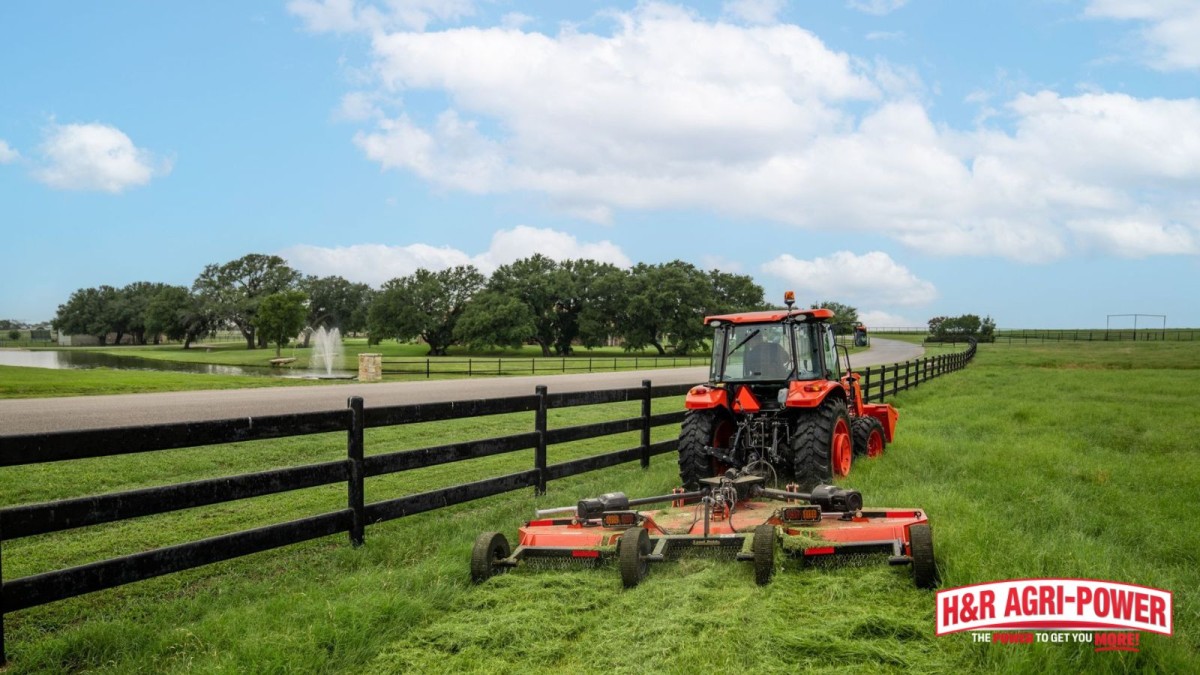
A bush hog is a heavy-duty rotary cutter that attaches to a tractor's three-point hitch or drawbar and uses PTO-driven blades spinning at 2,000 to 2,500 RPM to clear thick brush, tall grass, and small saplings that standard mowers cannot handle.
This guide covers bush hog types and sizing, key performance and safety features, tractor-to-implement matching, budgeting and long-term costs, maintenance for maximum lifespan, and finding reliable dealer support.
Rotary cutters and finish mowers serve different purposes; cutting width, deck gauge, and duty rating all determine which model fits your acreage. Light-duty cutters need roughly 2 HP per foot of cut width, while heavy-duty units require around 5 HP per foot and can handle 2-inch saplings.
PTO horsepower ratings, hitch category, and driveline compatibility must align between your tractor and cutter. Mismatched equipment reduces efficiency and creates safety hazards, so verifying specifications before purchase prevents costly mistakes.
Safety features like chain shielding, PTO guards, and proper shutdown procedures protect operators from serious injury. First-time buyers benefit from understanding these safeguards before operating any rotary equipment.
New bush hog prices vary widely by size and duty class, and long-term ownership costs including gearbox oil changes, blade replacements, and seal inspections factor into the total investment. Regular maintenance can extend equipment life by 50 to 100 percent compared to neglected units.
Warranty coverage, parts availability, and accessible service departments influence long-term satisfaction. H&R Agri-Power provides manufacturer-trained technicians, on-farm service, and expert guidance to help first-time acreage owners choose and maintain the right bush hog.
Why Is a Bush Hog Important for Managing Acreage?
A bush hog is important for managing acreage because it handles heavy vegetation that standard mowers cannot cut. The sections below cover the tasks a bush hog performs and how it compares to alternative land maintenance methods.
What Types of Acreage Tasks Can a Bush Hog Handle?
The types of acreage tasks a bush hog can handle include:
-
Clearing overgrown fields: Tall grass, dense weeds, and thick brush up to 2 inches in diameter fall within a heavy-duty rotary cutter's capacity.
-
Maintaining pastures: Periodic mowing keeps grazing land productive by controlling invasive plants and encouraging fresh growth.
-
Managing fence lines and ditches: A bush hog reaches areas where standard mowers stall or cannot safely operate.
-
Preparing food plots: Mowing perennial plots of alfalfa or clover once or twice per year reduces grass and weed competition, keeping the stand in a lush vegetative state.
-
Controlling saplings and brush regrowth: Seasonal passes prevent woody growth from reclaiming cleared land.
For first-time acreage owners, few implements match this range of capability at a comparable cost per acre.
How Does Using a Bush Hog Compare to Other Land Maintenance Methods?
Using a bush hog compares favorably to other land maintenance methods in durability, cost efficiency, and versatility. Finish mowers produce a manicured lawn appearance, yet they cannot handle brush, saplings, or uneven terrain. String trimmers and hand clearing work on small patches but become impractical beyond an acre or two. Hiring a land-clearing service avoids equipment ownership, though recurring costs add up quickly on properties that need multiple passes per season.
A bush hog, by contrast, pairs with the tractor most acreage owners already need, consolidating vegetation management into a single attachment. According to FIMIC Implement LLC, regular maintenance can extend equipment life by 50 to 100 percent compared to neglected equipment, with heavy-duty components lasting 10 or more years under proper care. That longevity makes a bush hog one of the most cost-effective long-term investments for routine acreage upkeep.
With the value of a bush hog established, understanding the different types available helps narrow the right choice for your property.
What Types of Mowers Are Available for Acreage Owners?
The types of mowers available for acreage owners include rotary cutters for heavy clearing and finish mowers for manicured results. Choosing between them depends on your terrain, vegetation density, and property size.
What Is the Difference Between Rotary Cutters and Finish Mowers?
The difference between rotary cutters and finish mowers is their intended application and cutting capability. Rotary cutters handle thick brush, tall weeds, and overgrown pastures. Light-duty rotary cutters require 2 HP per foot of cutting width, while heavy-duty models require 5 HP per foot and can take on saplings up to 2 inches in diameter. Finish mowers, by contrast, produce a clean, even cut suited to lawns and maintained turf areas.
Rotary cutters use heavier blades and reinforced decks to withstand impacts from dense vegetation and debris. Finish mowers use multiple lighter blades spinning at higher speeds for a polished appearance. According to Bush Hog LLC, Bush Hog provides a 10-year gearbox limited warranty on rotary cutters when the retail sale occurs within the current model year, covering manufacturing defects and workmanship.
For most first-time acreage owners managing overgrown land, a rotary cutter is the more practical starting point. Finish mowers become worthwhile only after the property is already under control and you want a groomed look near the house or along driveways.
Which Bush Hog Size Is Best for Small, Medium, or Large Acreages?
The best bush hog size depends on your total acreage and the tractor powering it:
-
Under 5 acres: A 4- to 5-foot rotary cutter pairs well with a sub-compact or compact tractor. According to Ohio State University Extension, a medium to large ATV may substitute when a tractor is unavailable, though most ATVs are not designed for heavy ground-tilling equipment and risk excessive wear on the transmission and drivetrain.
-
5 to 10 acres: A compact tractor with a 5- to 6-foot rotary cutter and additional attachments such as a box blade is recommended, as compact tractors provide adequate power for small to medium acreage maintenance.
-
10+ acres: A utility tractor paired with a 6- to 7-foot or wider rotary cutter significantly reduces mowing time per pass.
Undersizing your cutter means more passes and longer hours in the seat, while oversizing it beyond your tractor's PTO capacity creates safety hazards and accelerates wear. Matching cutter width to tractor horsepower ensures both efficiency and longevity across any property size.
What Key Features Should You Look for in a Bush Hog?
The key features to evaluate in a bush hog are cutting width, deck thickness, PTO horsepower ratings, and safety components. Each factor directly influences performance, durability, and operator protection.
How Do Cutting Width and Deck Thickness Affect Performance?
Cutting width and deck thickness affect performance by determining how efficiently a bush hog covers ground and how well it withstands impact from debris. A wider cutting deck reduces the number of passes needed per acre, while thicker deck steel resists dents and punctures from rocks and stumps.
According to Iowa State University Extension and Outreach, field capacity is measured in acres per hour and depends on three variables: width, speed, and field efficiency, with field efficiency representing the actual capacity achieved as a percentage of maximum theoretical capacity without overlapping, slowing for turns, or stopping. Matching cutting width to your tractor's horsepower avoids bogging down in heavy material.
Why Do PTO Horsepower Ratings Matter When Choosing a Bush Hog?
PTO horsepower ratings matter because they determine whether your tractor can safely and effectively power the rotary cutter. Undersizing creates strain on the drivetrain, while oversizing wastes fuel and capital.
General PTO horsepower guidelines include:
-
A 4-foot rotary cutter requires 18 to 45 PTO HP.
-
Finish mowing requires 15 to 20 PTO HP.
-
Thick brush cutting requires 20 to 40 PTO HP.
According to Pape Machinery Agriculture and Turf, these ranges reflect the significant difference between light trimming and heavy clearing work. Light-duty rotary cutters need roughly 2 HP per foot of cutting width, while heavy-duty models require approximately 5 HP per foot and can handle 2-inch diameter saplings. Always check the manufacturer's minimum PTO HP specification before purchasing.
What Safety Features Should First-Time Buyers Consider?
The safety features first-time buyers should consider include chain guards, PTO shield covers, and debris deflectors. These components reduce the risk of serious injury during operation.
Key safety features to evaluate before purchase:
-
Chain shields along the rear and sides to contain thrown objects.
-
A full PTO driveline guard covering all rotating shafts.
-
Deck skid shoes that prevent scalping and reduce ground contact hazards.
-
A slip clutch or shear bolt to protect the drivetrain from sudden impact.
According to the U.S. Consumer Product Safety Commission, rotary power mowers are associated with approximately 60,500 injuries annually requiring emergency room care, including cuts, fractures, and amputations. Given these risks, never operate a bush hog with missing guards, and always disengage the PTO before dismounting. For first-time owners, investing in a model with robust factory-installed safety features is far more reliable than retrofitting aftermarket solutions.
With the right feature set identified, the next step is matching your bush hog to your specific tractor.
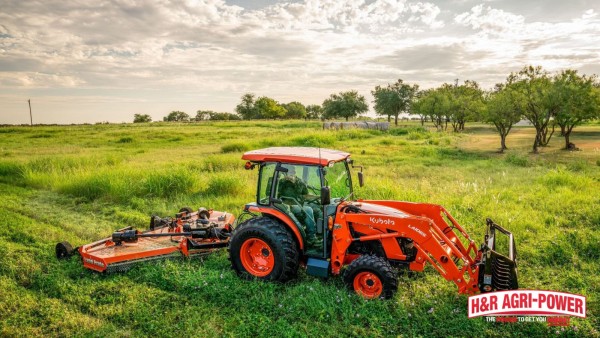
How Do You Match a Bush Hog to Your Tractor or Equipment?
You match a bush hog to your tractor or equipment by verifying PTO speed, hitch category, and horsepower compatibility. The sections below cover hitch and PTO requirements, plus maintenance checks before attachment.
How Do You Determine the Right PTO and Hitch Compatibility?
The right PTO and hitch compatibility is determined by matching three specifications between your tractor and rotary cutter: PTO speed rating, three-point hitch category, and PTO horsepower output.
Most bush hogs operate on a 540 RPM PTO shaft, though some larger units require 1,000 RPM. Connecting a 540 RPM implement to a 1,000 RPM output will damage the gearbox. Check your tractor's operator manual for its PTO speed before purchasing.
Three-point hitch categories must also align. Compact tractors typically use Category 1 hitches, while utility tractors use Category 1 or 2. According to TractorByNet, light-duty rotary cutters require 2 HP per foot of cutting width and heavy-duty models require 5 HP per foot. For properties exceeding 10 acres, a utility tractor provides the power needed for efficient operation. Always confirm that your tractor's PTO horsepower falls within the implement's rated range.
What Maintenance and Attachment Requirements Should Be Checked?
The maintenance and attachment requirements that should be checked include gearbox oil condition, blade sharpness, driveline connections, and all mounting hardware.
Before attaching any rotary cutter, inspect these items:
-
Gearbox oil level should reach just below the fill plug threads when checked on level ground with a cool gearbox.
-
Driveline shields must be intact and spin freely without cracks or missing guards.
-
Three-point hitch pins and clips should be free of excessive wear or bending.
-
Blades should be sharp and balanced, since dull blades increase power requirements and strain the entire drivetrain.
Gearbox oil should be replaced when necessary, EP 80W-90 or SAE 85W-140 gear oil are commonly used, verify required oil per operator’s manual. Blades should be replaced annually if too worn to sharpen.
First-time owners who stay consistent with these pre-attachment checks avoid the most common causes of premature wear. With compatibility and maintenance verified, understanding total ownership costs helps complete the buying decision.
What Are Typical Costs and Budget Considerations for Buying a Bush Hog?
Typical costs for buying a bush hog range widely based on condition, size, and duty rating. The sections below break down new versus used pricing and the long-term expenses first-time owners should plan for.
How Much Do New Bush Hogs Cost Compared to Used Ones?
New bush hogs cost significantly more than used ones, though pricing depends on cutting width, duty class, and brand. Light-duty 4- to 5-foot rotary cutters designed for compact tractors generally start in the low thousands, while heavy-duty 6-foot models built for utility tractors climb considerably higher. Premium features like stump jumpers, heavier deck gauges, and laminated tail wheels add to the sticker price.
Used bush hogs offer substantial savings, however, worn gearboxes, bent blades, and cracked decks can turn a bargain into an expensive rebuild. Before purchasing used, inspect the gearbox for leaks, check blade condition, and verify that the PTO shaft and three-point hitch components show no excessive wear. A well-maintained used rotary cutter with solid seals and fresh gear oil can deliver years of reliable service at a fraction of new cost.
What Long-Term Costs Should First-Time Owners Be Aware Of?
Long-term costs first-time owners should be aware of include routine maintenance, part replacement, and potential major repairs. Blades, gearbox oil, seals, and shear bolts represent recurring expenses every season.
Key ongoing costs to budget for include:
-
Blade replacement: Blades should be replaced annually or after significant use if too worn to sharpen, since dull blades increase cutting power requirements and strain on the drivetrain.
-
Gearbox service: Oil changes when necessary using proper gear oil per the operator’s manual keep the gearbox protected.
-
Gearbox failure: According to FIMIC Implement LLC, gearbox replacement can cost $1,000 to $3,000 or more depending on the equipment, making preventive maintenance far cheaper than emergency repairs.
-
Seal and bolt inspection: Seasonal seal checks and bolt re-torques after initial use prevent leaks and component loosening.
Factoring these recurring expenses into the purchase decision gives a more accurate picture of total ownership cost. With maintenance handled proactively, the next step is understanding the service schedules that keep a bush hog running season after season.
What Should You Know About Bush Hog Maintenance and Longevity?
You should know that consistent maintenance directly determines how long a bush hog lasts and how reliably it performs. The following sections cover service intervals for key components and preventive steps that extend equipment life.
How Often Should You Service or Replace Bush Hog Parts?
You should service or replace bush hog parts on a schedule tied to operating hours and seasonal use. Key service intervals include:
-
Gearbox oil level: Check before each use with the gearbox cool and on level ground.
-
Gearbox oil replacement: Replace when necessary.
-
Seal inspection: Inspect every season to prevent leaks and contamination.
-
Bolt re-torque: Perform when necessary
-
PTO coupling: Clean after every use to ensure even power transfer.
-
Blades: Replace annually or sooner if too worn to sharpen, since dull blades increase power requirements and strain on the drivetrain.
According to FIMIC Implement LLC, recommended gearbox oils are EP 80W-90 and SAE 85W-140 gear oils.
What Preventive Steps Can Increase the Life Span of Your Bush Hog?
Preventive steps that can increase the life span of your bush hog focus on proper lubrication, correct assembly, and proactive component upgrades. Regular maintenance can extend equipment life by 50 to 100 percent compared to neglected units. Heavy-duty components with consistent care can last 10 or more years, while standard-duty equipment typically reaches 5 to 7 years.
Critical preventive measures include:
-
Upgrade seals: High-temperature, double-lip nitrile seals improve longevity by 30 to 40 percent in dusty conditions.
-
Install seals correctly: Clean the shaft with 600-grit emery cloth and coat the seal lip with clean gear oil before installation. Shaft misalignment during reassembly is the most common cause of premature seal failure.
-
Avoid deferred gearbox service: Gearbox replacement costs $1,000 to $3,000 or more, making scheduled oil changes far more economical.
Skipping even one season of basic maintenance compounds wear rapidly, so treating service intervals as non-negotiable is the simplest way to protect your investment. With a solid maintenance routine established, knowing where to find reliable equipment and ongoing support becomes the next priority.
Where Can First-Time Buyers Find Reliable Bush Hogs and Ongoing Support?
First-time buyers can find reliable bush hogs and ongoing support through established agricultural equipment dealerships that offer manufacturer-trained technicians, genuine parts inventory, and structured after-sale service programs. Evaluating dealership quality and understanding warranty terms are essential steps.
How Can You Evaluate Dealerships and After-Sale Service?
You can evaluate dealerships and after-sale service by assessing several key factors before committing to a purchase. A dealership's service infrastructure directly affects how quickly you return to the field when something breaks. Key evaluation criteria include:
-
Technician qualifications: Manufacturer-trained technicians diagnose and repair equipment faster than general mechanics.
-
Service availability: Dealerships offering emergency and on-farm service reduce costly downtime during peak mowing season.
-
Parts inventory: On-site parts stock means faster turnaround compared to ordering components and waiting days for delivery.
-
Maintenance programs: Scheduled service plans that follow manufacturer-recommended intervals help prevent unexpected failures.
For first-time owners unfamiliar with rotary cutter maintenance, a dealership that provides routine maintenance programs is far more valuable than one that simply sells equipment and moves on.
What Role Does Warranty and Parts Availability Play in Your Purchase?
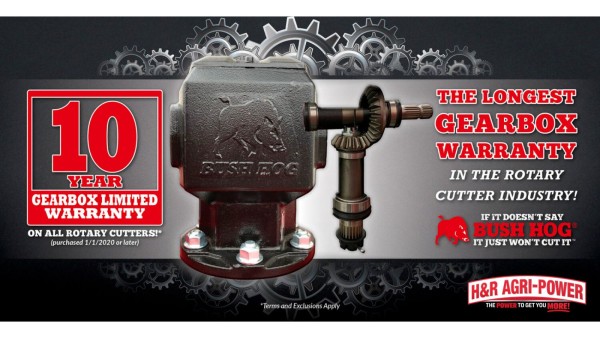
Warranty and parts availability play a critical role in your purchase by protecting against manufacturing defects and minimizing repair costs over the life of the equipment. Warranty terms vary significantly between brands. According to Bush Hog LLC's 2020 Product Warranty Guide, Bush Hog provides a 10-year limited gearbox warranty on rotary cutters when the retail sale occurs within the current model year, covering manufacturing defects and workmanship.
When comparing warranty coverage, prioritize these factors:
-
Gearbox warranty duration, since gearbox replacement can cost $1,000 to $3,000 or more.
-
Seal and labor coverage, because some warranties cover only parts while others include labor for the full term.
-
Maintenance compliance requirements, as most warranties become void if the equipment is used outside designed horsepower specifications or without documented upkeep.
Parts availability matters just as much as warranty length. A strong warranty means little if replacement blades, seals, or gearbox components take weeks to arrive. Buying from a dealership with deep parts inventory and direct manufacturer relationships keeps your bush hog operational when it counts most.
How Does H&R Agri-Power Help First-Time Acreage Owners Select and Support Bush Hogs?
H&R Agri-Power helps first-time acreage owners select and support bush hogs through expert equipment matching, manufacturer-trained technicians, and ongoing service programs. The sections below cover available support services and key takeaways from this guide.
Which Ongoing Support Services from H&R Agri-Power Benefit Bush Hog Owners?
The ongoing support services from H&R Agri-Power that benefit bush hog owners include routine maintenance programs, emergency on-farm repairs, and expert diagnostics from over 100 manufacturer-trained service technicians. H&R Agri-Power's Service and Repair Department specializes in maintaining tractors, mowers, and balers, with a fleet of service trucks available 24 hours a day, 7 days a week. On-farm service visits bring parts and skilled technicians directly to the property, minimizing downtime during peak mowing season.
H&R Agri-Power also offers both new and used machinery across 21 locations in six states, giving first-time buyers access to hands-on guidance when matching a bush hog to their tractor and acreage. For owners managing 5 to 10 acres, this kind of personalized consultation prevents costly mismatches between cutting width, PTO horsepower, and property demands.
What Are the Key Takeaways About Bush Hog Buying Guide for First-Time Acreage Owners We Covered?
The key takeaways about a bush hog buying guide for first-time acreage owners are:
-
Bush hog selection starts with matching cutting width and duty rating to your acreage size and vegetation density.
-
PTO horsepower compatibility between tractor and rotary cutter prevents mechanical strain and safety hazards.
-
Safety features, proper PTO shutdown procedures, and chain guards protect operators and bystanders.
-
Routine gearbox oil changes, blade inspections, and seal checks extend equipment life and reduce costly repairs.
-
Warranty terms vary significantly by manufacturer; understanding coverage before purchase protects your investment.
-
A dealership with on-site service, trained technicians, and parts availability simplifies long-term ownership.
H&R Agri-Power combines over 50 years of agricultural equipment expertise with comprehensive service and selection, making the transition into acreage ownership more manageable for first-time buyers.