

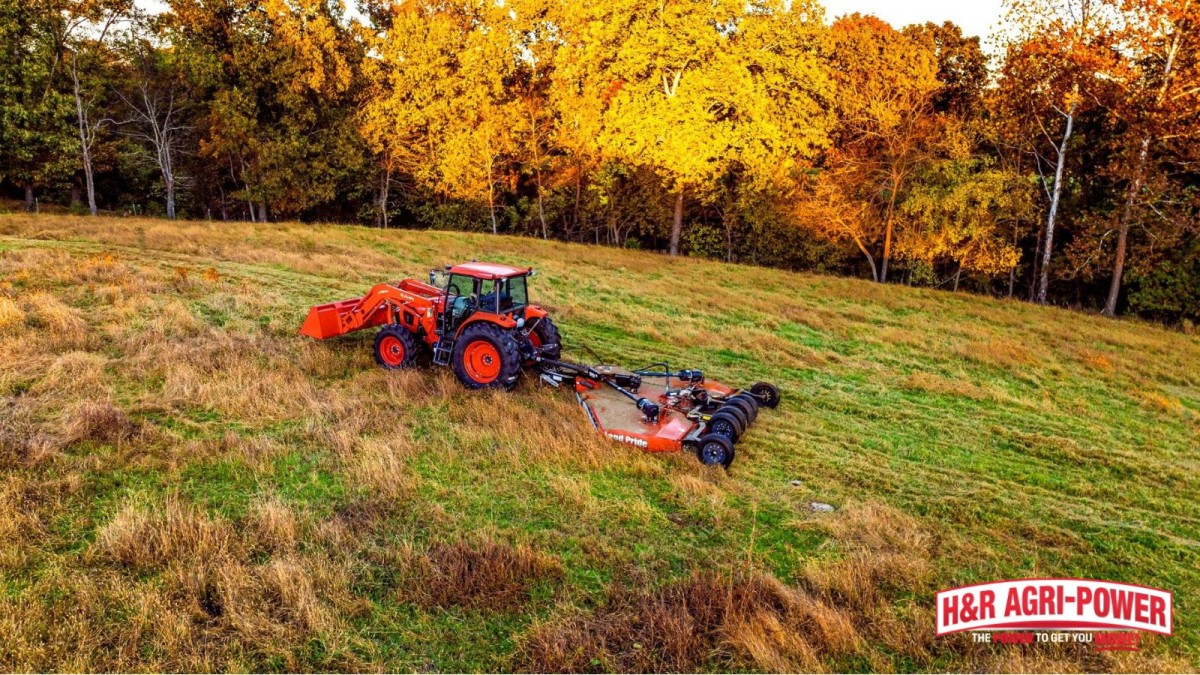
Brush hogging equipment refers to a category of tractor-mounted implements used to cut, clear, and maintain vegetation on food plots, ranging from heavy rotary cutters built for dense brush to precision finish mowers suited for established plantings.
This guide covers implement types and their specific uses, how to select the right equipment for your plot and tractor, key features to evaluate in rotary cutters, flail mowers, and finish mowers, proper maintenance practices, safety standards, and how H&R Agri-Power can help you find the right equipment.
Rotary cutters, flail mowers, finish mowers, and sickle bar mowers each serve a distinct role in food plot work. Rotary cutters dominate initial clearing of heavy brush and small saplings, while flail mowers and finish mowers take over for ongoing seasonal maintenance where cut quality directly affects crop regrowth.
Choosing the right implement depends on four factors: the stage of plot development, tractor horsepower, terrain conditions, and plot size. A rotary cutter sized at 5 PTO HP per foot of cutting width handles rough ground efficiently, while a finish mower outperforms a batwing rotary cutter on established clover or chicory plots by promoting faster regrowth.
Maintenance and safety practices are non-negotiable in this work. PTO shaft lubrication every 8 hours, seasonal gearbox oil changes, and maintaining a 300-foot bystander clearance zone during operation are the core standards that keep equipment running and operators safe across every season.
What Is Brush Hogging Equipment and Why Does It Matter for Food Plots?
Brush hogging equipment refers to a category of tractor-mounted implements used for cutting, clearing, and maintaining vegetation across fields, woodland edges, and food plots. The sections below cover how these implements function and why they are essential to food plot success.
What Is a Brush Hog?
A brush hog is a heavy-duty, PTO-driven rotary cutter designed to mow dense brush, tall grass, and woody vegetation that standard mowers cannot handle. Mounted on a tractor's three-point hitch, it uses one or more free-swinging blades rotating beneath a reinforced steel deck to knock down thick growth in a single pass. Because the blades swing freely on impact, they deflect off rocks and debris rather than shattering, making rotary cutters well-suited to rough, uneven ground typical of food plot sites.
Why Does Brush Hogging Equipment Matter for Food Plots?
Brush hogging equipment matters for food plots because clearing and maintaining vegetation is the most time-intensive phase of food plot development. As Whitetail Institute contributor Matt Harper notes, clearing the area is the first and often most labor-intensive step in creating a new food plot. Without the right implement, overgrown land cannot be converted into productive planting ground, and established plots quickly lose yield to encroaching brush and weed pressure between growing seasons. Selecting the correct implement type, whether a rotary cutter, flail mower, or finish mower, directly determines how efficiently a plot is established and how well it sustains wildlife through each season.
What Types of Brush Hogging Equipment Are Used for Food Plots?
The types of brush hogging equipment used for food plots include rotary cutters, flail mowers, finish mowers, and sickle bar mowers. Each implement suits a different stage of food plot work, from initial clearing to fine-tuned seasonal maintenance.
Rotary Cutters
Rotary cutters are heavy-duty implements driven directly by a tractor's PTO shaft, making them the most common choice for cutting thick brush, tall weeds, and light woody growth on food plots. Unlike flail mowers, which are belt-driven off the gearbox, rotary cutters receive power directly from the PTO, giving them greater torque for dense vegetation. Standard practice requires 5 PTO HP per foot of cutter width, so sizing your tractor correctly is essential. A slip clutch offers better protection to the tractor's PTO shaft than a shear bolt setup, making it the preferred option for rocky or debris-laden plots.
Flail Mowers
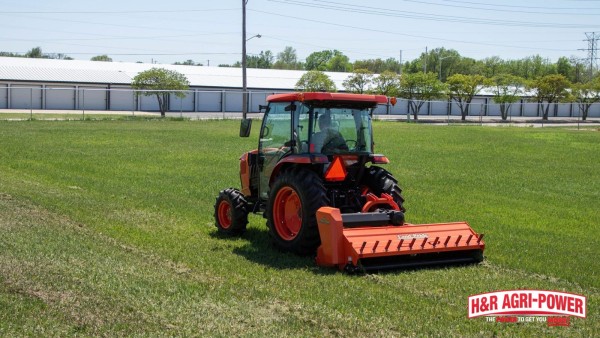
Flail mowers use multiple small blades or hammers mounted on a spinning horizontal drum to cut vegetation into fine pieces. A rear roller levels the mowed surface, leaving a cleaner, more uniform finish than a rotary cutter. Flail mowers require full, constant PTO-rated RPMs to operate effectively, making consistent tractor throttle management critical. They perform best on established plots with moderate grass and cover crop regrowth rather than heavy brush.
Finish Mowers
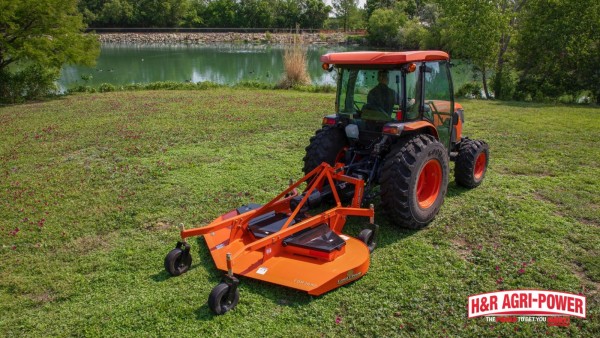
Finish mowers deliver a precise, low, even cut suited to maintaining established food plot plantings such as clover, chicory, and brassicas. Their lighter construction and finer blade design produce a cleaner mulch than rotary cutters, which supports faster crop regrowth after mowing. Using a finish mower on tender food plot species can meaningfully outperform a batwing rotary cutter, where coarser cutting may slow regrowth.
Sickle Bar Mowers
Sickle bar mowers cut vegetation at the stem rather than shredding it, making them well suited for hay-type food plot species such as clover or native grasses intended for cutting and removal. Sickle bar mowers work through a reciprocating blade action. This implement type leaves cut material lying on the surface, which can be raked or baled rather than mulched in place. ASABE/ISO 17101-1:2012 establishes thrown-object test and acceptance criteria for agricultural rotary mowers, though sickle bar designs present a different safety profile due to their lower blade speeds.
How Do You Choose the Right Brush Hogging Equipment for Your Food Plot?
Choosing the right brush hogging equipment for your food plot depends on four key factors: the stage of plot development, ongoing maintenance needs, tractor horsepower, and terrain conditions. The sections below address each factor with specific guidance.
What Brush Hogging Equipment Works Best for Initial Food Plot Clearing?
The brush hogging equipment that works best for initial food plot clearing is a heavy-duty rotary cutter. According to Whitetail Institute contributor Matt Harper, clearing the area is the first and often most labor-intensive step in establishing a new food plot. A rotary cutter handles dense brush, tall grass, and small saplings far more efficiently than lighter implements. For very heavy brush and small saplings, a rotary cutter is generally faster and more capable than a flail mower. Operators converting overgrown land into productive wildlife plots, including those pursuing acreages eligible under USDA's Conservation Reserve Program practice CP-12, benefit most from the raw cutting power a rotary cutter delivers.
What Brush Hogging Equipment Works Best for Ongoing Food Plot Maintenance?
The brush hogging equipment that works best for ongoing food plot maintenance is a finish mower or flail mower, depending on what crop is planted. Rotary cutters are effective for rough passes, but mowing established clover or chicory plots with a batwing rotary cutter can result in slower regrowth compared to using a finish mower. Flail mowers produce a finer cut and distribute clippings more evenly, which supports faster plant recovery. For land managers maintaining trails or mixed-cover plots, a flail mower offers a cleaner, more controlled result that promotes healthier regrowth across the growing season.
How Does Tractor Size Affect Which Brush Hogging Equipment You Can Use?
Tractor size directly determines which brush hogging equipment you can safely and effectively operate. Standard practice requires 5 PTO horsepower per foot of rotary cutter width, meaning a 6-foot cutter needs at least 30 PTO HP to function properly.
Compact tractors, rated between 25 and 60 HP, can handle mid-size rotary cutters and most flail mowers. Sub-compact tractors under 25 HP are limited to narrower, lighter implements and are generally unsuitable for heavy brush clearing. Matching implement width to available PTO output prevents drivetrain strain and protects both the tractor and the cutter.
How Does Terrain and Plot Size Influence Equipment Selection?
Terrain and plot size influence equipment selection by determining which implement type delivers the best durability and efficiency for the conditions. In 2025 field tests, flail mowers outperformed rotary cutters on rocky terrain, offering better durability and lower maintenance costs, according to Juma JX. On flat, open plots, a wider rotary cutter covers ground faster and is the practical choice for large acreages. Smaller or irregularly shaped plots benefit from narrower, more maneuverable implements. Rocky or uneven ground accelerates blade wear on rotary cutters, making a flail mower the smarter long-term investment when stones or roots are consistently present. For food plot operators navigating these terrain decisions, H&R Agri-Power's in-store staff can help assess tractor horsepower, terrain conditions, and plot size to narrow down the right implement category before purchase.
What Are the Key Features to Look for in a Rotary Cutter?
The key features to look for in a rotary cutter include blade type, deck thickness, PTO compatibility, driveline protection, and cutting width relative to your tractor's power. The sections below cover cutting performance, driveline protection, and safety considerations in detail.
Cutting Performance and Blade Design
Cutting performance in a rotary cutter depends on blade quality, deck gauge steel, and cutting height adjustment range. For heavy brush and small saplings, a rotary cutter handles the work faster than a flail mower, making blade durability a critical selection factor. However, when maintaining established clover or chicory food plots, note that a batwing rotary cutter may produce slower regrowth compared to a finish mower, so matching the tool to the task matters.
Key blade and deck features to evaluate:
-
Blade material: High-carbon or hardened steel for impact resistance in woody vegetation.
-
Deck thickness: Heavier-gauge steel decks withstand repeated rock and debris contact.
-
Cutting height range: Wider adjustment accommodates both initial clearing and maintenance passes.
-
Blade overlap: Overlapping blade paths eliminate uncut strips in a single pass.
Driveline and Gearbox Protection
A rotary cutter's driveline protection system determines how well the implement survives unexpected impacts with rocks, stumps, and buried debris. Rotary cutters are directly driven by a PTO shaft, so driveline protection is the primary safeguard for both the cutter gearbox and the tractor's PTO.
Two protection mechanisms to compare:
-
Slip clutch: Releases torque automatically on impact, offering continuous protection without stopping operations to replace hardware.
-
Shear bolt: Sacrifices a replaceable bolt on impact; provides protection but requires stopping and carrying spare hardware in the field.
A slip clutch provides more reliable protection for the tractor's PTO shaft than a shear bolt design. Grease zerks on PTO shafts should be lubricated every 8 hours of operation, and gearbox oil should be replaced when necessary.
Safety Features and Clearance Standards
The key safety features in a rotary cutter are the rear discharge deflector, chain or rubber shielding around the deck perimeter, and a properly rated PTO shield. According to the LSU AgCenter, operating a rotary cutter safely requires that no people or animals be within 300 feet of the machine during operation. Buyers should confirm that any cutter they consider meets ASABE/ISO 17101-1:2012 thrown-object test and acceptance criteria for agricultural rotary mowers.
Safety features to verify before purchase:
-
Rear deflector: Redirects debris downward rather than outward.
-
Chain or rubber skirting: Shields around the deck perimeter reduce lateral object throw.
-
PTO shaft guard: Full-coverage shielding over the driveline prevents entanglement.
-
Warning decals: Visible, intact safety labeling is a baseline compliance requirement.
Selecting a cutter with all four of these features in place significantly reduces thrown-object risk on food plot terrain where bystanders or hunting companions may be nearby.
What Are the Key Features to Look for in a Flail Mower?
The key features to look for in a flail mower include blade type, blade count, rotor speed, cutting width, and rear roller design. These factors directly determine how well the implement performs on food plot terrain.
Blade Type and Configuration
Flail mower blades come in two primary types: Y-blades and hammer blades. According to MechMaxx's 2025 flail mower blade guide, Y-blades are designed for general-purpose mowing, managing cover crops, and finishing pastures, and they require less power to spin than heavier hammer blades. For food plot maintenance on established vegetation, Y-blades are the practical choice. Hammer blades suit denser, woodier material but demand more PTO horsepower.
Rear Roller and Cutting Height Adjustment
A flail mower's rear roller flattens and levels the mowed area after each pass, producing a cleaner finish than a rotary cutter on maintained plots. Adjustable cutting height is equally important, allowing operators to raise the deck for tall grass or lower it for a tighter finish on established clover and brassica plots.
PTO Power Requirements
Flail mowers require full, constant PTO-rated RPMs to operate effectively. Underspeeding the rotor reduces cut quality and increases blade wear. Always match the implement's required PTO horsepower rating to your tractor's available output before purchasing.
A land manager choosing between a flail mower and a rotary cutter for tall grass and trails should note that flail mowers excel on maintained vegetation, while rotary cutters handle initial heavy clearing faster.
What Are the Key Features to Look for in a Finish Mower?
The key features to look for in a finish mower include cutting width, deck construction, blade configuration, and cutting height adjustability. These specifications directly affect how cleanly a finish mower performs on established food plots seeded with clover, chicory, or brassicas.
Cutting Width and Deck Size
Cutting width determines how efficiently a finish mower covers a plot in a single pass. Wider decks reduce the number of passes needed on larger plots, saving time and fuel. Deck construction matters equally; a reinforced steel deck resists flex and impact from uneven ground, maintaining a consistent cutting plane across the plot surface.
Blade Configuration and Cutting Quality
Blade configuration determines the quality of cut a finish mower delivers on food plot vegetation. Finish mowers use multiple shorter blades spinning in overlapping patterns, which produces a finer, more even cut than a single large rotary blade. According to a Facebook food plot group discussion, mowing clover and chicory with a finish mower promotes faster regrowth than using a batwing rotary cutter, making blade quality a meaningful factor for plot productivity.
Cutting Height Adjustment
Cutting height adjustment allows operators to set the mowing height precisely for different crop stages, such as trimming clover at 4 to 6 inches without scalping the stand. Most quality finish mowers offer multiple height positions via adjustable gauge wheels or a crank-style lift mechanism. This level of control is especially valuable on food plots where maintaining canopy height directly influences how quickly vegetation recovers after mowing.
Hitch Compatibility and PTO Requirements
Hitch compatibility and PTO requirements determine whether a finish mower pairs correctly with the operator's tractor. Most finish mowers use a Category 1 or Category 2 three-point hitch and require a standard 540 RPM PTO connection. Matching these specifications to the tractor prevents power delivery issues and ensures safe, consistent operation across varied plot terrain.
How Do You Properly Maintain Brush Hogging Equipment Used on Food Plots?
Properly maintaining brush hogging equipment used on food plots requires consistent lubrication, blade inspection, gearbox servicing, and PTO shaft care. The sections below cover each maintenance task and its recommended interval.
How Often Should You Grease the PTO Shaft on a Rotary Cutter?
The PTO shaft on a rotary cutter should be greased every 8 hours of operation. Grease zerks on PTO shafts require lubrication at this interval to prevent premature wear and binding. Because food plot work often involves extended mowing sessions across varied terrain, tracking hours is the most reliable way to stay on schedule rather than relying on calendar dates alone.
How Often Should You Change the Gearbox Oil in a Rotary Cutter?
Gearbox oil in a rotary cutter should be replaced when necessary. According to guidance from Fimic Implement, replace gearbox oil in rotary mowers once per year or seasonally at a minimum. For food plot operators who run their equipment hard through dense brush and thick vegetation, a seasonal change is the more protective option.
What Blade Maintenance Does Brush Hogging Equipment Require?
Blade maintenance on brush hogging equipment includes regular inspection for cracks, bends, and wear, along with sharpening or replacement as needed. Dull or damaged blades reduce cutting efficiency and place additional load on the gearbox and PTO drivetrain. After clearing rocky or debris-heavy areas, inspect blades before the next use since hidden rocks and roots accelerate edge degradation far faster than clean grass mowing.
What Are the Key Maintenance Checks Before Each Use?
The key maintenance checks before each use of a rotary cutter or flail mower include:
-
Inspecting blades for cracks, chips, and proper fastener torque.
-
Checking the PTO shaft for secure connection and shield integrity.
-
Verifying gearbox oil level and condition.
-
Confirming all guards and deflectors are in place and undamaged.
-
Lubricating grease points before each use.
Consistent pre-use checks reduce mid-season breakdowns and protect both the implement and the tractor's drivetrain during demanding food plot work.
What Safety Practices Should You Follow When Operating Brush Hogging Equipment?
The safety practices you should follow when operating brush hogging equipment cover pre-operation checks, bystander clearance, PTO shutdown procedures, and compliance with recognized agricultural safety standards. ASAE Standard S318.10 provides the foundational safety information for the normal operation and service of agricultural equipment, including rotary cutters and related implements.
Maintain a safe bystander clearance zone. Operate a rotary cutter only when no people or animals are within 300 feet of the cutting area. Thrown objects are among the most serious hazards associated with rotary cutters, capable of traveling significant distances at high velocity.
Shut down the PTO and engine before dismounting. Always disengage the PTO, turn off the engine, and set the brakes before stepping off the tractor. According to Ohio State University Extension, this sequence prevents injuries from unexpected blade contact or equipment movement.
Conduct pre-operation inspections. Before each use, check blade condition, driveline guards, and all safety shields for damage or missing hardware. Worn or missing guards are a leading contributor to rotary cutter injuries.
Wear appropriate personal protective equipment. Use hearing protection, eye protection, and sturdy footwear during operation. Rotary cutters generate significant noise levels and debris.
Follow manufacturer guidelines and posted safety decals. Safety decals on the implement communicate specific hazard warnings. Replace any decals that are worn or illegible before operating the equipment.
Treating these practices as non-negotiable habits, not optional precautions, is what separates experienced operators from those who encounter preventable accidents.
How Can H&R Agri-Power Help You Find the Right Brush Hogging Equipment for Your Food Plots?
H&R Agri-Power helps food plot managers find the right rotary cutters, flail mowers, and finish mowers through 21 locations across six states and 50+ years of equipment expertise. The sections below cover what H&R Agri-Power carries and key takeaways for equipment selection.
Does H&R Agri-Power Carry Brush Hogging Equipment and Implements for Food Plot Use?
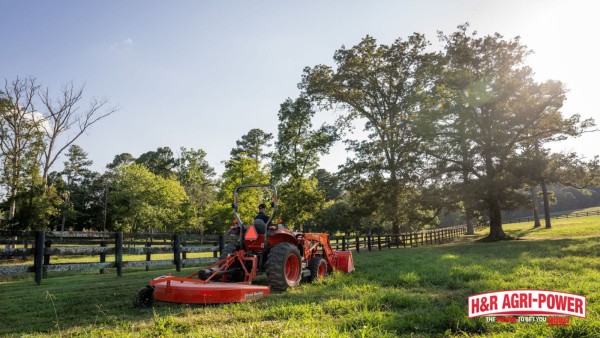
Yes, H&R Agri-Power carries Bush Hog brand implements alongside rotary cutters and mowing attachments from other leading manufacturers. H&R Agri-Power operates 21 locations across Kentucky, Tennessee, Illinois, Alabama, Indiana, and Mississippi, giving food plot managers direct access to equipment, parts, and knowledgeable staff. Whether the need is initial clearing with a heavy-duty rotary cutter or season-long plot maintenance with a flail or finish mower, H&R Agri-Power's inventory and multi-brand expertise support every stage of the process. In-store staff can match the right implement to your tractor's PTO horsepower and your specific terrain conditions.
What Are the Key Takeaways About the Best Brush Hogging Equipment for Clearing and Maintaining Food Plots?
The key takeaways about the best brush hogging equipment for food plots center on matching implement type to task, tractor size, and terrain:
-
Rotary cutters handle initial clearing of heavy brush and small saplings faster than any other implement type.
-
Flail mowers deliver superior mulching and terrain-following performance, particularly on uneven or rocky ground.
-
Finish mowers produce the cleanest cut for established plots with clover, chicory, and similar low-growing forages.
-
PTO horsepower match is non-negotiable: under-powered tractors cause premature drivetrain wear and incomplete cuts.
-
Slip clutch protection matters more than shear bolts for long-term drivetrain health when clearing rough ground.
-
Routine maintenance — gearbox oil, blade inspection, and PTO shaft lubrication — determines implement longevity across seasons.
-
Safety clearance of 300 feet from people and animals is the minimum standard for safe rotary cutter operation.
H&R Agri-Power combines brand selection, service depth, and local expertise to help you build and maintain productive food plots season after season.