

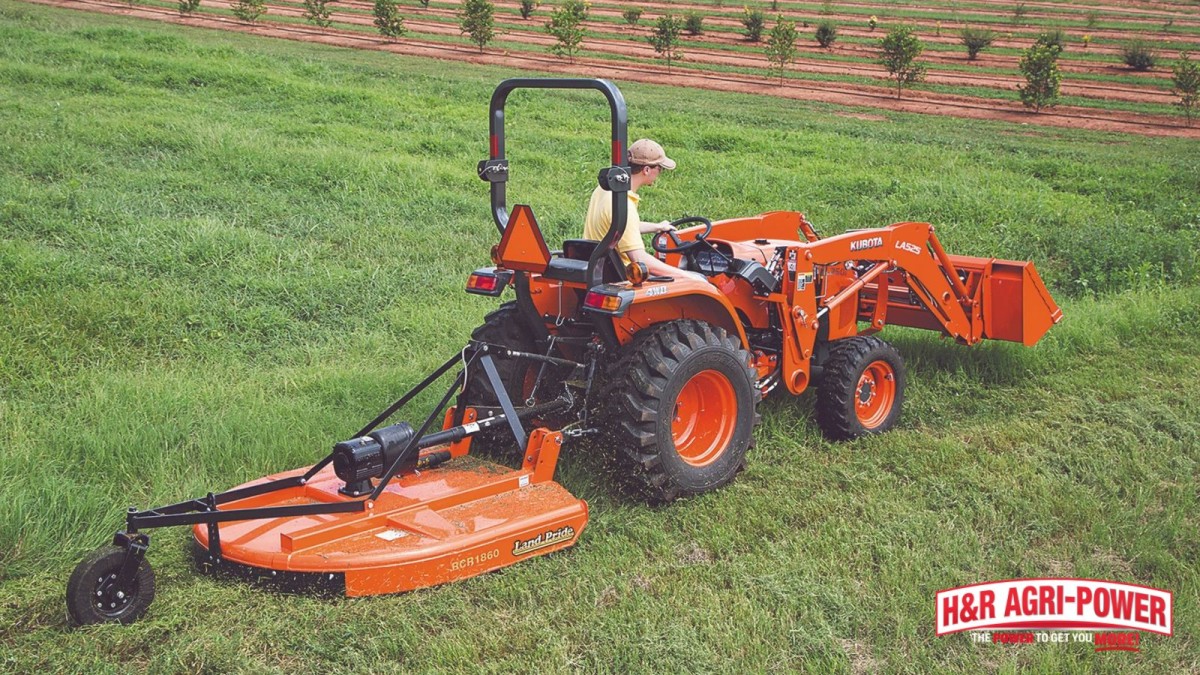
A bush hog setup is the combination of rotary cutter (or flail mower), tractor, and hitch configuration that allows small-acreage landowners to clear grass, brush, and woody growth efficiently and safely. The right setup depends on property size, tractor horsepower, terrain, and how the land is used.
This guide covers equipment selection factors, mower types and attachments, tractor-to-implement matching, routine maintenance, pasture and land management practices, operational safety, environmental and regulatory considerations, and how H&R Agri-Power can help.
Choosing the correct cutter starts with matching horsepower to cutting width; a common guideline is 5 HP per foot of cutter, which means most hobby tractors pair well with a 5- or 6-foot three-point hitch rotary cutter. Terrain and vegetation density then determine whether a standard rotary cutter or a flail mower is the better fit.
Rotary cutters handle tall grass, saplings, and general clearing, while flail mowers excel on rough, uneven ground and produce a finer cut finish. Specialty attachments can extend versatility for seasonal or site-specific tasks.
Proper PTO speed selection (540 or 1,000 rpm), hitch category, and front ballasting all affect performance and safety. Keeping at least 20% of tractor weight on the front axle is essential when running a rear-mounted cutter.
Regular blade maintenance, gearbox inspection, and driveline maintenance prevent costly breakdowns and keep cut quality consistent across seasons.
Strategic mowing height and timing protect pasture forage quality for horses and livestock, while also managing invasive weed species. Buffer setbacks near waterways and compliance with local zoning rules ensure your mowing practices align with environmental regulations.
Which Factors Should You Consider When Choosing a Bush Hog for Small-Scale Farms?
The factors you should consider when choosing a bush hog for small-scale farms include tractor size and horsepower, property terrain, and vegetation type. The following sections break down how power requirements and landscape conditions shape the right selection.
What Size and Power Range Is Right for My Property and Tractor?
The size and power range right for your property and tractor depends on matching cutting width to available horsepower. A common rule of thumb is 5 HP per foot of cutter, so a 5-foot bush hog requires at least a 25 HP tractor. For small farms, a three-point hitch rotary cutter covering a 5 or 6-foot pass is the most common setup for typical hobby tractors.
Larger 10-foot rotary cutters need at least 85 HP and attach at the drawbar with hydraulic lift. Undersizing creates strain on the drivetrain, while oversizing wastes fuel and maneuverability on tight acreage. According to Iowa State University Extension, custom rates for clearing land with a tractor and mower averaged $161.65 per hour in 2026, ranging from $100 to $225. Owning the right-sized setup often pays for itself quickly compared to hiring out.
How Do Terrain and Vegetation Influence Bush Hog Selection?
Terrain and vegetation influence bush hog selection by determining the deck strength, cutting height range, and blade configuration your setup requires. Key terrain factors to evaluate include:
-
Steep slopes or rolling hills demand lower center-of-gravity implements and tractors with adequate ballasting.
-
Rocky ground calls for stump jumper-equipped rotary cutters that protect blades from hidden obstacles.
-
Wet or soft soils require wider tires and lighter implement weight to prevent rutting.
Vegetation density matters equally. Rotary cutters handle saplings and thick brush effectively because blade tip speeds can exceed 150 miles per hour. Light grass and maintained pastures, by contrast, need less aggressive setups. Matching the implement to what actually grows on your property prevents premature wear and unnecessary expense.
With size, power, and terrain accounted for, understanding the main types of bush hogs available helps narrow the right fit further.
What Are the Main Types of Bush Hogs Suited for Hobby Farms and Rural Properties?
The main types of bush hogs suited for hobby farms and rural properties are rotary cutters and flail mowers. Each serves different terrain and vegetation conditions, and specialty attachments can extend their versatility.
How Do Rotary Cutters Compare to Flail Mowers for These Uses?
Rotary cutters compare to flail mowers in several key ways that affect performance on hobby farms and rural properties. According to Trimax Mowing Systems, rotary mowers are best suited to maintained turf and general grass cutting, while flail mowers perform better on rough ground, uneven terrain, weeds, and debris.
Key differences include:
-
Rotary cutters use one or two heavy blades spinning horizontally, making them simpler to maintain and effective for thick brush.
-
Flail mowers use multiple small blades on a rotating drum, producing a finer cut finish but requiring more setup and tuning.
-
Fuel consumption rates remain generally consistent across both mower types, so operating costs are comparable.
For most hobby farm owners managing a mix of open pasture and occasional overgrowth, a rotary cutter offers the best balance of durability, simplicity, and cutting power. Flail mowers earn their place when terrain is consistently rough or a manicured finish matters.
Are There Specialty Attachments or Accessories Worth Considering?
Specialty attachments worth considering include stump jumpers, chain guards, skid shoes, and rear discharge deflectors. These accessories improve both safety and cutting performance across varying conditions.
-
Stump jumpers protect the gearbox by allowing the blade assembly to pass over hidden stumps and rocks.
-
Chain guards and rear deflectors reduce the risk of debris being thrown toward bystanders or structures.
-
Skid shoes allow operators to set a consistent cutting height, which is especially useful on uneven ground.
Investing in quality guards and height-control accessories often prevents costly repairs down the line. With the right attachments selected, matching the bush hog to your specific tractor becomes the next critical step.
How Do You Match a Bush Hog to Your Tractor and Implements?
You match a bush hog to your tractor and implements by verifying PTO speed, hitch category, horsepower rating, and weight distribution. The following subsections cover PTO and hitch requirements, plus compatibility and safety essentials.
What PTO Requirements and Hitch Types Are Involved?
The PTO requirements and hitch types involved in matching a bush hog to your tractor center on two standards: PTO speed and three-point hitch category.
According to the ASABE Technical Library, the standard PTO rated speed for agricultural tractors is either 540 or 1000 rpm, with some newer tractors featuring shiftable gearboxes to toggle between both speeds. Most rotary cutters designed for hobby farms operate at 540 rpm. Running a 540 rpm cutter on a 1000 rpm output without the correct adapter or gearbox setting will damage the implement and create a serious safety hazard.
Three-point hitch categories must also align:
-
Category 1 hitches fit most compact and sub-compact tractors from 20 to 45 HP.
-
Category 2 hitches suit utility tractors typically ranging from 40 to 100 HP.
-
Category 3 and 4 hitches serve larger agricultural tractors rarely used on hobby farms.
For small properties, a three-point hitch rotary cutter covering a 5 or 6-foot pass is the most common configuration for typical hobby tractors. Always confirm that the cutter's hitch pin sizes and spacing match your tractor's link arms before purchase.
How Do You Ensure Compatibility and Safe Operation?
You ensure compatibility and safe operation by matching horsepower to cutting width, maintaining proper weight distribution, and inspecting all connection points before each use.
The general rule is 5 HP per foot of cutter width. A 5-foot bush hog requires at least 25 HP, while a 6-foot model needs approximately 30 HP. Undersizing the tractor strains the engine and drivetrain; oversizing wastes fuel without added benefit.
Weight distribution is equally critical. According to Bush Hog's operational manual, a minimum of 20% of the total tractor weight must be maintained on the front end at all times when operating a rotary cutter. Rear-mounted implements shift weight backward, which can lift the front wheels and cause loss of steering control. Front ballast, such as cast iron suitcase weights, counteracts this imbalance on compact tractors.
Before each session, verify these compatibility checkpoints:
-
PTO shaft length is trimmed correctly and does not bottom out in the tractor's PTO stub.
-
All shear pins and bolts are properly torqued.
-
The driveline shield rotates freely and covers the entire shaft.
-
Hydraulic hoses, if applicable, show no cracks or leaks.
Overlooking any single connection point introduces risk that compounds at operating speed. With compatibility confirmed, routine maintenance keeps these protections effective over the long term.
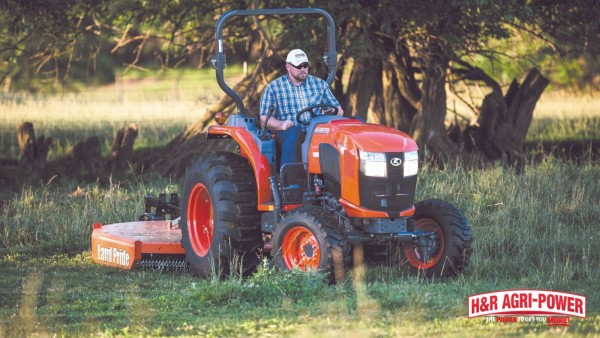
What Is the Best Way to Maintain and Care for Bush Hogs on Rural Properties?
The best way to maintain and care for bush hogs on rural properties combines consistent routine service with proactive troubleshooting. The following subsections cover scheduled maintenance steps and common problem identification.
Which Routine Maintenance Steps Help Prolong the Life of a Bush Hog?
The routine maintenance steps that help prolong the life of a bush hog include blade care, gearbox service, and structural inspections performed on a consistent schedule. According to Cornell Cooperative Extension, rotary cutter blades should be sharpened with a hand-held disk grinder whenever they get dull and replaced when severely beaten or worn beyond recovery.
Beyond blade maintenance, a thorough routine should include:
-
Checking gearbox oil levels before each use and changing fluid when necessary.
-
Greasing all zerk fittings on spindles, hitch pins, and driveline joints after every few hours of operation.
-
Inspecting the PTO shaft, shear pins, and slip clutch for wear or damage.
-
Examining the deck and skid shoes for cracks, bending, or excessive corrosion.
-
Verifying that all safety shields and chain guards remain securely attached.
Storing the bush hog under cover during off-seasons, with blades lightly oiled to prevent rust, extends service life considerably. Most owners underestimate how much consistent greasing alone reduces long-term repair costs.
How Do You Identify and Address Common Bush Hog Problems?
You identify and address common bush hog problems by recognizing early warning signs during operation, such as unusual vibration, uneven cutting, or abnormal noise from the gearbox. Excessive vibration typically indicates bent or unbalanced blades, which should be removed, inspected, and either rebalanced or replaced. Uneven cut height often points to worn skid shoes or incorrect deck adjustment.
Other frequent issues to watch for include:
-
Sheared PTO pins caused by striking hidden obstacles like rocks or stumps.
-
Leaking gearbox seals, signaled by oil residue around the housing.
-
Driveline u-joint wear, which produces a clicking sound at low RPM.
Addressing problems early prevents cascading damage to the gearbox or tractor PTO. For owners who lack diagnostic tools or shop access, professional service ensures problems are resolved correctly before they escalate. With a solid maintenance and troubleshooting routine established, the next consideration is how mowing practices themselves support broader land management goals.
How Can Brush Hogging Practices Support Land Management and Animal Safety?
Brush hogging practices support land management and animal safety by maintaining pasture quality, controlling brush encroachment, and reducing hazards for livestock. The following sections cover safe pasture creation and strategic mowing for invasive weed prevention.
What Practices Help Create Safe Pastures for Horses and Livestock?
The practices that help create safe pastures for horses and livestock include mowing at species-appropriate heights, removing woody debris, and maintaining consistent cutting schedules. According to Rutgers Cooperative Extension, shorter grass species like Kentucky bluegrass should be mowed to 2–3 inches, while taller species like orchardgrass and tall fescue perform best at 3–4 inches.
Key pasture safety practices include:
-
Mowing regularly to prevent tall grass from concealing holes, rocks, or debris that could injure animals.
-
Clearing saplings and brush along fence lines to maintain barrier integrity.
-
Avoiding scalping the ground, which exposes soil to erosion and weed invasion.
-
Rotating mowing patterns to promote even forage regrowth across the pasture.
Consistent mowing height is one of the most overlooked factors in horse property management; getting it wrong compromises both forage nutrition and ground stability underfoot.
How Does Regular Mowing Prevent Invasive Weeds and Brush?
Regular mowing prevents invasive weeds and brush by interrupting seed development and suppressing woody growth before it establishes. However, timing matters more than frequency. Montana State University Extension notes that mowing spotted knapweed once per season in mid-July is usually sufficient for control, because this targets the plant's reproductive stage before seed dispersal.
One important limitation exists: mowing low enough to kill weeds (2 inches or less) also removes valuable forage, making it rarely effective as a standalone weed-killer in pastures. Strategic mowing works best as part of an integrated approach.
Effective timing principles include:
-
Mowing before weed seed heads mature to prevent dispersal.
-
Cutting brush and saplings during active growth when regrowth capacity is lowest.
-
Maintaining forage-friendly heights that shade out weed seedlings without sacrificing pasture quality.
With sound mowing practices in place, following proper safety protocols protects both the operator and the equipment.
What Safety Tips Should You Follow When Operating a Bush Hog on Hobby Farms?
The safety tips you should follow when operating a bush hog on hobby farms include wearing proper protective equipment and following operational practices that prevent accidents. The sections below cover recommended PPE and key strategies to avoid equipment damage.
What Personal Protective Equipment Is Recommended?
The personal protective equipment recommended for bush hog operation includes safety glasses, hearing protection, steel-toed boots, and close-fitting clothing. Rotary cutter blades can reach top speeds exceeding 150 miles per hour, according to Cornell University Cooperative Extension, which means debris can be ejected at lethal velocity. Eye protection rated for high-impact resistance is essential under these conditions. Hearing protection matters because prolonged tractor and PTO noise exposure causes cumulative hearing damage. Long pants and a snug shirt reduce the risk of fabric catching on rotating components. Gloves improve grip during blade inspection and maintenance tasks.
How Can You Prevent Accidents and Equipment Damage?
You can prevent accidents and equipment damage by maintaining proper tractor ballast, inspecting the cutting area beforehand, and following safe operational procedures. A minimum of 20 percent of total tractor weight must remain on the front axle at all times when operating a rotary cutter, as specified in Bush Hog operational guidelines. Walking the field before mowing helps identify hidden rocks, stumps, fence wire, and holes that damage blades or cause rollovers.
Key prevention practices include:
-
Ensuring your tractor is equipped with a Roll-Over Protective Structure (ROPS) and wearing the seatbelt at all times.
-
Never allowing bystanders, children, or pets within the discharge zone during operation.
-
Disengaging the PTO and shutting off the engine completely before approaching the cutter for any reason.
-
Reducing speed on slopes and avoiding mowing across steep grades where tipping risk increases.
-
Checking blade condition and shear bolt integrity before each use.
For hobby farm operators, these precautions are easy to overlook when the job feels routine, yet most serious injuries occur during familiar tasks performed without full attention. Understanding local regulations further strengthens your overall safety approach.
How Do Local Regulations and Environmental Factors Affect Brush Hogging on Small Farms?
Local regulations and environmental factors affect brush hogging on small farms by imposing zoning restrictions, vegetative buffer requirements, and wildlife protections that dictate when, where, and how you can mow. Understanding these rules and ecological considerations helps you stay compliant while managing your land effectively.
What Local Zoning or Environmental Restrictions Should You Know About?
The local zoning or environmental restrictions you should know about include brush management regulations, vegetative buffer setbacks, and federal or state conservation requirements. According to a USDA Natural Resources Conservation Service (NRCS) guidance document, brush management must comply with all local, state, and federal laws while targeting specific woody species and protecting desired vegetation.
Key restrictions to check before brush hogging include:
-
County or municipal zoning ordinances that limit clearing on agricultural parcels.
-
Wetland protection zones where mowing or land disturbance is prohibited.
-
Seasonal restrictions that protect nesting wildlife during spring and early summer.
-
State-level erosion control requirements on sloped or erodible land.
Contact your county extension office or local NRCS service center to confirm which rules apply to your property before scheduling any clearing work.
How Can You Minimize Impact on Wildlife and Waterways?
You can minimize impact on wildlife and waterways by maintaining vegetated buffer zones, timing your mowing strategically, and avoiding sensitive habitats. The U.S. Environmental Protection Agency (EPA) recommends riparian buffer setbacks near waterways to reduce pollution potential by preserving vegetated natural areas between cleared land and water sources.
Practical steps to protect your local ecosystem include:
-
Leaving unmowed strips of at least 35 feet along streams, ponds, and drainage channels.
-
Mowing from the center of a field outward to give ground-nesting birds and small mammals an escape route.
-
Avoiding brush hogging during peak nesting season, typically April through mid-June in most U.S. regions.
-
Scouting the mowing area on foot before each session to identify active nests or burrows.
These precautions do not significantly slow down a mowing schedule, yet they make a measurable difference for local biodiversity. With regulatory and environmental considerations addressed, the right equipment partner can help you choose a setup that meets both your land management goals and compliance needs.
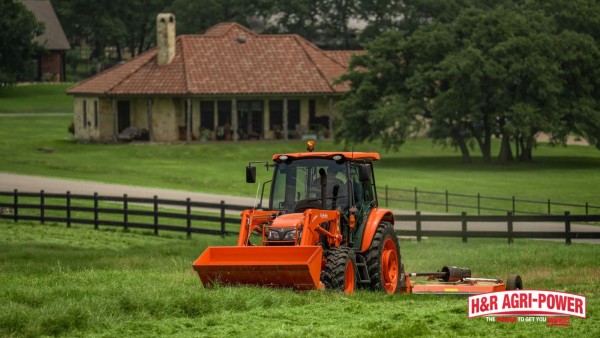
How Can H&R Agri-Power Support Your Bush Hog Needs for Hobby Farms, Horse Properties, and Homesteads?
H&R Agri-Power can support your bush hog needs through expert equipment selection, hands-on maintenance services, and personalized guidance across 21 locations in six states.
What Equipment Selection and Maintenance Services Does H&R Agri-Power Offer for Brush Hogging?
H&R Agri-Power offers equipment selection and maintenance services for brush hogging that draw on over 50 years of agricultural expertise. With partnerships with leading brands such as Case IH, Kubota, New Holland Equipment, and Bush Hog, H&R Agri-Power carries rotary cutters, compact tractors, and implements suited to hobby farms, horse properties, and rural homesteads.
Beyond sales, H&R Agri-Power provides parts sourcing, inspections, and service support to keep bush hog setups running safely. Whether you need help matching a three-point hitch cutter to your tractor's PTO or scheduling seasonal blade maintenance, any of the 21 locations across Kentucky, Tennessee, Illinois, Alabama, Indiana, and Mississippi can assist. For property owners still weighing their options, that dealer-level guidance often prevents costly mismatches.
What Are the Key Takeaways About Best Bush Hog Setups for Hobby Farms, Horse Properties, and Rural Homesteads We Covered?
The key takeaways about best bush hog setups for hobby farms, horse properties, and rural homesteads we covered center on matching equipment to your land, maintaining it consistently, and mowing with safety and environmental awareness in mind.
According to Cornell University, a three-point hitch rotary cutter covering a 5 or 6-foot pass is the most common type for typical hobby tractors on small farms. Core decisions covered in this article include:
-
Sizing your rotary cutter to your tractor's horsepower and your property's terrain.
-
Choosing between rotary cutters for general clearing and flail mowers for rough, uneven ground.
-
Verifying PTO speed compatibility, hitch category, and proper front ballasting before operation.
-
Following routine blade sharpening, gearbox checks, and seasonal inspections.
-
Mowing at species-appropriate heights to preserve forage quality on horse pastures.
-
Complying with local zoning rules and maintaining buffer setbacks near waterways and wildlife habitat.
Prioritizing these fundamentals protects your investment and keeps your land productive season after season. H&R Agri-Power can help you put these principles into practice with the right equipment and ongoing support.