

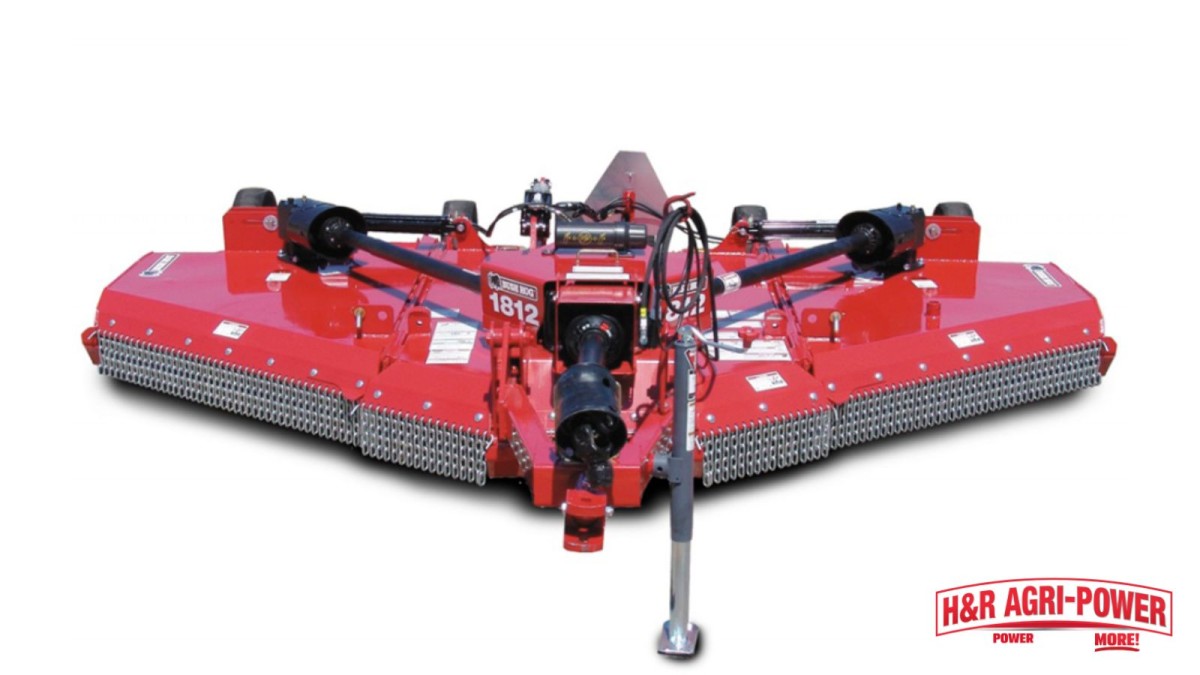
The best Bush Hog rotary cutters are heavy-duty, tractor-mounted implements built to clear thick vegetation across pastures, roadsides, and overgrown land. Bush Hog is one of the most recognized names in rotary cutting equipment, with models ranging from light-duty single-spindle units for small acreage to multi-spindle machines designed for large-scale clearing operations.
This guide covers cutter selection by property type, key performance features and specifications, brand comparisons, attachments and accessories, maintenance practices, environmental and safety regulations, and dealer support through H&R Agri-Power.
Matching the right cutter to your terrain is the starting point. Pastures, roadside corridors, and overgrown ground each present different challenges in terms of vegetation density, slope, and obstacle frequency, and selecting the wrong duty class leads to premature wear or unsafe operation.
Performance depends heavily on cutting width, PTO horsepower requirements, blade type, and deck construction. Bush Hog builds its decks with heavy-gauge steel and offers both smooth and notched blade options, each suited to different vegetation types and finish expectations.
When compared to competitors like Woods and Land Pride, Bush Hog distinguishes itself through gearbox warranty coverage, steel gauge thickness, and a long track record in demanding conditions. We break down the specific differences so you can evaluate each brand on the specs that matter.
Accessories such as skid plates, safety chains, and wheel kits extend cutter versatility, while consistent maintenance (blade sharpening, gearbox service, and driveline inspection) keeps machines productive across years of hard use. Federal, state, and local regulations also influence how and when you can operate rotary cutters near roads, wildlife habitats, and public areas.
Why Is It Important to Choose the Right Rotary Cutter for Your Property?
Choosing the right rotary cutter for your property is important because terrain, vegetation density, and intended use vary widely across pastures, roadsides, and overgrown land. The following sections cover how conditions shape cutter selection and why Bush Hog rotary cutters deliver distinct advantages.
How Do Pasture, Roadside, and Overgrown Conditions Affect Cutter Selection?
Pasture, roadside, and overgrown conditions affect cutter selection by demanding different levels of cutting power, deck durability, and operational clearance. Maintained pastures with uniform grass require lighter-duty cutters and smooth blades that produce a cleaner finish. Roadsides introduce uneven terrain, hidden debris, and slope hazards that call for reinforced decks and protective chain guards. Overgrown ground, thick with saplings, dense brush, and woody stems, needs heavy-duty construction and aggressive blade profiles to handle the load without stalling. Matching the cutter to the specific condition prevents premature wear, reduces downtime, and protects operator safety. Overlooking these differences is one of the most common and costly mistakes property owners make.
What Are the Main Benefits of Using Bush Hog Rotary Cutters?
The main benefits of using Bush Hog rotary cutters are heavy-gauge construction, proven durability across demanding conditions, and broad model availability for different property sizes. Bush Hog 1812 flex-wing rotary cutters, for example, utilize 10-gauge steel for the deck according to Bush Hog product specifications. This construction resists punctures and structural fatigue in rough terrain where lighter equipment would fail. Bush Hog's lineup spans compact models for small pastures to wide-deck units for large-acreage operations, giving property owners flexibility to match cutter size to tractor horsepower and workload. For anyone managing mixed conditions, that combination of structural integrity and model range makes the brand a reliable starting point.
What Key Features Should You Look for in a Bush Hog Rotary Cutter?
The key features to look for in a Bush Hog rotary cutter are cutting width, power rating, blade design, deck construction, and safety features. Each factor directly affects performance across pastures, roadsides, and overgrown ground.
Which Cutting Widths and Power Ratings Are Most Suitable for Large and Small Areas?
The most suitable cutting widths and power ratings depend on property size and tractor capacity. A widely accepted guideline is to match approximately 5 PTO horsepower per foot of cutting width, according to TractorByNet. This means a 25 HP tractor pairs well with a 5-foot cutter, while a 60 HP tractor can handle a 12-foot unit.
For small acreage and homestead mowing, cutters in the 4- to 6-foot range work efficiently without overtaxing compact tractors. Larger pastures and roadside corridors benefit from 10- to 15-foot widths that reduce total pass count. Matching width to horsepower prevents excessive strain on the driveline and ensures clean, consistent cuts even in thick vegetation.
How Do Blade Design and Deck Construction Impact Performance?
Blade design and deck construction impact performance by determining cut quality, durability, and suitability for different vegetation types.
There are two primary blade styles to consider:
-
Smooth blades are ideal for lighter mowing conditions, produce a finer finish, and offer easier sharpening with a longer service life.
-
Notched blades are more aggressive, designed to cut through thick vegetation and dense brush, though they are harder to sharpen and wear out faster.
Deck gauge plays an equally important role. Bush Hog's 1812 Flex-Wing Rotary Cutter, for example, uses 10-gauge steel for the deck. Heavier gauge steel resists impact damage from rocks and debris, which matters significantly on rough, overgrown terrain where lighter decks would dent or warp prematurely.
What Safety Features Should Be Prioritized When Selecting a Rotary Cutter?
The safety features that should be prioritized when selecting a rotary cutter include blade enclosure design, blade stopping time, chain shielding, and slope stability ratings. According to OSHA standard 1910.243, blade enclosure openings must be limited to a vertical angle of 15 degrees and no more than 1.25 inches above the lowest cutting point. The same regulation requires blades to stop within 15 seconds after declutching and caps maximum blade tip speed at 19,000 feet per minute.
Operational awareness matters just as much as built-in protections. The Wisconsin Department of Transportation advises against operating mowing equipment on slopes greater than 3:1 to prevent rollovers. Prioritizing these features protects operators, bystanders, and wildlife during fieldwork.
With the right combination of features identified, comparing Bush Hog models against competing brands clarifies which cutter best fits your operation.
How Do Bush Hog Rotary Cutters Compare to Other Leading Brands?
Bush Hog rotary cutters compare to other leading brands through differences in warranty coverage, build materials, and long-term maintenance costs. The following sections break down how Bush Hog stacks up against Woods and Land Pride.
What Are the Differences Between Bush Hog, Woods, and Land Pride Rotary Cutters?
The differences between Bush Hog, Woods, and Land Pride rotary cutters center on warranty structure, build quality, and intended use cases. Bush Hog offers a 10-year limited gearbox warranty with full coverage for the first six years and parts-only coverage for years seven through ten. Woods Equipment provides a 10-year and 6-year gearbox warranty that covers seals and includes labor for the full warranty duration. Land Pride offers a 5-year limited warranty on its RCR12 and RCR15 Series single-spindle rotary cutters.
Key distinctions include:
-
Bush Hog uses 10-gauge deck steel on models like the 1812 Flex-Wing Rotary Cutter, prioritizing heavy-duty field performance.
-
Woods includes seal coverage and full labor within its gearbox warranty, reducing out-of-pocket service costs.
-
Land Pride emphasizes low-maintenance operation, with users reporting minimal intervention beyond routine greasing.
For operators cutting dense brush on rough terrain, Bush Hog's heavier gauge construction often justifies the investment.
In What Ways Do Bush Hog Models Stand Out for Durability and Maintenance?
Bush Hog models stand out for durability and maintenance through heavy-gauge steel construction and extended gearbox warranty coverage. The 1812 Flex-Wing Rotary Cutter, for example, uses a 10-gauge steel deck, reinforcing the frame against impacts from rocks, stumps, and dense overgrowth commonly found on pastures and roadsides.
According to Bush Hog's product warranty guide, their 10-year limited gearbox warranty provides full coverage for six years, a commitment that reflects confidence in drivetrain longevity. Proper maintenance further extends service life; rotary cutter gearboxes typically last between 5 and 10 years when greased and inspected on schedule. That combination of robust materials and warranty backing makes Bush Hog a strong choice for operators who need equipment that holds up season after season under demanding conditions.
With brand differences clarified, matching the right accessories to your cutter further improves performance.
Which Rotary Cutter Attachments and Accessories Are Worth Considering?
Rotary cutter attachments and accessories worth considering include skid plates, safety chains, wheel kits, and duty-matched components that protect the deck and improve cut quality across varying terrain.
What Types of Skid Plates, Chains, or Wheel Kits Enhance Rotary Cutter Performance?
The types of skid plates, chains, and wheel kits that enhance rotary cutter performance serve distinct protective and operational roles:
-
Skid plates mount beneath the cutter deck to set minimum cutting height, prevent scalping on uneven ground, and shield the deck from rocks and stumps.
-
Safety chains hang along the front and rear of the deck to contain debris thrown by spinning blades, reducing projectile hazards near roadsides and fencelines.
-
Wheel kits attach to the cutter frame to maintain consistent cutting height across undulating pastures, distributing weight so the deck follows ground contours instead of gouging.
For operations on rocky or root-heavy terrain, skid plates are arguably the single most cost-effective upgrade because deck damage from hidden obstacles adds up fast.
How Should You Decide Between Standard-Duty and Heavy-Duty Attachments?
You should decide between standard-duty and heavy-duty attachments by matching component strength to the vegetation density and terrain severity you encounter most often. Standard-duty skid plates, chains, and hardware suit maintained pastures with light brush and relatively smooth ground. Heavy-duty options, built from thicker gauge steel and reinforced mounting points, are necessary for overgrown fields, rocky roadsides, and dense saplings that impose greater impact loads on the cutter deck. According to Bush Hog's specifications, their 1812 Flex-Wing Rotary Cutter uses 10-gauge steel for the deck, illustrating the material thresholds commercial-grade applications demand. Choosing heavy-duty attachments upfront often costs less than repeatedly replacing standard components damaged by conditions they were never designed to handle.
With the right accessories selected, a consistent maintenance routine keeps them performing at their best.
What Are the Recommended Maintenance Practices for Rotary Cutters Used on Challenging Terrain?
The recommended maintenance practices for rotary cutters used on challenging terrain include regular blade sharpening, timely component replacement, and consistent gearbox care. The following subsections cover blade service intervals and strategies to prevent costly downtime.
How Often Should Blades Be Sharpened or Replaced on a Bush Hog Rotary Cutter?
Blades on a Bush Hog rotary cutter should be sharpened and replaced when necessary, usually every one to two years, depending on usage intensity and operating conditions. This general rule applies across rotary cutter applications, though rocky pastures, sandy roadsides, and dense overgrown brush accelerate wear faster than clean grass fields.
Operators working challenging terrain should inspect blades before each session for:
-
Visible nicks, cracks, or rolled edges
-
Uneven wear patterns indicating deck misalignment
-
Excessive thinning from repeated sharpening
Dull or damaged blades force the tractor to work harder, increasing fuel consumption and stressing the drivetrain. Keeping a spare set of blades on hand eliminates unnecessary delays during peak mowing season.
What Steps Help Prevent Downtime and Extend the Lifespan of Your Rotary Cutter?
The steps that help prevent downtime and extend the lifespan of your rotary cutter center on proactive gearbox maintenance, consistent greasing, and thorough pre-operation inspections. According to FIMIC Implement, the average lifespan of a rotary cutter gearbox is typically between 5 and 10 years with proper maintenance.
Key preventive practices include:
-
Checking gearbox oil level and quality before each use
-
Greasing all zerk fittings on spindles, hitch points, and wheel hubs at manufacturer-recommended intervals
-
Inspecting skid plates, chains, and shielding for wear after working rocky or uneven ground
-
Tightening hardware that vibration loosens over time
Neglecting these basics is the fastest path to an expensive mid-season breakdown. For operators running rotary cutters across rough pastures or along ditchlines, a disciplined maintenance routine pays for itself many times over in avoided repair costs and extended equipment life.
How Do Environmental and Safety Regulations Affect Rotary Cutter Use in the United States?
Environmental and safety regulations affect rotary cutter use in the United States by imposing federal blade-safety standards, state-level mowing requirements, and wildlife protection guidelines. The sections below cover local and state laws to know and safe operating practices around people, wildlife, and traffic.
What Local or State Laws Should You Know Before Mowing Pastures or Roadsides?
The local or state laws you should know before mowing pastures or roadsides include state department of transportation mowing-height mandates, slope-operation limits, and federal blade-enclosure standards. The Florida Department of Transportation, for example, specifies a minimum mowing height of 6 inches for all rural mowing areas to protect turf health and reduce erosion.
Key regulations to be aware of include:
-
OSHA requires that blade enclosure openings not exceed 15 degrees vertical angle and 1.25 inches above the lowest cutting point.
-
OSHA limits maximum blade tip speed to 19,000 feet per minute.
-
OSHA mandates that blades stop within 15 seconds of declutching.
-
The Wisconsin Department of Transportation advises against operating mowing equipment on slopes greater than 3:1 to prevent rollovers.
-
Many counties require permits or impose seasonal restrictions for roadside mowing near public rights-of-way.
Checking with your county road department and state DOT before mowing roadsides is always worthwhile, since violations can result in fines or liability exposure.
How Can You Operate Rotary Cutters Safely Around People, Wildlife, and Traffic?
You can operate rotary cutters safely around people, wildlife, and traffic by maintaining buffer zones, adjusting mowing schedules, and using proper debris-containment equipment. Rotary mowers pose greater wildlife risk than alternatives; a study published in Agriculture, Ecosystems & Environment found that cutter bar mowers cause half as much wildlife mortality as rotary and flail mowers, and recommended avoiding add-on conditioners when using rotary equipment.
Practical safety measures include:
-
Maintaining a minimum 50-foot clearance from pedestrians, structures, and parked vehicles to reduce projectile risk.
-
Mowing roadsides only during low-traffic periods and using appropriate signage or traffic-control devices.
-
Raising cutting height during nesting season (typically April through July) to protect ground-nesting birds and small mammals.
-
Inspecting the area for rocks, debris, and fence wire before each pass.
-
Ensuring all chain guards and rear deflectors are intact and properly adjusted.
Combining compliant equipment with thoughtful timing gives operators the best balance of productivity and responsible land stewardship.
How Should You Approach Rotary Cutter Selection and Support with H&R Agri-Power?
You should approach rotary cutter selection and support with H&R Agri-Power by leveraging over 50 years of equipment expertise across 21 locations in six states. The sections below cover how H&R Agri-Power helps with choosing and maintaining rotary cutters, plus key takeaways from this guide.
Can H&R Agri-Power's Equipment Sales, Parts, and Service Help With Choosing and Maintaining the Right Rotary Cutter?
Yes, H&R Agri-Power's equipment sales, parts, and service can help with choosing and maintaining the right rotary cutter. With 21 locations across Kentucky, Tennessee, Illinois, Alabama, Indiana, and Mississippi, H&R Agri-Power provides hands-on guidance for matching cutting width, deck construction, and power requirements to your specific property conditions.
H&R Agri-Power carries leading brands and stocks replacement blades, gearbox components, and wear parts to minimize downtime. Warranty support matters when investing in a rotary cutter; Bush Hog, for example, offers a ten-year limited warranty on gearboxes with full coverage for the first six years and parts-only coverage for years seven through ten. Having a local dealer who can process warranty claims and perform service makes that coverage far more practical than managing it alone.
What Are the Key Takeaways About Best Bush Hog Rotary Cutters for Pastures, Roadsides, and Overgrown Ground We Covered?
The key takeaways about best Bush Hog rotary cutters for pastures, roadsides, and overgrown ground we covered center on matching the cutter to your terrain, maintaining it consistently, and buying from a dealer who supports you long after the sale.
-
Match cutting width and horsepower to your property size and tractor capacity.
-
Select blade type and deck gauge based on vegetation density and terrain severity.
-
Prioritize safety features, especially when mowing near roadsides, traffic, or wildlife habitats.
-
Follow a regular maintenance schedule for blades, gearboxes, and driveline components to prevent costly downtime.
-
Understand local and state mowing regulations before operating on public rights-of-way.
-
Choose a dealer like H&R Agri-Power that offers parts availability, factory-trained service, and warranty processing under one roof.
For most landowners, the rotary cutter that performs best is the one properly sized, well-maintained, and backed by accessible dealer support.