

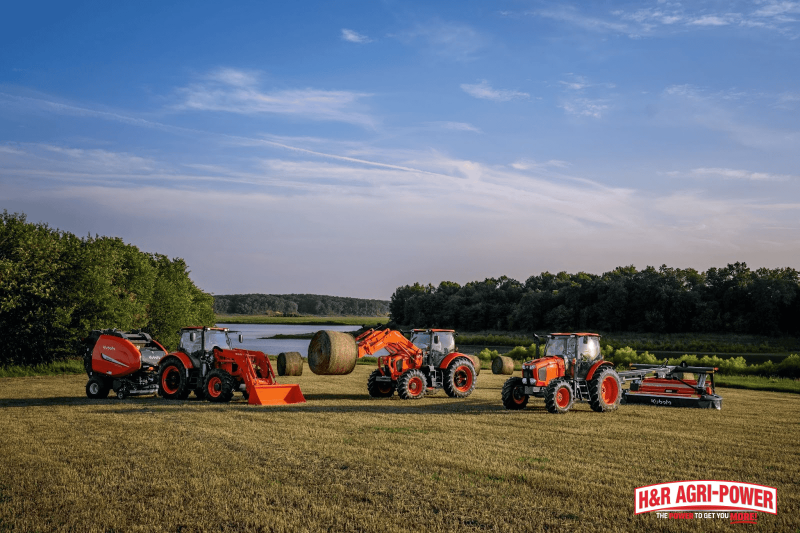
Mississippi farmers face unique challenges every day. The region’s heavy clay soils, hot and humid climate, and long growing seasons demand reliable equipment that can keep up with tough conditions. A tractor is more than a tool; it is the backbone of daily farm work. When it comes to power, durability, and dependable service, Kubota tractors are a name Mississippi farmers consistently trust.
Across the U.S., equipment downtime costs farmers a significant amount of money. A 2023 study by the U.S. PIRG Education Fund found that unplanned breakdowns and restrictive repair policies cost farmers roughly $3,348 per season per farm in lost income, labor, and repair delays. For Mississippi farmers, where weather windows are tight and soil conditions demanding, every hour a tractor stays offline matters.
Kubota has built a strong reputation by offering machines that perform under pressure, adapt to multiple tasks, and save costs over time. From hauling feed to heavy tillage, Kubota tractors have become essential across small family farms and large operations alike.
This guide explores why Kubota tractors stand out for heavy-duty work in Mississippi and highlights the features that farmers value most. Read on!
What Mississippi Farms Demand and How Kubota Delivers
Mississippi farming is diverse, with operations ranging from row crops like soybeans and cotton to livestock and forestry. Every acre brings different challenges, but one thing remains constant: tractors must work hard and keep working season after season.
Kubota tractors are designed to handle these demands while delivering consistent performance.
Typical Mississippi Conditions and Heavy Duty Needs
The state’s soils vary from rich Delta loams to sticky clays that hold water long after rain. These conditions test traction, power, and durability. Long summers bring scorching heat and high humidity, which means tractors must have strong cooling systems and reliable components to withstand long operating hours.
Mississippi farmers also work around unpredictable weather patterns that can quickly turn a dry field into mud, requiring tractors that can pull through without bogging down.
In fact, Mississippi has more than 31,000 farms working 10.3 million acres of land, according to the Mississippi Department of Agriculture and Commerce. On farms this size, downtime is more than just a hassle. It can throw the whole operation off schedule. That’s why tractors need the right mix of engine power, torque, and durability to keep up with tough conditions.
The Tasks Farmers Rely on Tractors to Handle
Daily work requires versatility. Farmers depend on tractors for heavy tillage, discing, and planting preparation. Livestock operations use them for hauling feed, moving hay bales, and clearing land. Row crop producers need dependable PTO power for sprayers and mowers.
Forestry and timber landowners rely on loaders and hydraulic strength to move logs and clear brush. To cover this wide range of heavy-duty tasks without compromise, farmers often focus on choosing the right Kubota tractor for their farm.
Reliability and Durability That Stand Up to Long Field Days
Reliability is one of the biggest reasons Mississippi farmers trust Kubota. A tractor that fails in the middle of planting or harvest can cause costly delays. Kubota tractors are engineered with rugged frames and components that last through years of demanding use.
Heavy Duty Components and Build Quality
Kubota tractors feature reinforced frames, strong axles, and heavy castings designed for continuous stress. Loader arms are built thicker to handle repeated lifting, while drivetrains are engineered to transfer power efficiently without excessive wear.
Farmers often choose Kubota because the tractors are known to withstand rough terrain and long operating hours without breakdowns.
Real World Uptime and Longevity Indicators
Farmers measure reliability by uptime. Kubota tractors are known for long service intervals, minimal downtime, and straightforward maintenance that keeps machines running. Access panels and easy-to-reach service points reduce the time it takes to complete daily checks.
The importance of dependable equipment shows up in the numbers. Based on data from the USDA Economic Research Service, production costs for field crops have risen by more than 15% over the past five years, with equipment maintenance and repair listed among the biggest contributors. For Mississippi farmers, tractors that hold up to long field days help keep these rising costs under control.
In real-world conditions, many Mississippi farmers report that Kubota tractors remain dependable well beyond their expected service life, making them a safe long-term investment.
Engine Power and Torque for Heavy Tillage and Hauling
When it comes to heavy tillage and hauling, Mississippi farmers need tractors that can dig deep, pull strong, and keep running all day without losing momentum. Kubota tractors stand out because their engines are built with the kind of power and torque that can handle the state’s tough soils, heavy loads, and long working hours.
From breaking ground for row crops to hauling full trailers across uneven terrain, these tractors are designed to deliver strength where it counts.
How Power Translates to Field Performance
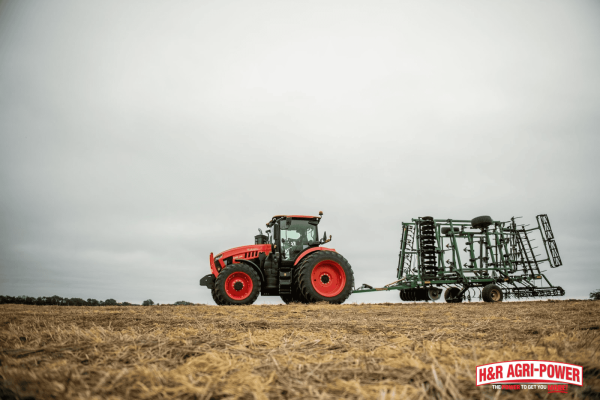
Horsepower is often the first number farmers look at, but torque is what keeps a tractor moving under strain. Kubota’s engines are engineered to deliver steady torque across a wide RPM range, which means they don’t bog down easily in sticky Delta clay or sandy loam. This reliable pulling power helps farmers keep their equipment moving smoothly through deep tillage passes or when pulling heavy implements, such as disc harrows and cultivators.
The Kubota M7 Series, for example, offers up to 168 horsepower with a high torque rise that’s perfect for deep tillage. Farmers who need versatility for both row crop work and livestock operations often favor the Kubota M6 Series, which balances horsepower with maneuverability while still offering enough torque to pull balers, wagons, and heavy planters.
In practice, this combination of horsepower and torque means fewer stalls, less downtime, and more consistent fieldwork, even when the soil or terrain changes.
Matching Engine Specs to Your Most Demanding Jobs
Mississippi farms vary widely in size, and so do the demands placed on tractors. Choosing the right Kubota engine depends on the type of work being done most often:
-
Heavy tillage and row crop farming: The Kubota M7-174 provides high horsepower and torque for plowing, ripping, and pulling wide implements across hundreds of acres. Its power and efficiency make it a go-to option for larger farms.
-
Mixed operations with livestock and crops: The M6 Series shines here. With 114–141 horsepower options, it delivers plenty of pulling power for balers, spreaders, and mid-size tillage equipment.
-
Hauling and transport jobs: For farms that rely heavily on trailers, feed wagons, or grain carts, Kubota’s consistent torque at lower RPMs makes a difference. The engine’s steady power curve reduces strain and fuel use while moving heavy loads.
Having a tractor that matches these specific needs prevents underpowered equipment from slowing down work and also avoids the cost of overspending on unnecessary horsepower.
Why Mississippi Farmers Trust Kubota for Heavy Workloads
In the Mississippi climate, tractors run long hours during planting and harvest. Engines need to provide consistent torque without overheating or guzzling fuel. Kubota’s advanced engine technology, including common rail systems and electronic controls, keeps fuel burn efficient while still delivering the raw strength farmers need.
The confidence farmers have in Kubota comes from this proven performance. When a tractor can pull a loaded trailer across muddy fields or push through a long day of deep tillage without missing a beat, it becomes a trusted partner in the operation.
Hydraulics and Lifting Capacity That Speeds Loader Work
Hydraulic systems are a major factor in heavy-duty productivity. Farmers rely on hydraulics for loader work, attachments, and precise implement control. Kubota tractors deliver strong hydraulic flow and reliable lifting power to handle demanding jobs.
Hydraulic Flow, Cycle Times, and Lift Ratings Explained
Hydraulic flow determines how quickly loaders and attachments respond. Kubota tractors are designed with efficient hydraulic systems that provide faster cycle times, allowing the bucket to lift, dump, and return quickly. Strong lift ratings also allow farmers to move heavier loads with ease, saving time during repetitive tasks like hauling gravel or stacking bales.
Loader Tasks That Benefit Most From Higher Flow
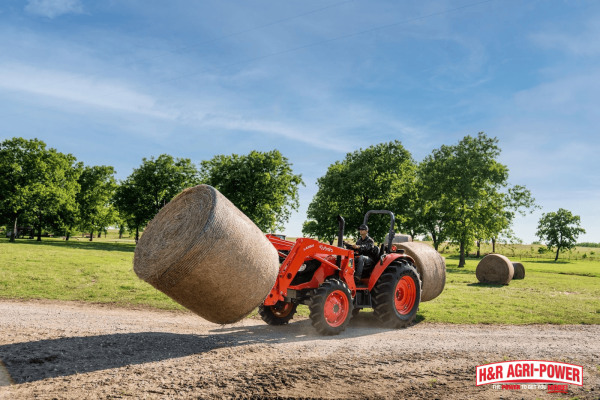
Loader work is common on Mississippi farms, whether it’s feeding cattle, moving hay bales, or loading dirt and gravel. Higher hydraulic performance reduces the time spent on these jobs. For farmers who depend heavily on loaders, Kubota equipment saves time and money through its focus on responsive hydraulics that directly translates to faster, more productive workdays.
Attachment Compatibility to Match Any Farm Task
No tractor is complete without attachments. Kubota tractors are built with compatibility in mind, making it easy for farmers to adapt their machines for multiple tasks across the year.
Most Useful Implements for Mississippi Operations
Common attachments include rotary cutters for pasture management, plows and tillers for soil preparation, bale spears and grapples for livestock work, and post hole diggers for fencing. Kubota tractors are compatible with a wide range of implements, giving farmers the flexibility to handle row crops, livestock, and land clearing tasks with one machine.
Quick Hitch and PTO Options for Faster Swaps
Kubota offers quick hitch systems and reliable PTO setups that make switching between attachments easier. Farmers save valuable time by reducing the effort it takes to connect and disconnect implements, especially during busy planting and harvest seasons.
Fuel Efficiency and Operating Costs Farmers Can Count on
Fuel efficiency directly affects profitability. Kubota tractors are engineered to use fuel efficiently without sacrificing power, which helps Mississippi farmers control costs during long operating days.
Fuel Use During Long Field Days
Kubota engines are known for delivering steady performance while managing fuel consumption. On days when tractors run for 10 to 12 hours, efficient engines make a noticeable difference in overall operating expenses.
Routine Costs and Practical Ways to Lower Running Expenses
Simple habits, such as keeping air filters clean, checking tire pressure, and following scheduled maintenance, can help reduce fuel consumption. Kubota tractors are also designed with durable parts that require fewer replacements, further lowering operating costs. Mississippi farmers value these savings, especially during high-demand seasons when tractors run continuously.
Dealer Network and Local Support Across Mississippi
A strong dealer network is just as important as the tractor itself. Farmers need reliable access to parts, service, and expert support. Kubota’s presence across Mississippi provides that peace of mind.
Finding Parts Fast and Accessing Mobile Service
Kubota dealers across Mississippi keep critical parts in stock, allowing farmers to get back to work quickly after a breakdown. Many also offer mobile service, sending technicians directly to farms for urgent repairs. This level of support minimizes downtime during critical periods, such as planting and harvest.
USDA data shows that machinery repair and maintenance make up a growing share of farm operating costs. In recent years, the costs for parts and labor for agricultural machinery have increased by over 40% since 2020, putting real pressure on farms to avoid delays. Having dealers nearby with stocked parts and mobile service helps avoid those inflated repair costs and keeps work moving when weather windows are short.
What Good Dealer Support Looks Like During Planting and Harvest
Reliable dealers provide extended hours, priority scheduling, and even loaner equipment during busy seasons. Kubota’s dealer network is known for going the extra mile to support local farmers, making it easier to trust the brand when every day counts.
Operator Comfort and Ergonomics for Long, Hot Workdays
Farmers spend long hours in their tractors, often in sweltering Mississippi heat. Comfort is not a luxury; it’s a necessity for productivity and safety. Kubota tractors are designed with operator comfort in mind.
Cab Features That Reduce Fatigue and Improve Productivity
Features like air conditioning, adjustable seating, and ergonomic controls reduce operator fatigue during extended shifts. Good visibility and intuitive layouts also help operators work efficiently while staying safe.
Simple Comfort Upgrades That Make a Big Difference
Small details such as improved mirrors, sun shades, easy entry steps, and sturdy hand grips make everyday use more convenient. These upgrades may seem minor, but they significantly improve comfort and reduce strain during long workdays.
Resale Value and Total Cost of Ownership over Time
Investing in a tractor is a long-term decision. Kubota tractors not only perform well during their service life but also hold strong resale value, reducing overall ownership costs.
Depreciation Patterns and Trade In Practicalities
Kubota models consistently retain value in the used market, making them a smart choice for farmers who plan to trade up in the future. A well-maintained Kubota often sells at higher resale prices than many competitors.
Calculating ROI for Heavy Duty Use
Return on investment goes beyond purchase price. When factoring in fuel efficiency, low maintenance needs, and high resale value, Kubota tractors deliver a strong ROI. For Mississippi farmers, this balance makes Kubota one of the most cost-effective heavy-duty options.
A Quick Buying Checklist for Mississippi Farmers
Before investing in a tractor, Mississippi farmers should look beyond just horsepower ratings. Choosing the right Kubota means considering the tasks it will handle most frequently, the land conditions, and the level of local support available. Here’s a practical checklist to keep in mind:
-
Define your core tasks: tillage, loader work, mowing, or hauling. The main job should guide your model choice.
-
Check hydraulic flow and lift capacity: essential for loader work, hay handling, and operating modern implements.
-
Ask about fuel efficiency: tractors that sip less fuel during long days add up to real savings over a season.
-
Evaluate cab comfort: for Mississippi’s hot, humid summers, air conditioning, seating, and visibility make a major difference.
-
Confirm parts and dealer support: reliable service and quick access to parts keep you running during planting and harvest.
-
Review warranty and financing options: a strong warranty adds peace of mind, while flexible financing helps manage cash flow.
-
Consider resale value: Kubota tractors typically hold their value well, making them a smart long-term investment.
How to Pick the Right Kubota Model for Your Farm Size
Farm size and workload should guide your tractor decision. Not every farm requires the same level of power or features. Here’s how to narrow it down:
-
Small farms and hobby operations (under 50 acres):
-
Compact Kubota models are ideal.
-
Good for mowing, light tillage, hauling small trailers, and general maintenance.
-
Easier to maneuver in tight spaces like barns or small pastures.
-
-
Medium farms (50–200 acres):
-
Mid-range utility models strike the right balance.
-
Enough horsepower for plowing, planting, baling, and loader work.
-
Suitable for both row crop operations and livestock chores.
-
-
Large farms and commercial operations (200+ acres):
-
High-horsepower models with advanced hydraulics and heavy-duty frames.
-
Built for deep tillage, heavy hauling, and constant loader use.
-
More comfort and technology features to support long shifts and precision farming.
-
By matching the tractor’s size and power to the scale of your farm, you avoid overspending on equipment you don’t need or underpowering critical jobs.
Ready to Put a Kubota Tractor to Work on Your Farm?
Mississippi farmers trust Kubota because these tractors deliver on the qualities that matter most in the field: dependable power, durability, comfort, and support that never leaves you stranded. From small-acreage hobby farms to large commercial operations, Kubota offers models built to handle the demanding conditions and year-round tasks unique to Mississippi agriculture.
The right tractor is more than just equipment. It is a long-term partner that affects your productivity, operating costs, and peace of mind. By choosing wisely, you set your farm up for years of reliable performance.
At H&R Agri-Power, you’ll find a full line of Kubota tractors, along with expert guidance to match the right model to your farm’s size and workload. Our team not only helps you compare features and attachments but also provides local support, parts availability, and financing options to make ownership simple.
If you are ready to see how a Kubota can transform your workday, visit H&R Agri-Power online or stop by one of our Mississippi locations. Talk with our specialists, explore the latest Kubota models, and schedule a demo to experience the difference firsthand!
Frequently Asked Questions
Do Kubota tractors hold value?
Yes, Kubota tractors are well-known for retaining their value over time. Their reputation for reliability, low maintenance needs, and long service life means they often have higher resale prices compared to many competitors. Farmers who trade in or sell used Kubota models usually find that demand stays strong in both local and national markets.
Who makes Kubota farm equipment?
Kubota farm equipment is manufactured by Kubota Corporation, a Japanese company founded in 1890. Today, Kubota has production facilities worldwide, including in the United States. Many of their tractors for the North American market are built at the Kubota Manufacturing of America (KMA) plant in Gainesville, Georgia, and the Kubota Industrial Equipment (KIE) facility in Jefferson, Georgia.
How do tractors help farmers?
Tractors are the backbone of modern farming because they save time, reduce labor, and increase efficiency. They help with heavy-duty tasks such as plowing, tilling, planting, hauling, mowing, and loader work. With the ability to attach different implements, a single tractor can replace multiple machines, making daily farm operations faster and more cost-effective.
What is the best Kubota for a small farm?
For small farms, compact and versatile models are often the best fit. The Kubota L Series and BX Series are popular choices. The BX Series offers excellent maneuverability for chores like mowing, landscaping, and light hauling, while the L Series provides more horsepower for slightly larger jobs like tilling and loader work. Both are user-friendly, fuel-efficient, and built to handle a wide range of tasks without being oversized for small-acreage farms.