

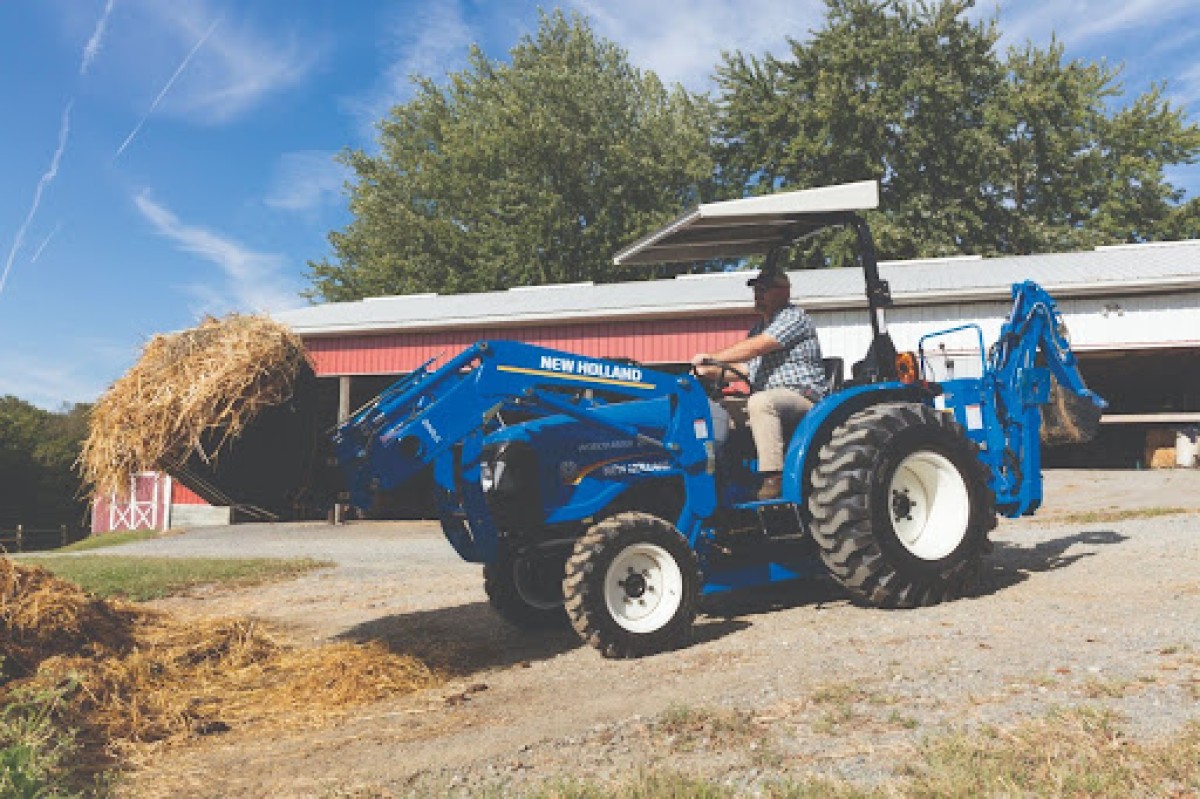
Farm implements are specialized tools and attachments designed to make daily agricultural tasks faster, safer, and less labor-intensive. They improve efficiency by allowing farmers to plant, cultivate, and harvest more precisely.
For example, using the proper implements can significantly cut working hours, reduce fuel consumption, and maximize yields. Yet, global adoption still has room to grow. Only 18% of global farm households have access to tractor-powered equipment, while the rest depend on hand tools or animal traction. This shows how small farms can gain a competitive edge by adopting modern implements.
Equally important is selecting the right tractor to power these tools. Compact tractors are lightweight and highly adaptable, ideal for smaller farms, while utility tractors provide higher horsepower for heavy-duty fieldwork.
Farm Implements: What Are They?
Farm implements are essential tools that make agriculture faster, safer, and more productive. These attachments and machines save valuable time, reduce reliance on manual labor, and bring consistency to farming operations.
Instead of relying solely on the workforce, farmers can harness implements to prepare land, plant seeds, harvest crops, and transport goods precisely.
Mechanization has a direct link to productivity. This improvement is critical for small-scale farmers, as labor shortages and narrow planting or harvesting windows often limit success. Implements ensure tasks are completed quickly and on schedule.
As farming evolves, the role of implements continues to grow. To understand their importance, it’s helpful to explore the key categories and the tools that drive efficiency at each production stage
Key Categories of Farm Implements
Farm implements generally fall into four categories:
-
Soil preparation: Tools that prepare fields for planting.
-
Planting: Equipment that ensures precise seed placement.
-
Harvesting: Machines that speed up crop collection and minimize losses.
-
Material handling: Implements that move crops, feed, and other goods.
Each stage plays a unique role in farming. Together, they create a streamlined workflow that maximizes output and reduces waste. Adopting even one implement in each category can significantly improve efficiency and profitability for small farms.
Implements for Soil Preparation
Preparing the soil is the foundation of successful farming. Without proper groundwork, seeds may not germinate evenly, and crops can struggle to thrive. Soil preparation implements loosening and leveling the land, improving aeration, and incorporating organic matter.
Key tools include:
-
Plows: Break up compacted soil and turn over residues, creating a fresh seedbed.
-
Harrows: Smooth the surface after plowing, breaking clods, and leveling fields.
-
Tillers: Compact, versatile machines that mix soil, making them especially useful for smaller plots.
For example, with a tiller a farmer can prepare an acre of land in just a few hours, which might take days if done with hand tools. Proper soil prep doesn’t just save time; it also improves plant health. This is why soil implements are often the first investment for small farmers transitioning to mechanization. They immediately boost productivity and set the stage for better planting outcomes.
Implements for Planting
Once the land is prepared, precise planting becomes the next critical step. Planting implements ensure seeds are placed at the correct depth and spacing, reducing waste and promoting uniform crop stands.
Standard planting tools include:
-
Planters: Place seeds at consistent intervals with minimal waste.
-
Seed Drills: Sow seeds in evenly spaced rows, improving germination rates.
-
Broadcast Spreaders: Distribute seeds or fertilizer across a wide area, ideal for cover crops or small grains.
For instance, a small farm using a seed drill can cut labor requirements by more than half. The FAO notes that mechanized planters and drills can reduce labor needs by 50–75% compared to hand seeding. This not only saves time but also ensures more consistent growth, leading to higher yields.
These tools are invaluable for small farms with limited labor. Instead of spending days on manual planting, farmers can focus on managing crop care and planning for the next season.
Implements for Harvesting
Harvest season is often the busiest and most stressful time on a farm. Crops must be collected quickly to prevent losses from weather, pests, or spoilage. Harvesting implements reduce these risks by making the process faster and more efficient.
Examples include:
-
Balers: Compress hay, straw, or forage into transportable bales.
-
Sickle Bar Mowers are affordable for cutting grass or forage and are well-suited to smaller farms.
-
Small Combines: Compact harvesters that cut, thresh, and clean grain crops in a single pass.
An arXiv study on robotic berry harvesters shows that manual harvesting may result in up to 85% loss of marketable berries due to touch damage. Still, the robotic gripper system achieved about 95% reliability, dramatically lowering the damage rate.
Implements for Material Handling
After planting and harvesting, farmers still have to move crops, feed, and supplies. Material handling implements make this process more efficient and less labor-intensive.
Key tools include:
-
Loaders: Used for lifting soil, hay bales, or feed.
-
Pallet Forks: Move stacked goods or heavy supplies safely.
-
Trailers: Transport crops, equipment, or livestock feed across the farm.
While material handling may seem secondary, it saves time and reduces physical strain. For instance, trailers cut down on repeated trips across fields, while loaders streamline daily feeding tasks. USDA ERS data indicate that mechanization and technological advancements significantly reduced labor hours.
From 1948 to 2017, labor hours fell by 83% in U.S. agriculture while employment dropped by 81%. This underscores the profound impact of mechanization, even if it doesn’t expressly assign a 25% labor-cost reduction. These savings are critical for small farms with limited staff. By investing in a loader or trailer, farmers free up time for other high-value activities like planning, marketing, or improving soil health.

Top 7 Implements Every Small Farm Needs
Small farms thrive when equipped with the right tools. Implementing reduces manual labor and allows farmers to maximize the performance of compact and utility tractors. Below are seven must-have implements that improve efficiency, productivity, and long-term sustainability.
1. Rotary Tiller
A rotary tiller is a powerful soil-preparation tool. Its rotating blades break up compact soil, mix in organic matter, and create a fine seedbed ready for planting. This reduces the need for repeated plowing or manual digging.
Rotary tillers are highly compatible with compact tractors, making them a practical choice for smaller farms with limited acreage. Their efficiency allows farmers to prepare fields quickly, ensuring better soil aeration and moisture retention.
2. Box Blade
A box blade scraper is a versatile attachment for grading, leveling, and clearing land. It consists of heavy steel blades that scrape and move soil, making it helpful in maintaining farm roads, preparing seedbeds, or even spreading gravel.
Farmers often rely on box blades for seasonal field repairs, as they can easily handle rugged terrain. For small farms, this implementation ensures that land remains smooth, accessible, and ready for crop or livestock use.
3. Post Hole Digger
Installing fencing or planting orchard trees can be time-consuming without the right tools. A post-hole digger addresses this challenge by drilling uniform holes in minutes. This implement is ideal for setting fence posts to protect livestock or marking vineyard and orchard layouts. Attached to a compact or utility tractor, it saves countless hours of manual digging and ensures consistent results across the farm.
4. Loader Attachment
The loader is one of the most versatile tractor attachments. It is mounted to the front and acts like a powerful scoop for lifting and transporting materials. Farmers can use it to move soil, gravel, manure, hay bales, or feed bags.
This versatility makes tractor loader attachments worthwhile year-round, from spring planting preparations to winter livestock feeding. For small farms, loaders reduce reliance on manual hauling and speed up essential tasks.
5. Mower or Brush Cutter
Grass and brush management are critical for maintaining healthy pastures and safe farmland. A mower keeps fields neat by trimming grass, while a brush cutter handles more demanding jobs such as removing thick weeds, brush, or small saplings.
This implement improves the appearance of fields, reduces fire risks, and prevents invasive plant growth. Compact tractor owners often find brush cutters valuable for reclaiming unused or overgrown areas.
6. Seeder or Planter
Sowing seeds evenly and at the correct depth is vital for strong germination. Seeders and planters mechanize this process, ensuring uniform rows and better crop stands. Compared to hand-sowing, they save significant time and labor. For small farms, this efficiency means more consistent crops and better use of available land.
7. Sprayer
Sprayers are essential for applying fertilizers, pesticides, or herbicides. Mounted on a tractor, they allow farmers to cover fields quickly while maintaining accuracy in application. This reduces chemical waste and ensures even coverage for healthier crops. For small farms, sprayers save both time and money, while supporting environmentally responsible farming by preventing overuse of chemicals.
How Implements Improve Small Farm Efficiency?
Farm implements transform the operation of small farms. Farmers can increase productivity, cut costs, and boost yield by replacing manual labor with mechanized tools.
-
Labor savings: Implements reduce the need for hand tools and extra workers, allowing one farmer to manage more land.
-
Higher yields: Uniform planting, timely fertilization, and efficient weed control lead to healthier crops.
-
Reduced costs: Mechanization lowers dependency on seasonal labor and reduces wastage of seeds, chemicals, and fuel.
From 1948 to 2021, U.S. agricultural output nearly tripled, while labor input declined by approximately 76 percent. For small farms operating on tight margins, these improvements translate directly into stronger financial stability and long-term sustainability.
Factors to Consider Before Buying Implements
Choosing the proper implementation is about the task at hand and long-term compatibility and efficiency. Farmers must evaluate several factors before investing, as the wrong choice can lead to wasted money, underperformance, or even equipment damage.
Tractor Horsepower Compatibility
Every implement is designed to match a specific power range. For instance, 20–40 HP compact tractors work best with smaller implements like rotary tillers and sprayers. In contrast, utility tractors above 50 HP can handle heavy-duty attachments such as box blades or loaders. If the implement is too large for the tractor’s horsepower, it strains the engine and reduces efficiency.
Farm Size
The scale of the farm determines which implements will bring the most benefit. A small 10-acre vegetable farm may prioritize planters, tillers, and sprayers, while a 100-acre mixed-use farm will see greater value in loaders, balers, or large mowers. Matching implements to acreage prevents both over-investment and underperformance.
Soil Type
Soil texture and condition play a significant role in choosing implements. Sandy soils require lighter tillage tools, while clay soils may need stronger plows and harrows. In conservation farming, no-till seeders preserve soil health while boosting yields. According to the FAO, soil-appropriate mechanization can improve productivity by 20–30% while reducing erosion risks.
Budget Constraints
Farmers must balance the desire for advanced tools with financial limits. While high-quality implements may cost more upfront, cheaper alternatives can wear out quickly and require frequent replacements. Carefully reviewing both short-term affordability and long-term durability is essential.
Farmers can make smarter decisions that align with their operational needs and long-term goals by conducting thorough evaluations.
Cost vs. by evaluating these factors Value of Implements
Buying an implement should always be viewed as an investment rather than a simple purchase. Implements have a direct impact on efficiency, yields, and operating costs. Farmers need to weigh initial expenses against future savings and potential returns.
Upfront Costs
Implements can range from a few hundred dollars for smaller attachments to tens of thousands for advanced machinery. These prices often discourage small farms, but costs should be considered regarding the labor they replace and the yield improvements they deliver.
Long-Term ROI
Well-chosen implements consistently pay for themselves over time. For example, a precision planter may seem costly at purchase but reduces seed waste and increases crop uniformity, directly improving yields. This shift translates into measurable financial gains for farms facing labor shortages.
Resale Value
Unlike many farm inputs, implements retain value if appropriately maintained. A used loader or tiller often sells at a strong resale price because demand for quality attachments remains steady. This resale potential lowers the actual cost of ownership and adds financial security to the investment.
Balancing the Equation
Farmers should not focus solely on price tags but compare the expected return. If an implement saves hundreds of labor hours per year, reduces operating costs, and has resale potential, its actual value far outweighs its upfront cost.
In short, while implements can be expensive, their role in improving efficiency, protecting soil, and boosting yields makes them essential long-term investments for any small farm.

Storage and Maintenance of Implements
Proper storage and maintenance practices extend the lifespan of farm implements and ensure they perform efficiently when needed. Neglecting care often leads to rust, breakdowns, or expensive repairs, which can be avoided with consistent upkeep.
Cleaning Practices
Implements should be cleaned thoroughly after each use. Dirt, plant residue, and fertilizer can accelerate rust or wear. A pressure washer is effective, but sensitive parts such as bearings or seals should be shielded from excess water.
Tanks and hoses should be rinsed with clean water, and essential equipment used with chemicals, like sprayers, should be rinsed with clean water to prevent clogging and corrosion.
Storage Solutions
Keeping implements in a sheltered, dry area is one of the best ways to prevent weather damage. A covered shed or barn protects metal parts from rain and direct sunlight, which can weaken components over time.
Tarps or raised pallets can still provide partial protection for farmers without enclosed storage. Seasonal storage should include draining fluids, lubricating moving parts, and disconnecting power-driven components to avoid tractor strains.
Servicing and Maintenance
Routine inspections are vital. Farmers should check for worn blades, loose bolts, or cracked welds before each use. Regular oiling and greasing help reduce friction and prolong part life.
A service log ensures no step is missed and helps maintain resale value when the implementation is no longer needed. Together, these practices ensure small farm implements stay reliable season after season, saving money and avoiding operational delays.
Future of Implements for Small Farms
The landscape of small farm mechanization is rapidly evolving. Technology is reshaping how implements are designed and used, with new tools to make farming more precise, efficient, and sustainable.
Precision Implements
Precision farming equipment uses GPS and sensor technology to apply extremely accurate inputs like seeds, fertilizers, and pesticides. For example, precision planters can reduce seed waste and optimize spacing, leading to higher yields.
As per data from the USDA Economic Research Service, around 40% of U.S. corn and soybean acreage used yield mapping tools in recent years, reflecting meaningful adoption of precision agriculture technologies. This demonstrates how smaller farms are also beginning to benefit from technology once reserved for large operations.
Miniaturized Equipment Trends
Smaller, lighter machines are becoming increasingly important for small farms. Mini-tractors, compact robotic seeders, and portable harvesters allow farmers to work efficiently on limited acreage. These tools reduce soil compaction and are often more affordable than larger machinery.
According to the FAO, miniaturized equipment has become crucial to sustainable farming in regions with shrinking landholdings. It enables farmers to boost output without over-investing in oversized equipment.
The Road Ahead
Future implements will combine precision, automation, and compact design. For small farms, this means greater access to tools that maximize productivity while minimizing costs and environmental impacts. Farmers who adopt these innovations early will likely see significant advantages in efficiency and profitability.

Ready to Boost Your Farm’s Efficiency with the Right Implements?
Choosing the proper implements is one of the smartest investments for small farm owners. From ensuring compatibility with tractor horsepower and soil type to balancing upfront costs with long-term value, every decision directly impacts efficiency and profitability. Proper storage and maintenance practices keep equipment reliable season after season, while the future of farming points toward precision, AI-enabled, and compact solutions that further reduce labor and increase yields.
At H&R Agri Power, we make it simple to access the must-have implements that transform small farms into productive, sustainable operations. Whether you’re looking to explore equipment options or flexible financing plans, our team is here to help you find solutions tailored to your land and goals.
Start browsing our wide range of farm implements today with H&R Agri Power and take the next step toward more innovative, efficient farming.
Frequently Asked Questions
What is the most important implement for small farms?
The answer depends on the primary tasks of your farm. A rotary tiller is essential for most growers because it prepares soil efficiently for planting. Others may find a box blade more critical, as it levels and maintains farm roads or fields. The “most important” implement is the one that solves your farm’s biggest challenge first.
Can compact tractors handle most small farm implements?
Yes, compact tractors are designed for small farms. If your tractor’s horsepower rating and 3-point hitch system match the implement’s requirements, most common tools, such as tillers, mowers, and loaders, will work effectively. Always check manufacturer guidelines before purchasing.
How much do small farm implements cost?
Prices vary widely based on the type and size of the implement. Entry-level tools, such as small seeders, may cost around $500, while larger or more complex attachments like sprayers or loaders can reach $5,000 or more. While the upfront cost is significant, many implements retain good resale value if appropriately maintained.
Do small farms really need sprayers?
Yes. Even at a small scale, a sprayer effectively manages pests, weeds, and crop nutrition. Without it, farmers often spend more on manual labor or face reduced yields due to untreated fields. Using the right sprayer ensures healthier crops and more consistent harvests.
How many implements should a small farm own?
A typical small farm benefits from 3 to 5 core implements, such as a tiller, mower or brush cutter, loader attachment, and seeder. Additional tools like a sprayer or post-hole digger can be added based on farm size, crops, and operational goals. Start with the essentials, then expand as your farm grows.
What is the most common farm implement?
The most common farm implement is the plow. Plows are used to turn over the soil, prepare seedbeds, and control weeds. Other widely used implements include harrows, seeders, cultivators, and sprayers, depending on the type of farming and crops.
What tractor implements do I need for a garden?
For garden-scale work, compact tractors can handle a variety of implements to make tasks easier:
-
Rotary tiller or cultivator – For preparing and aerating soil.
-
Plow – For turning soil in larger garden plots.
-
Seeder or planter – To plant seeds efficiently.
-
Front-end loader or bucket – For moving soil, compost, or mulch.
-
Mower or brush cutter – To keep garden paths and lawns trimmed.
-
Harrow – To break up soil clumps and level beds.