

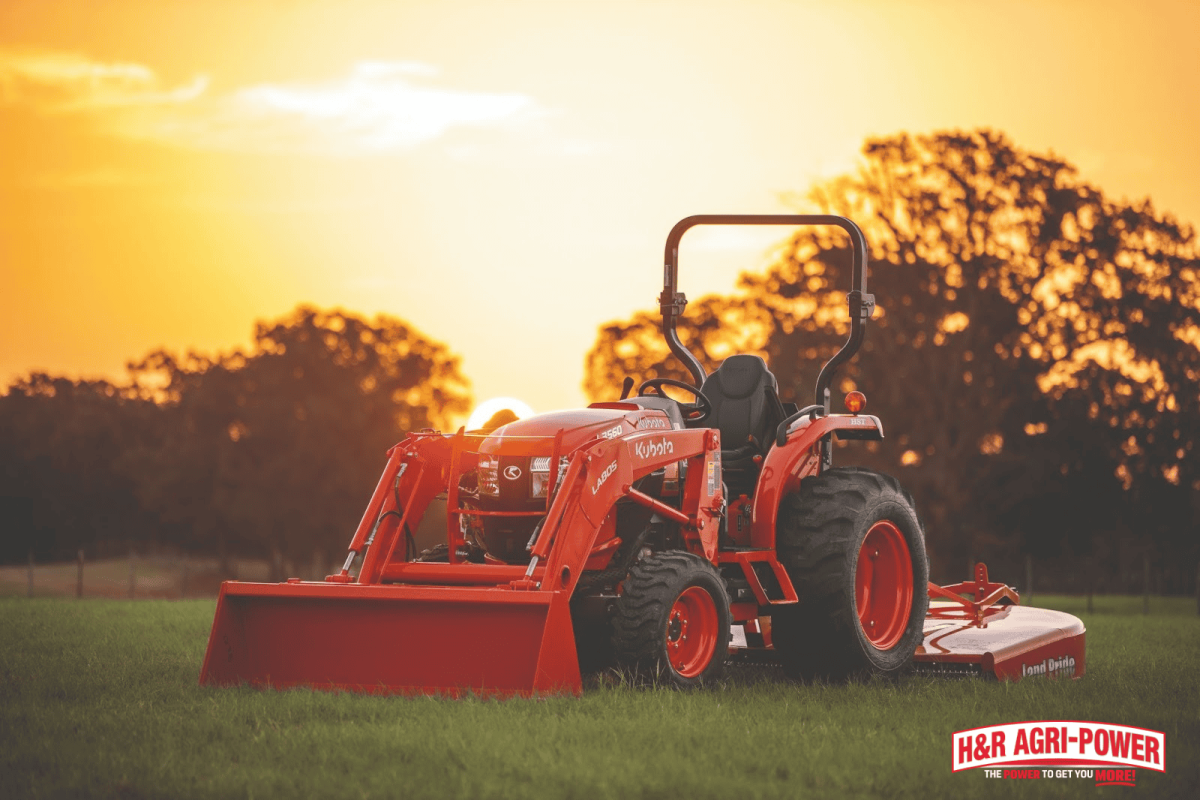
Kubota Tractor Selection Guide for Tennessee’s Small and Large Farms
Selecting the right tractor is crucial for Tennessee farmers, as it significantly impacts productivity, efficiency, and long-term costs. A tractor serves as the backbone of farm operations, from soil cultivation and hauling to powering implements.
According to the Tennessee Department of Agriculture, over 85% of Tennessee’s farmers use tractors for daily agricultural tasks. This blog provides a detailed analysis of Kubota tractors suitable for small and large farms in Tennessee, considering terrain, climate, crop types, and operational needs. By the end, readers will have actionable insights to select tractors that maximise efficiency and productivity.
Understanding Tennessee’s Agricultural Landscape
Tennessee’s agricultural landscape is highly diverse, encompassing humid lowlands, rolling hills, and mountainous regions. This diversity directly affects tractor selection, as different terrains and climates require tractors with varying power, stability, and versatility. Farms in western Tennessee often have fertile clay and loam soils, suitable for row crops such as soybeans and corn. Meanwhile, the eastern mountainous regions require tractors that can handle slopes, uneven terrain, and rocky soils.
The climate also plays a critical role. Tennessee experiences humid summers with frequent rainfall, which can slow field operations and affect tractor traction. Tractors operating in high-moisture soils require adequate ground clearance, durable tires, and proper weight distribution to avoid soil compaction and rutting. Additionally, mild winters allow for year-round operation but require machinery that can handle seasonal variability, including wet spring fields and dry summer conditions.
Key considerations for Tennessee farmers include:
-
Soil compatibility: Select tires and ballast appropriate for clay, loam, or sandy soils.
-
Terrain adaptability: Ensure tractors can handle slopes, hills, and uneven ground.
-
Climate resilience: Choose models that perform efficiently in humid, rainy conditions.
-
Crop types: Tractors should support implements needed for both row crops and forage production.
Understanding the local agricultural landscape enables farmers to select tractors that minimize downtime, protect soil health, and optimize performance for both small- and large-scale operations.
Why is understanding the local landscape critical for tractor selection?
The right tractor must be adaptable to soil type, terrain, and weather conditions to maintain operational efficiency and long-term farm productivity.
Assessing Farm Size and Operational Needs
Farm size and operational scope directly influence tractor selection. Tennessee farms range from small hobby farms under 50 acres to large commercial farms exceeding 500 acres. Each category has unique requirements regarding tractor horsepower, attachments, and versatility.
Small Farms (Under 50 Acres)
-
Ideal tractors are sub-compact and compact models, such as Kubota's BX and B Series.
-
These tractors are maneuverable, allowing operations in tight spaces such as orchards and garden plots.
-
Common tasks include mowing, tilling, light hauling, and snow removal.
-
Advantages include lower initial cost, fuel efficiency, and ease of storage.
Medium to Large Farms (50–500 Acres)
-
Require utility tractors such as Kubota L Series.
-
Tasks include plowing, planting, hay baling, and heavier hauling.
-
Must accommodate larger implements like box blades, front loaders, and rear-mounted equipment.
-
Hydraulic flow and lift capacity become critical for attaching versatile implements.
Large-Scale Operations (Over 500 Acres)
-
High-horsepower tractors like the Kubota M Series are necessary.
-
These tractors handle intensive row crop production, large hay fields, and heavy hauling.
-
Equipped with advanced transmission options, GPS, and high-capacity hydraulics.
-
Efficiency in fuel usage, speed, and implement handling is essential for profitability.
Key Considerations
-
Primary farm tasks: mowing, hauling, tilling, planting, or hay production.
-
Annual work hours: frequent use demands higher durability and service support.
-
Flexibility for future expansion: choosing a tractor that can scale with farm growth.
Why does farm size matter for tractor choice?
Because the wrong tractor can either underperform on large operations or be unnecessarily expensive and cumbersome for small-scale farms, impacting efficiency and ROI.
Key Tractor Specifications for Tennessee Farms
Selecting a tractor requires evaluating horsepower, transmission, lift capacity, hydraulic flow, and PTO to match operational needs.
Horsepower Requirements
-
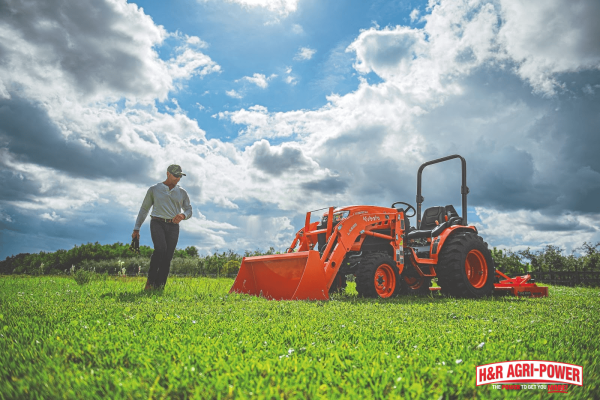
Small farms: 20–40 HP for mowing, tilling, and light-duty tasks.
-
Medium farms: 40–70 HP for field work and medium-duty hauling.
-
Large farms: 70–110+ HP for heavy-duty operations such as plowing and hay production.
Transmission Types
-
Manual Transmission: precise control, durable, low maintenance.
-
Hydrostatic Transmission: smooth operation, ideal for repetitive tasks like mowing.
-
Powershift Transmission: combines control and speed, suitable for heavy-duty farm operations.
Lift Capacity and Hydraulic Flow
-
Determines the ability to use loaders, backhoes, and rear implements.
-
Higher lift capacity supports larger attachments and improves efficiency.
-
Kubota models provide hydraulic systems ranging from 6–24 GPM, depending on model size.
PTO (Power Take-Off) Considerations
-
PTO drives implements like mowers, balers, and tillers.
-
Match PTO horsepower with implement requirements to avoid underperformance.
Additional Technical Considerations
-
Tire size and traction for Tennessee soils.
-
Ground clearance for hilly or uneven terrain.
-
Fuel efficiency to reduce operating costs.
-
Optional cab features for operator comfort.
Implement Compatibility and Versatility
Implement compatibility is a critical factor when selecting a Kubota tractor for Tennessee farms. Tractors are most efficient when paired with the right implements, and Tennessee’s diverse agricultural practices, ranging from row crops to hay and forage, require careful matching.
Common Implements Used in Tennessee Agriculture
-
Plows and Harrows: For soil preparation, breaking up compacted clay and loam soils common in western Tennessee.
-
Mowers and Rotary Cutters: Used for hay, pasture maintenance, and clearing fields. Hydrostatic transmission tractors often excel here.
-
Balers and Rakes: Essential for hay production; tractors must provide adequate PTO and hydraulic support.
-
Front Loaders: For moving soil, feed, or hay bales. Lift capacity and hydraulic flow are critical for safety and efficiency.
-
Seeders and Planters: Precision planting requires compatible hitch types and PTO alignment.
Considerations for Tractor-Implement Matching
-
PTO Compatibility: Ensure the PTO horsepower matches the implement requirements. For instance, larger hay balers require higher PTO output.
-
Hydraulic Capacity: Implements such as loaders and backhoes rely on sufficient hydraulic flow. Check tractor specifications for GPM ratings.
-
Hitch Systems: Kubota tractors offer Category 1, 2, or adjustable 3-point hitches. Matching the hitch category ensures stability and performance.
-
Weight and Stability: Heavy implements require tractors with proper ballast and stability to prevent tipping or soil damage.
Operational Benefits of Versatility
-
Efficiency: Properly matched implements reduce field passes and labor.
-
Cost Savings: Avoids over-investing in equipment incompatible with existing tractors.
-
Future-Proofing: A versatile tractor can accommodate new implements as farm operations expand.
Why is implementation compatibility crucial for Tennessee farmers?
Mismatched equipment can reduce efficiency, increase fuel consumption, accelerate wear, and compromise crop quality. Selecting tractors with compatible specifications ensures optimal performance across a wide range of tasks.
Fuel Efficiency and Environmental Considerations
Fuel efficiency and environmental compliance are increasingly critical for Tennessee farmers. With rising fuel costs and stricter environmental regulations, choosing a tractor that balances power with efficiency is essential.
Fuel Economy Considerations
-
Kubota’s modern engines are designed for Tier 4 Final EPA compliance, reducing emissions while maintaining high torque.
-
Compact tractors typically consume less fuel due to lower horsepower requirements.
-
High-horsepower tractors benefit from advanced fuel injection systems and hydrostatic transmissions that optimize efficiency during heavy tasks.
-
Fuel-saving practices include matching tractor size to tasks, avoiding unnecessary idling, and performing regular maintenance.
Environmental and Sustainability Considerations
-
Emissions Compliance: Tractors must meet federal and state emissions regulations. Tier 4 engines reduce particulate matter and NOx emissions.
-
Soil Health: Fuel-efficient tractors are lighter and reduce soil compaction, preserving soil structure.
-
Sustainable Practices: Integrating GPS-guided precision farming reduces overlaps, fuel use, and greenhouse gas emissions.
Additional Tips for Tennessee Farms
-
Utilize tractor attachments that minimize passes, such as combined mowing and baling equipment.
-
Conduct fuel audits to monitor consumption trends.
-
Select tractors with efficient PTO and hydraulic systems to maximize implement power while minimizing fuel consumption.
Explore the Best Kubota Tractors for Your Farm – Get Started Now
Choosing the right Kubota tractor for a Tennessee farm depends on farm size, terrain, soil, and operational needs. Small farms benefit from compact B Series tractors for light-duty tasks, while medium and large farms often require L or M Series models for heavier work and multiple implements. Key factors include horsepower, transmission, lift capacity, hydraulic flow, implement compatibility, and fuel efficiency. Regular maintenance, dealer support, and financing options help ensure long-term reliability. Partnering with H&R Agri-Power provides expert guidance, quality tractors, and dependable service to help farms of all sizes thrive.
Frequently Asked Questions
What Size Kubota Tractor Is Best for a 25-Acre Tennessee Farm?
For a 25-acre farm, a compact B Series Kubota tractor is ideal. It provides enough horsepower for mowing, light tilling, and hauling, while being easy to manoeuvre and store.
Can Kubota Tractors Handle Hilly Terrain?
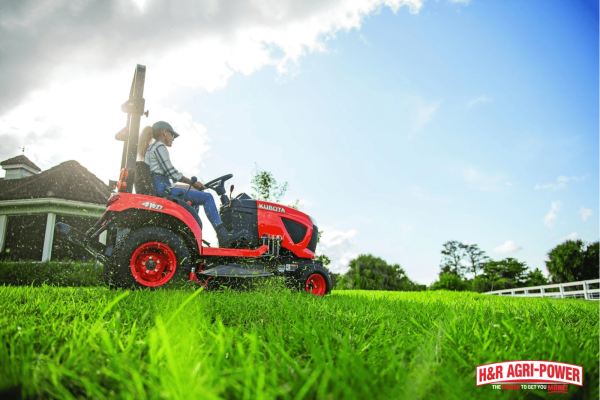
Yes, 4WD Kubota tractors with proper tires can handle slopes and uneven ground safely, offering stability and traction for various farm tasks.
How Often Should Maintenance Be Done on Kubota Tractors?
Regular maintenance is essential. Basic checks like engine oil and filters should be done every 100 hours, transmission and PTO every 250 hours, and a full service annually to ensure long-term reliability.
Are Kubota Tractors Compatible With Implements From Other Brands?
Yes, as long as PTO, hitch, and hydraulic connections match. Most standard implements can be used safely, offering flexibility for farmers.
What Financing Options Are Available for Tennessee Farmers?
Farmers can access USDA loans, dealer financing, or leasing options. These provide flexible payment plans to make acquiring a tractor easier and more affordable.