

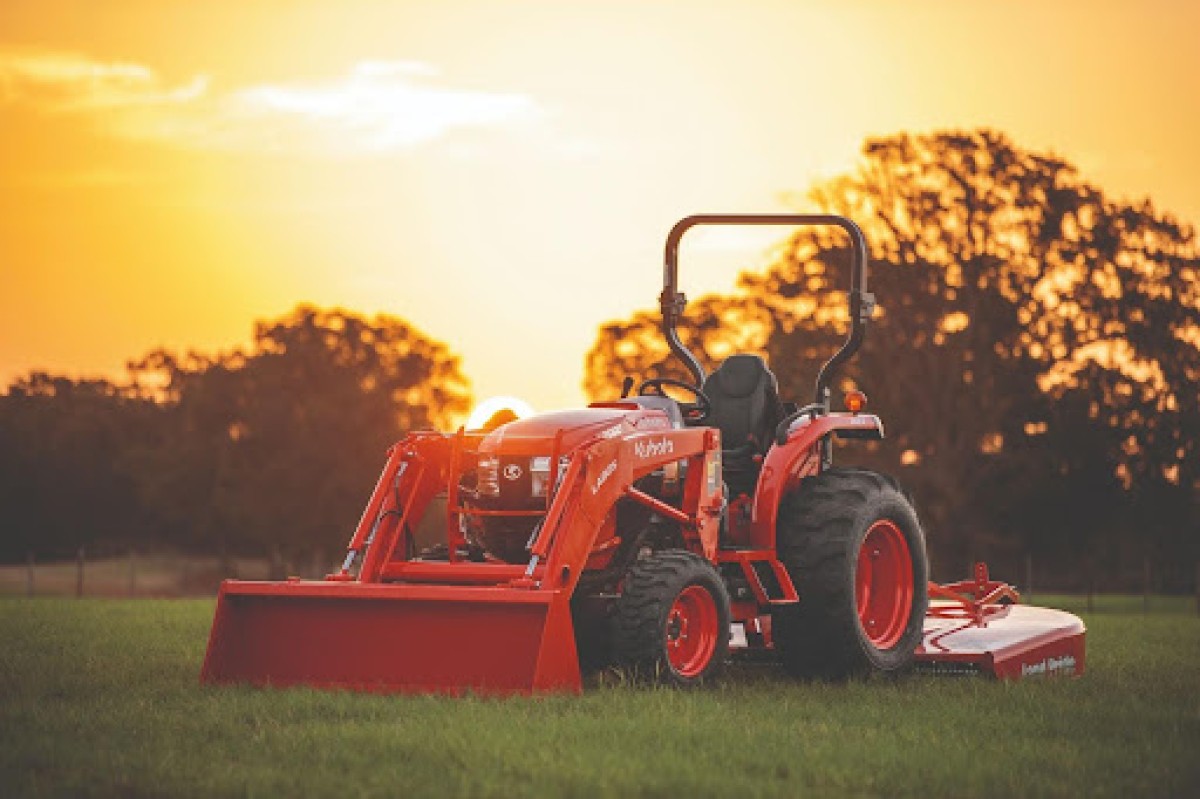
Choosing between a compact and a utility tractor is one of the most critical decisions for farmers, landowners, and property managers. Compact tractors, usually around 25-40 HP, are ideal for mowing, landscaping, hauling, and small-scale farming.
Utility tractors, ranging from 40-100 HP, provide the extra strength needed for plowing, heavy loader work, and handling larger implements. Understanding these differences matters because the wrong choice can lead to higher costs, underutilized equipment, or reduced job efficiency.
Market data also shows how significant this decision is. In 2023, tractors under 40 HP represented 62.2% of all U.S. tractor sales, reflecting the widespread preference for compact models among small farms and rural property owners. This trend demonstrates that while utility tractors remain vital for heavier agricultural operations, compact tractors dominate overall demand.
This article explores the key differences between compact and utility tractors.
What Is a Compact Tractor?
Compact tractors are scaled-down versions of standard agricultural tractors. Typically rated between 20 and 60 horsepower, they are designed for tasks that require versatility rather than raw strength. They are often the first choice for small farmers, landscapers, vineyard operators, and homeowners managing multiple acres.
This dominance shows that compact tractors meet the needs of a wide range of users beyond traditional farms, including rural estates, hobby farms, and municipal grounds crews.
Features of Compact Tractors
Compact tractors are engineered for balance, small enough for maneuverability but powerful enough for everyday jobs. Key features include:
-
Compact Dimensions: Narrow frames and shorter wheelbases suit orchards, vineyards, and properties with obstacles.
-
Responsive Handling: Their lightweight and tight turning radius allows operators to work in confined areas where utility tractors cannot fit.
-
Fuel Efficiency: A smaller engine means less fuel burned per hour, reducing costs for routine work.
-
Versatile Implement Support: Attachments such as front loaders, backhoes, rotary cutters, and tillers expand their role beyond basic hauling.
For example, a vineyard owner might choose a compact tractor specifically because its narrow frame fits neatly between rows of vines without damaging crops.
Common Uses of Compact Tractors
Compact tractors shine in the everyday management of small to medium-sized properties. Their most frequent uses include:
-
Landscaping: Mowing large lawns, grading driveways, or spreading gravel.
-
Small-Scale Farming: Tilling soil for vegetable plots, spraying orchards, or planting cover crops.
-
Light Hauling: Transporting mulch, harvested produce, or animal feed around a property.
-
Maintenance Work: Clearing snow in winter or moving firewood during the colder months.
Consider a five-acre property: one compact tractor can handle lawn mowing in summer, till a garden in spring, and plow snow in winter. Instead of buying multiple machines, landowners rely on one tractor with the correct implements.
Benefits of Compact Tractors
Compact tractors deliver measurable advantages for specific users:
-
Lower Purchase Price: They cost significantly less than utility tractors, making them accessible to first-time buyers and small farm operators.
-
Operating Cost Savings: Their efficient engines reduce fuel and maintenance expenses over the years of use.
-
Ease of Storage: Their smaller size means they fit into a standard garage, unlike utility tractors, which require dedicated barns.
-
Beginner-Friendly Controls: Many models have simplified steering and gear options, allowing less experienced operators to work safely.
-
Year-Round Utility: The right attachments remain useful throughout the year, from mowing and tilling to snow removal.
This combination of affordability and adaptability explains why compact tractors dominate the U.S. sales market. They offer a practical balance for those who do not need heavy-duty horsepower.
Limitations of Compact Tractors
Despite their many strengths, compact tractors are not designed to replace larger machines. Their main limitations include:
-
Horsepower Constraints: At 20–60 HP, they cannot pull large plows, heavy balers, or multi-row planting equipment.
-
Hydraulic Power Limits: Compact tractors have lower lift capacity, so moving large bales or heavy logs may not be possible.
-
Efficiency on Large Farms: Compact tractors can become inefficient on operations covering hundreds of acres because tasks take too long.
-
Attachment Restrictions: Some larger implements require higher PTO horsepower than compact tractors can provide.
Recognizing these limits helps buyers avoid overestimating a compact tractor’s capabilities. Compact tractors excel when matched with smaller properties, orchards, or hobby farms, but a utility tractor is the better fit for extensive commercial agriculture.

What Is a Utility Tractor?
A utility tractor is a versatile machine built to handle demanding farm work. Unlike compact tractors, which are designed for light to medium tasks, utility tractors typically range between 40 and 100 horsepower (HP).
This makes them powerful enough to manage larger fields, haul heavy loads, and operate implements that require high torque and advanced hydraulics.
These tractors are commonly seen on mid-sized and large farms where scale and productivity matter. Sales for 2WD 40–100 hp tractors in July were up 0.8%, with 5,146 sales in 2025 and 5,107 in 2024.
Year-to-date, AEM reports 29,465 tractors sold in this category, down 6.3% from 31,459 at the same time last year. The two-wheel drive, 40–100 hp tractor inventory began at 28,402 in July. Farmers rely on utility tractors because they balance raw power and adaptability.
Features of Utility Tractors
Utility tractors stand out for their strength and durability. Some of their key features include:
-
Weight and Power: Heavier builds give them traction and stability, even when pulling large implements through tough soils.
-
Durability: Frames, engines, and drivetrains are designed to withstand years of continuous use on demanding tasks.
-
Hydraulic Systems: Strong hydraulic setups allow farmers to use attachments such as plows, balers, and sprayers.
-
Size: They are larger than compact tractors, enabling them to cover more ground quickly.
These design elements make utility tractors suitable for jobs that require sustained power and reliability.
Common Uses of Utility Tractors
Because of their horsepower and attachment options, utility tractors are widely used in diverse farming operations. Farmers typically rely on them for:
-
Tillage and Soil Prep: Preparing large fields for planting by pulling plows, harrows, and seed drills.
-
Livestock Operations: Transporting heavy feed, cleaning pens, or lifting and moving hay bales.
-
Harvesting Support: Pulling wagons and powering balers during harvest seasons.
-
Hauling Loads: Moving equipment, trailers, or produce over long distances.
Utility tractors act as a central workhorse on larger farms where efficiency and scale are critical.
Benefits of Utility Tractors
Utility tractors are highly valued because they deliver:
-
Versatility: Suitable for both crop farming and livestock operations.
-
Strength: Ability to perform heavy tasks that compact tractors cannot manage.
-
Implement Compatibility: Works with a wide range of large-scale implements.
-
Time Efficiency: Faster field coverage reduces labor hours.
A utility tractor is often the best investment for farmers who want a single machine that can handle multiple heavy-duty jobs.
Limitations of Utility Tractors
Despite their many advantages, utility tractors are not ideal for every farm. Their limitations include:
-
High Cost: They require larger initial investments and higher maintenance budgets.
-
Storage Needs: Their size makes them harder to store, especially on smaller farms.
-
Fuel Consumption: Larger engines use more fuel, adding to operating costs.
These trade-offs may be unsuitable for hobby farmers or those managing small plots.

Compact vs Utility Tractors: A Detailed Comparison
When deciding between compact and utility tractors, it’s essential to consider how their differences align with specific farm needs. Compact tractors are more efficient for smaller-scale operations, while utility tractors are designed for farms where power and versatility are essential. Below, each factor is broken down to help farmers make an informed choice.
Size and Horsepower
Compact tractors usually range between 20 and 60 HP, making them easier to maneuver and store. They are light enough for residential or small-scale agricultural work, such as mowing, gardening, or landscaping.
Utility tractors, on the other hand, begin around 40 HP and go beyond 100 HP. This added power allows them to pull heavy equipment, manage large acreages, and work longer hours without strain. Their weight provides traction for heavy loads but also means they are less suited for confined spaces.
A 20-acre property with mixed gardening and light farming would benefit from a compact tractor. In contrast, a 200-acre farm with field crops or livestock would require the horsepower and durability of a utility tractor.
Implements and Attachments
Attachments are often the deciding factor in which tractor type to purchase.
Compact tractors excel with front-end loaders, mid-mount mowers, small tillers, and backhoes. These implements are ideal for light farming, grounds maintenance, or landscaping projects.
Utility tractors, however, are built to operate large plows, balers, sprayers, and heavy-duty loaders. They can handle equipment that compact models don’t have the horsepower for.
This difference directly affects a farmer’s ability to scale operations. A small-scale grower may never need a baler, but for livestock farmers, the ability to operate one is essential.
Cost Considerations
Cost is another factor that differentiates compact and utility tractors. Compact tractors are generally less expensive and have lower insurance, fuel, and maintenance costs. Their resale value is substantial among hobby farmers and landscapers, making them a relatively safe investment.
Utility tractors require a larger upfront cost, and financing terms can be more demanding. Maintenance, parts, and fuel costs are also higher. However, these expenses are justified for larger farms by their ability to cover more acres and reduce labor hours. The long-term productivity of a utility tractor often outweighs the higher price.
Fuel Efficiency and Maintenance
Compact tractors are more fuel-efficient because of their smaller engines. Their servicing requirements are simpler, which makes maintenance less expensive. For small farmers, this efficiency is an attractive advantage.
Utility tractors, while more powerful, burn more fuel per hour. Their advanced hydraulic systems and larger engines also require more frequent servicing. This leads to higher ongoing costs, but the trade-off is the ability to complete heavy-duty tasks that compact tractors cannot manage.
Ease of Operation
Compact tractors are easier for beginners to operate. Their lightweight build, simple controls, and maneuverability make them approachable for new farmers or those using them on residential properties.
Utility tractors are more complex. Operators often need to manage multiple hydraulic controls and navigate larger implements. This learning curve may discourage part-time users, but it is manageable for full-time farmers needing advanced functionality.
Durability and Longevity
Compact tractors are durable when used within their capacity. They last for years on light tasks but can wear down quickly under heavy, continuous workloads. Utility tractors, by contrast, are built for resilience. With proper care, they can last decades while handling rigorous fieldwork. Their engines, frames, and transmissions are designed to support consistent, heavy use over long hours and across multiple farming seasons.
Choosing between compact and utility tractors depends on the scale and demands of the farm. Compact tractors are efficient, affordable, and easy to handle, making them perfect for small farms, landscaping, and light agricultural work. With their strength, durability, and broad implement compatibility, utility tractors are better suited for large-scale farming and livestock operations.
Farmers should evaluate acreage, type of work, and budget before deciding. Compact tractors offer efficiency and savings for smaller properties under 50 acres. Utility tractors remain superior for larger operations where time and productivity are critical.
How to Choose the Right Tractor for Your Farm
Selecting between a compact or utility tractor requires a thoughtful approach. Each farm is unique, so the best choice depends on acreage, workload, and long-term goals.
According to the USDA’s 2024 Farm Production Expenditures report, the Tractor and self-propelled machinery category accounted for $21.0 billion, or 4.4% of total U.S. farm production expenditures, making it one of the largest single equipment spending categories. This highlights why careful planning before purchase is essential.
Here is a step-by-step framework to guide the decision:
-
Assess Farm Size: Smaller properties under 50 acres benefit from compact tractors, while farms over 100 often require a utility tractor’s strength.
-
Evaluate Workload: Identify daily and seasonal tasks. A compact model works for mowing, landscaping, or light hauling jobs. A utility tractor is necessary for tillage, baling, or heavy transport.
-
Set a Budget: Consider not only the purchase price but also fuel, storage, insurance, and long-term maintenance. Utility tractors demand higher ongoing costs.
-
Examine Terrain: Hilly or uneven land may call for the stability of a heavier utility tractor. Flat or residential terrain is well-suited for compact tractors.
-
Plan for Future Needs: Think beyond immediate tasks. A growing farm might outgrow a compact tractor, making a utility option more cost-effective in the long run.
For a more detailed guide, read our article on How to Choose the Right Tractor, which covers in-depth selection strategies.
Pros and Cons: Compact vs Utility Tractors
While both tractor types serve valuable roles, they have distinct advantages and drawbacks. Understanding these points makes aligning your investment with your farm’s realities easier.
Pros of Compact Tractors
Here are some pros of compact tractors:
-
Lower purchase price and reduced operating costs.
-
Easy to maneuver in tight areas like orchards, barns, or residential plots.
-
Lightweight design minimizes soil compaction, which benefits smaller farms and gardens.
-
Simple controls make them beginner-friendly.
-
Fuel-efficient compared to larger models.
-
Easier to store in small sheds or garages.
Cons of Compact Tractors
The following are the cons of compact tractors:
-
Limited horsepower (20–60 HP), restricting heavy-duty capabilities.
-
Cannot operate large-scale implements like balers or large plows.
-
It is less durable under prolonged, heavy workloads.
-
Smaller lifting capacity limits their use in livestock operations.
Pros of Utility Tractors
Here are some pros of the utility tractors:
-
Higher horsepower (40–100+ HP) enables them to handle demanding jobs.
-
Stronger hydraulic systems support a wider range of attachments.
-
Suitable for both crop production and livestock tasks.
-
Greater durability and longevity under continuous use.
-
Efficient for covering larger acreages in less time.
Cons of Utility Tractors
Here are some cons of utility tractors:
-
Higher upfront purchase price and costlier long-term maintenance.
-
Larger engines consume more fuel, raising operational expenses.
-
Require more space for storage and maneuvering.
-
Steeper learning curve for operators unfamiliar with advanced controls.
Compact tractors are practical, affordable, and efficient for small farms and light tasks. Utility tractors, while more expensive and fuel-intensive, are indispensable for larger farms that demand power, versatility, and durability. The choice depends on balancing farm size, workload, and future expansion goals.

Best Use Cases for Each Tractor
Every farm has unique needs, and choosing between compact and utility tractors depends on matching their strengths to the type of operation. Compact tractors thrive in smaller settings, while utility tractors excel in more demanding environments.
Compact tractors are most effective in:
-
Hobby Farms and Small Acreage: Their 20–60 HP horsepower range makes them well-suited for owners managing gardens, orchards, or less than 50 acres.
-
Residential and Landscaping Work: Compact size and maneuverability make them ideal for mowing, hauling light loads, or operating front-end loaders.
-
Light Agricultural Tasks: Small-scale tillage, planting, or irrigation support can be handled efficiently.
Because they are easier to store and more fuel-efficient, compact tractors are the go-to option for part-time farmers and landowners who need versatility without heavy-duty power.
Utility tractors, on the other hand, deliver value in:
-
Livestock Operations: Their lifting capacity and ability to run hay balers or feed wagons make them indispensable for dairy or cattle farms.
-
Row Crop Farming: With horsepower often exceeding 100 HP, they can manage large implements for plowing, planting, and spraying across hundreds of acres.
-
Large Acreage Farms: Utility tractors are best for properties above 100 acres. They are designed to cover more ground in less time.
For farmers working with scale and heavy-duty demands, utility tractors offer the durability and strength needed to maintain efficiency season after season.
Future Trends in Farm Tractors
The tractor industry is undergoing rapid transformation. Shifts in technology, sustainability goals, and global demand are shaping the next generation of farm equipment. Farmers today are comparing compact and utility tractors and considering how innovation will affect their future investments.
Rise of Electric Compact Tractors
One major trend is the rise of electric compact tractors. Designed to reduce fuel costs and emissions, these models are gaining attention among small-acreage farmers and vineyards. They provide:
-
Quiet operation
-
Lower maintenance needs
This makes them particularly appealing for residential or environmentally sensitive operations.
AI-Powered Utility Tractors
AI-powered utility tractors are beginning to enter the market for larger operations. Equipped with sensors and innovative guidance systems, these tractors can:
-
Optimize tillage, planting, and harvesting with minimal operator input
-
Use real-time data to reduce waste and improve efficiency
-
Support precision agriculture practices
Market Outlook
Looking at the bigger picture, the global agricultural tractor market will continue expanding. According to the Allied Market Research report titled “Agricultural Tractors Mark,”:
-
Market size was $59.1 billion in 2021
-
Projected to reach $97.8 billion by 2031
-
CAGR of 5.6% from 2022 to 2031
Rising food demand, technological advancements, and the adoption of sustainable machinery are fueling this growth.
Convergence of Electrification and AI
The convergence of electrification and artificial intelligence suggests a future where tractors are stronger, more versatile, brighter, and cleaner. Farmers planning long-term equipment investments should consider how these innovations may align with their operational goals.
Compact vs. Utility Tractors
Here is a quick overview:
-
Compact tractors are best suited for hobby farms and smaller acreages, where maneuverability and cost-efficiency are top priorities.
-
Utility tractors: Dominate livestock and row crop operations, supporting large fields and heavier workloads.
With technological advances like electrification and AI integration, both categories are evolving to meet the challenges of modern farming.
Compact or Utility, We’ll Help You Pick the Best Tractor
Choosing between a compact and a utility tractor depends on your farm’s size, daily workload, and long-term goals. Compact tractors shine on small acreages, hobby farms, and landscaping projects where maneuverability and efficiency matter most. On the other hand, utility tractors bring the power, durability, and versatility required for livestock management, tillage, and larger crop operations.
Both options have unique advantages and limitations; understanding these differences ensures you invest in the right machine for your needs. With modern trends like electric compact tractors and AI-powered utility models shaping the future, today’s decision should also account for tomorrow’s opportunities.
At H&R Agri Power, we’re here to make that decision easier. Explore our tractor sales and financing options to find the perfect match for your farm. Whether looking for efficiency on a small property or strength for large-scale operations, our team is committed to helping you invest confidently.

Frequently Asked Questions
What size tractor is best for a 10-acre farm?
For most 10-acre farms, a compact tractor with 20–40 horsepower is sufficient. It can handle mowing, light tillage, and basic hauling without being oversized or difficult to maneuver. If livestock or heavy tillage is planned, stepping up to a utility tractor may be necessary.
Can a compact tractor handle livestock tasks?
Compact tractors can manage lighter livestock-related jobs, such as pulling small trailers or cleaning pens. However, utility tractors are better suited for demanding tasks like baling hay, feeding on a larger scale, or hauling heavier loads.
Are utility tractors worth the extra cost?
Utility tractors require a higher initial investment but pay off when used on larger farms or operations that demand heavy-duty work. Their durability, higher horsepower, and ability to support advanced implements make them cost-effective in the long run.
Which tractor type is easier for beginners?
Compact tractors are generally easier for new operators to operate. Their smaller size, straightforward controls, and lighter weight reduce the learning curve, making them a practical choice for first-time tractor owners.
Do both tractors support precision farming tools?
Many modern utility tractors are compatible with GPS guidance, precision planting, and data-driven tools, which improve efficiency on larger farms. Compact tractors may support some technology, but their compatibility is more limited due to size and power constraints.
Do all John Deere tractors use the same key?
Most John Deere tractors, especially older and mid-sized models, are keyed alike. This means a single key can start multiple tractors from the brand, which is handy for farmers with several machines. However, newer or high-end John Deere models may have unique keys or advanced ignition systems for added security.
What are the downsides of compact tractors?
Compact tractors are incredible for small properties, but they do have some limitations:
-
Lower horsepower – They aren’t ideal for heavy tillage or large-scale farming.
-
Smaller lifting capacity – They can’t handle oversized implements or heavy loads.
-
Limited ground clearance – Rough or uneven terrain may be harder to navigate.
-
Slower work pace – Covering large areas takes more time.
-
Fewer attachments – Some heavy-duty attachments aren’t compatible.
They’re perfect for landscaping, gardening, and light farm work, but not the best choice for big acreage or heavy-duty operations.