

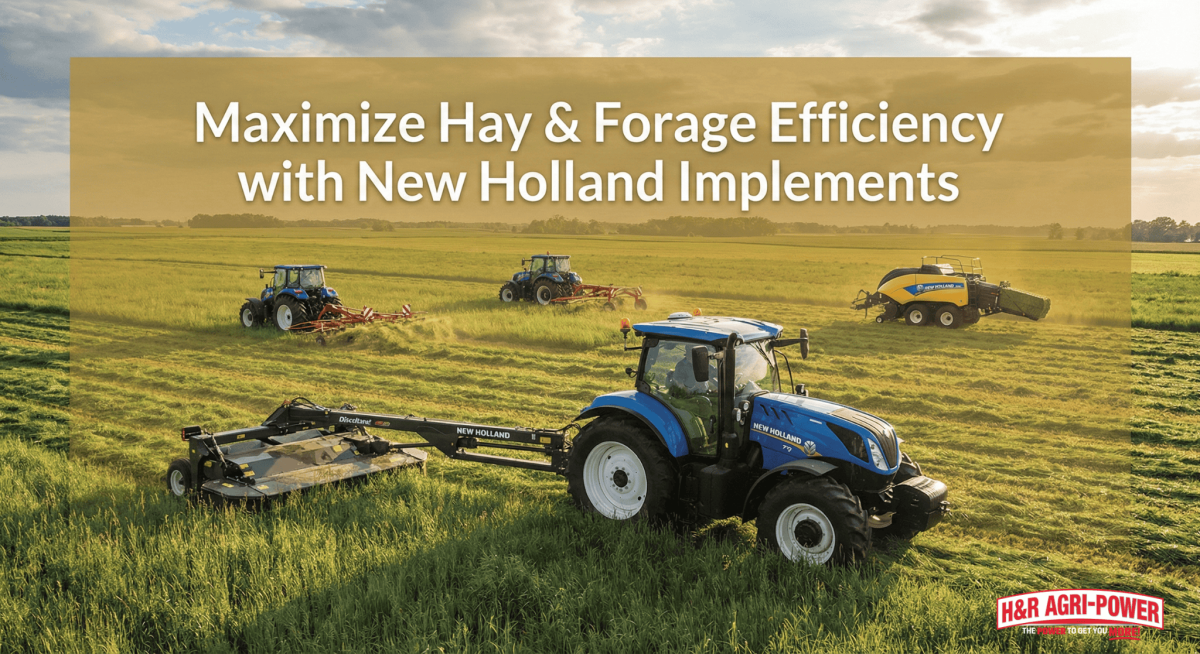
When you're searching for the most effective hay and forage equipment, you've come to the right place. We understand that selecting the right implements can make or break your operation's productivity and profitability. Whether you're upgrading existing equipment or building a new forage operation, we'll guide you through New Holland's comprehensive lineup and help you make informed decisions that maximize your investment.
Hay and forage implements are specialized agricultural equipment designed to cut, condition, ted, rake, and bale forage crops efficiently while preserving nutritional quality. According to Strategic Market Research, 2024: the haying and forage equipment market was valued at USD 10.8 billion with a projected compound annual growth rate of 6.2% through 2034, reflecting the critical importance of these tools in modern agriculture.
As noted by agricultural engineer Dr. James Peterson from Iowa State University Extension, "Before you shop for equipment, make sure you know the specifications of your tractor. Its horsepower rating and weight are the most important specs..." - a fundamental principle that underscores the importance of proper equipment selection.
Key Takeaways:
-
New Holland offers disc mowers, tedders, rakes, and balers with features like MowMax™ II PLUS cutterbar providing 30% lower cutting height
-
Advanced disc mower conditioning options include chevron rubber/steel rolls and LeaningEdge™ flail tines for optimal drying rates
-
Tedder and rake selection impacts field losses - wheel rakes show lowest losses while rotary rakes tend higher according to University of Wisconsin
-
Baler technology features Loop Master™ system producing 26% stronger knots and IntelliSense™ automation for hands-free operation
-
Precision farming integration through FieldOps™ platform enables real-time monitoring and remote diagnostics
-
H&R Agri-Power provides 0% APR financing for 60-72 months on select models with comprehensive dealer support
This comprehensive guide examines New Holland's complete hay and forage equipment lineup, analyzing how each implement type contributes to harvest efficiency and forage quality. We explore the technological innovations that set New Holland apart, from automated baling systems to precision monitoring platforms, while providing practical insights for matching equipment to your specific operational needs and tractor capabilities.
Actionable Tip: Before visiting H&R Agri-Power to explore New Holland equipment, document your tractor's horsepower rating, PTO speed, and weight specifications - this preparation will streamline equipment selection and ensure optimal compatibility.
As we delve into the specific implement categories and their applications, you'll discover how New Holland's engineering innovations translate into measurable improvements in productivity, forage quality, and operational efficiency for hay and forage producers nationwide.
Which Types of Hay and Forage Implements Does New Holland Offer?
The types of hay and forage implements New Holland offers are disc mowers, tedders, rakes, and balers designed for various farm sizes and operational needs. The global haying and forage equipment market reached USD 9.1-10.8 billion in 2024 with projected CAGR of 4.1-6.2% through 2034. CNH Industrial, New Holland's parent company, reported a 23% decrease in net sales in 2024 due to reduced industry demand.
New Holland's implement lineup addresses cutting, conditioning, tedding, raking, and baling operations across different farming scales. The following subsections detail how each implement category improves specific aspects of hay and forage harvesting.
How Do New Holland Disc Mowers Improve Forage Harvesting?
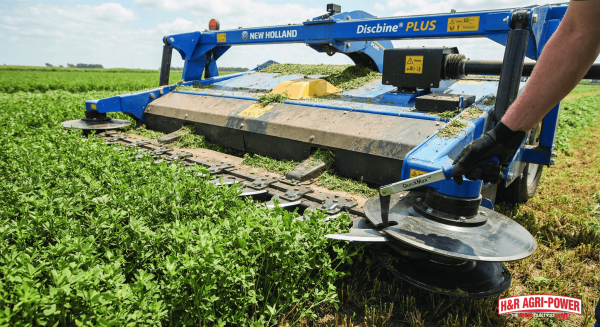
New Holland disc mowers improve forage harvesting through advanced cutting technology and conditioning systems. The Discbine® PLUS series features MowMax™ II PLUS cutterbar providing 30% lower cutting height than previous models. QuickMax™ knife-change system reduces maintenance time and complexity. Disc mowers operate at 2250 RPM knife speed at 1000 RPM PTO.
Tractor requirements range from 95 to 345 HP depending on model. Conditioning options include chevron rubber/steel rolls and LeaningEdge™ flail tines for faster crop drying. These features combine to deliver cleaner cuts, reduced crop damage, and accelerated drying times essential for quality forage production.
What Advantages Do New Holland Tedders Provide for Hay Drying?
The advantages New Holland tedders provide for hay drying are wider tedding coverage and uniform crop spreading. ProTed™ rotary tedders offer 17'1" to 24'11" tedding widths. Models feature 4-7 rotors for even crop spreading across the field. Rotary tedder design promotes uniform drying and reduces moisture content more efficiently than traditional methods.
The multi-rotor configuration ensures consistent crop fluffing and turning, exposing more surface area to sun and wind. This systematic spreading pattern accelerates moisture removal while preserving leaf attachment and nutritional value.
Why Are New Holland Rakes Popular Among Forage Producers?
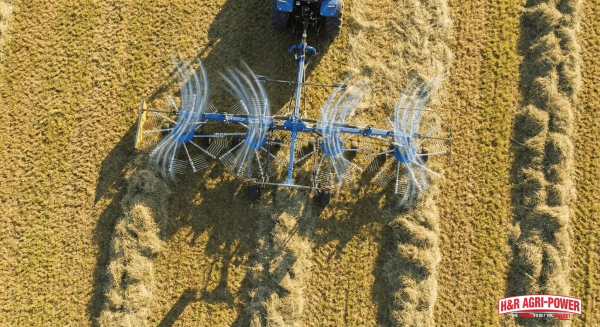
New Holland rakes are popular among forage producers because of their versatile width options and proven windrow formation. ProCart™ and ProCart™ PLUS Deluxe carted wheel rakes provide 18'-28' raking widths. DuraVee™ trailing wheel rakes offer 17'5" to 31' raking widths with durable construction. ProRotor™ rotary rakes feature long tines for creating well-shaped windrows.
According to University of Wisconsin Extension research, wheel rakes have the lowest field losses while rotary rakes tend to have the highest. This equipment range allows producers to select optimal raking solutions based on crop conditions, field size, and acceptable loss tolerances while maintaining consistent windrow quality for subsequent baling operations.
How Does Choosing the Right Implement Affect Hay Quality and Yield?
Choosing the right implement affects hay quality and yield through equipment efficiency, crop preservation, and harvest timing optimization. The BigBaler PLUS produces up to 110 bales per hour with 10% greater density than previous models, demonstrating how advanced equipment directly impacts productivity.
According to University of Wisconsin Extension research, proper equipment selection and operation can minimize field losses during harvesting. Equipment-crop matching preserves forage quality throughout the harvesting process by ensuring optimal cutting height, conditioning intensity, and windrow formation.
Modern hay implements incorporate technologies that protect nutritional value while maximizing tonnage per acre. The relationship between implement selection and final product quality determines market value and livestock performance outcomes. Understanding these connections helps producers select implements that match their specific operational goals and field conditions.
What Factors Influence the Choice of Implement for Specific Crops?
The choice of implement for specific crops depends on tractor specifications, crop characteristics, and field conditions. Iowa State University Extension emphasizes matching equipment to tractor horsepower rating and weight specifications for optimal performance. Forward speed capabilities must align with crop density and field conditions to maintain consistent cutting quality and avoid equipment strain.
Different crop types require specific conditioning options such as chevron rubber rolls for grasses or flail tines for legumes. Moisture content at harvest dictates whether aggressive conditioning or gentle handling preserves leaf attachment. Field topography influences whether operators choose pull-type or mounted implements for stability and maneuverability.
How Can Proper Equipment Maintenance Enhance Forage Quality?
Proper equipment maintenance enhances forage quality by ensuring consistent cutting performance and reducing contamination risks. Regular maintenance minimizes field losses during harvesting operations through optimal blade sharpness and proper equipment adjustment. The QuickMax™ knife-change system on Discbine mowers reduces downtime for blade replacement, allowing operators to maintain peak cutting efficiency.
Sharp blades create clean cuts that promote rapid regrowth and reduce plant stress. Properly adjusted conditioning rolls ensure uniform stem crushing without excessive leaf loss. Despite farmer testimonials noting higher-than-expected maintenance costs on newer models, consistent upkeep prevents breakdowns during critical harvest windows when forage quality changes rapidly.
What Common Mistakes Should Be Avoided When Selecting Implements?
Common mistakes when selecting implements include purchasing equipment without verifying tractor compatibility and overlooking operational requirements. Iowa State University warns against purchasing equipment without knowing tractor specifications, as incompatible pairings reduce efficiency and accelerate wear. Mismatching equipment size to tractor capacity creates power limitations that compromise field speed and cut quality.
Failing to consider forward speed requirements for specific crop conditions affects harvest quality through uneven cutting or incomplete conditioning. Operators often underestimate maintenance requirements and parts costs for complex systems. Choosing implements based solely on purchase price without evaluating long-term operating costs leads to unexpected expenses and reduced profitability over the equipment's service life.
How Do New Holland Round and Square Balers Compare for Hay Production?
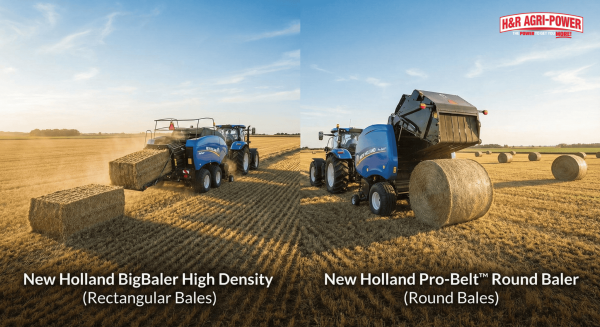
New Holland round and square balers compare through distinct operational advantages for different hay production scenarios. The global baler market valued at USD 6.4 billion in 2024 is expected to reach USD 11.9 billion by 2030 with a CAGR of 10.6%. BigBaler High Density series produces up to 22% higher density bales than standard models.
Roll-Belt™ and Pro-Belt™ round balers offer variable-chamber designs for flexibility across crop types. Square balers excel in commercial operations requiring stackable transport, while round balers provide weather resistance and handling simplicity for smaller farms.
When Should You Use a Round Baler Instead of a Square Baler?
You should use a round baler instead of a square baler when prioritizing weather resistance, handling simplicity, and variable moisture conditions. Pro-Belt™ models produce 35.5-65" diameter bales suitable for various storage and feeding systems. The Pro-Belt™ 561 model provides 16% increase in feeding capacity over previous generations.
Variable-chamber round balers offer greater versatility for different crop moisture levels. Round balers suit operations with limited labor since one person can handle bale movement. Choose round balers for beef cattle operations where outdoor storage is common and bale weathering is acceptable.
What Features Distinguish New Holland Balers From Other Brands?
The features that distinguish New Holland balers from other brands are Loop Master™ technology, MaxiSweep™ pickup systems, and superior bale density capabilities. Loop Master™ double knotting system produces knots 26% stronger than conventional systems. This technology eliminates twine offcuts, saving nearly 4 miles of twine per 10,000 bales.
BigBaler PLUS features 31.5" longer bale chamber and MaxiSweep™ pickup system for cleaner crop gathering. Loop Master™ system received Edison Gold Medal award in 2021 for innovation excellence. These proprietary technologies reduce operating costs while improving bale quality and consistency.
How Do Net-Wrapping and Twine Options Affect Baling Efficiency?
Net-wrapping and twine options affect baling efficiency through speed, cost, and environmental factors. Net wrapping provides faster bale completion times compared to twine binding. Loop Master™ system eliminates twine offcuts, reducing plastic waste in fields. Twine savings with Loop Master™ translate to reduced operating costs over high-volume seasons.
Net wrap costs more per bale but increases daily output by reducing wrapping time. Twine remains economical for operations prioritizing material costs over speed. Both options integrate with New Holland's automated systems for consistent bale formation and optimal material usage.
What Innovative Technologies Do New Holland Implements Use for Hay and Forage?
New Holland implements use IntelliSense™ bale automation with LiDAR-based technology for hands-free baling operations. The FieldOps™ platform provides comprehensive farm data management through mobile and web applications. SmartSteer™ swath guidance enables autosteering for improved field efficiency by automatically following windrows.
These technologies work together to reduce operator fatigue while increasing productivity and bale consistency. The following sections detail how monitoring systems, automation features, and farm management integration transform hay and forage operations.
How Do Advanced Monitoring Systems Support Precision Forage Management?
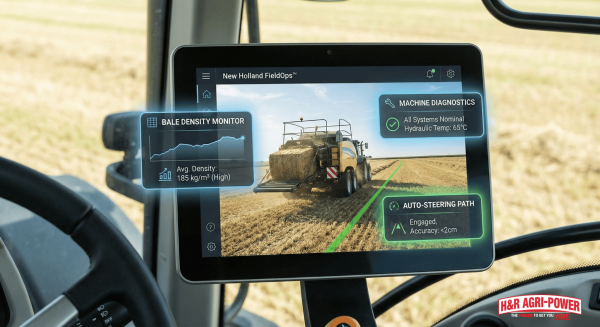
Advanced monitoring systems support precision forage management through real-time machine tracking and automated adjustments. FieldOps™ offers remote diagnostics capabilities that monitor equipment performance from any location. IntelliCruise™ II automatically adjusts baler speed based on crop density measurements to maintain consistent bale formation.
The system sends proactive maintenance alerts through FieldOps™ to prevent equipment downtime during critical harvest windows. These monitoring capabilities enable operators to optimize machine settings for varying field conditions while maintaining peak efficiency throughout the harvest season.
What Automation Features Are Available on New Holland Equipment?
The automation features available on New Holland equipment include IntelliSense™, which combines SmartSteer™ guidance with IntelliCruise™ II feed rate control. This hands-free baling capability increases daily productivity by eliminating manual steering corrections. The automation reduces operator fatigue by managing both steering and ground speed simultaneously.
Fuel efficiency improves through optimized travel patterns and consistent operating speeds. Bale quality consistency increases because the system maintains uniform pickup rates regardless of windrow variations. These integrated features allow operators to focus on monitoring overall operation quality rather than controlling individual machine functions.
How Does New Holland Equipment Integrate With Modern Farm Management Systems?
New Holland equipment integrates with modern farm management systems through the FieldOps™ platform's agronomic data capabilities. The platform combines machine performance metrics with field information for comprehensive operational analysis. Remote diagnostics allow fleet management across multiple machines from a central location.
Cloud-based data storage enables access to equipment performance metrics from any device with internet connectivity. The integration supports decision-making by providing historical performance data alongside current operational parameters. This connectivity transforms individual machines into components of a coordinated precision farming system that optimizes hay and forage production across entire operations.
How Should You Approach Selecting New Holland Implements With H&R Agri-Power?
Selecting New Holland implements with H&R Agri-Power involves leveraging dealer expertise, financing options, and comprehensive equipment access. H&R Agri-Power offers 0% APR financing for 60 or 72 months on select New Holland models through CNH Industrial Capital, subject to credit approval. Customer testimonials consistently highlight dealer support and parts availability as significant advantages when purchasing through H&R Agri-Power's network.
The dealership provides technical guidance for matching implements to specific tractor capabilities and operational requirements. Financing programs help manage upfront equipment costs while maintaining cash flow during seasonal operations.
Can H&R Agri-Power Help You Find the Right New Holland Hay and Forage Solutions?
Yes. H&R Agri-Power helps customers find the right New Holland hay and forage solutions through comprehensive equipment access and expert consultation. The dealership provides New Holland's complete hay and forage lineup, including disc mowers, tedders, rakes, and balers. Promotional financing options reduce acquisition costs through extended payment terms at competitive rates.
The dealer network ensures ongoing support through parts availability and service expertise. H&R Agri-Power specialists evaluate farm-specific requirements to recommend optimal equipment configurations. This consultative approach helps producers select implements that match their acreage, crop types, and production goals while staying within budget constraints.
What Are the Key Takeaways About the Best New Holland Implements for Hay and Forage Operations?
The key takeaways about the best New Holland implements for hay and forage operations are that advanced technology, proper equipment matching, and long-term return on investment determine overall harvesting success.
New Holland maintains market leadership through advanced features like IntelliSense™ automation and Loop Master™ knotting technology. Equipment selection requires matching implement specifications to tractor horsepower ratings and crop density requirements.
Investment in automation features provides measurable returns through:
-
Improved fuel efficiency from IntelliCruise™ II systems
-
Reduced labor costs via hands-free baling operations
-
Lower maintenance expenses with QuickMax™ knife-change systems
-
Enhanced bale quality through consistent density control
These technological advantages, combined with H&R Agri-Power's support infrastructure, create long-term value for hay and forage operations seeking to maximize productivity while minimizing operational costs.